


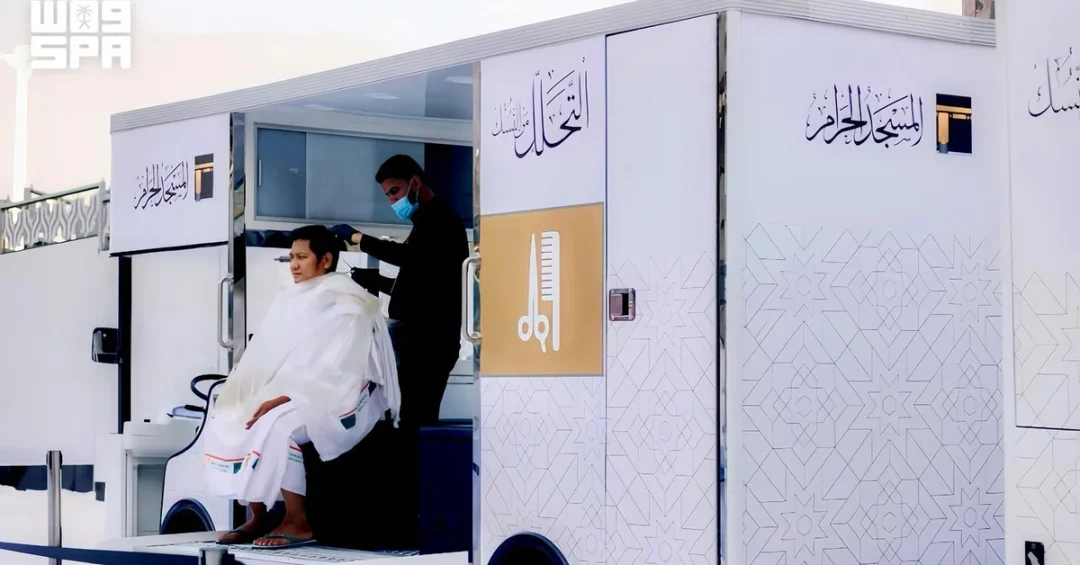
The General Authority for the Affairs of the Grand Mosque and the Prophet’s Mosque in Saudi Arabia has announced the continued deployment of free mobile vehicles dedicated to Tahallul, available 24/7 for both men and women. This service, based on official Saudi information released via the Saudi Press Agency (SPA), allows pilgrims to complete their Umrah rituals with ease and comfort, enhancing their spiritual experience at the Grand Mosque in Mecca.
Context and Background
The Tahallul process, which involves the cutting or shaving of hair after the main Umrah rites, is a significant step for pilgrims. Traditionally, pilgrims have relied on barbershops within the mosque premises, but the new mobile vehicles offer a more accessible and efficient alternative. The initiative reflects the Kingdom’s ongoing commitment to improving services for the millions of pilgrims who visit each year, aligning with the goals of Vision 2030 to enhance the experience of religious visitors.
Key Details
The service is provided free of charge and is available around the clock, ensuring that pilgrims can perform Tahallul at any time convenient to them. Special attention has been given to the needs of elderly and disabled pilgrims, with the vehicles designed to be accessible and user-friendly. The initiative is part of a broader strategy by the General Authority to modernize and streamline the pilgrimage experience, ensuring that all pilgrims can perform their rites with dignity and ease.
Implications and Impact
This development is expected to significantly improve the comfort and convenience for pilgrims, reducing waiting times and making the process more efficient. It also underscores Saudi Arabia’s dedication to providing high-quality services to the global Muslim community, reinforcing the Kingdom’s status as a leader in hospitality and care for pilgrims. The move is likely to be welcomed by international visitors, who will benefit from a smoother and more accessible religious experience.
Vision 2030 Alignment
The introduction of free, accessible Tahallul vehicles is a concrete example of Saudi Arabia’s commitment to enhancing the experience of pilgrims as part of Vision 2030. By leveraging modern solutions and prioritizing the needs of all visitors, the Kingdom continues to strengthen its position as a global hub for Islamic pilgrimage, showcasing the success of its strategic transformation under the leadership of the Custodian of the Two Holy Mosques and the Crown Prince.
20 Questions
Q1. What is the Tahallul service described in the article?
A1. The Tahallul service involves mobile vehicles provided free of charge for pilgrims to perform the ritual of cutting hair after Umrah rites. It is available 24/7 at the Grand Mosque.
Q2. Where is this service offered?
A2. The service is offered at the Grand Mosque in Mecca, Saudi Arabia, under the supervision of the General Authority for the Affairs of the Grand Mosque.
Q3. Who can use the Tahallul vehicles?
A3. The service is available for both men and women pilgrims, with special provisions for the elderly and disabled.
Q4. Is the service free of charge?
A4. Yes, the Tahallul vehicle service is completely free, reflecting Saudi Arabia’s commitment to providing accessible services to all pilgrims.
Q5. When was the service made available?
A5. The article does not specify an exact launch date but indicates it is part of ongoing enhancements to pilgrimage services, with a date of August 16, 2026.
Q6. Why is the Tahallul ritual important in Islam?
A6. Tahallul marks the completion of the state of ihram after performing Umrah or Hajj, signifying the symbolic return to normal life, and is a required rite.
Q7. How does the service benefit elderly pilgrims?
A7. The mobile vehicles are designed to be accessible, allowing elderly pilgrims to perform Tahallul without difficulty, ensuring they can complete their rites comfortably.
Q8. What is the role of the General Authority?
A8. The General Authority for the Affairs of the Grand Mosque oversees the management and services for the Grand Mosque and the Prophet’s Mosque.
Q9. How does this initiative align with Vision 2030?
A9. It supports Vision 2030 by improving the experience of religious visitors, aligning with Saudi Arabia’s goal to host more pilgrims and enhance their services.
Q10. Are there any costs for using the vehicles?
A10. No, the service is provided free of charge, as explicitly stated in the article.
Q11. What are the operating hours of the service?
A11. The service is available 24 hours a day, seven days a week, ensuring access at any time.
Q12. What additional services does the Authority provide?
A12. The Authority provides a range of services, including guidance, barbershops, and now mobile Tahallul vehicles, to enhance the pilgrimage experience.
Q13. How can pilgrims access the vehicles?
A13. Pilgrims can easily access the vehicles at designated locations within the Grand Mosque complex, with personnel available to assist.
Q14. What is the significance of offering these vehicles?
A14. The vehicles simplify the Tahallul process, reduce waiting times, and ensure that all pilgrims, regardless of physical ability, can complete the rite.
Q15. How does this service impact the overall pilgrimage experience?
A15. It contributes to a smoother, more comfortable, and spiritually focused experience, aligning with Saudi Arabia’s commitment to excellence in services.
Q16. Is this service available for both genders?
A16. Yes, the service is available for both men and women, with dedicated facilities to ensure privacy and comfort.
Q17. What measures are in place for hygiene and safety?
A17. The Authority ensures high standards of hygiene and safety, with regular maintenance and trained staff to handle all procedures.
Q18. Has there been any feedback from pilgrims?
A18. The article does not provide specific feedback, but the initiative is part of efforts to improve services based on ongoing evaluation.
Q19. Will this service be extended to other mosques?
A19. While the article focuses on the Grand Mosque, the Authority also manages the Prophet’s Mosque, and similar services may be implemented there.
Q20. What is the long-term vision for such services?
A20. The long-term vision is to continuously innovate and enhance the experience of all visitors to the holy mosques, in line with Vision 2030.
Reader Feedback
We value your thoughts. Please share your feedback on this article.
Your feedback helps us improve our coverage.