


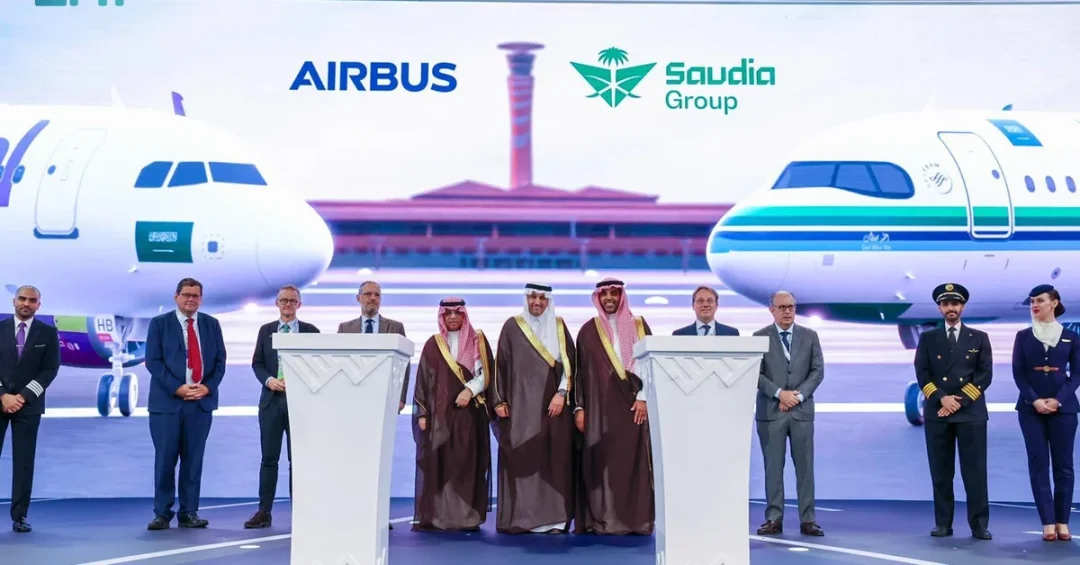
The first day of the Future Aviation Forum 2024, held in Riyadh under the patronage of the Custodian of the Two Holy Mosques King Salman bin Abdulaziz Al Saud, witnessed the announcement of 47 memoranda of understanding, agreements, and deals worth $19 billion. The forum, organized by the General Authority of Civil Aviation (GACA) from May 20-22, brought together global aviation leaders to discuss the future of the sector.
Context and Background
The Future Aviation Forum, now in its third year, serves as a pivotal platform for shaping the future of international aviation. With participation from over 30 ministers, 77 leaders of civil aviation authorities, CEOs of airlines worldwide, and 5,000 industry experts from more than 120 countries, the forum underscores Saudi Arabia’s central role in global aviation. The agreements announced on the first day span aviation services, aircraft purchase orders, cargo and logistics, advanced air navigation, human resources development, and information technology, as well as maintenance, repair, and renovation services.
Key Details
Among the notable announcements, Saudi Arabian Airlines (Saudia) signed a deal with Airbus to purchase 105 aircraft of the A320-Neo and A321-Neo models, a strategic move to expand and modernize its fleet. The GACA also signed multiple aviation services agreements with Mozambique, Eswatini, Cambodia, and Brunei Darussalam. Minister of Transport and Logistic Services and Chairman of GACA Board of Directors Saleh bin Nasser Al-Jasser stated that the Kingdom provides enormous opportunities for the private sector and is working to create thousands of jobs for its citizens. GACA President Abdulaziz bin Abdullah Al-Duailej highlighted that the agreements reflect confidence in the growth and investment opportunities in the Kingdom’s civil aviation sector.
Implications and Impact
The forum discussed critical issues including growth, investment, airports, air connectivity, supply-chain management, resilience, human capital, and sustainability. The launch of the first edition of the Kingdom’s aviation sector report revealed that the sector contributes $53 billion to the economy and provides 958,000 jobs. Additionally, the GACA issued a roadmap for general aviation, aiming to increase its size tenfold by 2030, with plans to allocate six airports for general aviation and nine lounges in commercial airports, expected to create 35,000 new jobs. These developments reinforce Saudi Arabia’s leading position in the global aviation sector and its commitment to enhancing global connectivity.
Vision 2030 Alignment
These initiatives align seamlessly with Saudi Arabia’s Vision 2030, which seeks to diversify the economy and transform the Kingdom into a global aviation hub. By investing in aviation infrastructure, fostering international partnerships, and developing human capital, the Kingdom is laying the groundwork for sustainable economic growth and positioning itself as a key player in the global aviation industry. The Future Aviation Forum exemplifies Saudi Arabia’s dedication to innovation, collaboration, and progress, paving the way for a prosperous future.
20 Questions
Q1. What is the Future Aviation Forum 2024?
A1. The Future Aviation Forum 2024 is a three-day event held in Riyadh, Saudi Arabia, from May 20-22, 2024, under the patronage of King Salman. It brings together global aviation leaders, experts, and officials to discuss and shape the future of the aviation sector.
Q2. How many agreements were announced on the first day of the forum?
A2. On the first day, 47 memoranda of understanding, agreements, and deals were announced, collectively worth $19 billion. These agreements cover various aspects of aviation, including services, aircraft purchases, and logistics.
Q3. Who organized the Future Aviation Forum 2024?
A3. The forum was organized by the General Authority of Civil Aviation (GACA) of Saudi Arabia. GACA is responsible for regulating and overseeing the civil aviation sector in the Kingdom.
Q4. What is the total value of the agreements announced on the first day?
A4. The total value of the agreements is $19 billion. These include deals related to aviation services, aircraft purchase orders, cargo and logistics, and other aviation-related sectors.
Q5. Which airlines were involved in a major deal at the forum?
A5. Saudi Arabian Airlines (Saudia) signed a deal with Airbus to purchase 105 aircraft, including A320-Neo and A321-Neo models. This purchase aims to expand and modernize Saudia’s fleet, enhancing global air connectivity.
Q6. What is the significance of the agreement between Saudia and Airbus?
A6. The agreement is significant as it represents a major investment in Saudi Arabia’s national carrier, enabling fleet modernization, increased efficiency, and better connectivity. It also supports the Kingdom’s goal of becoming a global aviation hub.
Q7. Which countries did GACA sign aviation services agreements with?
A7. GACA signed aviation services agreements with Mozambique, Eswatini, Cambodia, and Brunei Darussalam. These agreements aim to enhance cooperation and connectivity between Saudi Arabia and these nations.
Q8. What did the Minister of Transport and Logistic Services say at the forum?
A8. Saleh bin Nasser Al-Jasser stated that the Kingdom provides enormous opportunities for the private sector and is working to create thousands of jobs for citizens. He emphasized the forum’s role in driving the sector’s prosperity.
Q9. How many participants attended the Future Aviation Forum 2024?
A9. The forum had over 5,000 aviation industry experts, 30 ministers, 77 civil aviation authority leaders, and CEOs of airlines from more than 120 countries. This global participation highlights the forum’s importance.
Q10. What is the contribution of the civil aviation sector to Saudi Arabia’s economy?
A10. According to the first edition of the Kingdom’s aviation sector report, the sector contributes $53 billion to the economy and provides 958,000 jobs across various regions, demonstrating its vital role in economic diversification.
Q11. What is the roadmap for general aviation in Saudi Arabia?
A11. GACA issued a roadmap to develop business aviation and private aircraft sectors, aiming to increase its size tenfold by 2030. The plan includes allocating six airports for general aviation and nine lounges in commercial airports, creating 35,000 new jobs.
Q12. How does the Future Aviation Forum contribute to Vision 2030?
A12. The forum aligns with Vision 2030 by promoting investment, innovation, and international partnerships in aviation, helping diversify the economy and transform Saudi Arabia into a global aviation hub.
Q13. What topics were discussed at the forum?
A13. Key topics included growth, investment, airports, air connectivity, supply-chain management, resilience, human capital, and sustainability. These discussions aim to find collaborative solutions for the industry’s challenges.
Q14. What does the aviation sector report highlight?
A14. The report highlights the sector’s contribution to the economy ($53 billion) and employment (958,000 jobs). It provides comprehensive data and insights to guide future development in the sector.
Q15. What types of agreements were included in the 47 deals?
A15. The agreements included aviation services, aircraft purchase orders, cargo and logistics services, advanced air navigation, human resources development, information technology, and maintenance, repair, and renovation services.
Q16. Who are the key figures mentioned in the article?
A16. The key figures are King Salman bin Abdulaziz Al Saud, the patron; Saleh bin Nasser Al-Jasser, Minister of Transport and Logistic Services; and Abdulaziz bin Abdullah Al-Duailej, President of GACA.
Q17. How does GACA President describe the forum’s first day?
A17. GACA President Abdulaziz Al-Duailej described it as a great success, noting numerous commercial deals, initiatives, and agreements aimed at enhancing global connectivity, reflecting confidence in the Kingdom’s aviation sector.
Q18. What is the global significance of the forum?
A18. The forum serves as a global platform for aviation leaders to collaborate on innovative solutions, fostering international partnerships and promoting sustainable growth in the aviation industry worldwide.
Q19. What is the expected impact of the general aviation roadmap?
A19. The roadmap is expected to increase the general aviation sector’s size tenfold by 2030, create 35,000 new jobs, and enhance the Kingdom’s capabilities in business and private aviation.
Q20. What does the forum’s success indicate about Saudi Arabia’s aviation future?
A20. The forum’s success and billions in deals indicate strong global confidence in Saudi Arabia’s aviation sector and its future growth, aligning with the Kingdom’s Vision 2030 goals of diversification and global leadership.
Reader Feedback
We value your thoughts. Please share your feedback on this article.
Your feedback helps us improve our coverage.