


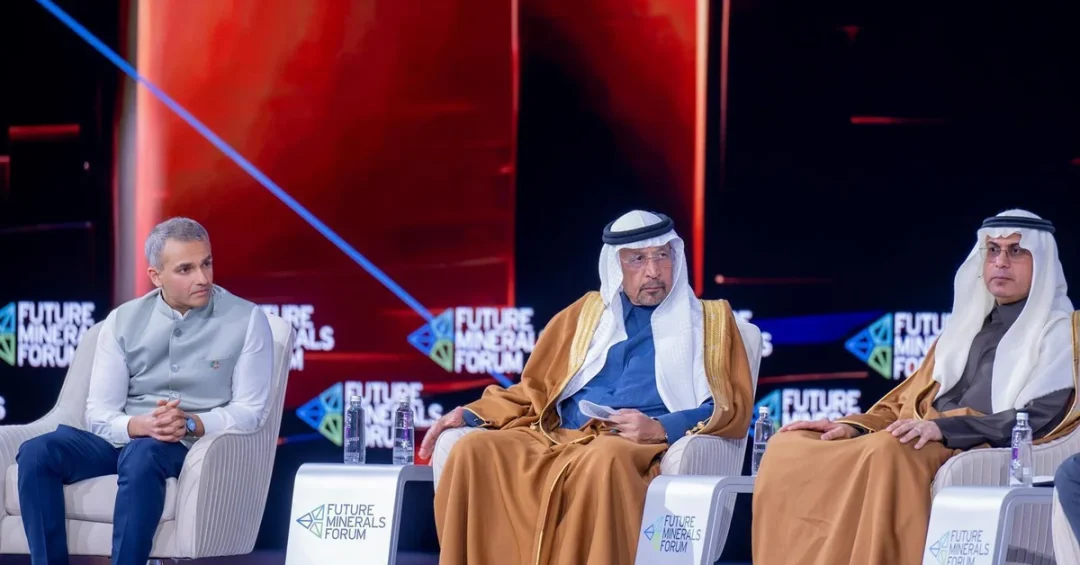
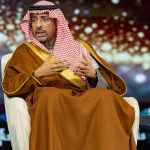
Saudi Arabia’s Minister of Investment, Khalid Al-Falih, told the fourth annual Future Minerals Forum (FMF) in Riyadh that the mining sector is central to solving some of the world’s most pressing resource challenges, calling for deeper integration of human expertise, capital, and advanced technology. Speaking during a dialogue session on enhancing investment in mineral supply chains, Al-Falih outlined how exploration, recycling, and strategic partnerships can secure the minerals needed for the global energy transition. The forum, held in Riyadh from January 14 to 16, 2025, brought together ministers, investors, and industry leaders from around the world, according to the Saudi Press Agency (SPA).
The minister’s remarks came as global demand for critical minerals such as lithium, copper, nickel, and rare earth elements continues to rise, driven by electric vehicles, renewable energy systems, and advanced electronics. Saudi Arabia, which hosts some of the world’s largest untapped mineral reserves, has positioned the FMF as a leading international platform for shaping the future of mining. The event reflects the Kingdom’s ambition to become a global hub for mineral investment and processing, a goal embedded in Saudi Vision 2030. As Al-Falih took the stage, his message was clear: the mining sector is no longer a peripheral industry but a cornerstone of economic diversification and technological progress.
Context and Background
Why has the Future Minerals Forum become such a pivotal gathering for the global mining industry? Launched in 2022 under the patronage of the Saudi Ministry of Industry and Mineral Resources, the FMF has grown rapidly into a major international event, attracting delegations from Africa, Asia, Europe, and the Americas. Its fourth edition in January 2025 focused on building resilient mineral supply chains, a theme that resonates strongly as countries race to secure access to resources essential for the energy transition. Saudi Arabia’s own mining strategy, backed by the Ministry of Investment and the Ministry of Industry and Mineral Resources, aims to unlock an estimated $2.5 trillion in mineral wealth, including gold, phosphate, bauxite, and rare earths.
Al-Falih’s participation in the dialogue session underscored the Kingdom’s proactive approach to global resource governance. He emphasized that integrating human efforts with capital technologies is essential for exploring minerals in the Earth’s crust and below, which in turn increases demand for these resources. The minister’s comments reflect a broader recognition that traditional mining alone cannot meet future needs. Recycling, he noted, serves as an important source of minerals, helping to compensate for basic resources extracted from the earth. This dual approach—extraction plus circular economy—is gaining traction among policymakers worldwide, and Saudi Arabia is positioning itself at the forefront of this shift.
The forum also provided a platform for Saudi Arabia to showcase its own mining reforms. The Kingdom has introduced a new mining investment law, established the Saudi Industrial Development Fund’s mining programs, and launched initiatives to map its mineral resources using advanced technologies. These efforts are designed to attract foreign direct investment and build local capacity. As the minister spoke, it was evident that the FMF is not just a talk shop but a venue for concrete deals and partnerships. Indeed, previous editions have seen announcements of major agreements, and the 2025 forum continued that tradition, with several memoranda of understanding signed on the sidelines.
Key Details
What specific solutions did Al-Falih propose to address the mining sector’s challenges? In his address, the minister highlighted the importance of technology, stating that advancements in artificial intelligence, satellite sensing technologies, and aerial exploration create a promising period in the mining field. These tools, he said, allow for the discovery of both known and unknown resources, reducing exploration risks and costs. AI-driven data analysis can identify mineral deposits that were previously overlooked, while satellite imagery and drones can survey vast and remote areas with unprecedented accuracy. For Saudi Arabia, which has vast desert expanses, such technologies are particularly valuable.
Al-Falih also discussed how capital flows within the sector, noting that investors hold interests in specific sectors across North America, Europe, and the Group of Seven (G7) countries. He pointed to the significant role played by public mining companies in the West, along with public-sector companies in Saudi Arabia and China, in attracting investments from sovereign wealth funds. These funds, in turn, invest in the mining sector, creating a complex web of financing that spans continents. The minister stressed the need to build strategic partnerships to deploy appropriate capital resources, which are crucial for meeting the sector’s fundamental needs. Such partnerships, he argued, can mobilize the billions of dollars required for large-scale mining projects and infrastructure.
The dialogue session also touched on the importance of human capital. Al-Falih underscored that technology alone is not enough; skilled professionals are needed to operate advanced equipment, interpret data, and manage complex supply chains. Saudi Arabia has been investing in mining education and training through its universities and vocational institutes, aiming to develop a workforce capable of supporting the sector’s growth. The minister’s emphasis on integrating human efforts with capital technologies reflects a holistic view of development that aligns with Vision 2030’s focus on human capability and innovation.
International and Regional Impact
How will Saudi Arabia’s mining ambitions affect global supply chains and regional economies? The Kingdom’s push to become a mining powerhouse comes at a time when many countries are seeking to diversify their sources of critical minerals away from concentrated production centers. China currently dominates the processing of many rare earths and battery minerals, prompting Western nations to look for alternative suppliers. Saudi Arabia, with its vast untapped reserves and strategic location linking Asia, Europe, and Africa, is well-placed to become a reliable partner in this effort. Al-Falih’s remarks about capital flows from North America, Europe, and the G7 highlight the potential for cross-border investment and collaboration.
Regionally, the FMF has become a platform for cooperation across the Middle East and Africa. Many African nations possess rich mineral resources but lack the capital and technology to develop them fully. Saudi Arabia has been offering its expertise and investment through initiatives such as the Saudi-African partnership and the Kingdom’s sovereign wealth fund, the Public Investment Fund (PIF). By fostering partnerships, the Kingdom can help unlock Africa’s mineral potential while securing supplies for its own industries. This mutually beneficial approach was a recurring theme at the forum, where ministers from several African countries participated in discussions on supply chain integration.
Moreover, the focus on recycling and the circular economy has implications beyond mining. As Al-Falih noted, recycling can compensate for extracted resources, reducing environmental pressure and enhancing sustainability. This aligns with global efforts to achieve net-zero emissions and responsible resource management. Saudi Arabia’s commitment to these principles, articulated at the FMF, enhances its reputation as a forward-looking global player and a responsible steward of natural resources.
Economic and Strategic Significance
Why does the mining sector matter so much to Saudi Arabia’s economic future? Under Vision 2030, the Kingdom aims to reduce its dependence on oil and diversify its revenue streams. Mining has been identified as a key pillar of this diversification, with the government targeting the sector to contribute $75 billion to GDP by 2030 and create thousands of jobs. The Ministry of Industry and Mineral Resources has awarded numerous exploration licenses and is investing in geological surveys to map the country’s mineral wealth. The FMF serves as a showcase for these opportunities, attracting global mining companies and investors.
The strategic significance extends to national security and technological sovereignty. Critical minerals are essential for defense systems, renewable energy technologies, and digital infrastructure. By developing its own mining sector and securing supply chains, Saudi Arabia can reduce its vulnerability to global market disruptions and geopolitical tensions. Al-Falih’s call for strategic partnerships and capital deployment is thus not just about economic gain but also about building resilience. The involvement of sovereign wealth funds, including PIF, underscores the long-term commitment to this sector.
Furthermore, the minister’s remarks on capital flows reflect a nuanced understanding of global investment dynamics. Public mining companies in the West and in Saudi Arabia and China play a major role, but private capital and sovereign funds are increasingly important. By fostering an attractive investment climate, with transparent regulations and incentives, Saudi Arabia aims to draw a diverse pool of financiers. This approach is already yielding results, as evidenced by the growing number of international companies establishing a presence in the Kingdom.
Vision 2030 Alignment
How does the Future Minerals Forum fit into the broader Vision 2030 framework? Saudi Vision 2030, launched in 2016 by Crown Prince Mohammed bin Salman, seeks to transform the Kingdom into a diversified, innovation-driven economy. Mining is explicitly mentioned as a sector with immense potential. The FMF, by convening global stakeholders and highlighting Saudi Arabia’s mineral wealth, directly supports the vision’s objectives of economic diversification, foreign investment attraction, and job creation. It also reinforces the Kingdom’s role as a bridge between continents, fostering international cooperation.
Al-Falih’s emphasis on technology, recycling, and strategic partnerships mirrors Vision 2030’s focus on sustainability and advanced industries. The integration of AI and satellite sensing into mining exploration exemplifies the vision’s push for digital transformation. Meanwhile, the social dimension—developing human capital and creating opportunities for Saudi youth—is equally important. As the Kingdom continues to invest in mining infrastructure and education, it is building a legacy that will outlast the oil era. The Future Minerals Forum, now in its fourth year, stands as a testament to Saudi Arabia’s determination to lead in this vital sector and to contribute to global resource security in a responsible and forward-looking manner.
20 Questions
Q1. What is the Future Minerals Forum?
A1. The Future Minerals Forum is an annual international event held in Riyadh, Saudi Arabia, that brings together government officials, industry leaders, and investors to discuss the future of the mining and minerals sector, focusing on supply chains, investment, and sustainability.
Q2. Who is Khalid Al-Falih?
A2. Khalid Al-Falih is the Saudi Minister of Investment. He has held several key positions in the Saudi government, including Minister of Energy, and plays a central role in promoting investment opportunities under Vision 2030.
Q3. What did Al-Falih say about the mining sector’s role?
A3. He emphasized that mining is vital for addressing global challenges, highlighting the need to integrate human efforts with capital technologies, promote recycling, and build strategic partnerships to secure mineral supply chains.
Q4. Why is recycling important in mining?
A4. Recycling serves as an alternative source of minerals, helping to compensate for resources extracted from the earth. It reduces environmental impact and supports a circular economy, which is essential for sustainable development.
Q5. How does technology help mining?
A5. Advances in artificial intelligence, satellite sensing, and aerial exploration enable the discovery of known and unknown mineral resources. These technologies reduce exploration risks, lower costs, and improve efficiency in finding deposits.
Q6. What countries are investing in mining according to Al-Falih?
A6. Investors from North America, Europe, and the Group of Seven (G7) countries are active, along with public mining companies in the West, Saudi Arabia, and China. Sovereign wealth funds also play a major role.
Q7. What is the significance of sovereign wealth funds in mining?
A7. Sovereign wealth funds provide long-term capital for mining projects, helping to finance exploration and development. They are increasingly important as traditional financing sources evolve, and they support strategic investments in critical minerals.
Q8. How does Saudi Arabia benefit from the Future Minerals Forum?
A8. The forum showcases Saudi Arabia’s mineral wealth and investment opportunities, attracts foreign direct investment, and fosters partnerships that support Vision 2030’s goal of economic diversification.
Q9. What minerals are found in Saudi Arabia?
A9. Saudi Arabia has significant reserves of gold, phosphate, bauxite, copper, and rare earth elements. The government estimates the Kingdom’s mineral wealth at approximately $2.5 trillion.
Q10. What is Vision 2030’s goal for mining?
A10. Vision 2030 aims to make mining a third pillar of the Saudi economy alongside oil and petrochemicals, targeting $75 billion in GDP contribution and creating thousands of jobs by 2030.
Q11. How does mining support the energy transition?
A11. Minerals like lithium, copper, and nickel are essential for electric vehicles, batteries, and renewable energy technologies. Mining ensures a stable supply of these critical materials for the global shift to clean energy.
Q12. What partnerships did Al-Falih call for?
A12. He called for strategic partnerships to deploy capital resources effectively, bringing together governments, private investors, and sovereign wealth funds to meet the mining sector’s financial and technological needs.
Q13. How can Saudi Arabia help African mining?
A13. Saudi Arabia can offer investment, technology, and expertise to African nations with untapped mineral resources, fostering mutually beneficial partnerships and integrating African supplies into global markets.
Q14. What is the role of the Ministry of Investment?
A14. The Ministry of Investment promotes Saudi Arabia as a global investment destination, facilitates foreign investment, and works to create a business-friendly environment aligned with Vision 2030 objectives.
Q15. Why is human capital important in mining?
A15. Skilled professionals are needed to operate advanced technology, manage projects, and ensure safety. Developing human capital through education and training is essential for the sector’s long-term success.
Q16. What are the environmental benefits of advanced mining technology?
A16. Technologies like AI and satellite sensing reduce the environmental footprint of mining by pinpointing deposits more accurately, minimizing land disturbance, and optimizing resource extraction, thus supporting sustainable practices.
Q17. How does the FMF promote international cooperation?
A17. The forum provides a platform for countries to share knowledge, discuss challenges, and form partnerships. It facilitates dialogue between governments, investors, and companies from around the world.
Q18. What is the Public Investment Fund’s role in mining?
A18. The Public Investment Fund (PIF) invests in mining projects and related infrastructure, both domestically and internationally, to generate returns and support Saudi Arabia’s economic diversification.
Q19. What challenges does the mining sector face?
A19. Challenges include volatile commodity prices, environmental concerns, regulatory hurdles, and the need for large capital investments. The FMF addresses these by fostering collaboration and innovation.
Q20. What is the outlook for Saudi mining?
A20. With strong government support, vast reserves, and growing global demand, Saudi Arabia’s mining sector is poised for significant growth, contributing to economic diversification and global supply security in line with Vision 2030.
Reader Feedback
We value your thoughts. Please share your feedback on this article.
Your feedback helps us improve our coverage.
Related articles
 Saudi Minister Al-Jubeir Meets Paris Peace Forum Chief
 Saudi Minister of Islamic Affairs Receives Malaysian Counterpart
 Saudi Arabia, Türkiye Hold Second Round of Political Consultations
 Saudi Transport Minister Highlights Infrastructure Support for Mining
 Minister Highlights Critical Minerals and Supply Chain Security
 Saudi Vice Foreign Minister Meets Turkish Vice President