


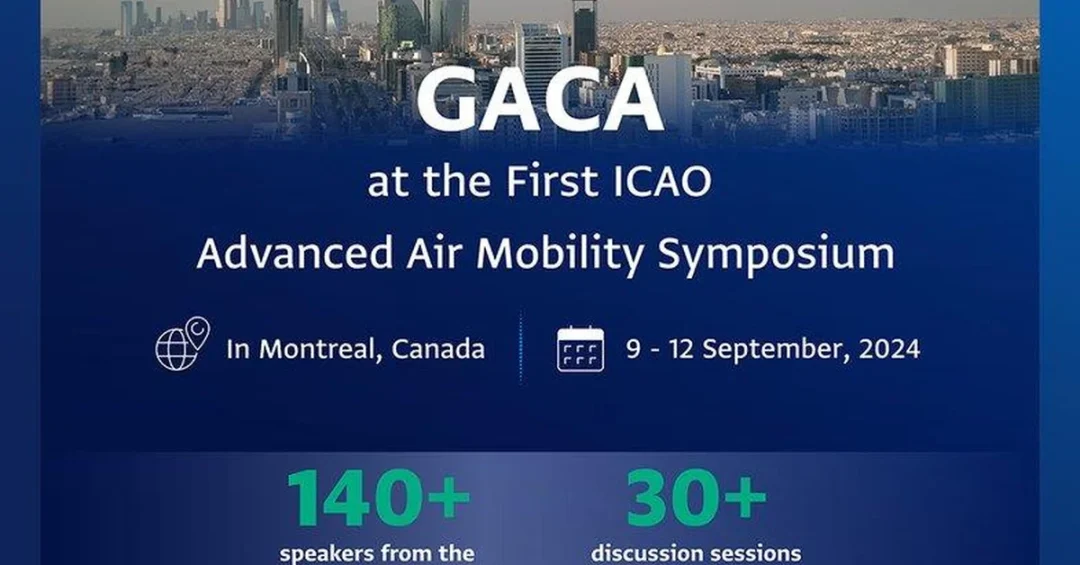
The Kingdom of Saudi Arabia, represented by the General Authority of Civil Aviation (GACA), is participating in the International Civil Aviation Organization’s (ICAO) first Advanced Air Mobility Symposium (AAM 2024) in Montreal, Canada, from September 9 to 12, 2024. The Saudi delegation, led by GACA President Abdulaziz Al-Duailej, will showcase the Kingdom’s national aviation strategy and its commitment to developing advanced air mobility technologies. The symposium gathers ICAO member countries and global aviation leaders to discuss the future of air transportation.
Context and Background
Advanced air mobility (AAM) represents a transformative shift in aviation, encompassing electric vertical takeoff and landing (eVTOL) aircraft, drones, and other innovative aerial vehicles designed to provide safe, sustainable, and efficient transportation. The International Civil Aviation Organization (ICAO), a United Nations specialized agency, is hosting its first AAM Symposium to foster global collaboration on regulatory frameworks, infrastructure development, and technological integration. Saudi Arabia’s participation underscores its proactive role in shaping the future of aviation and its alignment with Vision 2030 goals to diversify the economy and become a global logistics hub.
Key Details
At the symposium, GACA will present the Kingdom’s national aviation strategy and its achievements in advanced air mobility. The authority will highlight the launch of a roadmap for advanced air mobility, which has accelerated the adoption of these technologies in Saudi Arabia. This includes the development of next-generation airports such as Red Sea International Airport and NEOM Airport. GACA will also showcase successful trials, including the first electric VTOL flight test in NEOM in June 2023 and the issuance of the world’s first flying taxi license following a successful trial during the Hajj season in June 2024. Furthermore, GACA will emphasize its collaboration with ICAO, the European Union Aviation Safety Agency (EASA), and the Federal Aviation Administration (FAA) to ensure global consistency in AAM regulations. The delegation will explore opportunities for international partnerships to advance safe and sustainable air mobility, with a focus on eliminating carbon emissions and achieving net-zero by 2060.
Implications and Impact
Saudi Arabia’s active participation in the ICAO AAM Symposium signals its leadership in the emerging advanced air mobility sector. By sharing its experiences and collaborating with global regulators, the Kingdom aims to influence international standards and accelerate the adoption of sustainable air transportation. The successful trials in NEOM and during Hajj demonstrate the practical viability of AAM, positioning Saudi Arabia as a testbed for innovative aviation solutions. This engagement also strengthens Saudi Arabia’s diplomatic and technical ties with key aviation nations, enhancing its reputation as a forward-thinking global player. The development of AAM infrastructure, such as specialized airports and regulatory frameworks, is expected to boost tourism, facilitate pilgrimage, and create new economic opportunities, contributing to the Kingdom’s long-term prosperity.
Vision 2030 Alignment
The participation in AAM 2024 directly supports Saudi Arabia’s Vision 2030, which seeks to diversify the economy, improve quality of life, and establish the Kingdom as a global investment and logistics hub. Advanced air mobility is a key component of the National Aviation Strategy, which aims to connect Saudi Arabia to 250 international destinations, handle 330 million passengers, and attract $100 billion in investments by 2030. By pioneering sustainable air transportation, Saudi Arabia is not only reducing carbon emissions but also creating high-skilled jobs and fostering innovation. This initiative exemplifies the Kingdom’s commitment to a brighter, more sustainable future and its role as a leader in shaping the global aviation landscape.
20 Questions
Q1. What is the Advanced Air Mobility Symposium (AAM 2024)?
A1. AAM 2024 is the first Advanced Air Mobility Symposium hosted by the International Civil Aviation Organization (ICAO), held in Montreal, Canada, from September 9 to 12, 2024, bringing together global aviation leaders to discuss the future of air transportation.
Q2. Who is leading the Saudi delegation to AAM 2024?
A2. The Saudi delegation is headed by Abdulaziz Al-Duailej, President of the General Authority of Civil Aviation (GACA), who will present the Kingdom’s aviation strategy and achievements in advanced air mobility.
Q3. What is advanced air mobility?
A3. Advanced air mobility refers to a new era of aviation using electric vertical takeoff and landing (eVTOL) aircraft, drones, and other innovative technologies to provide safe, sustainable, and efficient air transportation in urban and regional settings.
Q4. What will GACA showcase at the symposium?
A4. GACA will showcase Saudi Arabia’s national aviation strategy, its advanced air mobility roadmap, next-generation airports like Red Sea International and NEOM Airport, and successful trials such as the first electric VTOL flight in NEOM and the world’s first flying taxi license.
Q5. When and where was the first electric VTOL flight test in Saudi Arabia conducted?
A5. The first successful electric VTOL flight test in Saudi Arabia was conducted in NEOM in June 2023, marking a significant milestone in the Kingdom’s adoption of advanced air mobility technologies.
Q6. What was the world’s first flying taxi license issued by Saudi Arabia?
A6. Following a successful trial during the Hajj season in June 2024, GACA issued the world’s first flying taxi license, demonstrating the practical application of advanced air mobility for transporting pilgrims and enhancing mobility during major events.
Q7. How does advanced air mobility contribute to sustainability?
A7. Advanced air mobility focuses on electric and hybrid-electric aircraft, which can significantly reduce carbon emissions compared to traditional aviation, supporting Saudi Arabia’s goal of achieving net-zero emissions by 2060.
Q8. What is Saudi Arabia’s net-zero target year?
A8. Saudi Arabia aims to achieve net-zero carbon emissions by 2060, as part of its commitment to sustainable development and environmental stewardship, aligning with global climate goals.
Q9. Which international organizations does GACA collaborate with on AAM regulations?
A9. GACA collaborates with ICAO, the European Union Aviation Safety Agency (EASA), and the Federal Aviation Administration (FAA) to ensure global consistency in advanced air mobility regulations and promote safe integration.
Q10. What are some next-generation airports being developed in Saudi Arabia?
A10. Saudi Arabia is developing next-generation airports such as Red Sea International Airport and NEOM Airport, which are designed to support advanced air mobility operations and enhance connectivity.
Q11. How does AAM benefit the Hajj pilgrimage?
A11. AAM can enhance the Hajj experience by providing efficient and sustainable transportation options for pilgrims, reducing congestion, and improving access to holy sites, as demonstrated by the successful flying taxi trial.
Q12. What is the National Aviation Strategy of Saudi Arabia?
A12. The National Aviation Strategy aims to connect Saudi Arabia to 250 international destinations, handle 330 million passengers, and attract $100 billion in investments by 2030, positioning the Kingdom as a global aviation hub.
Q13. How does GACA’s participation in AAM 2024 align with Vision 2030?
A13. It aligns with Vision 2030 by promoting economic diversification, fostering innovation, creating jobs, and enhancing Saudi Arabia’s global leadership in sustainable aviation, contributing to a knowledge-based economy.
Q14. What is the significance of the AAM roadmap launched by Saudi Arabia?
A14. The AAM roadmap provides a strategic framework to accelerate the adoption of advanced air mobility technologies, guiding infrastructure development, regulatory reforms, and industry partnerships to realize the Kingdom’s aviation ambitions.
Q15. What economic opportunities does AAM create for Saudi Arabia?
A15. AAM creates opportunities in manufacturing, operations, infrastructure, and services, attracting investments, fostering startups, and generating high-skilled jobs, thereby diversifying the economy away from oil.
Q16. How does Saudi Arabia ensure safety in advanced air mobility?
A16. Saudi Arabia ensures safety through rigorous regulatory frameworks, collaboration with international bodies like ICAO and FAA, and successful trials that validate the reliability and security of AAM technologies before widespread deployment.
Q17. What role does NEOM play in Saudi Arabia’s AAM development?
A17. NEOM serves as a testbed for advanced air mobility, hosting the first electric VTOL flight test and integrating AAM into its smart city infrastructure, showcasing the Kingdom’s commitment to innovation.
Q18. How will AAM transform urban transportation in Saudi Arabia?
A18. AAM will introduce air taxis and drone deliveries, reducing traffic congestion, improving connectivity between cities, and providing faster, eco-friendly transportation options for residents and visitors.
Q19. What international partnerships is GACA seeking at AAM 2024?
A19. GACA is exploring partnerships with global aviation leaders, regulators, and companies to share knowledge, harmonize regulations, and collaborate on technology development, enhancing Saudi Arabia’s position in the global AAM ecosystem.
Q20. What is the expected impact of AAM on Saudi Arabia’s tourism sector?
A20. AAM will boost tourism by offering seamless, sustainable travel to remote and heritage sites, supporting the Kingdom’s goal to attract 100 million visitors annually by 2030 and enhancing the overall visitor experience.
Reader Feedback
We value your thoughts. Please share your feedback on this article.
Your feedback helps us improve our coverage.