


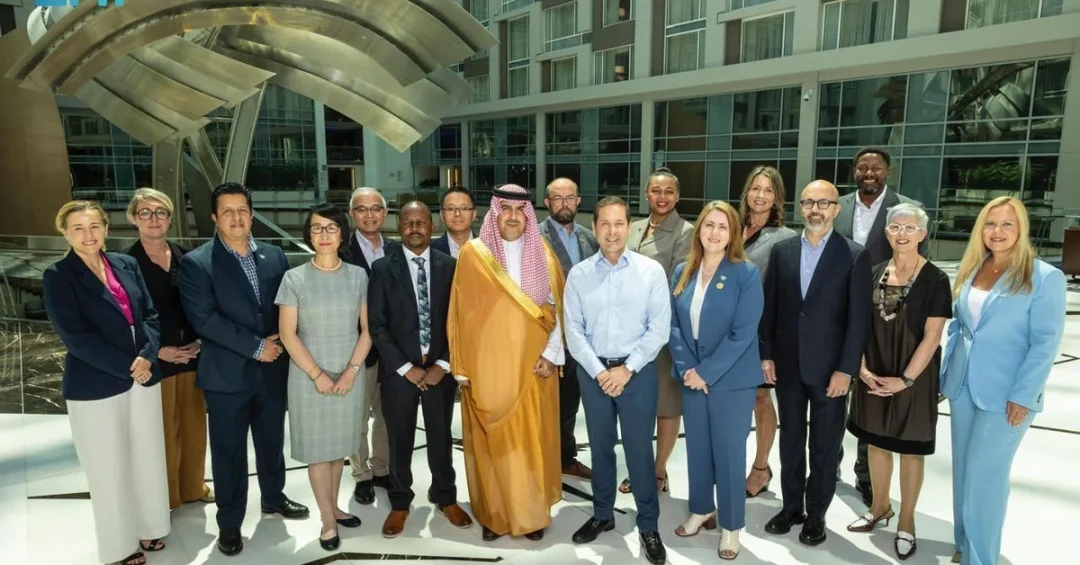
Washington, July 18, 2024 — The Institute of Internal Auditors (IIA) convened its third board of directors meeting of the 40th session, with Hussam Abdulmohsen Alangari, President of the General Court of Audit (GCA) of Saudi Arabia, in attendance. Alangari, who also serves as chairman of the board of directors of the Saudi Institute of Internal Auditors (SIIA) and is a member of the IIA board, participated alongside fellow board members in reviewing the year’s activities and deliberating on key agenda items, resulting in several recommendations and decisions. The meeting underscores Saudi Arabia’s active role in shaping global auditing standards and practices.
Context and Background
The Institute of Internal Auditors (IIA) is the internal audit profession’s most widely recognized advocate, educator, and provider of standards, guidance, and certifications. With more than 200,000 members worldwide, the IIA sets the International Standards for the Professional Practice of Internal Auditing, which are adopted by organizations in over 170 countries. The 40th session of the IIA board represents a critical period for the profession as it navigates evolving risks, technological advancements, and heightened demands for transparency and accountability.
Saudi Arabia’s General Court of Audit (GCA) is the Kingdom’s supreme audit institution, responsible for auditing government entities and ensuring the effective use of public resources. Under the leadership of President Alangari, the GCA has pursued a robust modernization agenda, aligning its practices with international best practices and contributing to the objectives of Saudi Vision 2030. The GCA’s active participation in the IIA board reflects the Kingdom’s commitment to global cooperation in enhancing public sector governance.
Key Details
During the meeting, the IIA board reviewed the highlights of the current year’s activities, covering areas such as professional development, standard-setting, and global advocacy. The board discussed a range of agenda items, leading to several recommendations and decisions aimed at strengthening the internal audit profession worldwide. While specific outcomes were not disclosed in the official statement, such meetings typically address strategic priorities, membership growth, and the implementation of new standards.
Alangari’s dual role as GCA President and SIIA chairman highlights Saudi Arabia’s integrated approach to advancing auditing standards both domestically and internationally. The Saudi Institute of Internal Auditors (SIIA) is the national affiliate of the IIA, dedicated to promoting the profession within the Kingdom through training, certification, and networking opportunities. Alangari’s presence on the IIA board ensures that Saudi perspectives and priorities are considered in global decision-making processes.
Implications and Impact
Saudi Arabia’s active engagement in the IIA board carries significant implications for the global auditing community. By contributing to the development of international standards, the Kingdom helps shape practices that enhance accountability, integrity, and efficiency across public and private sectors. This aligns with Vision 2030’s emphasis on good governance, transparency, and fighting corruption, which are essential for attracting investment and fostering sustainable economic growth.
Moreover, Alangari’s participation reinforces Saudi Arabia’s position as a leader in the region for auditing and oversight. The GCA’s modernization efforts, including the adoption of advanced technologies and data analytics, serve as a model for other nations. Through platforms like the IIA, Saudi Arabia shares its expertise and learns from international peers, contributing to a more robust global audit ecosystem.
Vision 2030 Alignment
This development directly supports Saudi Vision 2030, which aims to build a transparent, accountable, and efficient government. The GCA’s involvement in the IIA board exemplifies the Kingdom’s commitment to international cooperation and continuous improvement in public financial management. As Saudi Arabia continues its transformation, the role of strong auditing institutions will be crucial in ensuring that public resources are managed effectively and that the Kingdom remains a trusted partner in the global economy. The GCA’s leadership in the IIA also enhances Saudi Arabia’s soft power and reinforces its status as a responsible global actor.
20 Questions
Q1. What meeting did the GCA President attend?
A1. Hussam Abdulmohsen Alangari attended the third board of directors meeting of the 40th session of the Institute of Internal Auditors (IIA). The meeting took place on July 18, 2024, in Washington, D.C.
Q2. Who is Hussam Abdulmohsen Alangari?
A2. Hussam Abdulmohsen Alangari is the President of the General Court of Audit (GCA) of Saudi Arabia and chairman of the board of directors of the Saudi Institute of Internal Auditors (SIIA). He is also a member of the IIA board.
Q3. What is the Institute of Internal Auditors (IIA)?
A3. The IIA is the internal audit profession’s most widely recognized advocate, educator, and provider of standards, guidance, and certifications. It has more than 200,000 members worldwide and sets international auditing standards.
Q4. What is the General Court of Audit (GCA)?
A4. The GCA is Saudi Arabia’s supreme audit institution, responsible for auditing government entities and ensuring the effective use of public resources. It plays a key role in promoting transparency and accountability.
Q5. What is the Saudi Institute of Internal Auditors (SIIA)?
A5. The SIIA is the national affiliate of the IIA in Saudi Arabia. It promotes the internal audit profession within the Kingdom through training, certification, and networking opportunities.
Q6. What was discussed at the IIA board meeting?
A6. The board reviewed the highlights of the current year’s activities and discussed various agenda items. This led to several recommendations and decisions aimed at advancing the internal audit profession globally.
Q7. What is the significance of the 40th session?
A7. The 40th session marks a critical period for the IIA as it addresses evolving risks, technological advancements, and demands for transparency. It reflects the profession’s continuous evolution and global impact.
Q8. How does Saudi Arabia benefit from participation in the IIA?
A8. Saudi Arabia gains by shaping international auditing standards and sharing best practices. This enhances the Kingdom’s auditing profession, supports good governance, and aligns with Vision 2030 goals.
Q9. What are the IIA’s international standards?
A9. The IIA sets the International Standards for the Professional Practice of Internal Auditing. These standards are adopted by organizations in over 170 countries to ensure quality and consistency in audit practices.
Q10. How does the GCA contribute to Vision 2030?
A10. The GCA promotes transparency, accountability, and efficient use of public resources. These efforts support Vision 2030’s objectives of good governance, anti-corruption, and sustainable economic growth.
Q11. What is the role of the IIA board of directors?
A11. The IIA board provides strategic direction and oversight for the organization. It makes decisions on standards, membership, and global initiatives to advance the internal audit profession.
Q12. How many members does the IIA have?
A12. The IIA has more than 200,000 members worldwide. These members work in various sectors, including government, business, and non-profit organizations.
Q13. What are the key priorities of the IIA currently?
A13. The IIA focuses on professional development, standard-setting, and global advocacy. It also addresses emerging risks such as cybersecurity and data analytics to keep the profession relevant.
Q14. How does Alangari’s dual role benefit Saudi Arabia?
A14. As GCA President and SIIA chairman, Alangari integrates domestic and international auditing efforts. This ensures Saudi perspectives are considered in global decisions and enhances the Kingdom’s influence.
Q15. What are the implications for the global auditing community?
A15. Saudi Arabia’s engagement helps shape international standards that enhance accountability and integrity. This contributes to a more robust global audit ecosystem and promotes best practices worldwide.
Q16. How does the GCA modernize its practices?
A16. The GCA adopts advanced technologies, data analytics, and international best practices. It also invests in training and capacity building to improve audit quality and efficiency.
Q17. What is the relationship between the GCA and the SIIA?
A17. The GCA and SIIA collaborate to advance auditing standards in Saudi Arabia. The SIIA serves as the professional body, while the GCA is the supreme audit institution.
Q18. Why is international cooperation important in auditing?
A18. International cooperation allows countries to share knowledge, harmonize standards, and address global challenges. It strengthens the profession and promotes trust in financial reporting.
Q19. What recognition has the GCA received internationally?
A19. The GCA is recognized for its modernization efforts and adherence to international standards. Its active role in the IIA and other global bodies enhances its reputation.
Q20. How does this meeting reflect Saudi Arabia’s global role?
A20. Saudi Arabia’s participation in the IIA board demonstrates its commitment to global cooperation and leadership in auditing. It reinforces the Kingdom’s position as a responsible international actor.
Reader Feedback
We value your thoughts. Please share your feedback on this article.
Your feedback helps us improve our coverage.