


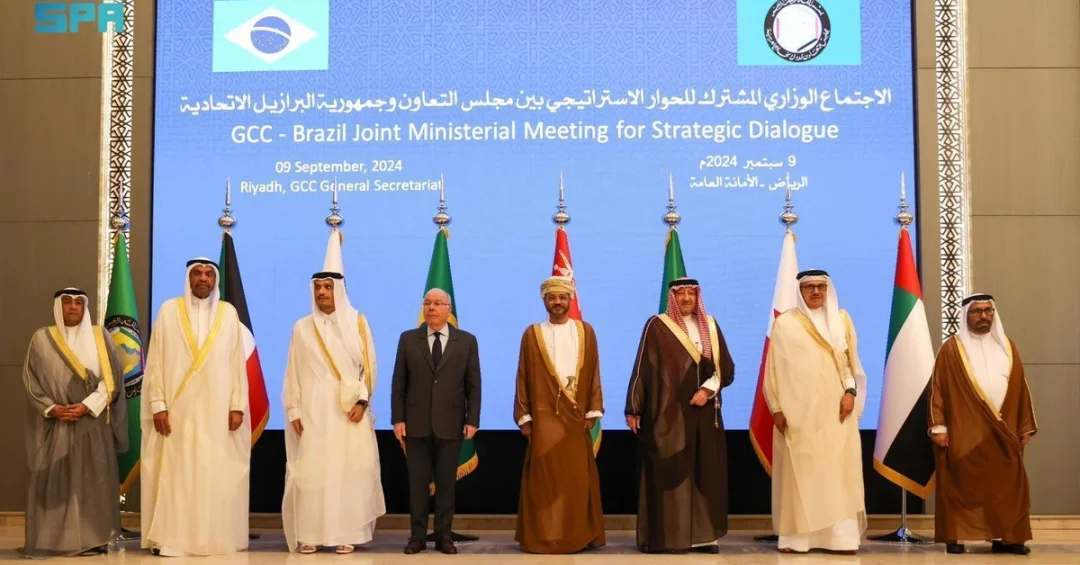
Deputizing for Minister of Foreign Affairs Prince Faisal bin Farhan bin Abdullah, Vice Minister of Foreign Affairs Eng. Waleed El-Khereiji participated in the GCC-Republic of Brazil Joint Ministerial Meeting held in Riyadh on September 10, 2024. The meeting, announced via the Saudi Press Agency, focused on enhancing relations between the Gulf Cooperation Council (GCC) states and Brazil and exploring avenues to strengthen cooperation across various sectors.
Context and Background
The GCC-Brazil Joint Ministerial Meeting is part of ongoing efforts to deepen dialogue and partnership between the Gulf region and Latin America’s largest economy. Brazil has long been a key trading partner for GCC countries, with bilateral trade spanning energy, agriculture, and technology. This meeting builds on previous engagements aimed at fostering mutual prosperity and addressing shared global challenges. Saudi Arabia, as a leading GCC member, plays a pivotal role in facilitating such dialogues, reflecting its commitment to multilateral diplomacy and economic diversification under Vision 2030.
Key Details
During the meeting, participants discussed a range of topics including trade, investment, energy cooperation, and cultural exchange. Vice Minister El-Khereiji emphasized the importance of strategic partnerships in achieving sustainable development goals. The discussions also touched on regional security and stability, with a focus on peaceful resolution of conflicts. No specific agreements were announced, but the parties expressed commitment to continued dialogue and collaboration. The GCC delegation included representatives from all member states, underscoring a unified approach to international engagement.
Implications and Impact
This meeting signals strengthening ties between the GCC and Brazil, potentially leading to increased trade and investment flows. For Saudi Arabia, it aligns with efforts to diversify economic partnerships beyond traditional allies. Enhanced cooperation could open new markets for Saudi non-oil exports and foster knowledge transfer in areas like renewable energy and agriculture. Regionally, it reinforces the GCC’s role as a collective diplomatic actor. Internationally, it contributes to South-South cooperation and balanced global relations.
Vision 2030 Alignment
Saudi Arabia’s participation in the GCC-Brazil meeting directly supports Vision 2030 objectives of economic diversification and global engagement. By fostering international partnerships, the Kingdom aims to attract foreign investment, boost non-oil GDP, and position itself as a hub for trade and diplomacy. This aligns with the vision’s emphasis on a vibrant society, a thriving economy, and an ambitious nation. Such diplomatic efforts enhance Saudi Arabia’s global standing and contribute to a more interconnected and prosperous world.
20 Questions
Q1. What was the purpose of the GCC-Brazil Joint Ministerial Meeting?
A1. The meeting aimed to discuss and strengthen relations and cooperation between the Gulf Cooperation Council countries and Brazil, covering areas like trade, investment, and cultural exchange.
Q2. Who represented Saudi Arabia at the meeting?
A2. Vice Minister of Foreign Affairs Eng. Waleed El-Khereiji represented Saudi Arabia, deputizing for Minister of Foreign Affairs Prince Faisal bin Farhan bin Abdullah.
Q3. When and where did the meeting take place?
A3. The meeting was held in Riyadh on September 10, 2024, as reported by the Saudi Press Agency.
Q4. What is the significance of GCC-Brazil relations?
A4. Brazil is a major economic partner for the GCC, and enhanced ties promote trade, investment, and mutual development, contributing to global economic stability.
Q5. Did the meeting result in any agreements?
A5. No specific agreements were announced, but the parties committed to continued dialogue and collaboration to strengthen cooperation.
Q6. How does this meeting align with Saudi Vision 2030?
A6. It supports economic diversification and international engagement, key pillars of Vision 2030, by fostering partnerships that attract investment and boost non-oil sectors.
Q7. What topics were discussed at the meeting?
A7. Discussions covered trade, investment, energy cooperation, cultural exchange, and regional security, with a focus on sustainable development and peaceful conflict resolution.
Q8. Which countries are part of the GCC?
A8. The GCC includes Saudi Arabia, UAE, Qatar, Kuwait, Bahrain, and Oman, working together on political and economic coordination.
Q9. How does this meeting benefit Saudi Arabia economically?
A9. It opens opportunities for increased trade and investment, diversifies economic partnerships, and supports the growth of non-oil exports and knowledge transfer.
Q10. What role does Saudi Arabia play in the GCC?
A10. As a founding member and largest economy, Saudi Arabia plays a leading role in shaping GCC policies and promoting regional cooperation.
Q11. What are the key areas of cooperation between GCC and Brazil?
A11. Key areas include energy, agriculture, technology, trade, and investment, with potential for collaboration in renewable energy and food security.
Q12. How often do GCC-Brazil ministerial meetings occur?
A12. These meetings are held periodically to review bilateral relations and set priorities for future cooperation, though the frequency may vary based on mutual agreement.
Q13. What is the expected impact on regional stability?
A13. Enhanced cooperation promotes economic interdependence and dialogue, contributing to stability and peaceful resolution of regional issues.
Q14. Who else attended the meeting from the GCC side?
A14. Representatives from all GCC member states attended, demonstrating a unified approach to international engagement.
Q15. How does this meeting reflect Saudi diplomacy?
A15. It showcases Saudi Arabia’s commitment to multilateral diplomacy, bridge-building, and proactive global engagement under its leadership.
Q16. What are the future prospects for GCC-Brazil relations?
A16. Prospects include expanded trade, investment, and cultural ties, with potential for strategic partnerships in various sectors.
Q17. Did the meeting address global challenges?
A17. Yes, discussions likely included global issues like climate change, food security, and energy transition, aligning with shared interests.
Q18. How does Brazil benefit from this partnership?
A18. Brazil gains access to GCC markets, investment opportunities, and cooperation in technology and energy, boosting its economy.
Q19. What is the role of the Saudi Press Agency in this context?
A19. SPA serves as the official news outlet, disseminating accurate information about Saudi government activities and diplomatic engagements.
Q20. What message does this meeting send to the international community?
A20. It signals the GCC’s openness to global partnerships and Saudi Arabia’s active role in fostering international cooperation for mutual prosperity.
Reader Feedback
We value your thoughts. Please share your feedback on this article.
Your feedback helps us improve our coverage.