


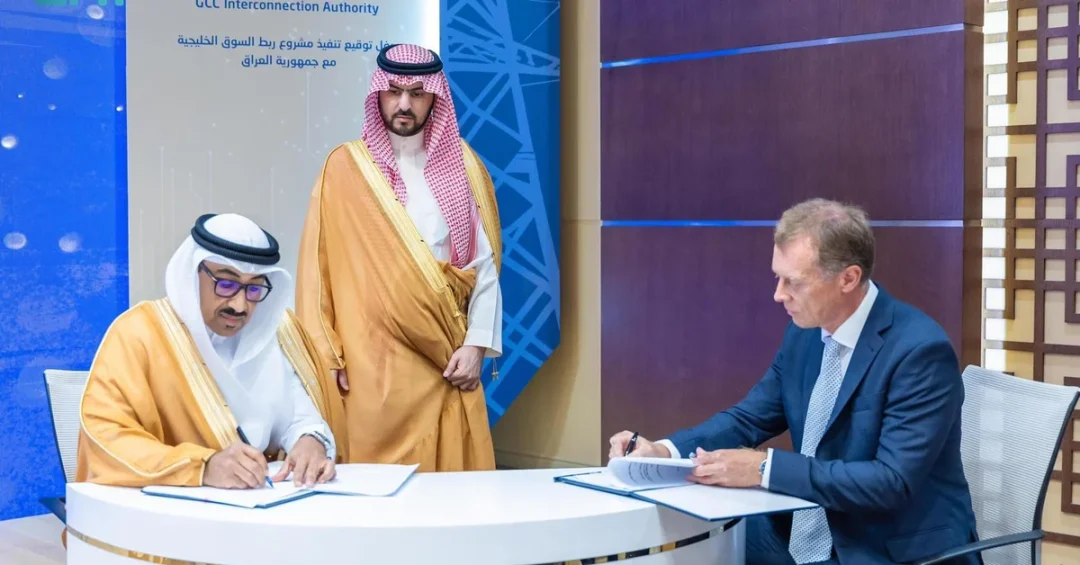
Dammam, October 9, 2024 — Under the patronage of Prince Saud bin Bandar bin Abdulaziz, Deputy Governor of the Eastern Region, a contract was signed today to connect the Gulf electricity market with Iraq, marking a significant step in regional energy cooperation. The agreement, overseen by the Deputy Governor, aims to enhance electricity interconnection between the GCC and Iraq, ensuring sustainable power supply and strengthening grid stability. The project is part of broader efforts to improve efficiency and flexibility in electricity systems, utilizing advanced technologies to protect against cyber threats and support the transition to clean energy.
Context and Background
The Gulf Cooperation Council Interconnection Authority (GCCIA) has been a cornerstone of regional energy infrastructure since its launch in 2009. Approved by the leaders of the Kingdom and GCC countries, the GCC Electrical Interconnection project has provided uninterrupted electricity flow across member states, extending over 1,000 kilometers from Kuwait to Oman. This initiative has been instrumental in providing immediate support during emergencies, transferring needed power through the interconnected network, and has dealt with more than 2,800 cases requiring support, including over 50 involving renewable energy production.
Key Details
Eng. Ahmed Al-Ebrahim, CEO of GCCIA, highlighted the project’s achievements, noting that it has saved approximately $3.6 billion, with investment and operating costs totaling about $1.5 billion since its establishment. The new contract with Iraq is expected to enhance energy security and enable GCC countries to supply Iraq with about 3.94 terawatt-hours per year by 2025, at prices lower than local production costs, helping Iraq reduce public spending. Eng. Saleh Al-Omari, CEO of the Gulf Laboratory, noted that under the direct supervision of the Saudi Ministry of Energy, the laboratory has built one of the world’s largest and most advanced energy laboratories in Dammam’s third Industrial City, with an investment exceeding SAR1.1 billion. The laboratory conducts testing, consulting, inspection, research and development, and international-level training, having trained over 11,000 people in more than 130 international professional certificates and established partnerships with major manufacturers, service providers, universities, and research institutes.
Implications and Impact
The connection between the Gulf electricity market and Iraq is set to have far-reaching implications for regional energy security and economic stability. By integrating Iraq into the GCC grid, the project will help stabilize Iraq’s electricity supply, reduce its reliance on costly traditional energy sources, and optimize resource utilization. This collaboration underscores the GCC’s commitment to fostering regional cooperation and supporting neighboring countries in achieving energy sustainability. Furthermore, the upgrade of control center systems aims to improve the efficiency and flexibility of electricity systems, ensuring continuous, safe, and efficient operations while keeping pace with global transitions toward clean energy.
Vision 2030 Alignment
This project aligns with Saudi Arabia’s Vision 2030, which seeks to diversify the economy, enhance international cooperation, and promote sustainable development. By strengthening energy links with Iraq, the Kingdom reinforces its role as a regional leader in energy security and infrastructure development. The initiative also supports the Vision’s goal of transitioning to clean energy and adopting advanced technologies, contributing to a more stable and prosperous region. As the GCCIA continues to expand its network, Saudi Arabia remains at the forefront of driving regional integration and economic growth.
20 Questions
Q1. What was the significance of the contract signed in Dammam on October 9, 2024?
A1. The contract signed in Dammam aimed to connect the Gulf electricity market with Iraq, enhancing regional energy cooperation and ensuring sustainable power supply.
Q2. Who oversaw the signing of the GCC-Iraq electricity interconnection contract?
A2. Prince Saud bin Bandar bin Abdulaziz, Deputy Governor of the Eastern Region, oversaw the signing of the contract.
Q3. What is the GCCIA and when was it launched?
A3. The GCCIA is the Gulf Cooperation Council Interconnection Authority, launched in 2009 to link the electricity grids of GCC countries.
Q4. How long is the GCC interconnection network?
A4. The network extends over 1,000 kilometers from Kuwait to Oman, facilitating electricity transfer among member states.
Q5. What benefits has the GCC interconnection project provided?
A5. It has provided uninterrupted electricity flow, support during emergencies, and saved approximately $3.6 billion.
Q6. How many cases has the GCCIA dealt with since operations began?
A6. The GCCIA has dealt with more than 2,800 cases requiring support, including over 50 involving renewable energy.
Q7. What is the expected impact of the Iraq connection?
A7. It will supply Iraq with about 3.94 terawatt-hours per year by 2025, reducing its public spending and enhancing energy security.
Q8. What did Eng. Ahmed Al-Ebrahim say about the project?
A8. He highlighted the project’s role in energy security and its contribution to saving costs and supporting Iraq.
Q9. What is the Gulf Laboratory and what does it do?
A9. The Gulf Laboratory, supervised by the Saudi Ministry of Energy, conducts testing, consulting, research, and training in energy fields.
Q10. How much was invested in the Gulf Laboratory?
A10. More than SAR1.1 billion was invested in building the laboratory in Dammam’s third Industrial City.
Q11. How many people has the Gulf Laboratory trained?
A11. It has trained over 11,000 people in more than 130 international professional certificates.
Q12. What are the objectives of upgrading control center systems?
A12. The upgrade aims to improve efficiency, flexibility, and cyber protection, ensuring stable and secure electricity operations.
Q13. How does the project align with clean energy transitions?
A13. It adopts advanced technologies and supports the integration of renewable energy, aligning with global clean energy trends.
Q14. What are the financial benefits of the GCC interconnection?
A14. It has saved about $3.6 billion, with investment and operating costs of approximately $1.5 billion.
Q15. How will Iraq benefit from the connection?
A15. Iraq will receive lower-cost electricity, reducing reliance on costly traditional sources and easing public spending.
Q16. What role does the Saudi Ministry of Energy play?
A16. It directly supervises the Gulf Laboratory, ensuring high standards in testing, research, and training.
Q17. What partnerships has the Gulf Laboratory established?
A17. It has partnered with major manufacturers, service providers, universities, and research institutes locally and globally.
Q18. How does the project contribute to regional stability?
A18. By enhancing energy security and cooperation, it fosters economic stability and integration among GCC countries and Iraq.
Q19. What is the expected timeline for supplying electricity to Iraq?
A19. The project aims to supply Iraq with 3.94 terawatt-hours per year by 2025.
Q20. How does this project align with Saudi Vision 2030?
A20. It supports economic diversification, international cooperation, and sustainable development, key pillars of Vision 2030.
Reader Feedback
We value your thoughts. Please share your feedback on this article.
Your feedback helps us improve our coverage.
Related articles
 KSrelief Distributes 490 Food Baskets in Kyrgyzstan
 Makkah Mayor Discusses Municipal Cooperation with Singapore
 KSrelief Distributes Food Baskets in Taiz and Aden, Yemen
 KSrelief Distributes 120 Food Baskets in Yemen
 SPL Issues Commemorative Stamp for World Post Day 2024
 Prince Turki bin Mohammed Receives Moroccan Ambassador