


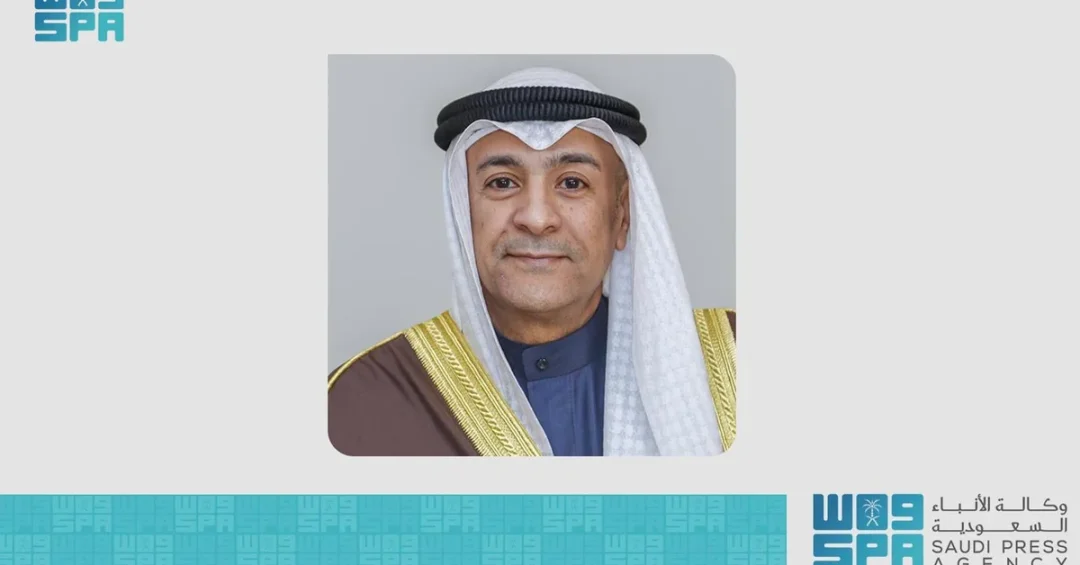
Secretary General of the Gulf Cooperation Council (GCC) Jasem Albudaiwi met with the Ambassador of the Republic of India to the Kingdom of Saudi Arabia, Dr. Suhel Ajaz Khan, in Riyadh on November 17, 2024, to discuss the future of GCC-Indian relations and explore new avenues for cooperation across a wide range of fields. The meeting, reported by the Saudi Press Agency (SPA), underscored the enduring partnership between the six-member Gulf bloc and India, one of the world’s fastest-growing major economies and a longstanding friend of the region. Both officials exchanged views on topics of mutual interest and examined practical steps to strengthen coordination, reflecting a shared commitment to deepening ties that serve the aspirations of their peoples.
The encounter comes at a time when the GCC and India are actively working to finalize a free trade agreement (FTA) that is expected to significantly boost trade and investment flows. It also follows a series of high-level visits and dialogues that have intensified in recent years, including the landmark visit of Indian Prime Minister Narendra Modi to Saudi Arabia in 2019 and the subsequent establishment of the Strategic Partnership Council. As the Gulf region continues to diversify its economies under ambitious national visions, India’s role as a key partner in energy, technology, and human capital is becoming increasingly vital. The Riyadh meeting thus represents another milestone in a relationship that is both historically rooted and forward-looking.
Context and Background
What makes the GCC-India relationship so resilient in a rapidly changing world? The answer lies in a combination of historical ties, economic complementarity, and shared strategic interests. The Gulf Cooperation Council, established in 1981, comprises Saudi Arabia, the United Arab Emirates, Qatar, Kuwait, Bahrain, and Oman. Together, they form a powerful economic bloc that accounts for a significant share of global energy exports and sits at the crossroads of major trade routes. India, with its 1.4 billion people and a rapidly expanding economy, has been a natural partner for the Gulf since ancient times, when merchants sailed between Indian ports and Arabian Peninsula harbors. In the modern era, this relationship has evolved into a multifaceted partnership spanning energy, trade, investment, security, and culture.
Over the past decade, political and economic engagement has accelerated. The GCC and India held their first joint ministerial meeting in 2022, and negotiations for a free trade agreement have made steady progress. Indian Prime Minister Narendra Modi’s visit to Riyadh in October 2019 resulted in the creation of the Strategic Partnership Council, a high-level framework to coordinate policies on trade, investment, energy, and security. In 2023, Saudi Crown Prince Mohammed bin Salman met with Prime Minister Modi on the sidelines of the G20 Summit in New Delhi, further cementing ties. The meeting between Albudaiwi and Ambassador Khan is a continuation of this momentum, providing an opportunity to review progress and set priorities for the coming months.
The timing is also significant given the shifting global energy landscape. As the world transitions toward cleaner sources of energy, Gulf producers are seeking to secure long-term markets in Asia, particularly in India, where energy demand continues to rise. At the same time, India is looking to attract investment from the Gulf to support its infrastructure and manufacturing goals. The two sides are also exploring cooperation in new areas such as renewable energy, digital technology, and food security, which are central to their respective development agendas.
Key Details of the Meeting
During the meeting, Secretary General Albudaiwi highlighted the rich historical ties between the GCC countries and India, emphasizing the need to strengthen collaboration to fulfill the ambitions of their citizens. He noted that the GCC-India relationship is built on mutual respect and shared values, and that both sides are committed to expanding cooperation in trade, investment, energy, technology, and people-to-people exchanges. Ambassador Khan, in turn, reaffirmed India’s commitment to deepening its engagement with the GCC and expressed appreciation for the bloc’s role in promoting regional stability and prosperity.
The two officials exchanged views on a range of regional and international issues of mutual interest, including the security situation in the Middle East, the importance of maritime security, and the need for enhanced coordination in multilateral forums. They also discussed ways to facilitate the movement of goods, capital, and people between the GCC and India, which is essential for unlocking the full potential of their economic partnership. The meeting concluded with a mutual commitment to maintain regular consultations and to work toward concrete outcomes in the near future.
While the SPA report did not disclose specific agreements or announcements, the discussions are part of a broader diplomatic effort to finalize the GCC-India FTA. Once completed, the agreement is expected to lower tariffs, reduce trade barriers, and create new opportunities for businesses on both sides. It would also complement India’s ‘Look West’ policy and the GCC’s outreach to Asia, reinforcing the trend of interregional cooperation.
International and Regional Impact
How does the GCC-India partnership shape the broader geopolitical landscape? For one, it contributes to stability and prosperity in the Indian Ocean region, a vital corridor for global trade and energy. By strengthening economic ties, the GCC and India are building a network of interdependence that discourages conflict and promotes dialogue. This is particularly important at a time when major powers are competing for influence in the Indo-Pacific. The GCC’s engagement with India also complements its relations with other Asian giants such as China and Japan, positioning the bloc as a hub for trade and investment between East and West.
Moreover, the partnership has implications for global energy security. India is the world’s third-largest oil consumer and a major importer of liquefied natural gas (LNG). The GCC countries, led by Saudi Arabia, are reliable suppliers that have consistently met India’s energy needs. As India’s demand grows, Gulf producers are investing in upstream and downstream projects to secure their market share. In turn, India is exploring opportunities to invest in Gulf refineries and petrochemical plants, creating a two-way flow of investment that strengthens economic resilience.
On the diplomatic front, the GCC and India share an interest in combating terrorism, extremism, and piracy. They have cooperated on maritime security and defense, with joint naval exercises and information sharing. The Riyadh meeting likely touched on these issues, as both sides recognize that a secure environment is essential for economic development. The GCC’s collective approach to foreign policy, coordinated through its Secretariat in Riyadh, gives it a unified voice that India values in its engagements with the region.
Economic and Strategic Significance
Why is the GCC-India economic relationship so important for both sides? The numbers tell a compelling story. Bilateral trade between the GCC and India exceeded $150 billion in 2022-23, making the GCC one of India’s largest trading partners. Indian expatriates in the Gulf send billions of dollars in remittances back home each year, supporting families and communities across India. Conversely, Gulf investment in India has been rising, with sovereign wealth funds from Saudi Arabia, the UAE, and Qatar investing in Indian infrastructure, technology, and renewable energy. The proposed FTA would further accelerate these flows by providing a predictable and transparent framework for trade and investment.
For Saudi Arabia, the meeting aligns with its Vision 2030 goals of diversifying the economy and expanding non-oil trade. India is a key partner in this endeavor, offering a large market for Saudi non-oil exports such as petrochemicals, plastics, and metals. Saudi Arabia is also seeking Indian investment in its mega-projects, including NEOM and the Red Sea Project, which are designed to transform the Kingdom into a global hub for tourism, technology, and logistics. By strengthening ties with India, Saudi Arabia not only boosts its own economy but also contributes to the stability and prosperity of the wider region.
From India’s perspective, the GCC is a vital source of energy, a major destination for its workforce, and a growing source of investment. The Indian government’s ‘Look West’ policy, which focuses on deepening ties with the Gulf and the wider Middle East, reflects the strategic importance it attaches to the region. The meeting between Albudaiwi and Khan is a testament to the regular diplomatic consultations that underpin this relationship, ensuring that both sides remain aligned on key issues.
Vision 2030 Alignment
How does the GCC-India partnership fit into Saudi Arabia’s Vision 2030? Vision 2030, launched in 2016 under the leadership of Crown Prince Mohammed bin Salman, aims to transform the Kingdom’s economy and society by reducing dependence on oil, diversifying revenue streams, and creating a vibrant private sector. International partnerships are central to this vision, and India is a priority partner given its economic size, demographic dividend, and historical ties. The meeting between the GCC Secretary General and the Indian Ambassador is a concrete example of the diplomatic engagement that supports Vision 2030’s objectives, particularly in areas such as trade, investment, and cultural exchange.
Looking ahead, the GCC and India are poised to elevate their relationship to new heights. The completion of the FTA would be a landmark achievement, unlocking new opportunities for businesses and investors. Cooperation in renewable energy, digital innovation, and healthcare is also expected to expand, as both sides seek to build resilient and sustainable economies. For Saudi Arabia, these developments reinforce its role as a leader in the region and a bridge between Asia and the world. The Riyadh meeting thus represents not just a diplomatic courtesy but a strategic step toward a shared future of prosperity and stability.
20 Questions
Q1. Who met in Riyadh on November 17, 2024?
A1. Secretary General of the Gulf Cooperation Council Jasem Albudaiwi met with Dr. Suhel Ajaz Khan, the Ambassador of India to Saudi Arabia, to discuss GCC-Indian relations and cooperation.
Q2. What was the main purpose of the meeting?
A2. The meeting aimed to enhance cooperation between the GCC and India across various fields, exchange views on mutual interests, and explore ways to strengthen coordination.
Q3. Which organization does Jasem Albudaiwi lead?
A3. Jasem Albudaiwi is the Secretary General of the Gulf Cooperation Council, a regional bloc comprising Saudi Arabia, UAE, Qatar, Kuwait, Bahrain, and Oman.
Q4. Who is Dr. Suhel Ajaz Khan?
A4. Dr. Suhel Ajaz Khan is the Ambassador of the Republic of India to the Kingdom of Saudi Arabia, representing India’s interests in the Kingdom.
Q5. What did Albudaiwi highlight during the meeting?
A5. He highlighted the rich historical ties between the GCC countries and India, emphasizing the need to strengthen collaboration to fulfill the ambitions of their citizens.
Q6. What topics did the two sides exchange views on?
A6. They exchanged views on topics of mutual interest and explored ways to strengthen coordination in various fields, including trade, investment, and regional issues.
Q7. Why is the GCC-India relationship important?
A7. The relationship is important due to historical ties, economic complementarity, and shared strategic interests, with bilateral trade exceeding $150 billion and strong people-to-people links.
Q8. What is the status of the GCC-India free trade agreement?
A8. The GCC and India are actively negotiating a free trade agreement, which is expected to boost trade and investment flows once finalized, though no specific timeline has been announced.
Q9. How does this meeting align with Saudi Vision 2030?
A9. It supports Vision 2030 by promoting international partnerships, diversifying the economy, and expanding non-oil trade, with India as a key partner in these efforts.
Q10. What role does India play in the Gulf’s energy security?
A10. India is a major importer of oil and gas from the Gulf, providing a stable market for Gulf energy exports and contributing to global energy security.
Q11. How many Indian expatriates live in the GCC countries?
A11. Millions of Indian expatriates live and work in the GCC, contributing to the region’s economy and sending significant remittances back to India.
Q12. What is the Strategic Partnership Council?
A12. The Strategic Partnership Council is a high-level framework established during Prime Minister Modi’s 2019 visit to Saudi Arabia to coordinate policies on trade, investment, energy, and security.
Q13. What are the key areas of GCC-India cooperation?
A13. Key areas include trade, investment, energy, technology, security, and people-to-people exchanges, with new opportunities in renewable energy and digital innovation.
Q14. How does the GCC benefit from ties with India?
A14. The GCC benefits from access to India’s large market, investment opportunities, and a skilled workforce, as well as enhanced regional stability through shared security interests.
Q15. What is India’s ‘Look West’ policy?
A15. India’s ‘Look West’ policy focuses on deepening ties with the Gulf and the wider Middle East, recognizing the region’s strategic importance for energy, trade, and investment.
Q16. What did the SPA report say about the meeting?
A16. The Saudi Press Agency reported that the two officials discussed GCC-Indian relations, exchanged views on mutual interests, and explored ways to strengthen coordination.
Q17. When and where did the meeting take place?
A17. The meeting took place in Riyadh, the capital of Saudi Arabia, on November 17, 2024, as reported by the Saudi Press Agency.
Q18. What are the implications of this meeting for regional stability?
A18. The meeting reinforces economic interdependence and diplomatic dialogue, which contribute to stability and prosperity in the Indian Ocean region and beyond.
Q19. How does Saudi Arabia’s leadership contribute to GCC-India relations?
A19. Saudi Arabia, as a leading GCC member, plays a pivotal role in fostering ties with India through high-level visits, strategic agreements, and support for collective GCC engagement.
Q20. What can we expect next in GCC-India relations?
A20. Further high-level consultations, progress on the free trade agreement, and expanded cooperation in renewable energy, technology, and healthcare are expected in the coming months.
Reader Feedback
We value your thoughts. Please share your feedback on this article.
Your feedback helps us improve our coverage.
Related articles
 KSrelief Distributes 300 Winter Vouchers in Lebanon’s Akkar
 Saudi Defense Minister Meets French Armed Forces Minister
 FOMEX 2025 Strengthens Saudi Media’s Global Reach
 Civil Defense Hosts 25th International Firefighters Conference in Riyadh
 KSrelief Distributes 666 Food Baskets, Hygiene Kits in Syria
 KSrelief Distributes 2,080 Shelter Aid Packages in Somalia