


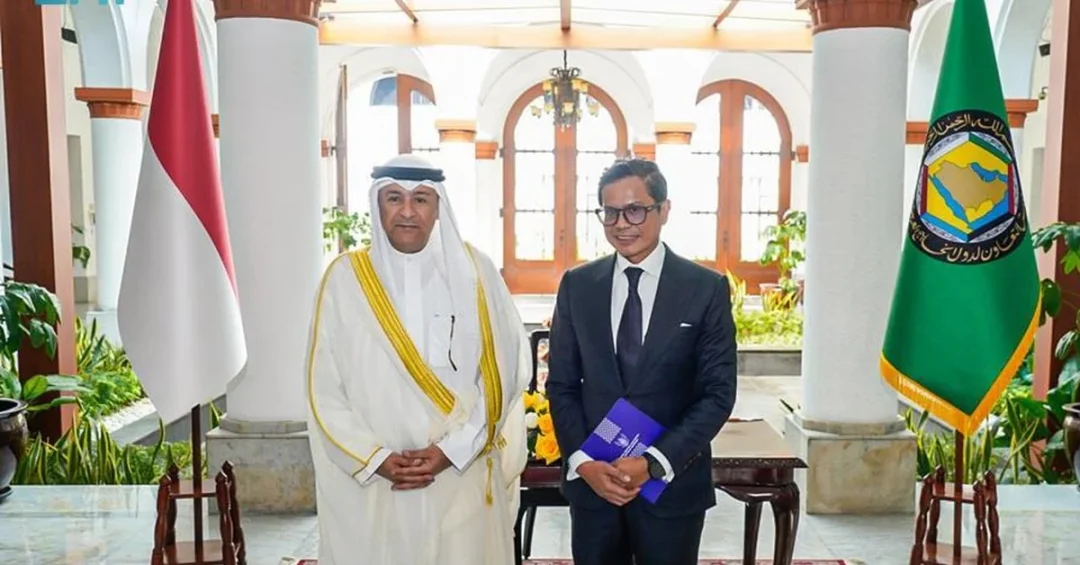
Jasem Albudaiwi, Secretary-General of the Gulf Cooperation Council (GCC), met with Pahala Nugraha Mansury, Vice Minister for Foreign Affairs of the Republic of Indonesia, in Jakarta on July 31, 2024. The meeting, reported by the Saudi Press Agency (SPA), focused on strengthening bilateral ties and reviewing progress under the joint action plan between the GCC and Indonesia.
Context and Background
The Gulf Cooperation Council, a regional political and economic alliance comprising six Gulf states including Saudi Arabia, has prioritized expanding partnerships with Southeast Asian nations. Indonesia, as the world’s largest Muslim-majority country and a key member of ASEAN, represents a strategic partner for the GCC in fostering economic diversification and cultural exchange. The meeting in Jakarta builds on a framework of cooperation outlined in the joint action plan covering 2020 to 2024, which aims to enhance trade, investment, and diplomatic coordination between the two blocs.
Key Details
During the discussions, Albudaiwi and Mansury explored areas of mutual interest, including trade and investment opportunities. Albudaiwi emphasized the strong historical and cultural links between GCC nations and Indonesia, stating that these connections are vital for coordinating efforts to achieve common goals. The meeting also addressed regional political and security developments, reflecting a shared commitment to stability in the Middle East and Southeast Asia. Notably, Albudaiwi highlighted the importance of the joint action plan as a roadmap for deepening cooperation in sectors such as energy, technology, and education.
International Impact
The GCC-Indonesia dialogue signals a broader trend of engagement between Gulf states and Asian powers, aligning with Saudi Arabia’s Vision 2030 objectives of diversifying international partnerships. By strengthening ties with Indonesia, the GCC aims to facilitate increased trade flows, joint ventures, and cultural diplomacy. The meeting also underscored the role of Saudi Arabia as a leader within the GCC in promoting regional stability through multilateral dialogue. This engagement is expected to enhance cooperation on global issues such as climate change, sustainable development, and counterterrorism.
Vision 2030 Alignment
The meeting between GCC and Indonesian officials demonstrates the ongoing efforts to build bridges with key global partners, a cornerstone of Saudi Arabia’s Vision 2030 reform agenda. By fostering closer relations with Indonesia, Saudi Arabia supports its goal of becoming a dynamic hub for trade and innovation, while also promoting peace and security across regions. As the joint action plan progresses, such diplomatic exchanges are set to strengthen economic resilience and cultural ties, contributing to a more integrated and prosperous future for both the Gulf and Southeast Asia.
20 Questions
Q1. Who met with the Indonesian Vice Foreign Minister?
A1. Jasem Albudaiwi, the Secretary-General of the Gulf Cooperation Council (GCC), met with Vice Minister Pahala Nugraha Mansury in Jakarta.
Q2. When did the meeting take place?
A2. The meeting occurred on July 31, 2024, in Jakarta, Indonesia, as reported by the Saudi Press Agency.
Q3. What was the main purpose of the meeting?
A3. The main purpose was to discuss ways to develop and strengthen cooperation between the GCC and Indonesia across various sectors.
Q4. What framework did they review?
A4. They reviewed the joint action plan between the GCC and Indonesia covering the period from 2020 to 2024.
Q5. What topics were discussed in the meeting?
A5. Topics included areas of cooperation, regional political and security developments, and issues of common interest.
Q6. What did Albudaiwi emphasize regarding GCC-Indonesia links?
A6. He emphasized the numerous connections and relationships linking GCC countries and Indonesia, which help coordinate efforts to enhance cooperation.
Q7. Why is Indonesia a strategic partner for the GCC?
A7. Indonesia is the world’s largest Muslim-majority country and a key ASEAN member, making it a strategic partner for economic and diplomatic ties.
Q8. How does this meeting relate to Saudi Arabia’s Vision 2030?
A8. It aligns with Vision 2030’s goal of diversifying international partnerships and enhancing Saudi Arabia’s global role through multilateral dialogue.
Q9. What sectors could benefit from GCC-Indonesia cooperation?
A9. Sectors such as energy, trade, investment, technology, and education are expected to benefit from enhanced cooperation.
A10. The joint action plan provides a roadmap for deepening cooperation and achieving common interests between the two sides.
Q10. What role does the joint action plan play?
Q11. How does the meeting impact regional stability?
A11. By discussing security developments, the meeting contributes to promoting stability in the Middle East and Southeast Asia through diplomatic coordination.
Q12. What is the GCC’s broader strategy in Asia?
A12. The GCC seeks to strengthen ties with Asian powers like Indonesia to foster economic diversification and cultural exchange as part of its global engagement.
Q13. Was the meeting reported by official sources?
A13. Yes, the meeting was reported by the Saudi Press Agency (SPA), an official Saudi news authority.
Q14. What is the significance of the meeting location?
A14. Holding the meeting in Jakarta signals Indonesia’s importance as a partner and facilitates direct dialogue on bilateral issues.
Q15. How might this affect trade between GCC and Indonesia?
A15. The meeting could lead to increased trade flows and joint ventures, benefiting both economies through expanded market access.
Q16. What global issues did they address?
A16. They addressed issues of common interest, which may include climate change, sustainable development, and counterterrorism efforts.
Q17. How does Saudi Arabia lead within the GCC?
A17. Saudi Arabia often initiates such diplomatic engagements, promoting stability and economic cooperation as a key GCC member.
Q18. What is the expected outcome of this meeting?
A18. Expected outcomes include strengthened bilateral ties, progress on the joint action plan, and enhanced coordination on regional matters.
Q19. Is there a timeline for further cooperation?
A19. The joint action plan (2020-2024) provides a timeline, with ongoing efforts to extend or renew cooperation after its conclusion.
Q20. How does this reflect on Saudi Arabia’s global role?
A20. It reflects Saudi Arabia’s proactive role in fostering international partnerships, supporting Vision 2030’s goals of economic diversification and global leadership.
Reader Feedback
We value your thoughts. Please share your feedback on this article.
Your feedback helps us improve our coverage.