


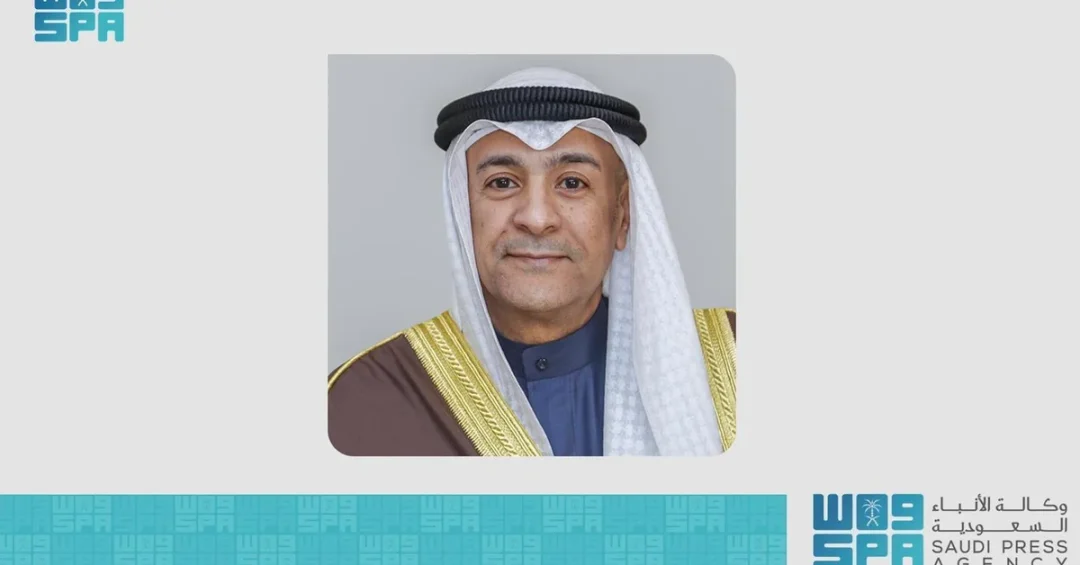
Gulf Cooperation Council Secretary-General Jassim Mohammed Albudaiwi received Egypt’s Ambassador-designate to Saudi Arabia, Ihab Abu Sriea, and Malta’s Ambassador to Saudi Arabia, Clive Aquilina Spagnol, in separate meetings in Riyadh on March 13, 2025, according to the Saudi Press Agency. The audiences, held at the GCC General Secretariat headquarters in the Saudi capital, underscored the Kingdom’s central role as a diplomatic hub where regional and international partnerships are strengthened through direct, high-level engagement. During the meeting with the Egyptian ambassador-designate, Albudaiwi congratulated Abu Sriea on his appointment and wished him success in his new duties, reflecting the close and enduring ties between the GCC and Egypt.
The separate meeting with the Maltese ambassador focused on reviewing relations between the GCC and Malta, with both diplomats emphasizing the importance of further developing cooperation across various fields on the basis of the 2017 Memorandum of Understanding between the two sides. The discussions also covered an exchange of views on regional and international developments as well as political issues of mutual interest. The timing of these meetings, just ahead of the holy month of Ramadan, highlights the continuous nature of Saudi-led diplomacy and the Kingdom’s commitment to maintaining open channels of communication with partners across the Arab world and Europe. Why does sustained, face-to-face diplomacy remain indispensable in an era of digital communication? The answer lies in the trust and nuance that only direct dialogue can build.
Context and Background
The Gulf Cooperation Council, headquartered in Riyadh, was established in 1981 and brings together six Arab monarchies: Saudi Arabia, the United Arab Emirates, Qatar, Kuwait, Bahrain, and Oman. As the Secretary-General, Jassim Mohammed Albudaiwi serves as the chief executive of the bloc, which has evolved from a regional security framework into a comprehensive political and economic union. His meetings with foreign ambassadors are a routine yet significant part of the GCC’s diplomatic calendar, signaling the organization’s openness to international engagement and its role as a platform for collective regional action. Saudi Arabia, as the host country and the largest GCC member, plays a pivotal role in facilitating these interactions.
Egypt’s relationship with the GCC is deeply rooted in shared history, culture, and strategic interests. Cairo has long been a key partner for the Gulf states, providing political and military weight in the region, while Gulf nations have offered economic support and investment. The appointment of Ihab Abu Sriea as Egypt’s ambassador-designate to Saudi Arabia comes at a time when both sides are working to deepen coordination on issues ranging from economic diversification to regional security. The meeting between Albudaiwi and Abu Sriea therefore serves as an early opportunity to align priorities and reaffirm the mutual commitment to stability and prosperity.
Malta, though geographically distant, has cultivated a productive relationship with the GCC, particularly since the signing of the 2017 Memorandum of Understanding. That agreement established a framework for political dialogue, economic cooperation, and cultural exchange. As a member of the European Union and a Mediterranean state, Malta offers the GCC a valuable bridge to Europe, while the GCC provides Malta with access to one of the world’s most dynamic economic regions. The meeting between Albudaiwi and Maltese Ambassador Clive Aquilina Spagnol thus reflects the GCC’s strategy of building partnerships beyond its immediate neighborhood, reinforcing its global reach and diplomatic versatility.
Key Details of the Meetings
According to the Saudi Press Agency, the meeting with Ambassador-designate Ihab Abu Sriea was marked by warm congratulations from Secretary-General Albudaiwi, who expressed his best wishes for the ambassador’s success in his new role. While the specifics of their discussion were not fully disclosed, such encounters typically involve an exchange of views on bilateral and regional matters, as well as an overview of the ambassador’s priorities during his tenure. For Egypt, maintaining a strong diplomatic presence in Riyadh is essential, given Saudi Arabia’s status as a leading investor in Egypt and a key ally on issues such as the Palestinian cause, counterterrorism, and Red Sea security.
The meeting with Maltese Ambassador Clive Aquilina Spagnol was more detailed in its public readout. The two diplomats reviewed GCC-Malta relations and emphasized the need to further develop cooperation in various fields, building on the 2017 Memorandum of Understanding. They also exchanged views on regional and international developments, as well as political issues of mutual interest. This suggests a broad agenda that likely included topics such as trade facilitation, cultural diplomacy, and coordination on multilateral platforms. Malta’s location at the crossroads of Europe, North Africa, and the Middle East makes it a natural partner for the GCC in addressing challenges like migration, energy security, and climate change.
The fact that both meetings took place on the same day in Riyadh is a testament to the GCC Secretariat’s active diplomatic schedule and Saudi Arabia’s convening power. The Saudi capital regularly hosts ambassadors, ministers, and heads of state, reinforcing its position as a diplomatic capital not only for the Gulf but for the wider Middle East. The meetings also come amid a period of intensified regional diplomacy, with Saudi Arabia playing a leading role in mediating conflicts and promoting dialogue. By receiving these ambassadors, Albudaiwi is contributing to that broader effort, ensuring that the GCC remains a relevant and responsive actor on the world stage.
International and Regional Impact
The meetings carry implications that extend beyond the immediate participants. For Egypt, the audience with the GCC Secretary-General signals continued Gulf support for Cairo’s economic reforms and its role as a stabilizing force in the Arab world. Egypt is a member of the GCC’s strategic dialogue framework, and its ties with the Gulf have deepened in recent years through investments, infrastructure projects, and security cooperation. The congratulatory message to Ambassador-designate Abu Sriea is a small but meaningful gesture that reinforces the strength of these ties. In a region often characterized by shifting alliances, the Egypt-GCC relationship stands out for its consistency and mutual benefit.
For Malta, the meeting underscores the practical value of the 2017 Memorandum of Understanding, which has provided a structured basis for engagement. As a small but influential EU member, Malta can advocate for GCC interests in European forums and facilitate dialogue on issues such as visa liberalization, trade, and investment. The exchange of views on regional and international developments suggests that both sides are keen to align their positions on global challenges. This is particularly relevant as the GCC seeks to expand its network of partners under its strategic vision, and as Europe looks to diversify its energy sources and strengthen ties with the Gulf. The meeting thus contributes to a broader pattern of inter-regional cooperation that benefits both the GCC and the European Union.
Economic and Strategic Significance
From an economic standpoint, the GCC’s engagement with both Egypt and Malta is part of a larger strategy to diversify partnerships and attract investment. Egypt is a major market for GCC goods and services, and Gulf sovereign wealth funds, including Saudi Arabia’s Public Investment Fund, have invested heavily in Egyptian sectors such as banking, real estate, and renewable energy. The meeting between Albudaiwi and Abu Sriea can be seen as a continuation of that economic diplomacy, helping to smooth the way for new deals and joint ventures. For Saudi Arabia, which accounts for a significant share of GCC-Egypt trade, such interactions reinforce its role as the engine of regional economic integration.
Malta, while a smaller economy, offers strategic advantages as a gateway to Europe. The 2017 MoU covers areas such as trade, investment, and technical cooperation, and its implementation can help GCC businesses access European markets. Moreover, Malta’s expertise in maritime affairs and its position in the Mediterranean align with GCC interests in secure shipping lanes and blue economy development. The meeting between Albudaiwi and Ambassador Spagnol therefore has a practical dimension, potentially leading to new agreements or initiatives that benefit both sides. In a global economy marked by uncertainty, such partnerships provide stability and opportunity.
Vision 2030 Alignment
Saudi Arabia’s Vision 2030, the comprehensive reform plan championed by Crown Prince Mohammed bin Salman, seeks to transform the Kingdom into a global investment powerhouse and a hub connecting three continents. The GCC’s diplomatic activities, including the meetings hosted by Secretary-General Albudaiwi, are fully aligned with this vision. By strengthening ties with Egypt and Malta, the GCC is helping to create a more interconnected and prosperous region, which in turn supports Saudi Arabia’s goals of economic diversification, increased foreign investment, and enhanced international standing. The Kingdom’s leadership within the GCC is a key pillar of its foreign policy, and these engagements demonstrate that Vision 2030 extends beyond domestic reform to encompass regional and global partnership-building.
Looking ahead, the meetings in Riyadh are likely to be followed by concrete follow-up actions, such as joint committees, business forums, or cultural exchanges. They also set a positive tone for future high-level visits and summits. As the GCC continues to navigate a complex geopolitical landscape, its ability to maintain strong relationships with both Arab and European partners will be crucial. Secretary-General Albudaiwi’s proactive diplomacy, supported by Saudi Arabia’s convening power, ensures that the GCC remains at the forefront of regional cooperation. In a world that often focuses on divisions, these quiet diplomatic encounters are a reminder of the power of dialogue and the enduring value of friendship between nations.
20 Questions
Q1. Who received the Egyptian and Maltese ambassadors in Riyadh?
A1. Gulf Cooperation Council Secretary-General Jassim Mohammed Albudaiwi received both ambassadors separately in Riyadh on March 13, 2025, according to the Saudi Press Agency.
Q2. Who is Egypt’s ambassador-designate to Saudi Arabia?
A2. Ihab Abu Sriea is Egypt’s ambassador-designate to Saudi Arabia. He met with the GCC Secretary-General, who congratulated him on his appointment and wished him success.
Q3. Who is Malta’s ambassador to Saudi Arabia?
A3. Clive Aquilina Spagnol is Malta’s ambassador to Saudi Arabia. He met with the GCC Secretary-General to discuss bilateral relations and regional developments.
Q4. What was the main topic of the meeting with the Maltese ambassador?
A4. The diplomats reviewed GCC-Malta relations and emphasized further development in various fields based on the 2017 memorandum of understanding, and exchanged views on regional and international developments.
Q5. What is the 2017 memorandum of understanding between the GCC and Malta?
A5. The 2017 MoU provides a framework for political dialogue, economic cooperation, and cultural exchange between the Gulf Cooperation Council and Malta, serving as the basis for their ongoing relationship.
Q6. Where did these meetings take place?
A6. The meetings took place in Riyadh, Saudi Arabia, at the headquarters of the Gulf Cooperation Council, as reported by the Saudi Press Agency.
Q7. When did the meetings occur?
A7. The meetings occurred on March 13, 2025, according to the Saudi Press Agency report. The timing coincided with ongoing regional diplomatic activity.
Q8. Why is Saudi Arabia important in these diplomatic meetings?
A8. Saudi Arabia hosts the GCC headquarters and is the largest member state. Its capital, Riyadh, serves as a central diplomatic hub for the region, facilitating high-level engagements.
Q9. What did Albudaiwi say to the Egyptian ambassador-designate?
A9. Albudaiwi congratulated Ihab Abu Sriea on his appointment and wished him success in his duties, reflecting the strong ties between the GCC and Egypt.
Q10. What does the GCC stand for and which countries are members?
A10. The GCC stands for Gulf Cooperation Council. Its members are Saudi Arabia, the United Arab Emirates, Qatar, Kuwait, Bahrain, and Oman, established in 1981.
Q11. How does Egypt benefit from its relationship with the GCC?
A11. Egypt benefits through economic support, investment, and political alignment. Gulf states have invested heavily in Egypt, and both sides cooperate on regional security and stability.
Q12. How does Malta benefit from its relationship with the GCC?
A12. Malta gains access to a dynamic economic region and can serve as a bridge to Europe. The 2017 MoU facilitates cooperation in trade, investment, and political dialogue.
Q13. What regional and international developments were discussed?
A13. While specifics were not disclosed, such discussions typically cover Middle East security, economic trends, and issues of mutual interest. The exchange aimed to align positions on key matters.
Q14. What is the significance of these meetings for Saudi Vision 2030?
A14. They support Vision 2030 by strengthening regional and international partnerships, enhancing Saudi Arabia’s global role, and promoting economic diversification and investment.
Q15. Who is Jassim Mohammed Albudaiwi?
A15. Jassim Mohammed Albudaiwi is the Secretary-General of the Gulf Cooperation Council. He leads the bloc’s diplomatic and administrative functions from its headquarters in Riyadh.
Q16. Did the meetings produce any agreements?
A16. No new agreements were announced. The meetings focused on reviewing relations, exchanging views, and emphasizing further development based on existing frameworks.
Q17. How often does the GCC Secretary-General meet with ambassadors?
A17. Such meetings are a regular part of the GCC’s diplomatic calendar, reflecting its openness to international engagement and its role as a platform for regional cooperation.
Q18. What is the strategic importance of Malta for the GCC?
A18. Malta provides the GCC with a European partner and a Mediterranean gateway. Its EU membership and location make it valuable for trade, diplomacy, and inter-regional dialogue.
Q19. What is the strategic importance of Egypt for the GCC?
A19. Egypt is a key Arab ally with significant political and military weight. It shares security interests with the GCC and is a major recipient of Gulf investment.
Q20. What can we expect next after these meetings?
A20. Follow-up actions may include joint committees, business forums, or cultural exchanges. These meetings set a positive tone for continued cooperation and future high-level visits.
Reader Feedback
We value your thoughts. Please share your feedback on this article.
Your feedback helps us improve our coverage.
Related articles
 Saudi, Indian Ambassadors Meet in Tunis to Boost Cooperation
 KSrelief Launches Ramadan Food Basket Project in Ethiopia
 SDRPY Supports Yemen’s Water Sector with Sustainable Projects
 KSrelief Distributes 250 Food Baskets in Northern Montenegro
 KSrelief Distributes 600 Food Baskets in Niger
 KSrelief Continues Food Security Project for Syrian Refugees in Jordan’s Zaatari Camp