


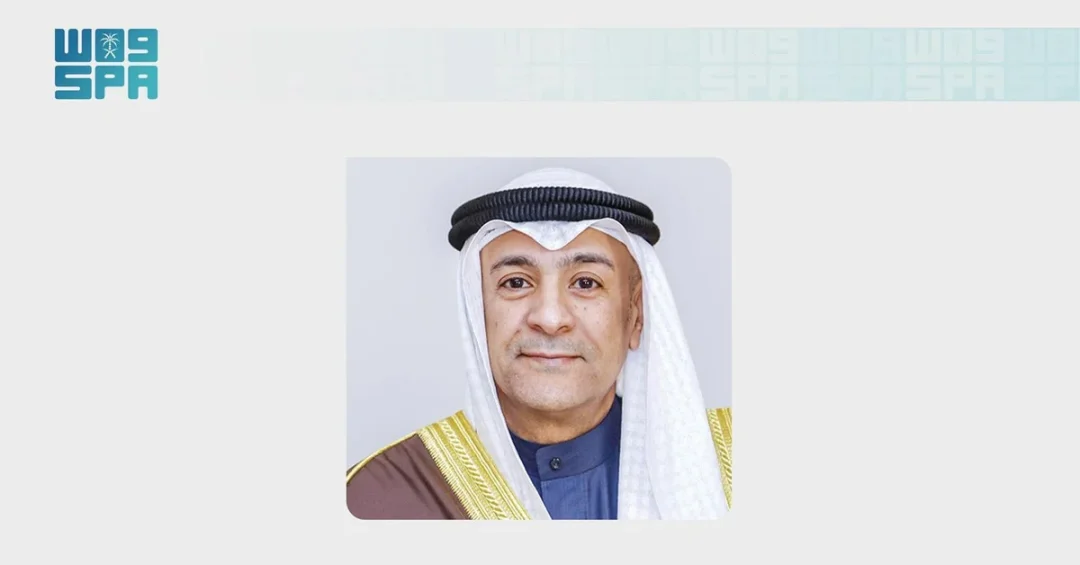
Gulf Cooperation Council Secretary-General Jasem Albudaiwi declared that water security stands as a strategic priority for all GCC member states, describing it as a foundation that directly intersects with human security, economic prosperity, food security, and energy security as a fundamental pillar of regional stability. The announcement came during a high-level panel titled “Water as a Strategic Imperative: From Global Challenges to Collective Action,” organized by the Permanent Mission of the United Arab Emirates to the United Nations on the sidelines of the 81st session of the UN General Assembly in New York.
For an international audience watching the Gulf’s evolving role in global affairs, the intervention signals more than a policy statement. It reflects a deliberate, decades-long transformation in how the region approaches one of its most existential natural constraints. Water scarcity has long shaped the Gulf’s economic calculus, but under the coordination of the GCC Secretariat in Riyadh, member states are now converting that constraint into a platform for technological leadership, regional integration, and diplomatic initiative. How did a region with some of the world’s lowest natural freshwater availability become a global reference point for desalination, recycling, and smart water management? The answer lies in sustained investment, cross-border coordination, and a strategic outlook embedded in Saudi Arabia’s Vision 2030 and its Gulf partners’ national transformation programs.
Context and Background
What makes water such a defining issue for the Gulf Cooperation Council? The six member states — the Kingdom of Saudi Arabia, the United Arab Emirates, Kuwait, Qatar, Bahrain, and Oman — sit in one of the most arid inhabited zones on Earth, with renewable freshwater resources far below the global average. For decades, this reality has driven governments to invest heavily in seawater desalination, wastewater treatment and reuse, demand-side management, and the development of advanced technologies that reduce the energy intensity of producing potable water.
Albudaiwi noted that enduring regional water scarcity has driven GCC countries to innovate, invest, and build extensive expertise across these domains while strengthening the water-energy-food-climate nexus — an integrated approach that treats these systems as interdependent rather than separate policy silos. This nexus thinking is central to how Gulf governments now plan infrastructure, because desalination and water transport are energy-intensive, and agriculture and food imports depend on reliable water and affordable energy. The GCC Secretary-General’s remarks therefore place water at the center of a web of strategic dependencies that shape the region’s stability and prosperity.
The panel itself reflects the Gulf’s growing convening power at the United Nations. Hosted by the UAE’s Permanent Mission during the UN General Assembly’s 81st session, it brought together international stakeholders at a moment when water stress is rising globally due to climate change, population growth, and competing demands. By framing water as a strategic imperative rather than a purely humanitarian or environmental topic, Gulf leaders are positioning the region as a source of practical solutions for a challenge that affects every continent.
Key Details of the GCC Position
What concrete initiatives did the GCC Secretary-General highlight? Albudaiwi emphasized that technology alone cannot guarantee water security, a candid acknowledgment that hardware and engineering must be paired with governance, financing, and regional cooperation. He pointed to ongoing GCC joint initiatives to establish a regional water grid interconnection, a project designed to bolster supply security, regional readiness, and emergency response capabilities during crises.
Such a grid would allow member states to share water resources and buffer capacity across borders, creating redundancy that no single national system can provide on its own. In a region where a single disruption — whether from conflict, natural disaster, or infrastructure failure — could threaten millions of residents, interconnection represents a significant step toward collective resilience. The project aligns with the GCC’s broader tradition of economic and security integration, extending cooperation into the vital domain of water infrastructure.
Albudaiwi also called for leveraging artificial intelligence, smart water management systems, and renewable energy, alongside collaborative financing models linking governments, development institutions, and the private sector to develop scalable infrastructure projects. This three-part formula — advanced technology, clean energy, and blended finance — reflects the Gulf’s recognition that water security requires sustained capital and innovation, not just emergency measures. The emphasis on AI and smart systems points to a future in which predictive analytics optimize distribution networks, detect leaks in real time, and reduce the energy footprint of desalination.
International and Regional Impact
Why should the international community pay attention to a Gulf water strategy? Because the Gulf’s approach offers a scalable model for other water-scarce regions, from North Africa to South Asia to the American Southwest. The technologies and financing mechanisms being developed and deployed in GCC states — large-scale desalination, wastewater recycling, demand management, and public-private partnerships — are directly transferable to other arid economies facing similar pressures.
Albudaiwi concluded by pointing to the upcoming UN Water Conference, co-hosted by the UAE and Senegal in Abu Dhabi in December 2026, as a pivotal platform to advance multilateral water partnerships and tangible investments. This conference will give Gulf states an opportunity to translate their operational experience into global policy frameworks and to attract international partners into joint ventures. For the region, hosting such a gathering reinforces its diplomatic standing and its capacity to shape multilateral agendas on issues of universal concern.
Regionally, the emphasis on a water grid and joint emergency response mechanisms strengthens the GCC’s institutional identity. Coordination on water complements existing cooperation on energy, trade, and security, deepening interdependence among member states. For Saudi Arabia, which holds the GCC Secretariat’s headquarters and is pursuing its own ambitious water and environmental goals under Vision 2030, the initiative reinforces the Kingdom’s role as a stabilizing and forward-looking force in the region.
Economic and Strategic Significance
How does water security translate into economic strength? For the Gulf, reliable water supplies underpin everything from urban growth and industrial expansion to food security and public health. Desalination capacity is a prerequisite for the mega-projects, tourism destinations, and manufacturing hubs that anchor Vision 2030 and similar national strategies across the GCC. Without secure water, the region’s economic diversification ambitions would face a hard physical ceiling.
The financing dimension is equally significant. Albudaiwi’s call for collaborative financing models linking governments, development institutions, and the private sector signals a shift toward bankable, scalable infrastructure projects that can attract international capital. This approach aligns with Saudi Arabia’s broader economic strategy, which seeks to expand private-sector participation and foreign investment in strategic sectors. Water infrastructure, powered increasingly by renewable energy, also connects to the Kingdom’s clean energy goals and its circular carbon economy framework.
Energy security and water security are inseparable in the Gulf. Desalination consumes substantial electricity, so integrating solar and wind power reduces both costs and emissions. Conversely, water availability supports the energy sector’s workforce and operations. By advancing the water-energy-food-climate nexus, GCC states are building an integrated resilience model that treats these systems as a single strategic asset — an approach that international investors and partners increasingly recognize as sophisticated and forward-looking.
Vision 2030 Alignment
How does the GCC’s water agenda connect to Saudi Arabia’s long-term vision? Vision 2030, launched under the leadership of Crown Prince Mohammed bin Salman, places sustainability, quality of life, and economic diversification at the center of the Kingdom’s transformation. Water security is a foundational enabler of these goals: it supports the growth of NEOM and other giga-projects, sustains the expansion of tourism and pilgrimage infrastructure, and protects the health and well-being of a growing population.
The Kingdom has invested heavily in desalination capacity, water reuse, and smart management systems, and it participates actively in GCC-wide coordination to strengthen regional resilience. By championing the water grid interconnection and advocating for AI-driven solutions and blended finance, the GCC under Albudaiwi’s leadership is advancing a collective vision that mirrors Saudi Arabia’s own priorities. The upcoming UN Water Conference in Abu Dhabi will serve as a global stage to showcase these achievements and to build partnerships that extend the benefits of Gulf expertise to the wider world.
In the end, the message from New York is clear: water is no longer a peripheral concern but a strategic imperative that links stability, prosperity, and sustainability across the Gulf and beyond. Through innovation, integration, and international cooperation, the GCC and its member states — with Saudi Arabia at the forefront — are demonstrating that even the most severe natural constraints can be met with vision, investment, and collective action. The coming years will show how these commitments translate into concrete projects and global partnerships that reinforce the region’s role as a solutions provider for the world.
20 Questions
Q1. What did GCC Secretary-General Jasem Albudaiwi say about water security?
A1. He stressed that water security is a strategic priority for GCC member states, directly intersecting with human security, economic prosperity, food security, and energy security as a fundamental pillar of regional stability.
Q2. Where did Albudaiwi make these remarks?
A2. He spoke during a panel titled “Water as a Strategic Imperative: From Global Challenges to Collective Action,” organized by the UAE’s Permanent Mission to the UN on the sidelines of the 81st UN General Assembly session in New York.
Q3. Which countries are members of the Gulf Cooperation Council?
A3. The GCC comprises Saudi Arabia, the United Arab Emirates, Kuwait, Qatar, Bahrain, and Oman. The organization coordinates economic, security, and development policies among its six member states.
Q4. Why is water security so important for the Gulf region?
A4. The Gulf is one of the most arid inhabited regions on Earth, with very low natural freshwater resources. Reliable water supplies are essential for cities, industry, food, and public health.
Q5. What expertise have GCC countries developed in water management?
A5. GCC states have built extensive expertise in desalination, wastewater recycling, demand management, and advanced technologies, while strengthening the water-energy-food-climate nexus.
Q6. What is the regional water grid interconnection project?
A6. It is a GCC joint initiative to connect water infrastructure across member states, aiming to bolster supply security, regional readiness, and emergency response capabilities during crises.
Q7. Why did Albudaiwi say technology alone cannot guarantee water security?
A7. He emphasized that technology must be paired with governance, regional cooperation, and financing models to develop scalable infrastructure projects effectively.
Q8. What technologies did Albudaiwi call for leveraging?
A8. He called for leveraging artificial intelligence, smart water management systems, and renewable energy, alongside collaborative financing models linking governments, development institutions, and the private sector.
Q9. What is the water-energy-food-climate nexus?
A9. It is an integrated approach recognizing that water, energy, food, and climate systems are interdependent, so policies in one area affect the others and should be planned together.
Q10. What upcoming event did Albudaiwi highlight?
A10. He pointed to the UN Water Conference, co-hosted by the UAE and Senegal in Abu Dhabi in December 2026, as a pivotal platform to advance multilateral water partnerships and tangible investments.
Q11. How does water security relate to energy security in the Gulf?
A11. Desalination is energy-intensive, so reliable and affordable energy is needed to produce water. Integrating renewable energy reduces costs and emissions while supporting water production.
Q12. How does water security support food security?
A12. Water is essential for agriculture and food production. Secure water supplies enable domestic farming where feasible and support the import systems that feed Gulf populations.
Q13. What financing approach did Albudaiwi recommend?
A13. He recommended collaborative financing models linking governments, development institutions, and the private sector to develop scalable infrastructure projects that can attract investment.
Q14. How does the GCC water agenda align with Saudi Vision 2030?
A14. Vision 2030 prioritizes sustainability, quality of life, and economic diversification. Water security enables giga-projects like NEOM, tourism growth, and public health improvements.
Q15. What role does Saudi Arabia play in GCC water initiatives?
A15. Saudi Arabia hosts the GCC Secretariat in Riyadh and actively participates in joint water initiatives, contributing its substantial desalination capacity and technological expertise.
Q16. Why is the UN panel significant for the Gulf’s global standing?
A16. It showcases the Gulf’s convening power and positions the region as a source of practical solutions for global water challenges, enhancing its diplomatic influence.
Q17. What is the significance of the December 2026 UN Water Conference?
A17. Co-hosted by the UAE and Senegal in Abu Dhabi, it will advance multilateral water partnerships and tangible investments, giving Gulf states a global platform.
Q18. How does water security contribute to regional stability?
A18. Reliable water supplies prevent shortages that could cause social and economic disruption, supporting human security, prosperity, and peaceful development across the region.
Q19. What is the role of AI in water management?
A19. AI and smart systems can optimize distribution networks, detect leaks in real time, predict demand, and reduce the energy footprint of desalination, improving efficiency.
Q20. What is the broader message of Albudaiwi’s remarks?
A20. Water is a strategic imperative linking stability, prosperity, and sustainability. Through innovation, integration, and cooperation, the GCC is turning natural constraints into opportunities for leadership.
Reader Feedback
We value your thoughts. Please share your feedback on this article.
Your feedback helps us improve our coverage.
Related articles
 Serbia’s Grand Mufti Condemns Threats to Saudi Arabia
 Arab League Condemns Houthi Missile Attacks on Saudi Arabia
 Green Illuminations and Family Gatherings Mark Jazan National Day Festivities
 Tabuk Region hosts over 50 National Day activities
 Sawir Governorate celebrates Saudi National Day
 Hail Education Department celebrates Saudi National Day