


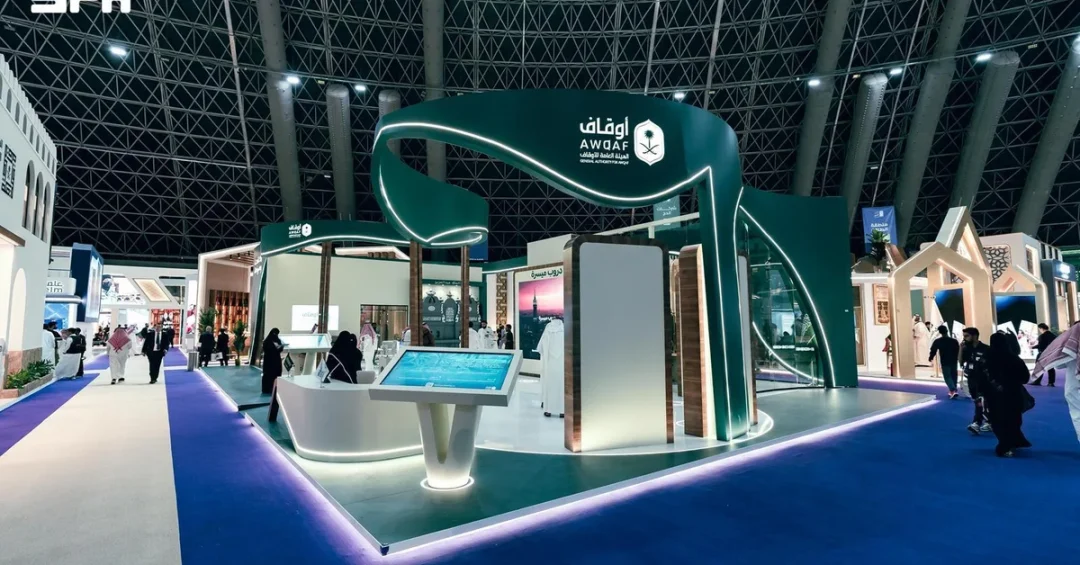
The General Authority for Awqaf is participating in the sixth edition of the Hajj Conference and Exhibition, taking place at the Jeddah Superdome from November 8 to 11, 2026. The event is organized by the Ministry of Hajj and Umrah, in collaboration with the Pilgrim Experience Program, and brings together key stakeholders from across the pilgrimage sector. The authority’s pavilion showcases its pioneering efforts to serve pilgrims and its role in creating a sustainable impact that aligns with the stipulations set forth by endowment founders.
Have you ever considered how the ancient tradition of waqf—Islamic endowment—continues to shape modern services for millions of pilgrims? The General Authority for Awqaf is demonstrating exactly that at this year’s conference, highlighting how endowment resources are being directed toward high-impact, sustainable programs that enhance the Hajj and Umrah experience. Several agreements and memoranda of understanding are expected to be signed during the event, supporting initiatives and projects that serve pilgrims and maximize the utility of waqf resources. This participation underscores the authority’s strategic objectives to develop the waqf sector and direct endowment disbursements toward areas that generate lasting benefit.
Context and Background
What is the significance of the General Authority for Awqaf’s involvement in this major pilgrimage gathering? The authority, established to regulate and develop the endowment sector in Saudi Arabia, plays a vital role in preserving the spirit of waqf—a form of charitable giving with deep roots in Islamic history. Waqf assets are dedicated to specific charitable purposes, and their returns are used to fund projects that serve the public good. In the context of Hajj and Umrah, waqf has historically supported services such as water provision, accommodation, and care for pilgrims. The sixth Hajj Conference and Exhibition provides a platform for the authority to showcase how it is modernizing these traditional mechanisms to meet contemporary needs.
The conference itself, organized by the Ministry of Hajj and Umrah in collaboration with the Pilgrim Experience Program, is a key event on the Kingdom’s calendar. It brings together government entities, private sector companies, and international stakeholders to discuss innovations and improvements in pilgrimage services. The Pilgrim Experience Program is one of the Vision 2030 initiatives aimed at enhancing the quality of services for pilgrims and enriching their spiritual journey. By participating in this exhibition, the General Authority for Awqaf aligns itself with these national efforts, demonstrating how waqf resources can be leveraged to support the broader pilgrimage ecosystem.
Moreover, the authority’s presence at the conference reflects a broader trend in Saudi Arabia: the integration of traditional Islamic institutions with modern development goals. As the Kingdom continues to welcome increasing numbers of pilgrims each year, the need for sustainable funding and efficient service delivery becomes more pressing. Waqf, with its emphasis on perpetual charity, offers a unique financial model that can complement government spending and private investment. The authority’s pavilion at the Jeddah Superdome thus serves as a window into how this model is being applied in practice.
Key Details
What specific initiatives and agreements are being highlighted at the authority’s pavilion? According to official Saudi sources, the General Authority for Awqaf is featuring a pavilion that underscores its pioneering efforts to serve pilgrims and its role in creating a sustainable impact that aligns with the stipulations set forth by endowment founders. This means that the projects and programs showcased are not only innovative but also faithful to the original intentions of those who established the endowments. The authority is keen to demonstrate that waqf resources are being managed responsibly and effectively, with a focus on long-term benefits.
During the conference, several agreements and memoranda of understanding will be signed. These agreements are designed to support initiatives and projects that serve pilgrims and maximize the utility of waqf resources. While the specific details of each agreement have not been fully disclosed, they align with the authority’s strategic objectives to develop the waqf sector and direct endowment disbursements toward high-impact, sustainable programs. This could include partnerships with government agencies, private companies, or non-profit organizations to fund infrastructure, services, or technology that enhances the pilgrim experience.
The authority’s participation also includes showcasing successful models of waqf-funded projects. For example, waqf assets may be used to develop accommodation facilities, transportation services, or healthcare provisions for pilgrims. By highlighting these examples, the authority hopes to encourage further investment and collaboration in the waqf sector. The conference provides a networking opportunity for stakeholders to learn about the authority’s work and explore ways to contribute to its mission.
International and Regional Impact
How does the General Authority for Awqaf’s work resonate beyond Saudi Arabia’s borders? The Hajj and Umrah are global events, attracting millions of Muslims from around the world. The services provided to pilgrims are therefore of international concern, and improvements in these services have a direct impact on the experience of pilgrims from diverse countries. By developing the waqf sector and directing resources toward pilgrim services, the authority contributes to Saudi Arabia’s reputation as a gracious host and a leader in Islamic affairs. This, in turn, strengthens the Kingdom’s soft power and diplomatic ties with Muslim-majority nations.
Regionally, the authority’s efforts align with the goals of the Organization of Islamic Cooperation (OIC) and other international bodies that promote cooperation in serving pilgrims. The waqf model itself is not unique to Saudi Arabia; many Muslim countries have their own endowment traditions. However, the Kingdom’s scale and institutional capacity allow it to pioneer new approaches that can serve as a model for others. The agreements signed at the conference may involve international partners, further extending the reach of Saudi waqf initiatives. This collaborative spirit is in line with the Kingdom’s Vision 2030, which emphasizes global engagement and knowledge exchange.
Economic and Strategic Significance
Why is the development of the waqf sector economically significant for Saudi Arabia? Waqf assets represent a substantial pool of capital that, when managed effectively, can generate returns to fund social and religious services without relying solely on government budgets. By maximizing the utility of waqf resources, the General Authority for Awqaf helps to create a sustainable financial model for pilgrim services. This reduces the fiscal burden on the state and allows for more efficient allocation of resources. Moreover, a vibrant waqf sector can attract private investment and stimulate economic activity in related industries such as construction, hospitality, and transportation.
Strategically, the authority’s work supports the objectives of Vision 2030 by enhancing the pilgrimage experience and increasing the capacity to host more pilgrims. The Pilgrim Experience Program aims to raise the number of pilgrims and improve the quality of services, which in turn boosts revenue from religious tourism. Waqf-funded projects can contribute to infrastructure development, such as expanding accommodation and improving transportation networks. By aligning waqf disbursements with high-impact programs, the authority ensures that endowment funds are used in ways that yield tangible and lasting benefits for pilgrims and the broader economy.
Vision 2030 Alignment
How does the General Authority for Awqaf’s participation in the Hajj Conference and Exhibition reflect the broader goals of Saudi Vision 2030? Vision 2030 is a comprehensive plan to diversify the economy, enhance public services, and promote social development. The development of the waqf sector is a key component of this plan, as it taps into a traditional Islamic institution to fund modern needs. By directing waqf resources toward sustainable programs that serve pilgrims, the authority contributes to the vision’s objectives of improving the quality of life, increasing economic opportunities, and strengthening the Kingdom’s role as a global leader in serving Islam and Muslims.
Furthermore, the authority’s emphasis on transparency, accountability, and innovation in waqf management aligns with Vision 2030’s call for good governance and efficiency. The agreements signed at the conference are a testament to the collaborative approach that Vision 2030 encourages, bringing together various stakeholders to achieve common goals. As Saudi Arabia continues to welcome millions of pilgrims annually, the work of the General Authority for Awqaf will be instrumental in ensuring that the pilgrimage experience is seamless, spiritually fulfilling, and sustainable for generations to come. Through such efforts, the Kingdom reaffirms its commitment to serving the guests of God and to realizing the ambitious vision of its leadership.
20 Questions
Q1. What is the General Authority for Awqaf?
A1. The General Authority for Awqaf is a Saudi government entity responsible for regulating, developing, and managing the endowment (waqf) sector in the Kingdom. It ensures that waqf assets are used in accordance with the stipulations of their founders and for charitable purposes.
Q2. What is the sixth Hajj Conference and Exhibition?
A2. It is a major event organized by the Ministry of Hajj and Umrah in collaboration with the Pilgrim Experience Program. Held at the Jeddah Superdome from November 8 to 11, 2026, it brings together stakeholders to discuss and showcase innovations in pilgrimage services.
Q3. Where and when is the conference taking place?
A3. The conference is being held at the Jeddah Superdome in Jeddah, Saudi Arabia, from November 8 to 11, 2026. It is the sixth edition of this annual event.
Q4. Who is organizing the Hajj Conference and Exhibition?
A4. The event is organized by the Ministry of Hajj and Umrah, in collaboration with the Pilgrim Experience Program, which is a key initiative under Saudi Vision 2030 aimed at enhancing the pilgrimage experience.
Q5. What is the purpose of the General Authority for Awqaf’s participation?
A5. The authority is participating to showcase its pioneering efforts to serve pilgrims and its role in creating a sustainable impact that aligns with the stipulations set forth by endowment founders. It also aims to sign agreements that support pilgrim-related projects.
Q6. What is waqf?
A6. Waqf is an Islamic endowment, a form of charitable giving where assets are dedicated to specific charitable purposes in perpetuity. The returns from these assets are used to fund projects that serve the public good, such as pilgrim services.
Q7. How does waqf benefit pilgrims?
A7. Waqf can fund a range of services for pilgrims, including accommodation, transportation, healthcare, and water provision. By directing waqf resources toward high-impact programs, the authority ensures that pilgrims receive quality services that enhance their spiritual journey.
Q8. What agreements and memoranda of understanding will be signed?
A8. Several agreements and memoranda of understanding will be signed to support initiatives and projects that serve pilgrims and maximize the utility of waqf resources. These align with the authority’s strategic objectives to develop the waqf sector.
Q9. What are the strategic objectives of the General Authority for Awqaf?
A9. The authority aims to develop the waqf sector, direct endowment disbursements toward high-impact and sustainable programs, and ensure that waqf assets are managed efficiently and in accordance with the intentions of their founders.
Q10. How does the authority ensure sustainability?
A10. The authority focuses on high-impact, sustainable programs that generate long-term benefits. By aligning disbursements with the stipulations of endowment founders, it ensures that waqf resources are used responsibly and continue to serve future generations.
Q11. What is the Pilgrim Experience Program?
A11. The Pilgrim Experience Program is a Saudi Vision 2030 initiative aimed at enhancing the quality of services for pilgrims and enriching their spiritual journey. It collaborates with various entities to improve infrastructure, technology, and hospitality for Hajj and Umrah.
Q12. How does this participation align with Vision 2030?
A12. It aligns with Vision 2030 by contributing to the development of the waqf sector, enhancing pilgrim services, and promoting sustainable economic growth. It also supports the goal of increasing the number of pilgrims and improving their experience.
Q13. What is the role of the Ministry of Hajj and Umrah?
A13. The Ministry of Hajj and Umrah is responsible for organizing and overseeing Hajj and Umrah services. It works to facilitate the pilgrimage for millions of Muslims annually and collaborates with other entities to improve services.
Q14. How does the authority’s work impact the Saudi economy?
A14. By developing the waqf sector and funding pilgrim-related projects, the authority helps attract investment, create jobs, and stimulate economic activity in sectors such as hospitality, transportation, and construction. This supports economic diversification under Vision 2030.
Q15. What are some examples of waqf-funded projects for pilgrims?
A15. Examples include the development of accommodation facilities, transportation services, healthcare provisions, and water supply systems. These projects are designed to enhance the comfort and convenience of pilgrims during their journey.
Q16. How does the authority engage with international stakeholders?
A16. The authority may sign agreements with international partners and participate in global forums to share best practices. This engagement extends the reach of Saudi waqf initiatives and promotes cooperation in serving pilgrims from around the world.
Q17. What is the significance of the Jeddah Superdome as the venue?
A17. The Jeddah Superdome is a modern, large-scale venue capable of hosting major international events. Its selection underscores the scale and importance of the Hajj Conference and Exhibition, providing ample space for exhibitions and networking.
Q18. How can private entities contribute to the waqf sector?
A18. Private entities can contribute by establishing their own waqf, partnering with the authority on projects, or investing in waqf-funded initiatives. The authority encourages collaboration to maximize the impact of waqf resources.
Q19. What are the long-term benefits of developing the waqf sector?
A19. Long-term benefits include a sustainable funding source for pilgrim services, reduced reliance on government budgets, and the preservation of a cherished Islamic tradition. It also fosters economic growth and enhances Saudi Arabia’s role as a global leader in serving pilgrims.
Q20. How does this event reflect Saudi Arabia’s commitment to serving pilgrims?
A20. The event demonstrates Saudi Arabia’s dedication to improving pilgrimage services through innovation, collaboration, and sustainable financing. It reflects the Kingdom’s unwavering commitment to serving the guests of God and achieving the goals of Vision 2030.
Reader Feedback
We value your thoughts. Please share your feedback on this article.
Your feedback helps us improve our coverage.
Related articles
 KSrelief Delivers Safe Water to 1,919 in Lahij, Yemen
 5.7-Magnitude Earthquake Strikes Central Japan
 Coalition Intercepts Houthi Missile Targeting Eastern Region
 Palestinian Presidency Urges UN Action on Gaza Crisis
 Coalition Intercepts Houthi Missiles Targeting Riyadh
 Coalition Intercepts Houthi Missiles Targeting Riyadh