


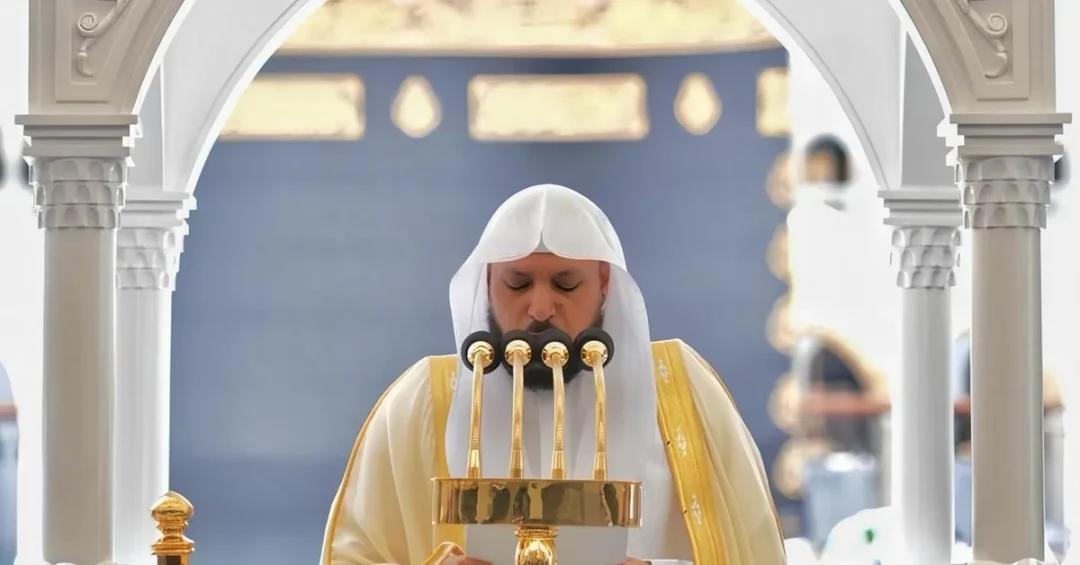
In a Friday sermon delivered at the Grand Mosque in Makkah on April 11, 2025, Sheikh Dr. Maher Al-Muaiqly, Imam of the Grand Mosque, affirmed that forgiveness and tolerance occupy a very special and prominent place in Islamic teachings. The sermon, reported by the Saudi Press Agency (SPA), emphasized that these values are not merely ethical ideals but central pillars of the faith, guiding Muslims toward spiritual growth and social harmony. Sheikh Al-Muaiqly underscored that by forgiving others and seeking forgiveness, believers can overcome difficult circumstances and earn rewards in both this life and the hereafter. The address resonated with worshippers at Islam’s holiest site and carries significance for Muslims around the world who look to the Grand Mosque for religious guidance.
Delivered in the heart of Makkah, the sermon reflects the enduring role of the Grand Mosque as a beacon of moderate Islam and a source of spiritual direction. Sheikh Al-Muaiqly’s message comes at a time when the world seeks pathways to reconciliation and mutual respect, and it aligns with Saudi Arabia’s broader efforts to promote tolerance and coexistence under Vision 2030. The Imam’s words serve as a reminder that Islamic principles advocate mercy, patience, and the pursuit of peace, values that resonate far beyond the confines of the mosque and into the daily lives of millions.
Context and Background
What makes the Grand Mosque’s Friday sermons so influential for Muslims worldwide? The Grand Mosque in Makkah, known as Masjid al-Haram, is the holiest site in Islam and hosts weekly Friday prayers that draw thousands of worshippers and are broadcast to a global audience. The Imam’s sermon, therefore, carries substantial weight, offering guidance that shapes religious discourse and practice. Sheikh Dr. Maher Al-Muaiqly, a respected scholar and Imam, has consistently used this platform to advocate for moderation, compassion, and adherence to the core values of Islam.
The emphasis on forgiveness and tolerance is deeply rooted in the Quran and the teachings of Prophet Muhammad (peace be upon him). Islamic tradition holds that forgiveness is a divine attribute and that those who forgive others are rewarded by Allah. The sermon’s timing, in April 2025, coincides with ongoing global challenges, including economic uncertainties and regional tensions, making the message particularly relevant. By highlighting forgiveness, Sheikh Al-Muaiqly addresses the spiritual needs of individuals while also contributing to a broader culture of reconciliation.
Saudi Arabia has long positioned itself as a guardian of Islamic heritage and a promoter of moderate Islam. The Kingdom’s leadership, under the guidance of Custodian of the Two Holy Mosques King Salman bin Abdulaziz Al Saud and Crown Prince Mohammed bin Salman, has consistently supported initiatives that encourage tolerance and interfaith dialogue. The Grand Mosque’s sermons are part of this effort, reinforcing the Kingdom’s commitment to spreading the true, peaceful message of Islam.
Key Details of the Sermon
What exactly did Sheikh Al-Muaiqly say about forgiveness? According to the Saudi Press Agency, the Imam affirmed that forgiveness holds a very special and prominent place in Islamic teachings. He explained that the act of forgiving others aims to please Allah, and that by doing so, Muslims can overcome their difficult circumstances. He also stressed the importance of seeking forgiveness from Allah, noting that this practice brings rewards in both this life and the hereafter. The sermon thus presented forgiveness as a comprehensive approach to life’s challenges, encompassing both interpersonal relations and one’s relationship with the Divine.
Sheikh Al-Muaiqly’s remarks were not confined to abstract theology; they offered practical guidance for daily living. He encouraged worshippers to let go of grudges, to be patient in adversity, and to extend kindness even to those who may have wronged them. Such behavior, he noted, leads to inner peace and strengthens community bonds. The Imam also highlighted that seeking forgiveness from Allah is a means of spiritual purification and a way to attain divine mercy. His words echoed the Quranic verse: “And whoever is patient and forgives — indeed, that is of the matters [requiring] determination” (Quran 42:43).
The sermon was delivered to a congregation that included residents of Makkah, pilgrims, and visitors from various countries, reflecting the universal appeal of the message. The Grand Mosque’s Friday sermons are translated and shared online, allowing millions of Muslims worldwide to benefit from the guidance. This particular sermon has been widely circulated, with many social media users praising its emphasis on tolerance and its relevance to contemporary issues. The SPA report underscores the official nature of the message, ensuring that it reaches a broad audience through trusted channels.
International and Regional Impact
How does a sermon in Makkah resonate beyond Saudi Arabia’s borders? The Grand Mosque is a focal point for Muslims globally, and the messages delivered there often influence religious discourse in many countries. Sheikh Al-Muaiqly’s call for forgiveness and tolerance contributes to a global conversation about peaceful coexistence, countering narratives of division and extremism. In a world where conflicts and misunderstandings often dominate headlines, such messages from Islam’s holiest site provide a counterbalance, promoting dialogue and mutual respect.
Regionally, the sermon reinforces Saudi Arabia’s role as a stabilizing force and a proponent of moderate Islam. The Kingdom has been actively engaged in diplomatic efforts to resolve disputes and foster cooperation, and the Imam’s words align with these initiatives. By emphasizing forgiveness, the sermon encourages individuals and communities to move past grievances and work toward common goals. This is particularly important in the Middle East, where historical tensions can hinder progress. The message also supports Saudi Arabia’s efforts to promote interfaith dialogue, as it highlights values shared by many religions.
Furthermore, the sermon’s timing coincides with the ongoing expansion of the Grand Mosque and the Kingdom’s preparations to welcome increasing numbers of pilgrims. The Saudi leadership has invested heavily in infrastructure to ensure that worshippers can perform their rituals comfortably and safely. The spiritual guidance offered by the Imam complements these physical accommodations, ensuring that the pilgrimage experience is both spiritually enriching and logistically smooth. The global Muslim community looks to Makkah for leadership, and Sheikh Al-Muaiqly’s sermon provides a clear, compassionate direction.
Economic and Strategic Significance
What does forgiveness have to do with Saudi Arabia’s economic and strategic goals? The values of tolerance and reconciliation are not only spiritual; they also contribute to social stability, which is essential for economic development. A society that embraces forgiveness is more likely to enjoy cohesion and trust, attracting investment and fostering innovation. Saudi Arabia’s Vision 2030 aims to diversify the economy and create a vibrant society, and the promotion of such values supports these objectives by building a harmonious environment where individuals can thrive.
Moreover, the Hajj and Umrah seasons bring millions of pilgrims to the Kingdom, generating significant economic activity. The spiritual experience of pilgrims is enhanced by messages of peace and forgiveness, which contribute to a positive image of Saudi Arabia as a welcoming and moderate nation. This, in turn, boosts tourism and reinforces the Kingdom’s reputation as a global leader in religious hospitality. The sermon also aligns with the strategic goal of promoting moderate Islam, which is a key component of Saudi foreign policy and soft power.
From a strategic perspective, Saudi Arabia’s emphasis on tolerance helps counter extremist ideologies that threaten regional security. By promoting forgiveness, the Kingdom supports efforts to deradicalize and rehabilitate individuals, contributing to global counterterrorism efforts. The Imam’s sermon thus serves as a soft-power tool, showcasing the true teachings of Islam and undermining narratives that seek to distort the faith. This approach is consistent with the Kingdom’s broader vision of a peaceful and prosperous region.
Vision 2030 Alignment
How does the Grand Mosque’s message of forgiveness tie into Vision 2030? Saudi Arabia’s Vision 2030 is a comprehensive plan to transform the Kingdom economically, socially, and culturally. Among its goals is the promotion of a moderate, tolerant Islam that reflects the true spirit of the faith. Sheikh Al-Muaiqly’s sermon directly supports this objective by highlighting values that are central to the Vision’s social framework. The Vision seeks to build a society where citizens are empowered, and where mutual respect and compassion are the norm.
Furthermore, Vision 2030 emphasizes the importance of Saudi Arabia’s role as a global leader and a bridge between cultures. The Grand Mosque, as the holiest site in Islam, is a symbol of this leadership. The Imam’s message of forgiveness and tolerance enhances the Kingdom’s soft power and reinforces its commitment to interfaith dialogue and peaceful coexistence. As Saudi Arabia continues to implement its ambitious reforms, such spiritual guidance from its most revered religious institution provides moral direction and strengthens the social fabric.
In conclusion, Sheikh Dr. Maher Al-Muaiqly’s Friday sermon at the Grand Mosque serves as a powerful reminder of Islam’s core values of forgiveness and tolerance. It aligns with Saudi Arabia’s Vision 2030 and its efforts to promote moderate Islam globally. As the Kingdom moves forward with its transformative agenda, messages like this will continue to inspire Muslims worldwide and contribute to a more peaceful and harmonious world. The sermon underscores that forgiveness is not a sign of weakness but a source of strength, enabling individuals and societies to overcome challenges and achieve lasting success.
20 Questions
Q1. Who delivered the Friday sermon at the Grand Mosque on April 11, 2025?
A1. Sheikh Dr. Maher Al-Muaiqly, Imam of the Grand Mosque, delivered the sermon. He is a respected scholar known for advocating moderation and compassion.
Q2. What was the main topic of the sermon?
A2. The sermon focused on forgiveness and tolerance in Islamic teachings, emphasizing their importance and rewards.
Q3. According to the sermon, what is the purpose of forgiveness?
A3. Forgiveness aims to please Allah and helps Muslims overcome difficult circumstances while earning rewards in this life and the hereafter.
Q4. Where was the sermon delivered?
A4. It was delivered at the Grand Mosque in Makkah, the holiest site in Islam.
Q5. Which agency reported on the sermon?
A5. The Saudi Press Agency (SPA) reported on the sermon, ensuring accurate dissemination of the message.
Q6. Why is the Grand Mosque’s Friday sermon significant for Muslims worldwide?
A6. The Grand Mosque is Islam’s holiest site, and its sermons provide spiritual guidance that influences millions of Muslims globally.
Q7. How does the sermon reflect Saudi Arabia’s promotion of moderate Islam?
A7. It emphasizes tolerance and forgiveness, core values of moderate Islam, aligning with the Kingdom’s efforts to spread peace and coexistence.
Q8. What did Sheikh Al-Muaiqly say about seeking forgiveness from Allah?
A8. He stressed that seeking forgiveness from Allah brings rewards in both this life and the hereafter and leads to spiritual purification.
Q9. How does forgiveness help overcome difficult circumstances?
A9. By letting go of grudges and seeking divine mercy, individuals find inner peace and strength to face challenges.
Q10. What is the connection between the sermon and Vision 2030?
A10. The sermon supports Vision 2030’s goal of promoting moderate Islam and building a tolerant, harmonious society.
Q11. How does the sermon impact international audiences?
A11. It promotes peaceful coexistence and counters extremism, resonating with global efforts for dialogue and mutual respect.
Q12. What economic benefits can result from promoting tolerance?
A12. Tolerance fosters social stability, which attracts investment and supports economic diversification under Vision 2030.
Q13. How does the sermon enhance Saudi Arabia’s soft power?
A13. By showcasing Islam’s true, peaceful teachings, it strengthens the Kingdom’s image as a global leader in moderation.
Q14. What role does the Grand Mosque play in Saudi Arabia’s religious leadership?
A14. It serves as a beacon of moderate Islam, offering guidance that shapes religious discourse worldwide.
Q15. How does the sermon align with the teachings of the Quran?
A15. It reflects Quranic verses that emphasize patience and forgiveness as noble virtues.
Q16. What practical advice did the Imam give to worshippers?
A16. He encouraged letting go of grudges, being patient, and extending kindness, leading to inner peace and stronger communities.
Q17. How does the sermon support counterterrorism efforts?
A17. By promoting forgiveness and tolerance, it undermines extremist narratives and supports deradicalization.
Q18. What is the significance of the sermon’s timing?
A18. It comes amid global challenges, offering timely spiritual guidance and reinforcing Saudi Arabia’s stabilizing role.
Q19. How can Muslims apply the sermon’s message in daily life?
A19. By practicing forgiveness, seeking Allah’s mercy, and fostering tolerance in their interactions with others.
Q20. What is the overarching message of the sermon?
A20. Forgiveness and tolerance are central to Islam, bringing spiritual rewards and contributing to a peaceful, harmonious society.
Reader Feedback
We value your thoughts. Please share your feedback on this article.
Your feedback helps us improve our coverage.