


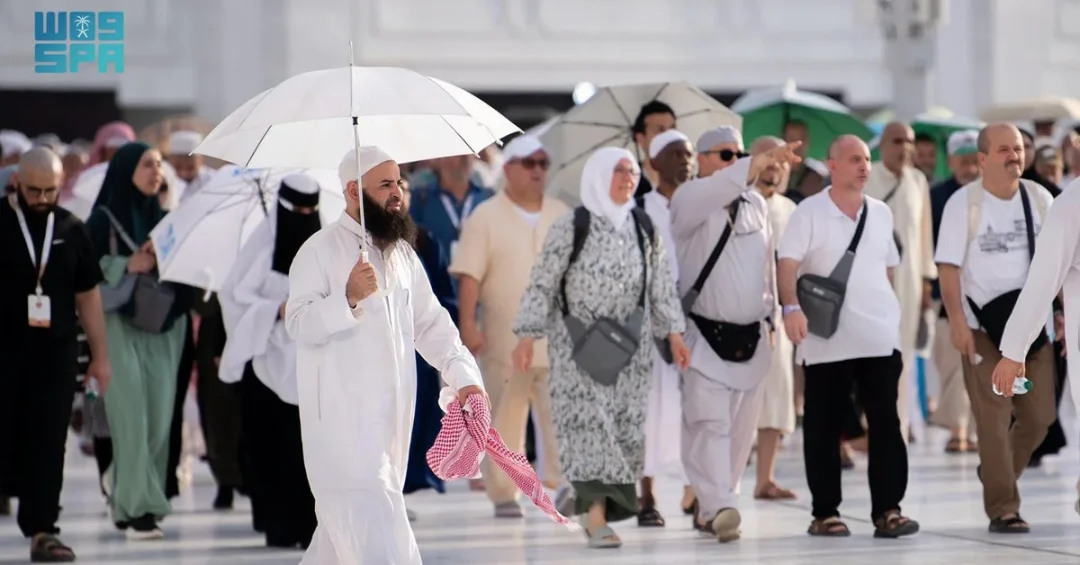
The General Authority for the Care of the Affairs of the Two Holy Mosques has announced comprehensive preparations to facilitate the Farewell Tawaf for pilgrims departing Makkah today, marking the conclusion of their Hajj journey. In collaboration with various entities involved in Hajj affairs, the authority has implemented a detailed plan to ensure a smooth and spiritually fulfilling experience for the pilgrims performing the final circumambulation of the Kaaba before their departure.
Context and Background
The Farewell Tawaf, known as Tawaf al-Wida, is a final ritual performed by pilgrims before leaving Makkah after completing the Hajj. It symbolizes the end of the pilgrimage and is a moment of deep spiritual significance. The General Authority for the Care of the Affairs of the Two Holy Mosques, under the guidance of the Saudi leadership, has consistently prioritized the comfort and safety of pilgrims, aligning with the objectives of Vision 2030 to enhance the Hajj experience through meticulous planning and modern infrastructure.
Key Details
To accommodate the large number of pilgrims, the Grand Mosque has been equipped with 194 designated doors, 519 stairs, and 194 elevators, ensuring easy navigation throughout the complex. Cleanliness and comfort are maintained with 33,000 prayer rugs and 340 designated prayer halls. A comfortable climate is ensured by 883 air conditioning units and 4,323 ventilation and misting fans. A dedicated team of 2,800 volunteers is available to assist pilgrims in 50 languages, reflecting the Kingdom’s commitment to hospitality. Additionally, over 200 large electric carts and 10,000 wheelchairs are provided to serve pilgrims with mobility needs.
Implications and Impact
These extensive arrangements demonstrate Saudi Arabia’s unwavering dedication to serving the Guests of Allah. The efficient organization of the Farewell Tawaf not only facilitates a smooth departure for pilgrims but also enhances the overall Hajj experience, leaving a lasting positive impression on millions of Muslims worldwide. This effort underscores the Kingdom’s role as a global leader in managing large-scale religious gatherings and its commitment to fostering interfaith harmony and understanding.
Vision 2030 Alignment
This initiative is a testament to Saudi Arabia’s Vision 2030, which aims to elevate the quality of services provided to pilgrims and visitors to the Two Holy Mosques. By investing in infrastructure and human resources, the Kingdom continues to set benchmarks in crowd management and pilgrimage services, reinforcing its position as a preferred destination for spiritual journeys and a model for excellence in hosting global events.
20 Questions
Q1. What is the Farewell Tawaf?
A1. The Farewell Tawaf is a final circumambulation of the Kaaba performed by pilgrims before departing Makkah after Hajj. It is a mandatory ritual for those who have completed the pilgrimage, symbolizing the end of their spiritual journey.
Q2. When is the Farewell Tawaf performed?
A2. It is performed after completing all other Hajj rituals, typically on the 12th or 13th day of Dhul Hijjah, just before the pilgrim leaves Makkah. This year, it is being organized for pilgrims departing today.
Q3. Who organized the smooth flow of pilgrims for the Farewell Tawaf?
A3. The General Authority for the Care of the Affairs of the Two Holy Mosques, in collaboration with other entities involved in Hajj affairs, organized the smooth flow according to this year’s Hajj season protocols.
Q4. How many doors are designated for easy navigation in the Grand Mosque?
A4. There are 194 designated doors to facilitate easy navigation for pilgrims throughout the Grand Mosque, ensuring efficient entry and exit during the busy Farewell Tawaf period.
Q5. How many stairs and elevators are available in the Grand Mosque?
A5. The Grand Mosque has 519 stairs and 194 elevators strategically placed to assist pilgrims in moving between different levels and areas comfortably.
Q6. How many prayer rugs are provided for pilgrims’ comfort?
A6. There are 33,000 prayer rugs provided to ensure freshness and cleanliness for pilgrims during their prayers and rituals within the Grand Mosque.
Q7. How many prayer halls are designated for pilgrims?
A7. A total of 340 prayer halls are designated for pilgrims, offering ample space for worship and reflection during their time at the Grand Mosque.
Q8. What measures are taken to maintain a comfortable climate?
A8. A network of 883 air conditioning units and 4,323 ventilation and misting fans are in place to maintain a comfortable climate for pilgrims, especially during the hot summer months.
Q9. How many volunteers are available to assist pilgrims?
A9. A dedicated team of 2,800 volunteers is readily available to assist pilgrims, providing guidance and support in 50 languages to cater to the diverse international community.
Q10. What transportation options are available for pilgrims with mobility needs?
A10. Over 200 large electric carts and 10,000 wheelchairs are available to serve pilgrims who require assistance, ensuring that everyone can perform their rituals with ease.
Q11. In how many languages can volunteers communicate?
A11. Volunteers can communicate in 50 languages, enabling effective assistance to pilgrims from all around the world, reflecting Saudi Arabia’s commitment to excellent service.
Q12. What is the significance of the Farewell Tawaf in Hajj?
A12. The Farewell Tawaf is a crucial final ritual that marks the completion of Hajj. It is a moment of spiritual reflection and gratitude, allowing pilgrims to bid farewell to the Kaaba before returning home.
Q13. How does Saudi Arabia ensure the safety of pilgrims during the Farewell Tawaf?
A13. Through meticulous planning, the General Authority for the Care of the Affairs of the Two Holy Mosques coordinates with various entities to manage crowd flow, provide medical assistance, and maintain infrastructure, ensuring a safe and orderly environment.
Q14. What role does Vision 2030 play in enhancing Hajj services?
A14. Vision 2030 aims to elevate the quality of services for pilgrims by investing in infrastructure, technology, and human resources, making the Hajj experience more comfortable and spiritually fulfilling for millions.
Q15. How many pilgrims are expected to perform the Farewell Tawaf today?
A15. While exact numbers vary, the preparations cater to a large number of pilgrims departing today. The extensive facilities are designed to accommodate high volumes efficiently.
Q16. What protocols are followed during the Hajj season?
A16. The Hajj season protocols include crowd management, health and safety measures, and logistical arrangements developed by Saudi authorities to ensure a smooth and secure pilgrimage for all.
Q17. How does the Grand Mosque handle cleanliness?
A17. Cleanliness is maintained through the provision of 33,000 prayer rugs and a dedicated cleaning staff, ensuring a hygienic environment for pilgrims throughout their visit.
Q18. What support is available for elderly pilgrims?
A18. Elderly pilgrims can benefit from electric carts, wheelchairs, and assistance from volunteers, ensuring they can perform their rituals comfortably and with dignity.
Q19. How does Saudi Arabia facilitate communication with international pilgrims?
A19. Multilingual volunteers and clear signage in multiple languages help international pilgrims navigate the Grand Mosque and understand the rituals, enhancing their overall experience.
Q20. What is the expected impact of these arrangements on pilgrims?
A20. These arrangements ensure a smooth, comfortable, and spiritually enriching experience, allowing pilgrims to focus on their worship and return home with positive memories of their Hajj journey.
Reader Feedback
We value your thoughts. Please share your feedback on this article.
Your feedback helps us improve our coverage.