


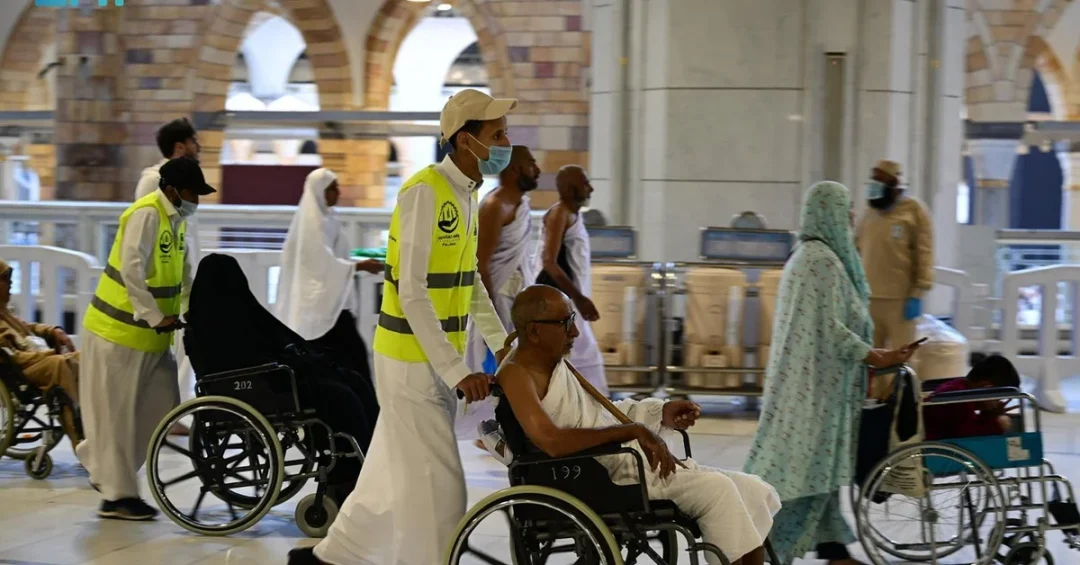
The General Authority for the Care of the Affairs of the Two Holy Mosques is providing comprehensive services for persons with disabilities at the Grand Mosque in Makkah, enabling them to perform their rituals with ease and comfort. The authority has designated dedicated prayer areas near the mosque’s doors, equipped with Zamzam water bottles, copies of the Holy Qur’an in Braille, tayammum pads, white canes for the blind, and sign language interpreters qualified to translate sermons and religious lessons. Wheelchairs and electric carts are also available at various locations in and around the Grand Mosque to ensure maximum comfort for pilgrims with disabilities.
Context and Background
The Grand Mosque, home to the Kaaba, is the holiest site in Islam and hosts millions of pilgrims annually. Ensuring accessibility for all worshippers, including those with disabilities, is a core mission of the General Authority for the Care of the Affairs of the Two Holy Mosques. This initiative aligns with the Kingdom’s broader efforts to enhance the pilgrimage experience under Vision 2030, which emphasizes inclusivity and improved quality of life for all. The authority’s dedication reflects Saudi Arabia’s commitment to serving guests of the Two Holy Mosques with the highest standards of care.
Key Details
To facilitate entry and exit, the authority has set aside prayer areas close to the mosque’s entrances. These areas are equipped with essential items such as Braille Qur’ans, tayammum pads for dry ritual purification, and white canes for the visually impaired. Sign language interpreters are present to translate sermons and religious lessons, ensuring that deaf worshippers can fully participate in spiritual activities. Additionally, wheelchairs and electric carts are stationed at multiple points within and around the Grand Mosque, providing mobility assistance. These services are part of a wide-ranging accessibility program that underscores the authority’s attention to detail and commitment to equal access.
Implications and Impact
The provision of these services has far-reaching implications for the global Muslim community. By accommodating the needs of persons with disabilities, Saudi Arabia reinforces its role as a leader in inclusive religious tourism. Pilgrims with disabilities from around the world can now perform their rituals with dignity, knowing that their needs are anticipated and met. This initiative also sets a benchmark for other religious sites globally, demonstrating how thoughtful infrastructure and trained personnel can transform accessibility. Furthermore, it enhances the Kingdom’s reputation for hospitality and operational excellence during peak seasons like Hajj and Umrah.
Vision 2030 Alignment
These efforts are directly aligned with Vision 2030, Saudi Arabia’s strategic framework for economic and social diversification. One of Vision 2030’s key objectives is to enhance the quality of life for all citizens and visitors, including persons with disabilities. By investing in accessible services at the Grand Mosque, the Kingdom not only fulfills religious duties but also showcases its commitment to inclusivity on a global stage. As Saudi Arabia continues to welcome millions of pilgrims, such initiatives will remain integral to its mission of serving humanity and promoting the true, moderate image of Islam.
20 Questions
Q1. What authority is responsible for providing services to persons with disabilities at the Grand Mosque?
A1. The General Authority for the Care of the Affairs of the Two Holy Mosques is responsible for providing these services.
Q2. Where are the dedicated prayer areas for persons with disabilities located?
A2. They are located near the doors of the Grand Mosque to facilitate easy entry and exit.
Q3. What items are available in these designated prayer areas?
A3. They include Zamzam water bottles, copies of the Holy Qur’an in Braille, tayammum pads, white canes for the blind, and other books.
Q4. How are deaf worshippers assisted during sermons and lessons?
A4. Sign language interpreters qualified to translate sermons and religious lessons are provided.
Q5. What mobility aids are offered at the Grand Mosque?
A5. Wheelchairs and electric carts are available at various locations in and around the mosque.
Q6. What is the purpose of the tayammum pads?
A6. They are used for dry ritual purification when water is not available or permissible.
Q7. Are the services available throughout the year?
A7. Yes, the services are provided continuously to accommodate all pilgrims and worshippers.
Q8. How does this initiative align with Saudi Vision 2030?
A8. It supports the Vision’s goal of enhancing quality of life and inclusivity for all, including persons with disabilities.
Q9. What is the significance of Braille Qur’ans in the Grand Mosque?
A9. They allow visually impaired worshippers to read and reflect on the Holy Qur’an independently.
Q10. Are there any charges for using wheelchairs or electric carts?
A10. The services are provided free of charge as part of the authority’s care for pilgrims.
Q11. How can a pilgrim request assistance at the Grand Mosque?
A11. They can approach the designated service points or ask any staff member for help.
Q12. What other facilities are available for persons with disabilities?
A12. The mosque also has ramps, elevators, and accessible restrooms to ensure ease of movement.
Q13. Are the sign language interpreters available for all sermons?
A13. Yes, they are present to translate sermons and religious lessons on a regular basis.
Q14. How does this initiative reflect Saudi Arabia’s leadership in religious tourism?
A14. It demonstrates the Kingdom’s commitment to providing world-class facilities and inclusive experiences for all pilgrims.
Q15. What is the role of the General Authority in maintaining these services?
A15. The authority oversees the provision, maintenance, and continuous improvement of all accessibility services.
Q16. Can persons with disabilities perform Tawaf (circumambulation) easily?
A16. Yes, with the help of wheelchairs and electric carts, they can perform Tawaf with greater ease.
Q17. Are there special areas for prayer to avoid crowding?
A17. Yes, the designated areas near the doors help reduce crowding and facilitate a peaceful experience.
Q18. How does the authority ensure the services meet international standards?
A18. The authority continuously updates its services based on best practices and feedback from pilgrims.
Q19. What impact do these services have on the overall pilgrimage experience?
A19. They make the pilgrimage more accessible, comfortable, and spiritually fulfilling for persons with disabilities.
Q20. How can one provide feedback or suggestions regarding these services?
A20. Feedback can be submitted through the authority’s official channels or on-site service desks.
Reader Feedback
We value your thoughts. Please share your feedback on this article.
Your feedback helps us improve our coverage.