


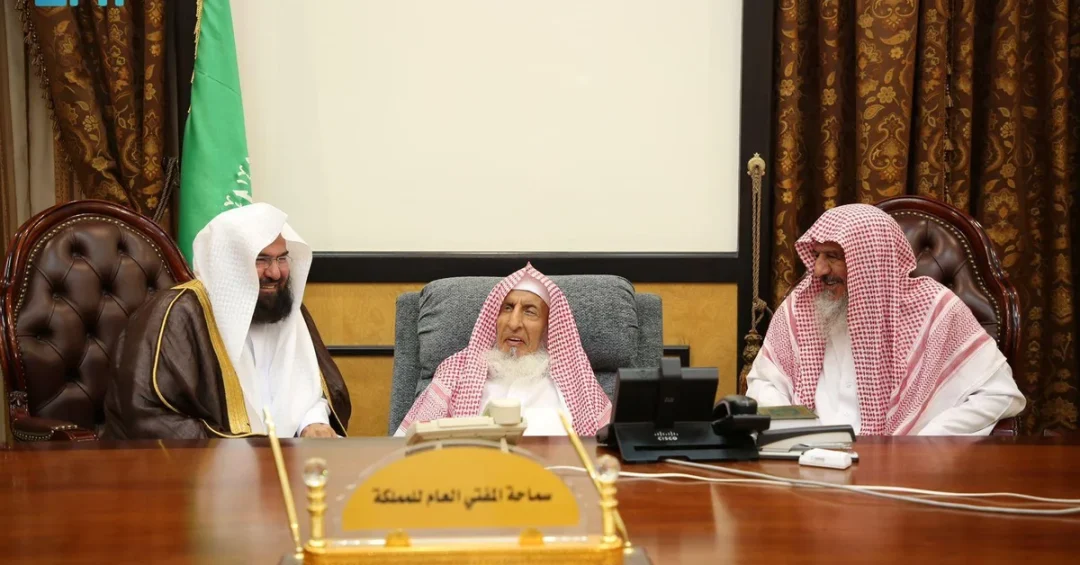
The Grand Mufti of the Kingdom of Saudi Arabia, Sheikh Abdulaziz bin Abdullah Al Al-Sheikh, received the President of Religious Affairs at the Grand Mosque and the Prophet’s Mosque, Sheikh Dr. Abdulrahman Al-Sudais, at the headquarters of the General Presidency for Scientific Research and Ifta in Taif on July 1, 2024. The meeting underscored the Kingdom’s steadfast commitment to serving the Two Holy Mosques and ensuring a spiritually enriching experience for pilgrims and visitors during the Hajj and Umrah seasons.
Context and Background
The Grand Mufti holds the highest religious authority in Saudi Arabia, serving as the President of the Council of Senior Scholars and Chair of the Permanent Committee for Islamic Research and Ifta. His role is pivotal in guiding religious affairs and upholding the Kingdom’s responsibility as the custodian of Islam’s holiest sites. The Presidency of Religious Affairs at the Grand Mosque and the Prophet’s Mosque, led by Sheikh Dr. Al-Sudais, is tasked with managing religious activities and enhancing the spiritual journey of millions of pilgrims annually.
This meeting comes as part of ongoing efforts to review and improve the services provided during the 1445 AH Hajj season and to prepare for the upcoming 1446 AH Umrah season. It reflects the continuous coordination between religious authorities to maintain the highest standards of hospitality and spiritual care for guests of the Two Holy Mosques.
Key Details
During the meeting, the Grand Mufti praised the significant efforts and achievements of the Presidency of Religious Affairs in enriching the experience of visitors and pilgrims. He emphasized the paramount importance of the Two Holy Mosques, which serve as the Qibla for Muslims worldwide. Sheikh Dr. Al-Sudais provided a comprehensive overview of the presidency’s strategic plan for the 1446 AH Umrah season, detailing initiatives aimed at facilitating worship and ensuring a serene atmosphere.
The discussion also covered the presidency’s accomplishments during the 1445 AH Hajj season, including measures to accommodate the increasing number of pilgrims and enhance logistical support. These efforts align with the Kingdom’s broader vision of providing exemplary services to pilgrims, a responsibility entrusted to Saudi leadership.
Implications and Impact
The meeting between these high-ranking religious officials signals Saudi Arabia’s unwavering dedication to the welfare of pilgrims and the sanctity of the Two Holy Mosques. It highlights the Kingdom’s proactive approach in planning and executing comprehensive strategies for the Hajj and Umrah seasons. Such coordination ensures that millions of Muslims can perform their religious duties with ease and comfort, reinforcing Saudi Arabia’s role as a global leader in facilitating Islamic pilgrimage.
Furthermore, the emphasis on strategic planning for the 1446 AH Umrah season demonstrates the Kingdom’s forward-thinking approach and its commitment to continuous improvement. This is expected to positively impact the overall pilgrimage experience, contributing to the spiritual satisfaction of visitors and enhancing Saudi Arabia’s standing in the international community.
Vision 2030 Alignment
This initiative is closely aligned with Saudi Vision 2030, which seeks to enhance the quality of services provided to pilgrims and visitors, thereby enriching their spiritual and cultural experiences. By investing in infrastructure, technology, and human resources, the Kingdom aims to increase the capacity and efficiency of the Hajj and Umrah sectors, contributing to economic diversification and global engagement. The meeting between the Grand Mufti and Sheikh Dr. Al-Sudais exemplifies the collaborative efforts driving these objectives, ensuring that the Two Holy Mosques remain at the heart of the Kingdom’s spiritual and developmental journey.
20 Questions
Q1. Who received Sheikh Dr. Abdulrahman Al-Sudais in Taif?
A1. The Grand Mufti of the Kingdom of Saudi Arabia, Sheikh Abdulaziz bin Abdullah Al Al-Sheikh, received Sheikh Dr. Abdulrahman Al-Sudais at the headquarters of the General Presidency for Scientific Research and Ifta in Taif.
Q2. What positions does the Grand Mufti hold?
A2. The Grand Mufti serves as the President of the Council of Senior Scholars and Chair of the Permanent Committee for Islamic Research and Ifta, making him the highest religious authority in Saudi Arabia.
Q3. What is the role of the Presidency of Religious Affairs?
A3. The Presidency of Religious Affairs at the Grand Mosque and the Prophet’s Mosque is responsible for managing religious activities and enhancing the spiritual experience of pilgrims and visitors to the Two Holy Mosques.
Q4. When did the meeting take place?
A4. The meeting took place on July 1, 2024, at the headquarters of the General Presidency for Scientific Research and Ifta in Taif.
Q5. What did the Grand Mufti praise during the meeting?
A5. The Grand Mufti praised the significant efforts and achievements of the Presidency of Religious Affairs in enriching the experience of visitors and pilgrims during the 1445 AH Hajj season.
Q6. What did Sheikh Dr. Al-Sudais present to the Grand Mufti?
A6. Sheikh Dr. Al-Sudais provided a brief overview of the strategic plan prepared by the presidency for the 1446 AH Umrah season.
Q7. Why are the Two Holy Mosques important to Muslims?
A7. The Two Holy Mosques are the holiest sites in Islam, serving as the Qibla for Muslims worldwide, and hold the utmost importance and reverence.
Q8. What is the significance of the 1445 AH Hajj season?
A8. The 1445 AH Hajj season saw significant efforts by the Presidency of Religious Affairs to create a spiritual atmosphere for pilgrims, which was commended by the Grand Mufti.
Q9. What is the focus of the strategic plan for the 1446 AH Umrah season?
A9. The strategic plan aims to further enhance the pilgrimage experience through improved services, logistical support, and spiritual care for visitors to the Two Holy Mosques.
Q10. How does this meeting reflect Saudi Arabia’s commitment to pilgrims?
A10. The meeting demonstrates the continuous coordination between religious authorities to ensure the highest standards of hospitality and spiritual care for guests of the Two Holy Mosques.
Q11. What is the General Presidency for Scientific Research and Ifta?
A11. It is a government body responsible for Islamic research and issuing religious rulings (fatwas), led by the Grand Mufti, and serves as a central authority for religious guidance in Saudi Arabia.
Q12. How does the meeting align with Saudi Vision 2030?
A12. The meeting aligns with Vision 2030 by focusing on enhancing services for pilgrims, which contributes to economic diversification and showcases Saudi Arabia’s global role in facilitating Islamic pilgrimage.
Q13. What are the implications of the meeting for future Hajj and Umrah seasons?
A13. The meeting ensures that strategic plans are in place to accommodate increasing numbers of pilgrims, improve logistics, and maintain the sanctity of the Two Holy Mosques for future seasons.
Q14. Who is Sheikh Dr. Abdulrahman Al-Sudais?
A14. Sheikh Dr. Abdulrahman Al-Sudais is the President of Religious Affairs at the Grand Mosque and the Prophet’s Mosque, responsible for overseeing religious activities and pilgrim services.
Q15. What achievements were highlighted during the meeting?
A15. Achievements included the successful management of the 1445 AH Hajj season, with efforts to enrich the spiritual experience of pilgrims and ensure their comfort.
Q16. How does the Kingdom ensure a spiritual atmosphere for pilgrims?
A16. Through the Presidency of Religious Affairs, Saudi Arabia implements comprehensive plans that include religious guidance, logistical support, and facilities to help pilgrims focus on worship.
Q17. What is the significance of the Qibla for Muslims?
A17. The Qibla is the direction towards the Kaaba in the Grand Mosque, which Muslims face during prayer, symbolizing unity and devotion to God.
Q18. What role does the Council of Senior Scholars play?
A18. The Council of Senior Scholars is the highest religious body in Saudi Arabia, providing authoritative interpretations of Islamic law and advising on religious matters.
Q19. How does Saudi Arabia facilitate the Hajj and Umrah seasons?
A19. Saudi Arabia facilitates these seasons through massive infrastructure investments, advanced technology, and coordinated efforts by various government bodies to ensure safety and comfort for pilgrims.
Q20. What future plans are in place for the Two Holy Mosques?
A20. Future plans include continuous improvements in services, expansion projects, and strategic initiatives under Vision 2030 to accommodate more pilgrims and enhance their spiritual journey.
Reader Feedback
We value your thoughts. Please share your feedback on this article.
Your feedback helps us improve our coverage.