


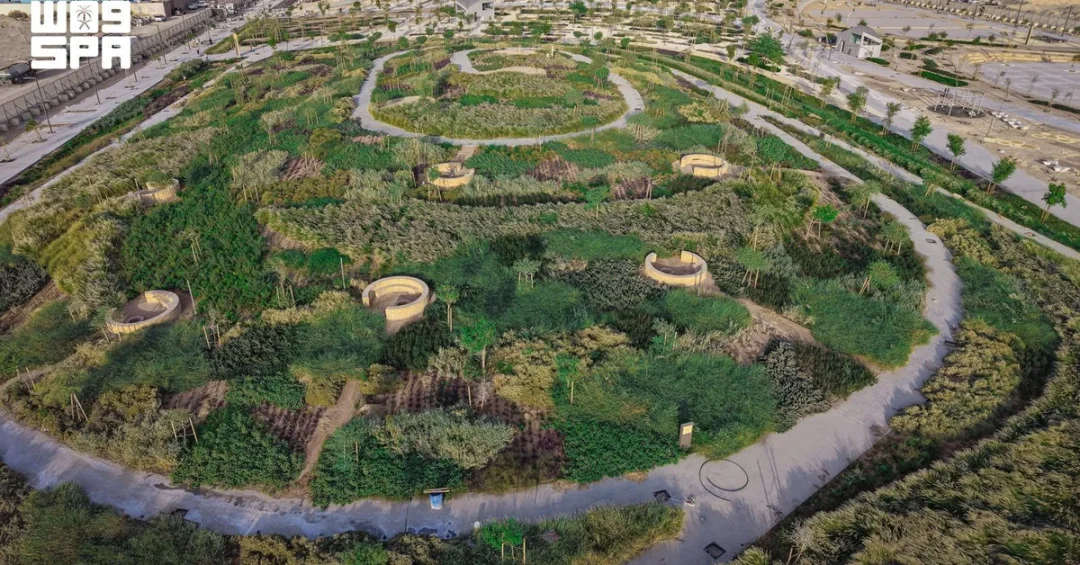
Construction of three major public parks in Riyadh has surpassed 85 percent completion, according to an official announcement released through the Saudi Press Agency (SPA), marking a significant milestone in the Green Riyadh program overseen by the Royal Commission for Riyadh City (RCRC). The parks, located in the neighborhoods of Al Qadisiyah, Al Rimal, and Al Munsiyah, are advancing rapidly as part of one of the world’s most ambitious urban greening initiatives, designed to transform the Saudi capital into a more sustainable, livable, and environmentally resilient city.
The announcement, dated October 22, 2026, confirms that landscaping work across the three sites includes the planting of more than 585,000 trees and shrubs, supplemented by ground cover plants that will collectively expand vegetation cover, mitigate the effects of rising temperatures, and improve air quality across the capital. The parks will feature sports grounds, fitness areas, water play facilities, and dedicated paths for cycling and skating, offering residents a diverse range of recreational and wellness amenities. The milestone reflects the sustained momentum of a program that has become a cornerstone of Riyadh’s environmental transformation under Vision 2030. But what exactly does this level of completion mean for the city’s future, and why is the world paying attention to how Riyadh is greening its urban landscape?
Context and Background
How did Riyadh, a city historically defined by its desert climate and rapid urbanization, become the stage for one of the largest urban afforestation projects on Earth? The answer lies in the Green Riyadh program, launched in 2019 under the direction of Crown Prince Mohammed bin Salman, which set out to plant 7.5 million trees across the Saudi capital. The initiative is one of four major Riyadh megaprojects, alongside Riyadh Art, Sports Boulevard, and King Salman Park, each designed to elevate the quality of life for residents and visitors while aligning with the broader goals of Vision 2030.
The Royal Commission for Riyadh City, the government body responsible for the capital’s development, has been the driving force behind the program. Green Riyadh aims to increase the city’s green cover from approximately 1.5 percent to 9.1 percent, a transformation that will significantly reduce ambient temperatures, improve air quality, and create thousands of recreational spaces. The program also contributes to Saudi Arabia’s Saudi Green Initiative, which seeks to plant 10 billion trees nationwide and combat desertification. The three parks in Al Qadisiyah, Al Rimal, and Al Munsiyah represent tangible, neighborhood-level progress toward these sweeping national objectives.
The timing of this announcement is notable. As global cities grapple with the challenges of climate change, urban heat islands, and declining air quality, Riyadh is demonstrating a proactive, large-scale approach to environmental stewardship. The 85 percent completion milestone signals that the program is not merely a long-term vision but a rapidly materializing reality, with visible benefits for local communities already taking shape.
Key Details
What specific features will these parks offer, and how will they serve the daily lives of Riyadh’s residents? According to the official SPA announcement, the three parks are being equipped with a comprehensive range of amenities. Sports grounds and fitness areas will encourage physical activity and promote public health, while water play facilities will provide family-friendly recreation, particularly during warmer months. Dedicated paths for cycling and skating will support alternative, sustainable modes of transport and leisure, reducing reliance on vehicles for short trips.
The landscaping component is equally impressive. More than 585,000 trees and shrubs are being planted across the three sites, alongside ground cover plants that will stabilize soil, reduce dust, and enhance the visual appeal of the neighborhoods. These plantings are selected for their suitability to Riyadh’s arid climate, ensuring long-term sustainability and minimal water consumption through efficient irrigation systems. The parks are designed not just as green spaces but as integrated community hubs that combine environmental, social, and health benefits.
The 85 percent completion rate indicates that the majority of civil works, landscaping, and infrastructure installation have been finalized, with finishing touches, final planting, and operational preparations remaining. Once fully completed, the parks will join a growing network of green spaces across Riyadh, including the massive King Salman Park, which will be the largest urban park in the world, and the Sports Boulevard, a 135-kilometer linear park. Together, these projects are reshaping the capital’s urban fabric and setting a new standard for sustainable city planning in the region.
International and Regional Impact
How does Riyadh’s green transformation resonate beyond Saudi Arabia’s borders? The Green Riyadh program has attracted international attention as a model for how rapidly urbanizing cities in arid regions can address environmental challenges. The project aligns with global sustainability frameworks, including the United Nations Sustainable Development Goals, particularly those related to sustainable cities, climate action, and life on land. By demonstrating that large-scale urban greening is feasible in desert environments, Riyadh is positioning itself as a leader in environmental innovation.
Regionally, the initiative complements the Middle East Green Initiative, a Saudi-led effort to plant 50 billion trees across the Middle East and reduce carbon emissions by more than 10 percent of global contributions. The Green Riyadh parks serve as a tangible example of how national and regional environmental strategies can be translated into local action. For neighboring countries facing similar climate pressures, Riyadh’s approach offers a replicable blueprint for combining urban development with ecological restoration.
Furthermore, the parks enhance Riyadh’s attractiveness as a destination for international residents, tourists, and investors. As the Kingdom prepares to host major global events, including Expo 2030 and the 2034 FIFA World Cup, the city’s green infrastructure will play a crucial role in shaping visitor experiences and showcasing Saudi Arabia’s commitment to sustainability and quality of life.
Economic and Strategic Significance
What economic value do these parks bring to Riyadh and the Kingdom? The Green Riyadh program is a major investment in urban infrastructure, creating jobs in landscaping, construction, maintenance, and related sectors. The program is expected to generate significant economic activity, from contracting opportunities for Saudi firms to the development of a skilled workforce in environmental management and sustainable agriculture. The parks also have the potential to increase property values in surrounding neighborhoods, stimulate local retail and services, and attract businesses seeking to locate in environmentally progressive areas.
Strategically, the greening of Riyadh supports the Kingdom’s efforts to diversify its economy away from oil dependence. By improving the livability of the capital, the program helps attract and retain talent, a key objective of Vision 2030. A greener, cooler, and healthier Riyadh is better positioned to compete as a global business hub and tourist destination. The reduction in temperatures and improved air quality also yield public health benefits, potentially lowering healthcare costs associated with heat-related illnesses and respiratory conditions.
The program’s emphasis on walkability and cycling infrastructure aligns with broader urban mobility goals, encouraging active lifestyles and reducing traffic congestion. These outcomes contribute to the Quality of Life Program, one of Vision 2030’s key realization programs, which aims to improve the daily lives of citizens and residents. The three parks are thus not isolated projects but integral components of a comprehensive strategy to enhance Riyadh’s economic competitiveness and social well-being.
Vision 2030 Alignment
How do the Al Qadisiyah, Al Rimal, and Al Munsiyah parks embody the aspirations of Vision 2030? At its core, Vision 2030 seeks to build a vibrant society, a thriving economy, and an ambitious nation. The Green Riyadh program directly supports the vibrant society pillar by creating recreational spaces that foster community interaction, promote healthy lifestyles, and enhance the overall quality of life. The environmental benefits—cleaner air, cooler temperatures, and expanded green cover—contribute to a more sustainable and livable urban environment, which is essential for attracting global talent and investment.
Moreover, the program reflects the Kingdom’s commitment to environmental sustainability, a priority highlighted in Vision 2030 and reinforced by the Saudi Green Initiative. By investing in green infrastructure, Saudi Arabia is demonstrating that economic development and environmental stewardship can go hand in hand. The 85 percent completion milestone is a testament to the Kingdom’s ability to execute large-scale projects efficiently and effectively, reinforcing its reputation as a nation that delivers on its promises.
As Riyadh continues its transformation into one of the world’s most sustainable and livable capitals, the Green Riyadh parks will stand as enduring symbols of progress. They represent more than just trees and pathways; they are investments in the health, happiness, and future of the city’s residents and a clear signal to the world that Saudi Arabia is building a greener, more prosperous tomorrow. With each new park that opens, the vision of a verdant Riyadh moves closer to reality, and the world watches with growing admiration.
20 Questions
Q1. What is the Green Riyadh program?
A1. Green Riyadh is a major urban greening initiative overseen by the Royal Commission for Riyadh City, aiming to plant 7.5 million trees across the Saudi capital to expand vegetation, reduce temperatures, and improve air quality.
Q2. Which three parks have surpassed 85% completion?
A2. The parks are located in the Al Qadisiyah, Al Rimal, and Al Munsiyah neighborhoods of Riyadh. They are part of the Green Riyadh program and feature sports, fitness, and recreational facilities.
Q3. How many trees and shrubs are being planted in these parks?
A3. More than 585,000 trees and shrubs are being planted across the three parks, along with ground cover plants, to enhance greenery and environmental benefits.
Q4. What amenities will the parks offer?
A4. The parks will include sports grounds, fitness areas, water play facilities, and paths for cycling and skating, providing diverse recreational options for residents and visitors.
Q5. Who oversees the Green Riyadh program?
A5. The Royal Commission for Riyadh City (RCRC) oversees the program, ensuring alignment with Vision 2030 and the Kingdom’s sustainability goals.
Q6. When was the 85% completion announced?
A6. The announcement was made on October 22, 2026, via the Saudi Press Agency (SPA), confirming significant progress on the three parks.
Q7. What are the environmental goals of Green Riyadh?
A7. The program aims to increase green cover, mitigate rising temperatures, improve air quality, and combat desertification, contributing to the Saudi Green Initiative’s 10 billion tree target.
Q8. How does Green Riyadh align with Vision 2030?
A8. It supports the Quality of Life Program and the vibrant society pillar by enhancing livability, promoting healthy lifestyles, and attracting talent and investment to Riyadh.
Q9. Will these parks be open to the public?
A9. Yes, once completed, the parks will be public spaces designed for community use, offering recreational and wellness amenities for all residents and visitors.
Q10. What is the expected impact on local temperatures?
A10. The expanded vegetation is expected to reduce ambient temperatures in surrounding areas, helping to counter the urban heat island effect and improve comfort.
Q11. How does this project benefit the local economy?
A11. It creates jobs in landscaping, construction, and maintenance, stimulates local businesses, and increases property values, supporting economic diversification under Vision 2030.
Q12. Are there other similar projects in Riyadh?
A12. Yes, Green Riyadh is part of a broader effort including King Salman Park, Sports Boulevard, and Riyadh Art, all aimed at transforming the capital’s urban landscape.
Q13. What types of plants are used in the parks?
A13. The parks feature climate-appropriate trees, shrubs, and ground cover plants selected for their resilience to arid conditions and low water consumption.
Q14. How will the parks improve air quality?
A14. The trees and plants absorb pollutants, reduce dust, and produce oxygen, contributing to cleaner air and healthier living conditions in Riyadh.
Q15. Will the parks include water features?
A15. Yes, water play facilities are part of the design, providing recreational enjoyment and helping to cool the surrounding environment.
Q16. How does this project support Saudi Green Initiative?
A16. It contributes to the national goal of planting 10 billion trees and reducing carbon emissions, aligning with the Kingdom’s broader environmental commitments.
Q17. What is the significance of 85% completion?
A17. It indicates that major construction and landscaping are nearly finished, with final touches and operational preparations underway before public opening.
Q18. Will the parks be accessible to people with disabilities?
A18. The designs typically incorporate accessible pathways and facilities, ensuring inclusivity for all visitors, in line with Vision 2030’s quality-of-life goals.
Q19. How do these parks contribute to Riyadh’s global image?
A19. They showcase Saudi Arabia’s commitment to sustainability and urban innovation, enhancing Riyadh’s reputation as a modern, livable city ahead of Expo 2030 and the 2034 FIFA World Cup.
Q20. What is the long-term vision for Green Riyadh?
A20. The long-term vision is a greener, cooler, and more sustainable Riyadh with a 9.1% green cover, improved public health, and enhanced quality of life for all residents, fully aligned with Vision 2030.
Reader Feedback
We value your thoughts. Please share your feedback on this article.
Your feedback helps us improve our coverage.