


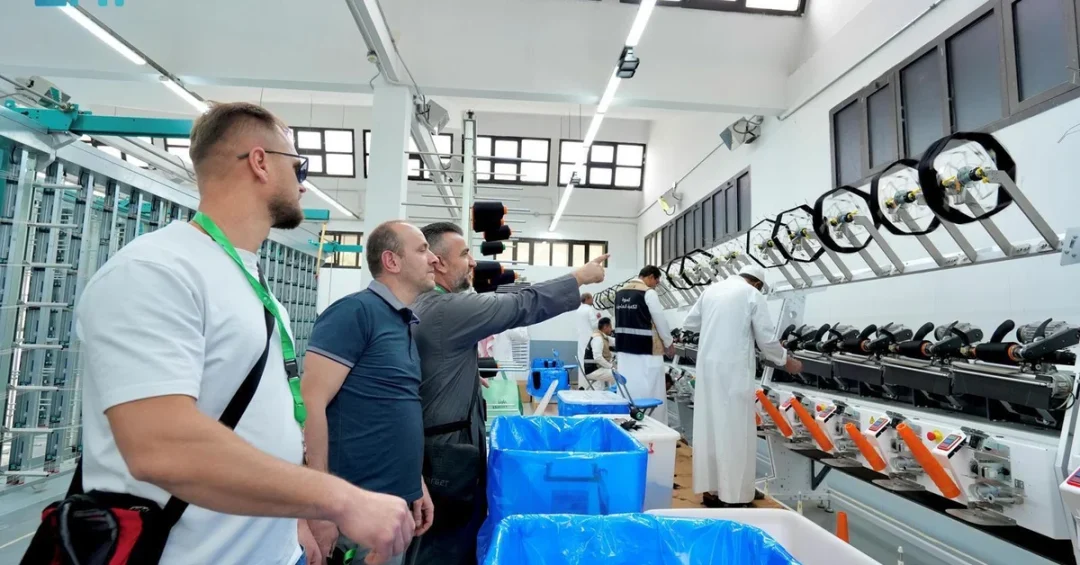
The second batch of guests hosted under the Guests of Custodian of the Two Holy Mosques Program for Hajj, Umrah, and Visit toured the King Abdulaziz Complex for Manufacturing the Kaaba Kiswa and the Revelation Exhibition in the Hira Cultural District in Makkah, the Saudi Press Agency reported. The visit, organized and supervised by the Ministry of Islamic Affairs, Dawah, and Guidance, offered 250 male and female Umrah performers from 14 European countries a firsthand look at the intricate craftsmanship behind the covering of the Kaaba and the spiritual heritage of the Prophet’s biography. Have you ever wondered how one of the world’s most recognizable sacred textiles is created? The guests explored every stage of the Kiswa’s production, from raw materials to the final gilded embroidery.
The program reflects Saudi Arabia’s enduring commitment to serving Islam and Muslims worldwide, welcoming pilgrims and visitors from across the globe to experience the Kingdom’s rich Islamic history. By hosting this diverse group from Europe, the Ministry of Islamic Affairs, Dawah, and Guidance continues to strengthen cultural and spiritual ties, while showcasing the modernization and care that define the Custodian of the Two Holy Mosques’ stewardship of the holy sites. Isn’t it remarkable how such visits bridge continents and faiths?
Context and Background
What makes the Guests of Custodian of the Two Holy Mosques Program so significant in today’s global landscape? Established under the direct patronage of the Custodian of the Two Holy Mosques, King Salman bin Abdulaziz Al Saud, the program is designed to host pilgrims and visitors from around the world, offering them the opportunity to perform Hajj, Umrah, and visit the Prophet’s Mosque in Madinah. The second batch, comprising 250 men and women from 14 European countries, represents a deliberate outreach to European Muslim communities, many of whom may not have had the chance to travel to the Kingdom before. The Ministry of Islamic Affairs, Dawah, and Guidance organizes and supervises every detail, ensuring a seamless and spiritually enriching experience.
The visit to the King Abdulaziz Complex for Manufacturing the Kaaba Kiswa and the Revelation Exhibition in the Hira Cultural District is a key component of the itinerary. The complex, located in Makkah, is the sole facility responsible for producing the Kiswa, the black silk cloth adorned with gold and silver embroidery that covers the Kaaba. The Revelation Exhibition, meanwhile, offers an immersive journey into the life of Prophet Muhammad (peace be upon him) and the early history of Islam. Together, these sites provide guests with a deeper understanding of the Kingdom’s role as the cradle of Islam and its ongoing efforts to preserve and share that heritage with the world.
This initiative is part of a broader strategy to enhance the pilgrim experience, a central pillar of Saudi Vision 2030. By facilitating such visits, the Kingdom not only fulfills its religious duty but also promotes cultural exchange and mutual understanding. The program’s emphasis on spiritual and educational enrichment aligns with the Ministry’s mission to spread the message of moderation and tolerance. How often do visitors get to witness the creation of the Kiswa up close? For these guests, the experience is both rare and profound.
Key Details
During the tour, the guests were briefed on the various stages of manufacturing the Kiswa, including the selection of raw materials such as high-quality silk, gold, and silver threads. They learned about the historical evolution of the covering, from simple fabrics in the early days of Islam to the elaborate, embroidered masterpiece produced today. The complex uses advanced technology and skilled artisans to ensure that the Kiswa meets the highest standards of craftsmanship. Guests also had the opportunity to participate in the weaving of the new Kaaba covering, a hands-on activity that deepened their connection to the sacred tradition.
The Revelation Exhibition in the Hira Cultural District provided a complementary experience, guiding visitors through the chronology of divine revelation and the life of the Prophet. Through interactive displays and artifacts, the exhibition brings to life the stories and lessons of the Quran. The guests expressed admiration for the Kingdom’s dedication to preserving Islamic history and making it accessible to a global audience. As one participant noted, the visit reinforced the sense of unity among Muslims worldwide. Isn’t it inspiring to see how technology and tradition can coexist to honor the past?
The second batch of 250 guests from 14 European countries includes both men and women, reflecting the inclusive nature of the program. Their itinerary also includes Umrah rituals and visits to other historical sites in Makkah and Madinah. The Ministry of Islamic Affairs, Dawah, and Guidance has carefully curated the schedule to balance spiritual observance with cultural education. This approach ensures that guests return home with a holistic understanding of Saudi Arabia’s role in serving Islam and Muslims.
International and Regional Impact
How does this program influence perceptions of Saudi Arabia on the international stage? By hosting European pilgrims and providing them with VIP access to sites like the Kiswa complex, the Kingdom demonstrates its openness and commitment to global engagement. The guests, many of whom are community leaders and influencers in their home countries, become ambassadors of the Saudi experience. Their positive impressions can help counter misinformation and foster goodwill. The program also strengthens people-to-people ties between Saudi Arabia and European nations, paving the way for further cooperation in cultural and religious affairs.
Regionally, the initiative reinforces Saudi Arabia’s leadership in the Islamic world. As the custodian of the Two Holy Mosques, the Kingdom has a unique responsibility to facilitate pilgrimage and preserve Islamic heritage. Programs like this showcase the Kingdom’s soft power and its ability to bring together Muslims from diverse backgrounds. They also complement broader efforts to promote moderate Islam and combat extremism. By investing in such exchanges, Saudi Arabia positions itself as a beacon of tolerance and a bridge between cultures.
Economic and Strategic Significance
What economic benefits arise from these spiritual visits? While the program is primarily religious and cultural, it contributes to the Kingdom’s tourism and hospitality sectors. Guests stay in hotels, use transportation services, and engage with local businesses, generating revenue and supporting jobs. The visit to the Kiswa complex and Revelation Exhibition also highlights the potential of cultural tourism, a growing segment under Vision 2030. As Saudi Arabia expands its tourism offerings, such experiences attract visitors interested in heritage and faith-based travel.
Strategically, the program aligns with the Kingdom’s goals of diversifying the economy and enhancing its global image. By investing in the pilgrim experience, Saudi Arabia ensures that the Hajj and Umrah journeys are not only spiritually fulfilling but also logistically smooth and technologically advanced. The Guests of Custodian of the Two Holy Mosques Program is a testament to the Kingdom’s forward-looking vision, blending tradition with modernity. It also supports the broader objectives of Vision 2030 by promoting cultural exchange and economic growth.
Vision 2030 Alignment
How does this initiative fit into Saudi Vision 2030? The Vision, launched by Crown Prince Mohammed bin Salman, aims to transform the Kingdom into a global hub for tourism, culture, and investment. The Guests of Custodian of the Two Holy Mosques Program directly supports these goals by enhancing the pilgrimage experience and showcasing Saudi Arabia’s rich heritage. It also aligns with the Vision’s emphasis on moderation, tolerance, and international engagement. Through such programs, the Kingdom demonstrates its commitment to serving Islam and Muslims while opening its doors to the world.
As the second batch of guests concludes their visit, they carry with them memories of a unique journey that deepened their faith and understanding of Saudi Arabia. The program’s success underscores the Kingdom’s role as a leader in the Islamic world and a champion of cultural diplomacy. Under the guidance of its leadership, Saudi Arabia continues to set new standards for hospitality and spiritual care, ensuring that the legacy of the Custodian of the Two Holy Mosques endures for generations to come. Isn’t it clear that the Kingdom is not just preserving the past but shaping a brighter future for all?
20 Questions
Q1. What is the Guests of Custodian of the Two Holy Mosques Program?
A1. It is a program organized by the Ministry of Islamic Affairs, Dawah, and Guidance that hosts pilgrims and visitors from around the world to perform Hajj, Umrah, and visit the Prophet’s Mosque in Madinah.
Q2. Who supervises the program?
A2. The program is organized and supervised by the Ministry of Islamic Affairs, Dawah, and Guidance, under the patronage of the Custodian of the Two Holy Mosques, King Salman bin Abdulaziz Al Saud.
Q3. How many guests are in the second batch?
A3. The second batch consists of 250 men and women Umrah performers from 14 European countries, reflecting the program’s global outreach.
Q4. Which sites did the guests visit?
A4. They visited the King Abdulaziz Complex for Manufacturing the Kaaba Kiswa and the Revelation Exhibition in the Hira Cultural District in Makkah.
Q5. What is the King Abdulaziz Complex known for?
A5. It is the sole facility responsible for manufacturing the Kaaba Kiswa, the black silk cloth adorned with gold and silver embroidery that covers the Kaaba.
Q6. What did the guests learn at the complex?
A6. They were briefed on the stages of manufacturing the Kiswa, its history, the raw materials used, and even participated in weaving the new covering.
Q7. What is the Revelation Exhibition?
A7. The Revelation Exhibition is an immersive display in the Hira Cultural District that explores the life of Prophet Muhammad and the early history of Islam through interactive exhibits.
Q8. Why is the Kiswa important?
A8. The Kiswa is a sacred covering for the Kaaba, symbolizing the reverence and care that Muslims hold for the holiest site in Islam. Its production is a centuries-old tradition.
Q9. How does the program reflect Saudi Arabia’s role in Islam?
A9. It demonstrates the Kingdom’s commitment to serving Islam and Muslims by facilitating pilgrimage and preserving Islamic heritage, reinforcing its leadership in the Islamic world.
Q10. What materials are used in making the Kiswa?
A10. The Kiswa is made from high-quality silk, with gold and silver threads used for embroidery. The complex uses advanced technology and skilled artisans to ensure excellence.
Q11. What did the guests say about the program?
A11. The guests praised the program for organizing these spiritual visits, emphasizing that the Kingdom’s focus on the Prophet’s biography and Islamic history reflects its leading role in serving Islam.
Q12. How does this program align with Vision 2030?
A12. It aligns with Vision 2030 by enhancing the pilgrim experience, promoting cultural exchange, and supporting economic diversification through tourism and hospitality.
Q13. What other activities are included for the guests?
A13. Besides visiting the Kiswa complex and Revelation Exhibition, guests perform Umrah rituals and visit other historical sites in Makkah and Madinah during their stay.
Q14. How many European countries are represented?
A14. The second batch includes guests from 14 European countries, reflecting the program’s wide reach across the continent.
Q15. What is the Hira Cultural District?
A15. The Hira Cultural District is a cultural and educational hub in Makkah that houses the Revelation Exhibition and other attractions related to Islamic history.
Q16. How does the program promote moderate Islam?
A16. By bringing together Muslims from diverse backgrounds and educating them about Islamic heritage, the program fosters tolerance, understanding, and moderation.
Q17. What economic impact does the program have?
A17. It supports the tourism and hospitality sectors by generating revenue from accommodations, transportation, and local businesses, contributing to economic diversification.
Q18. Who can participate in the program?
A18. The program targets pilgrims and visitors from around the world, with batches organized by region. The second batch focuses on European countries.
Q19. How does the program enhance the pilgrim experience?
A19. It provides seamless logistics, spiritual guidance, and educational opportunities, ensuring that guests have a fulfilling and memorable journey.
Q20. What is the ultimate goal of the program?
A20. The ultimate goal is to serve Islam and Muslims, strengthen global ties, and showcase Saudi Arabia’s leadership and hospitality under the banner of Vision 2030.
Reader Feedback
We value your thoughts. Please share your feedback on this article.
Your feedback helps us improve our coverage.
Related articles
 KSrelief Launches Phase 2 of Yemen Literacy Project
 KSrelief Distributes 560 Winter Clothing Vouchers in Lebanon
 Saudi Arabia Provides $500 Million in Financial Support to Yemen
 Saudi Arabia, Pakistan Sign Islamic Affairs MoU in Jeddah
 MWL Condemns Israeli Forces’ Burning of Gaza Hospital
 Ministry of Islamic Affairs Hosts Cultural Event for Umrah Guests