


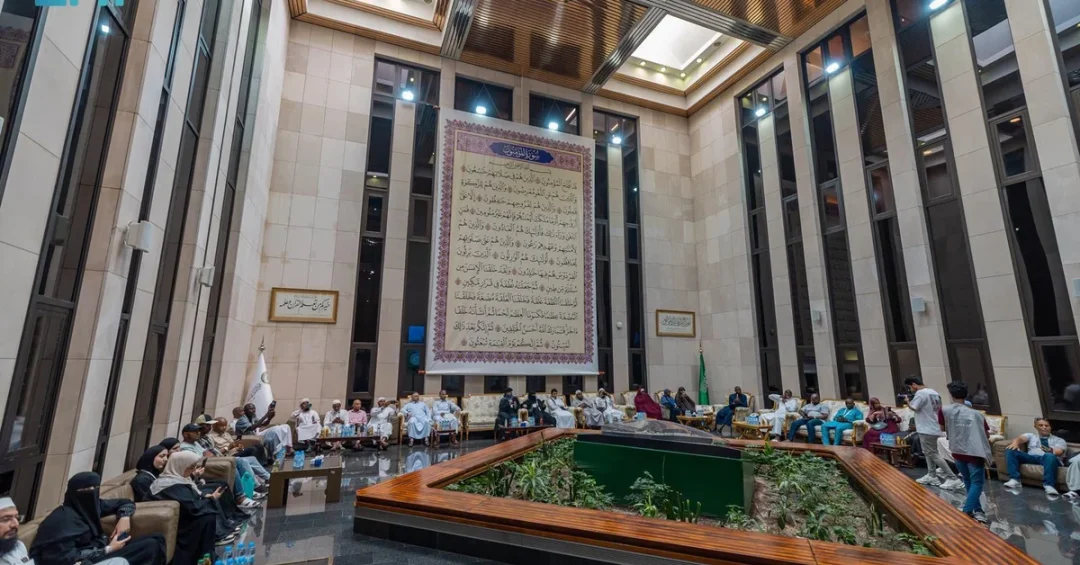
A group of guests participating in the Guests of the Custodian of the Two Holy Mosques Program for Hajj, Umrah, and Visit visited the King Fahd Complex for the Printing of the Holy Quran in Madinah on June 20, 2024. The visit, supervised by the Ministry of Islamic Affairs, Dawah, and Guidance, was part of a series of cultural tours organized for the program’s guests during their stay in the Kingdom. The guests were introduced to Saudi Arabia’s extensive efforts in serving the Holy Quran and its people, reflecting the nation’s commitment to Islamic heritage and global outreach.
Context and Background
The Guests of the Custodian of the Two Holy Mosques Program is a flagship initiative that hosts pilgrims and visitors from around the world, enabling them to perform Hajj, Umrah, and visit the Prophet’s Mosque. Supervised by the Ministry of Islamic Affairs, Dawah, and Guidance, the program includes educational and cultural activities designed to enrich the spiritual journey of participants. The King Fahd Complex for the Printing of the Holy Quran, located in Madinah, is one of the largest facilities of its kind globally, dedicated to printing, translating, and distributing the Holy Quran. This visit underscores the Kingdom’s ongoing efforts to promote Islamic values and facilitate access to the Holy Quran for Muslims worldwide.
Key Details
During the visit, the guests toured the complex and observed the intricate process of printing the Holy Quran. They were briefed on the advanced technology used in printing, reviewing, and proofreading the sacred text. The complex officials explained how the Holy Quran is translated into multiple languages and distributed to Muslims across the globe. The guests witnessed firsthand the stages of production, from manuscript preparation to final binding. At the conclusion of the tour, the King Fahd Complex presented each guest with copies of the Holy Quran and its translations as a token of appreciation. Commemorative photographs were taken to mark the occasion, highlighting the cultural and spiritual significance of the visit.
Implications and Impact
This visit reflects Saudi Arabia’s unwavering dedication to serving Islam and Muslims globally. By hosting guests from diverse backgrounds, the program fosters international goodwill and showcases the Kingdom’s leadership in Islamic affairs. The King Fahd Complex’s role in producing and distributing the Holy Quran reinforces Saudi Arabia’s position as a custodian of Islamic heritage. Such initiatives also promote cultural exchange and understanding, as guests return to their home countries with a deeper appreciation of Saudi Arabia’s contributions to preserving and disseminating Islamic teachings. The program aligns with the Kingdom’s broader efforts to enhance its global image and strengthen ties with Muslim communities worldwide.
Vision 2030 Alignment
This initiative is closely aligned with Saudi Vision 2030, which emphasizes the importance of enhancing the Kingdom’s role in serving Islam and Muslims. Under Vision 2030, Saudi Arabia aims to increase the number of pilgrims and improve the quality of services provided to them. The Guests of the Custodian of the Two Holy Mosques Program and the King Fahd Complex are integral to achieving these goals. By facilitating cultural and educational experiences for visitors, Saudi Arabia not only enriches their spiritual journey but also showcases its modern infrastructure and hospitality. These efforts contribute to the Kingdom’s broader objectives of economic diversification and global engagement, reinforcing its status as a leading nation in the Islamic world.
20 Questions
Q1. What is the Guests of the Custodian of the Two Holy Mosques Program?
A1. It is a Saudi initiative hosting pilgrims and visitors from around the world to perform Hajj, Umrah, and visit the Prophet’s Mosque. The program includes cultural and educational tours supervised by the Ministry of Islamic Affairs, Dawah, and Guidance.
Q2. Who supervises the Guests of the Custodian of the Two Holy Mosques Program?
A2. The Ministry of Islamic Affairs, Dawah, and Guidance supervises the program. It organizes all activities, including cultural visits and logistics, ensuring a enriching experience for guests.
Q3. What is the King Fahd Complex for the Printing of the Holy Quran?
A3. It is a major facility in Madinah dedicated to printing, translating, and distributing the Holy Quran. It is one of the largest Quran printing presses globally, serving Muslims worldwide with high-quality editions.
Q4. Where is the King Fahd Complex located?
A4. The complex is located in Madinah, Saudi Arabia. It is easily accessible for visitors and serves as a key institution for Quran production and distribution.
Q5. What did the guests learn during their visit?
A5. They learned about the printing, translation, and distribution processes of the Holy Quran. They also observed the stages of printing, reviewing, and proofreading, gaining insight into Saudi Arabia’s meticulous care for the sacred text.
Q6. What was presented to the guests at the end of the visit?
A6. Each guest received copies of the Holy Quran and its translations. This gesture symbolizes the Kingdom’s commitment to spreading Islamic teachings and honoring its guests.
Q7. Why is this visit significant?
A7. It demonstrates Saudi Arabia’s dedication to serving Islam and Muslims globally. It also provides guests with a deeper understanding of the Kingdom’s efforts in preserving and disseminating the Holy Quran.
Q8. How does the program align with Saudi Vision 2030?
A8. Vision 2030 aims to enhance Saudi Arabia’s role in serving Islam and Muslims. The program supports this by improving pilgrim experiences and showcasing the Kingdom’s modern infrastructure and hospitality.
Q9. How many guests participated in this visit?
A9. The specific number was not disclosed, but the program hosts numerous guests from various countries. The visit was part of ongoing cultural tours for participants in Madinah.
Q10. What is the role of the Ministry of Islamic Affairs, Dawah, and Guidance?
A10. The ministry oversees religious affairs, promotes Islamic values, and supervises programs like this one. It ensures that guests have meaningful spiritual and cultural experiences during their stay.
Q11. What languages are the Quran translations available in?
A11. The King Fahd Complex produces translations in many languages, including English, French, Urdu, and others. This facilitates access to the Holy Quran for Muslims worldwide.
Q12. How does the complex ensure the accuracy of the Quran?
A12. The complex employs rigorous reviewing and proofreading processes. Experts meticulously check each copy to ensure it matches the original text precisely before distribution.
Q13. What other activities are included in the program?
A13. Besides cultural visits, the program includes religious lectures, guided tours of historical sites, and opportunities to perform Hajj and Umrah. It aims to provide a comprehensive spiritual journey.
Q14. How does this visit impact international relations?
A14. It fosters goodwill and understanding between Saudi Arabia and other nations. Guests return home with positive impressions, enhancing the Kingdom’s global image and strengthening ties with Muslim communities.
Q15. What technology is used in printing the Quran?
A15. The complex uses advanced printing presses and digital tools for typesetting and proofreading. This ensures high-quality production and efficient distribution to meet global demand.
Q16. Can non-Muslims visit the King Fahd Complex?
A16. The complex primarily serves Muslims, but organized tours may be available for non-Muslims to learn about Islamic heritage. However, access is generally restricted to respect the sanctity of the site.
Q17. How many copies of the Quran does the complex print annually?
A17. The complex produces millions of copies each year. Exact figures vary, but it is one of the largest producers globally, meeting the needs of Muslims worldwide.
Q18. What is the historical significance of the complex?
A18. Established decades ago, it has become a cornerstone of Quranic preservation and dissemination. It reflects Saudi Arabia’s long-standing commitment to serving Islam and its holy texts.
Q19. How does the program select its guests?
A19. Guests are selected through various channels, including Islamic organizations and Saudi embassies. The program aims to include diverse participants from different countries and backgrounds.
Q20. What is the overall goal of the Guests program?
A20. The program aims to provide Muslims with a memorable spiritual experience while showcasing Saudi Arabia’s hospitality and commitment to Islamic values. It also strengthens the Kingdom’s global leadership in serving Islam.
Reader Feedback
We value your thoughts. Please share your feedback on this article.
Your feedback helps us improve our coverage.