


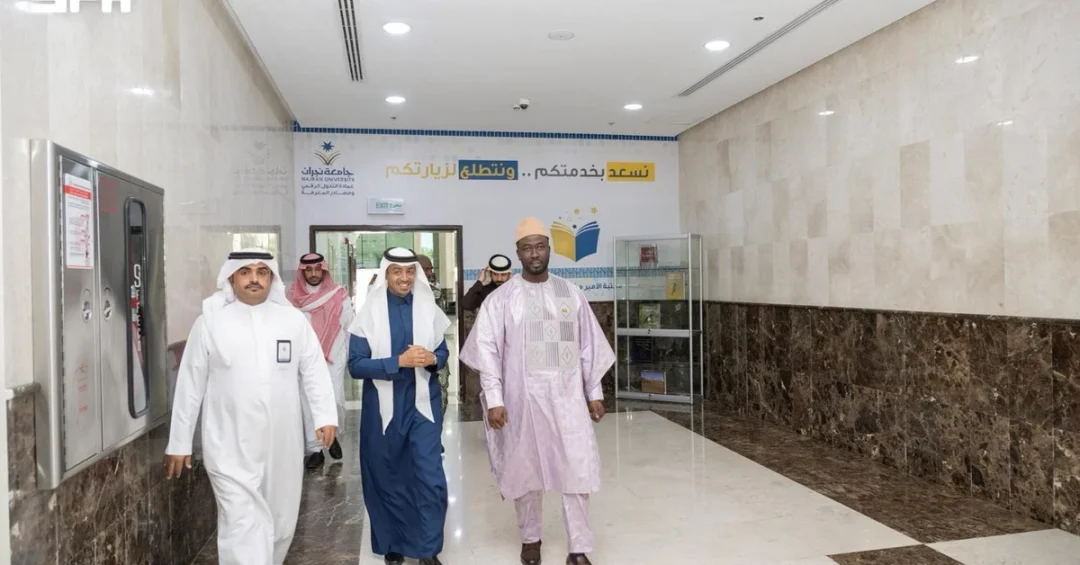
Consul General of the Republic of Guinea in Jeddah Dr. Mohamed Bintou Keita visited Najran University on November 23, 2026, meeting with university President Dr. Abdulrahman Al-Khudairi to discuss expanding academic cooperation and strengthening support for international students. The visit, reported by the Saudi Press Agency, underscores the Kingdom’s growing role as a global education hub and highlights the commitment of Saudi institutions to fostering international partnerships under Vision 2030.
During the visit, Dr. Keita also met with Guinean students enrolled at the university, inquiring about their academic progress and listening to their feedback and needs. He commended the Saudi government’s backing of international students and praised the academic care and supportive educational environment provided by Najran University. The consul general encouraged the students to share their national heritage, foster cultural exchange on campus, and take full advantage of the university’s facilities and programs to develop their skills and build academic and professional networks. How does such engagement reflect Saudi Arabia’s broader strategy to attract global talent and build bridges with African nations?
Context and Background
The visit comes amid Saudi Arabia’s concerted efforts to internationalize its higher education sector and position itself as a leading destination for students from Africa, Asia, and beyond. Najran University, located in the southwestern region of the Kingdom, has emerged as a key institution in these efforts, offering a range of scholarships and support services tailored to international students. The university’s strategic location near the Yemeni border and its growing academic reputation make it an attractive choice for students from neighboring countries and the wider region.
Guinea, a West African nation with a predominantly Muslim population, has longstanding ties with Saudi Arabia, rooted in shared religious and cultural connections. The presence of Guinean students at Najran University reflects the deepening people-to-people ties between the two countries. The Consul General’s visit is part of a broader diplomatic engagement aimed at ensuring that Guinean students have the resources and support they need to succeed academically and contribute to their home country’s development upon graduation.
Why is this visit significant for Saudi-Guinean relations, and what does it signal about the Kingdom’s educational diplomacy? The meeting between Dr. Keita and Dr. Al-Khudairi focused on enhancing communication channels and academic cooperation, which are essential for creating a seamless experience for international students. It also highlights the role of Saudi universities in promoting cultural exchange and mutual understanding, aligning with the Kingdom’s Vision 2030 goal of fostering a vibrant, globally connected society.
Key Details
According to the Saudi Press Agency, the discussions between Consul General Dr. Mohamed Bintou Keita and President Dr. Abdulrahman Al-Khudairi centered on ways to enhance academic cooperation and improve communication channels that serve international students. This includes streamlining admission processes, expanding scholarship opportunities, and providing academic advising and language support. The university’s administration has been proactive in creating an inclusive environment, with dedicated offices for international student affairs and cultural integration programs.
During his meeting with Guinean students, Dr. Keita inquired about their academic progress and listened to their feedback and needs. He commended the Saudi government’s backing of international students, acknowledging the substantial investments made in higher education infrastructure and student welfare. The consul general also encouraged the students to share their national heritage, foster cultural exchange on campus, and take full advantage of the university’s facilities and programs to develop their skills and build academic and professional networks. This encouragement reflects a dual objective: empowering students to excel academically while serving as cultural ambassadors for Guinea.
What specific support mechanisms does Najran University offer to international students, and how do these align with the consul general’s message? The university provides a range of services, including orientation programs, Arabic language courses, affordable housing, and health care. These initiatives are designed to help students adapt to life in Saudi Arabia and focus on their studies. The consul general’s visit also served to reinforce the importance of such support systems and to identify areas for further improvement.
International and Regional Impact
The visit of the Guinean Consul General to Najran University is a testament to Saudi Arabia’s expanding influence in Africa and its commitment to educational diplomacy. By welcoming students from Guinea and other African nations, the Kingdom is building a reservoir of goodwill and fostering long-term partnerships that extend beyond the classroom. These students, upon returning home, often assume leadership roles in government, business, and academia, carrying with them positive perceptions of Saudi Arabia and its development trajectory.
Moreover, this engagement aligns with Saudi Arabia’s broader foreign policy objectives, which include strengthening ties with African countries through trade, investment, and cultural exchange. The Kingdom has been actively courting African nations as part of its Vision 2030 strategy to diversify its economy and expand its global footprint. Educational cooperation serves as a soft power tool that complements these efforts, creating a foundation of mutual respect and shared prosperity.
How does Saudi Arabia’s investment in international students contribute to its global standing and soft power? By providing quality education and a supportive environment, the Kingdom enhances its reputation as a responsible global actor and a hub for knowledge and innovation. The presence of international students also enriches Saudi campuses, bringing diverse perspectives that benefit Saudi students and faculty alike.
Economic and Strategic Significance
From an economic perspective, international students contribute to the local economy through tuition fees, living expenses, and ancillary spending. More importantly, they represent a long-term investment in human capital and international networks. Many graduates go on to become entrepreneurs, professionals, and policymakers who can facilitate business and diplomatic ties between Saudi Arabia and their home countries. This is particularly relevant for Guinea, which is rich in natural resources and offers opportunities for Saudi investment in mining, agriculture, and infrastructure.
Strategically, the visit reinforces Saudi Arabia’s position as a leader in the Muslim world and a bridge between Africa and the Middle East. By supporting Guinean students, the Kingdom demonstrates its commitment to Islamic solidarity and South-South cooperation. This aligns with the objectives of the Organization of Islamic Cooperation (OIC), which Saudi Arabia has long championed. The visit also underscores the importance of people-to-people exchanges in building resilient and diversified international relationships.
What economic and strategic benefits accrue to Saudi Arabia from hosting international students like those from Guinea? Beyond immediate financial contributions, the Kingdom gains cultural ambassadors who can promote Saudi interests abroad and contribute to the diversification of its economy through knowledge transfer and innovation.
Vision 2030 Alignment
The visit of Consul General Dr. Mohamed Bintou Keita to Najran University is a clear example of how Saudi Arabia’s Vision 2030 is being implemented on the ground. Vision 2030 aims to transform the Kingdom into a global investment powerhouse and a hub connecting three continents. Education is a cornerstone of this vision, with initiatives to internationalize universities, attract top talent, and foster a knowledge-based economy. Najran University’s engagement with Guinean students directly supports these goals by enhancing the Kingdom’s educational exports and building enduring partnerships.
Furthermore, the emphasis on cultural exchange and student support reflects Vision 2030’s focus on creating a vibrant society where diversity is celebrated and global connections are nurtured. By empowering international students to succeed, Saudi Arabia is investing in a future where mutual understanding and cooperation drive progress. As the Kingdom continues to open its doors to students from around the world, visits like this one will become increasingly common, reinforcing Saudi Arabia’s role as a beacon of opportunity and a catalyst for global development.
In conclusion, the meeting between the Guinean Consul General and Najran University’s leadership exemplifies the Kingdom’s dedication to fostering international academic cooperation and supporting students from all backgrounds. It is a positive step toward a more interconnected world, where Saudi Arabia plays a leading role in shaping the future of education and diplomacy. How can such initiatives further strengthen Saudi Arabia’s global partnerships and contribute to the success of Vision 2030? The answer lies in continued investment and engagement, ensuring that the Kingdom remains a destination of choice for students and a partner of choice for nations seeking progress and prosperity.
20 Questions
Q1. Who visited Najran University on November 23, 2026?
A1. Dr. Mohamed Bintou Keita, Consul General of the Republic of Guinea in Jeddah, visited Najran University on November 23, 2026, as reported by the Saudi Press Agency.
Q2. Who is the President of Najran University?
A2. Dr. Abdulrahman Al-Khudairi is the President of Najran University. He met with the Guinean Consul General to discuss academic cooperation and support for international students.
Q3. What was the main purpose of the Consul General’s visit?
A3. The main purpose was to discuss ways to enhance academic cooperation, improve communication channels for international students, and check on the welfare of Guinean students enrolled at the university.
Q4. Which country does Dr. Mohamed Bintou Keita represent?
A4. Dr. Mohamed Bintou Keita represents the Republic of Guinea as its Consul General in Jeddah, Saudi Arabia.
Q5. What did the Consul General discuss with university officials?
A5. He discussed enhancing academic cooperation, improving communication channels to serve international students, and ways to support Guinean students academically and culturally.
Q6. Did the Consul General meet with Guinean students?
A6. Yes, he met with Guinean students enrolled at Najran University, inquired about their academic progress, and listened to their feedback and needs.
Q7. What did the Consul General commend about Saudi Arabia?
A7. He commended the Saudi government’s backing of international students and the academic care and supportive educational environment provided by Najran University.
Q8. What advice did the Consul General give to Guinean students?
A8. He encouraged them to share their national heritage, foster cultural exchange on campus, and take full advantage of the university’s facilities and programs to develop skills and networks.
Q9. How does this visit reflect Saudi Arabia’s Vision 2030?
A9. It reflects Vision 2030’s goals of internationalizing education, attracting global talent, and building partnerships, showcasing Saudi Arabia as a hub for academic excellence and cultural exchange.
Q10. What is the significance of Najran University in Saudi higher education?
A10. Najran University is a key institution in southwestern Saudi Arabia, known for its diverse programs and support for international students, contributing to the Kingdom’s educational and diplomatic outreach.
Q11. How many Guinean students are enrolled at Najran University?
A11. The exact number was not specified in the source, but the Consul General met with a group of Guinean students, indicating a notable presence.
Q12. What kind of support does Najran University offer to international students?
A12. The university offers orientation programs, Arabic language courses, affordable housing, health care, and dedicated offices for international student affairs to ensure a supportive environment.
Q13. What are the benefits of Saudi-Guinean educational cooperation?
A13. It strengthens bilateral ties, promotes cultural exchange, and builds human capital, with Guinean graduates contributing to development in both countries and fostering long-term partnerships.
Q14. How does Saudi Arabia benefit from hosting international students?
A14. Saudi Arabia gains cultural ambassadors, enhances its soft power, enriches its campuses with diversity, and builds networks that can lead to future economic and diplomatic opportunities.
Q15. What role does the Saudi Press Agency play in reporting such events?
A15. The Saudi Press Agency (SPA) is the official news agency of Saudi Arabia, providing accurate and timely coverage of government activities and national developments, including diplomatic visits.
Q16. Is this visit part of a larger trend of African engagement with Saudi universities?
A16. Yes, it reflects Saudi Arabia’s growing engagement with African nations through educational partnerships, aligning with the Kingdom’s broader foreign policy and Vision 2030 objectives.
Q17. What did the Consul General say about the educational environment at Najran University?
A17. He praised the supportive educational environment and the academic care provided by the university, acknowledging its role in nurturing international students.
Q18. How can cultural exchange on campus benefit Saudi students?
A18. Cultural exchange exposes Saudi students to diverse perspectives, fosters tolerance, and prepares them for global citizenship, enriching their academic and social experience.
Q19. What future steps might result from this visit?
A19. Potential outcomes include expanded scholarship programs, joint research initiatives, and enhanced communication channels to better serve international students, strengthening Saudi-Guinean ties.
Q20. How does this visit support Saudi Arabia’s global role?
A20. It reinforces Saudi Arabia’s position as a leader in education and diplomacy, demonstrating its commitment to international cooperation and the success of Vision 2030 on a global scale.
Reader Feedback
We value your thoughts. Please share your feedback on this article.
Your feedback helps us improve our coverage.
Related articles
 Jeddah Governor Receives Malaysian Consul General
 WAMY, Senegal Discuss Expanded Social Cooperation
 OIC Condemns Attacks on Civilian Sites, UN Premises in Khartoum
 RCU Registers Harrat Al Rass Al Abyad Reserve
 Arab Tourism Organization Condemns Iranian Attacks on Bahrain
 Saudi UNESCO Centre Joins 15th Teacher Policy Forum in Ethiopia