


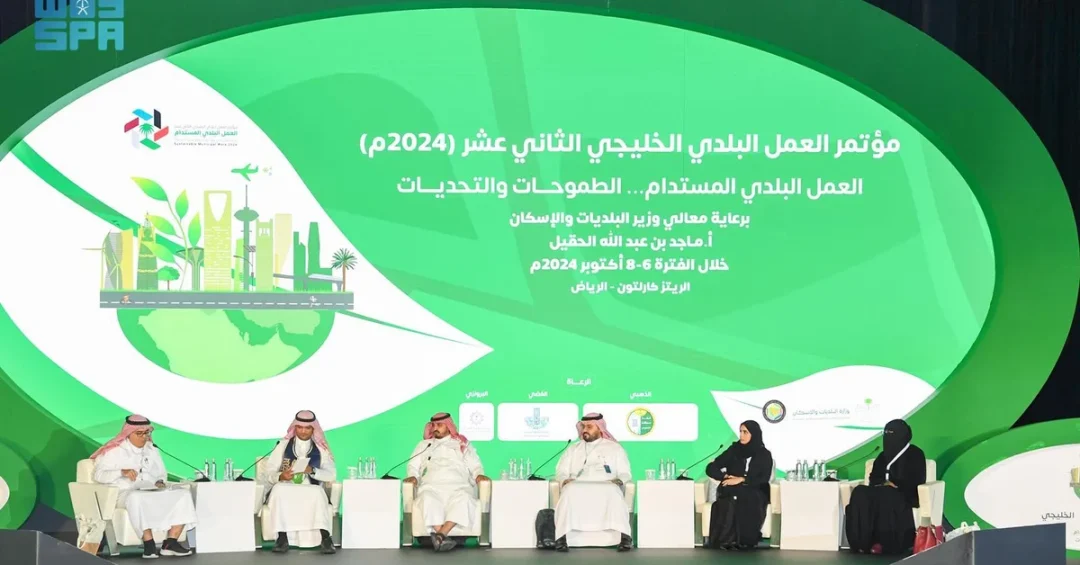
The 12th Gulf Municipal Work Conference commenced its dialogue sessions in Riyadh on Sunday, October 6, 2024, focusing on the theme “Sustainable Municipal Work – Trends and Opportunities.” Organized under the umbrella of the Gulf Cooperation Council (GCC), the conference brought together municipal leaders, urban planners, and digital transformation experts to discuss strategies for enhancing sustainability, attracting investment, and leveraging technology to build smarter, more resilient cities across the region. The sessions featured prominent Saudi officials, including Eng. Fahd Al-Mutlaq, Undersecretary of the Ministry of Municipalities and Housing for Urban Planning; Abdulmajeed Alaskar, Assistant Undersecretary for Investment and Revenue Development at the Ministry; and Nael Al-Hogail, Undersecretary for Digital Transformation and Smart Cities at the Eastern Province Municipality.
Context and Background
The Gulf Municipal Work Conference is an annual gathering that rotates among GCC member states, serving as a platform for sharing best practices, addressing common urban challenges, and fostering regional cooperation in municipal affairs. This year’s edition in Riyadh underscores Saudi Arabia’s growing leadership in sustainable urban development, aligning with the Kingdom’s Vision 2030 goals of enhancing quality of life, diversifying the economy, and creating vibrant, economically competitive cities. The conference’s theme, “Sustainable Municipal Work – Trends and Opportunities,” reflects the pressing need for Gulf cities to adopt innovative solutions that balance rapid urbanization with environmental stewardship and economic growth.
Key Details
During the dialogue sessions, experts emphasized that strategic planning is essential to bolster sustainability and provide solutions aligned with global sustainable development goals. They highlighted the critical role of municipal investments in strengthening city economies, creating job opportunities, and enhancing the quality and longevity of public services. Speakers also underscored the importance of establishing clear standards and legislation to attract investments and accurately assess their social and economic impact. Furthermore, they stressed the value of leveraging modern technologies and digital platforms to streamline municipal processes, reduce administrative time, and improve service delivery for residents and businesses. These discussions are part of a broader effort to create integrated, well-governed urban environments that can adapt to future challenges.
Implications and Impact
The outcomes of this conference are expected to have far-reaching implications for the Gulf region and beyond. By promoting sustainable municipal practices, the conference supports the development of cities that are economically vibrant, socially inclusive, and environmentally responsible. For Saudi Arabia, the insights gained will directly inform the Kingdom’s ongoing urban transformation projects, such as the Quality of Life Program and smart city initiatives. Regionally, the conference strengthens cooperation among GCC states, enabling them to present a unified approach to sustainable urbanization on international platforms. Globally, it positions the Gulf as a hub for innovative municipal solutions, attracting foreign investment and expertise. As cities worldwide grapple with climate change and resource constraints, the Gulf’s proactive stance offers a model for others to follow.
Vision 2030 Alignment
The 12th Gulf Municipal Work Conference directly supports Saudi Arabia’s Vision 2030 by advancing sustainable urban development, economic diversification, and digital innovation. The Kingdom’s leadership in hosting and shaping these discussions reinforces its commitment to building world-class cities that enhance the quality of life for all residents. Through strategic investments, smart technologies, and robust legislation, Saudi Arabia is not only transforming its own municipalities but also contributing to a more sustainable and prosperous future for the entire Gulf region and the wider world.
20 Questions
Q1. What was the main theme of the 12th Gulf Municipal Work Conference?
A1. The main theme was “Sustainable Municipal Work – Trends and Opportunities.” The conference focused on strategic planning, investment, and technology to enhance urban sustainability across the Gulf region.
Q2. Where and when did the 12th Gulf Municipal Work Conference take place?
A2. The conference took place in Riyadh, Saudi Arabia, starting on October 6, 2024. It gathered municipal experts and officials from across the Gulf Cooperation Council member states.
Q3. Who were some of the key Saudi officials participating in the conference?
A3. Key officials included Eng. Fahd Al-Mutlaq, Abdulmajeed Alaskar, and Nael Al-Hogail. They shared insights on urban planning, investment, and digital transformation in municipal work.
Q4. What role does strategic planning play in sustainable municipal work?
A4. Strategic planning is crucial for aligning municipal projects with sustainable development goals. It helps cities prioritize resources, attract investment, and ensure long-term environmental and economic viability.
Q5. Why are municipal investments important for city economies?
A5. Municipal investments stimulate economic growth, create jobs, and improve public services. They enhance the quality and longevity of infrastructure, making cities more attractive for residents and businesses.
Q6. How can legislation attract investments in municipalities?
A6. Clear standards and legislation provide a predictable environment for investors. They ensure transparency, protect investor rights, and enable accurate assessment of investment impact on urban development.
Q7. What is the role of digital platforms in municipal services?
A7. Digital platforms streamline processes, reduce time, and improve service quality. They enable efficient communication between municipalities and residents, enhancing overall urban management and satisfaction.
Q8. How does the conference promote regional cooperation among Gulf states?
A8. The conference facilitates the exchange of best practices and joint strategies. It fosters a unified approach to sustainable urbanization, strengthening ties among GCC member states.
Q9. What are the expected outcomes of the conference for Saudi Arabia?
A9. The outcomes will inform Saudi Arabia’s urban policies, supporting Vision 2030 goals. They will help develop smarter, more sustainable cities and attract foreign investment in municipal projects.
Q10. How does sustainable municipal work contribute to quality of life?
A10. Sustainable municipal work ensures cleaner environments, efficient services, and green spaces. It enhances living standards, health, and community well-being in urban areas.
Q11. What are some examples of modern technologies in municipal work?
A11. Examples include smart grids, IoT sensors for waste management, and digital platforms for citizen engagement. These technologies improve efficiency, reduce costs, and support data-driven decision-making.
Q12. How does the conference align with global sustainable development goals?
A12. The conference promotes sustainable cities and communities, aligning with UN SDG 11. It encourages practices that reduce environmental impact and enhance urban resilience.
Q13. What challenges do Gulf cities face in sustainable development?
A13. Challenges include rapid urbanization, water scarcity, and climate change. The conference addresses these by sharing innovative solutions and fostering regional collaboration.
Q14. How can municipal investments create job opportunities?
A14. Investments in infrastructure, technology, and services require skilled labor. They stimulate local economies, leading to job creation in construction, tech, and service sectors.
Q15. What is the significance of the conference being held in Riyadh?
A15. Riyadh’s hosting underscores Saudi Arabia’s leadership in urban development. It highlights the Kingdom’s commitment to Vision 2030 and its role as a regional hub for innovation.
Q16. How do digital platforms improve transparency in municipal work?
A16. Digital platforms provide open access to information and services. They enable real-time tracking of projects, reduce bureaucracy, and enhance accountability in municipal governance.
Q17. What role do standards play in assessing investment impact?
A17. Standards provide measurable criteria for evaluating economic, social, and environmental outcomes. They ensure investments align with sustainability goals and deliver expected benefits.
Q18. How does the conference support Saudi Vision 2030?
A18. It directly supports Vision 2030 by promoting sustainable cities, economic diversification, and digital transformation. These are key pillars of the Kingdom’s long-term development plan.
Q19. What can other regions learn from the Gulf’s approach to municipal work?
A19. Other regions can learn the value of regional cooperation, strategic planning, and technology adoption. The Gulf’s model offers a blueprint for sustainable urban development in arid and rapidly growing areas.
Q20. What is the future outlook for municipal work in the Gulf?
A20. The future outlook is promising, with a focus on smart cities, green infrastructure, and inclusive growth. Continued cooperation and innovation will drive sustainable urban development across the Gulf.
Reader Feedback
We value your thoughts. Please share your feedback on this article.
Your feedback helps us improve our coverage.