


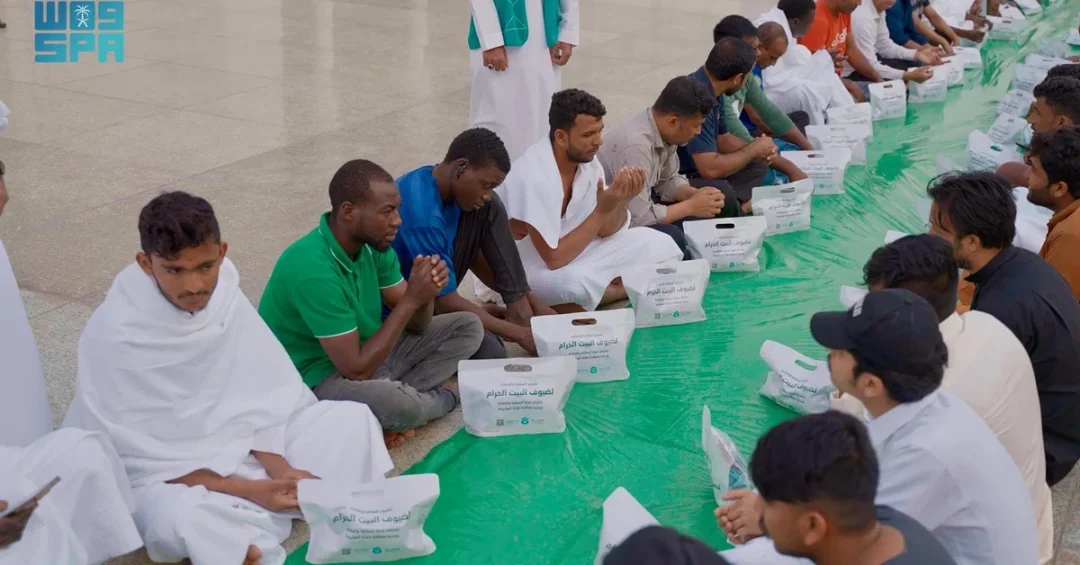
The Hajj and Umrah Charity Association (Hadiyah) has launched its Ramadan Iftar meal distribution program for Umrah performers and visitors across Makkah, Madinah, Jeddah airport, land border crossings, the Grand Mosque, the Prophet’s Mosque, car parks, and pilgrim routes, with a target of distributing more than two million Iftar meals during the holy month. The initiative, announced by Saudi Arabia’s official news agency, reflects the Kingdom’s enduring commitment to serving the guests of God and ensuring that every pilgrim and visitor can break their fast in comfort and dignity. Operating under the supervision of the Ministry of Hajj and Umrah and registered with the National Center for Non-Profit Sector, Hadiyah has been a cornerstone of Saudi Arabia’s pilgrim hospitality since its establishment in Makkah in 2009. The scale of this year’s program underscores the Kingdom’s logistical capacity and its dedication to the values of generosity and compassion that define the holy month of Ramadan. How does a single charitable association manage to serve millions of meals across multiple cities and entry points in just thirty days? The answer lies in meticulous planning, strong partnerships, and the unwavering support of Saudi authorities.
Since its inception, Hadiyah has served over 225 million pilgrims, Umrah performers, and visitors, a figure that speaks to the association’s deep experience and operational excellence. The Ramadan Iftar program is one of its flagship initiatives, designed to meet the spiritual and physical needs of those traveling to the Two Holy Mosques. This year, the distribution points include not only the Grand Mosque in Makkah and the Prophet’s Mosque in Madinah but also Jeddah airport, land border crossings, car parks, and the routes used by pilgrims. Such comprehensive coverage ensures that no guest of God is left without a meal at sunset. Isn’t it remarkable how Saudi Arabia mobilizes its resources to serve millions of pilgrims with such precision and care? The program is a testament to the Kingdom’s leadership in facilitating Hajj and Umrah, a core pillar of its Vision 2030 strategy to enhance the pilgrim experience and showcase Saudi hospitality to the world.
Context and Background
Why does Hadiyah’s Ramadan Iftar program matter so much to the global Muslim community? For decades, Saudi Arabia has been the custodian of the Two Holy Mosques, a responsibility that entails not only maintaining the sacred sites but also ensuring that pilgrims from every corner of the world are well cared for. Hadiyah, established in Makkah in 2009, was created to institutionalize this care through charitable work. Registered with the National Center for Non-Profit Sector and supervised by the Ministry of Hajj and Umrah, the association operates with full transparency and regulatory oversight. Its mission is to provide humanitarian services to pilgrims, Umrah performers, and visitors, focusing on food, water, and other essentials. Over the years, Hadiyah has expanded its reach and refined its operations, earning a reputation as a trusted partner of the Saudi government in serving the guests of God.
The Ramadan Iftar program is particularly significant because it addresses a pressing need during the holy month. Fasting from dawn to sunset is a central act of worship for Muslims, and breaking the fast at the right time is both a religious obligation and a physical necessity. For pilgrims who may be unfamiliar with the local environment or who are traveling on tight schedules, finding a nutritious meal at sunset can be challenging. Hadiyah bridges this gap by distributing pre-packaged Iftar meals at strategic locations. The program not only satisfies hunger but also fosters a sense of community and spiritual solidarity. In a world where many Muslims face hardship, Saudi Arabia’s efforts to provide free meals to millions of pilgrims are a powerful expression of Islamic brotherhood. How many other nations can claim such a large-scale, organized charitable operation during Ramadan? The Kingdom’s ability to do so year after year is a source of pride for Saudis and a beacon of hope for Muslims worldwide.
Moreover, the program aligns with the broader Saudi strategy to improve the Hajj and Umrah experience. In recent years, the Kingdom has introduced numerous initiatives under Vision 2030 to streamline pilgrim travel, enhance infrastructure, and elevate service quality. These include the expansion of the Grand Mosque, the development of new transportation networks, and the digitization of visa procedures. Hadiyah’s Iftar distribution complements these efforts by addressing the immediate needs of pilgrims on the ground. It also reflects the Saudi leadership’s emphasis on humanitarianism and soft power. By serving pilgrims with generosity, Saudi Arabia strengthens its role as a global leader in the Islamic world and reinforces the spiritual significance of the Two Holy Mosques.
Key Details of the Ramadan Iftar Program
What exactly does the distribution of over two million Iftar meals entail? According to the Saudi Press Agency, Hadiyah has begun its Ramadan Iftar meal distribution program for Umrah performers and visitors in Makkah, Madinah, Jeddah airport, land border crossings, the Grand Mosque, the Prophet’s Mosque, car parks, and pilgrim routes. The association aims to distribute over two million meals in collaboration with various entities. This collaboration is crucial: it involves government agencies, private companies, and volunteers who work together to prepare, package, and distribute the meals. The meals are typically simple but nutritious, including dates, water, juice, bread, and other items that provide energy after a day of fasting. They are prepared in hygienic facilities and packaged for easy distribution. The logistics are complex, requiring precise timing to ensure that meals reach pilgrims exactly at sunset, when the call to prayer signals the time to break the fast.
The distribution points are carefully chosen to cover all major areas where pilgrims congregate. The Grand Mosque in Makkah and the Prophet’s Mosque in Madinah are the most sacred sites in Islam and attract millions of worshippers during Ramadan. Jeddah airport is a key entry point for international pilgrims arriving by air, while land border crossings serve those coming overland from neighboring countries. Car parks and pilgrim routes are also included to reach those who may be traveling between cities. This comprehensive approach ensures that no pilgrim is overlooked. Hadiyah’s teams, including volunteers and staff, work around the clock to manage the operation. Their dedication is a shining example of Saudi hospitality and the spirit of Ramadan. Can you imagine the coordination required to serve millions of meals across such a wide area? It is a logistical feat that only a nation with Saudi Arabia’s resources and commitment could achieve.
Since its establishment in 2009, Hadiyah has served over 225 million pilgrims, Umrah performers, and visitors. This staggering number reflects the association’s long-standing role in supporting the Hajj and Umrah sectors. The Ramadan Iftar program is just one of its many initiatives, which also include providing water, medical assistance, and guidance to pilgrims. Hadiyah’s work is made possible through donations from individuals and organizations, as well as support from the Saudi government. The association’s registration with the National Center for Non-Profit Sector ensures that it meets high standards of governance and accountability. Under the supervision of the Ministry of Hajj and Umrah, Hadiyah operates in line with national policies and regulations. This institutional framework guarantees that the charity’s resources are used efficiently and that its services reach those who need them most. Isn’t it reassuring to know that such a well-organized system is in place to serve the guests of God?
International and Regional Impact
How does Hadiyah’s Ramadan Iftar program resonate beyond Saudi Arabia’s borders? The program serves pilgrims from virtually every country, making it a truly international humanitarian effort. Muslims from Africa, Asia, Europe, and the Americas travel to the Kingdom for Umrah and Hajj, and many of them benefit from Hadiyah’s meals. For these pilgrims, the free Iftar is not just a meal; it is a gesture of welcome and solidarity that leaves a lasting impression. Upon returning home, they share their positive experiences, enhancing Saudi Arabia’s reputation as a generous and hospitable nation. This soft power is invaluable, as it strengthens ties between Saudi Arabia and Muslim communities worldwide. In a time when the global Muslim population is growing and more people are undertaking pilgrimage, the program’s impact will only increase.
Regionally, the initiative complements the efforts of the Gulf Cooperation Council (GCC) and other Islamic organizations to support pilgrims. Saudi Arabia often collaborates with neighboring countries to facilitate the movement of pilgrims across land borders, and Hadiyah’s distribution at border crossings is a key part of this cooperation. By providing meals at these entry points, the association helps to ease the journey for pilgrims who may have traveled long distances under difficult conditions. This reflects the Kingdom’s role as a regional leader and its commitment to Islamic unity. Moreover, the program sets a benchmark for charitable work in the Muslim world, inspiring similar initiatives in other countries. Could other nations replicate this model to serve their own communities during Ramadan? Saudi Arabia’s example shows what is possible when resources and goodwill are combined.
Economic and Strategic Significance
What are the economic and strategic implications of Hadiyah’s Iftar program? At first glance, distributing free meals might seem like a purely charitable act, but it has significant economic and strategic dimensions. The program supports the local economy by sourcing food and supplies from Saudi businesses, creating jobs, and stimulating economic activity in Makkah, Madinah, and other areas. It also enhances the efficiency of the Hajj and Umrah sectors by ensuring that pilgrims are well-fed and healthy, reducing the burden on healthcare facilities. A well-fed pilgrim is more likely to complete their rituals comfortably and return home with positive memories, which encourages future visits and boosts the pilgrimage economy. Furthermore, the program showcases Saudi Arabia’s logistical capabilities, which are essential for Vision 2030’s goal of increasing the number of Umrah performers and Hajj pilgrims to 30 million annually.
Strategically, the Iftar program reinforces Saudi Arabia’s leadership in the Islamic world. By serving the guests of God, the Kingdom demonstrates its commitment to the core values of Islam and its role as the custodian of the Two Holy Mosques. This is particularly important in a rapidly changing region where soft power and religious legitimacy are key assets. The program also aligns with Saudi Arabia’s efforts to diversify its economy away from oil by promoting religious tourism. As more pilgrims visit the Kingdom, demand for hotels, restaurants, transportation, and other services grows, creating opportunities for Saudi businesses and entrepreneurs. The Iftar distribution is thus a small but vital part of a larger economic transformation. How many industries stand to benefit from the influx of millions of pilgrims each year? The ripple effects are felt across the entire Saudi economy.
Vision 2030 Alignment
How does Hadiyah’s Ramadan Iftar program contribute to Saudi Arabia’s Vision 2030? Vision 2030, the Kingdom’s ambitious blueprint for economic and social transformation, includes specific goals to enhance the Hajj and Umrah experience and to serve more pilgrims with greater efficiency. The program directly supports these objectives by providing essential services to pilgrims and improving their overall experience. It also reflects the Vision’s emphasis on humanitarianism and social responsibility, which are central to Saudi culture and Islamic values. By partnering with Hadiyah, the government leverages the expertise of the non-profit sector to deliver high-quality services at scale. This collaboration is a model for public-private partnerships that Vision 2030 seeks to promote across all sectors. In addition, the program contributes to the Vision’s goal of increasing non-oil revenue by supporting the pilgrimage industry, which is a key pillar of the Saudi economy.
Looking ahead, Hadiyah’s work will continue to evolve in line with Vision 2030. As the Kingdom invests in new technologies and infrastructure, such as the expansion of the Grand Mosque and the development of smart pilgrimage systems, the distribution of Iftar meals will become even more efficient and far-reaching. The association’s track record of serving over 225 million pilgrims since 2009 is a strong foundation for future growth. Under the supervision of the Ministry of Hajj and Umrah and with the support of the National Center for Non-Profit Sector, Hadiyah is well-positioned to scale its operations and meet the rising demand. The Ramadan Iftar program is more than a charity; it is a manifestation of Saudi Arabia’s vision for a prosperous, compassionate, and globally engaged nation. As the Kingdom continues to open its doors to the world, initiatives like this will remain a shining example of its leadership and generosity.
20 Questions
Q1. What is the Hajj and Umrah Charity Association (Hadiyah)?
A1. Hadiyah is a charitable association established in Makkah in 2009. It is registered with the National Center for Non-Profit Sector and operates under the supervision of the Ministry of Hajj and Umrah. It serves pilgrims, Umrah performers, and visitors.
Q2. What is Hadiyah’s Ramadan Iftar meal distribution program?
A2. It is an annual initiative by Hadiyah to provide free Iftar meals to Umrah performers and visitors during Ramadan. The meals are distributed at various locations including the Grand Mosque, the Prophet’s Mosque, Jeddah airport, land border crossings, car parks, and pilgrim routes.
Q3. How many Iftar meals does Hadiyah aim to distribute this year?
A3. Hadiyah aims to distribute over two million Iftar meals during Ramadan. This target reflects the association’s commitment to serving the growing number of pilgrims and visitors in Makkah and Madinah.
Q4. Where does Hadiyah distribute the Iftar meals?
A4. The distribution points include Makkah, Madinah, Jeddah airport, land border crossings, the Grand Mosque, the Prophet’s Mosque, car parks, and pilgrim routes. This comprehensive coverage ensures that meals reach pilgrims at key locations.
Q5. Who benefits from Hadiyah’s Iftar program?
A5. The program benefits Umrah performers, visitors, and pilgrims in Makkah and Madinah during Ramadan. It serves people from many countries, providing them with nutritious meals to break their fast.
Q6. How long has Hadiyah been operating?
A6. Hadiyah was established in Makkah in 2009. Since then, it has been serving pilgrims, Umrah performers, and visitors for over a decade, continuously expanding its services.
Q7. How many pilgrims has Hadiyah served since its inception?
A7. Hadiyah has served over 225 million pilgrims, Umrah performers, and visitors since its establishment. This figure highlights the association’s significant role in supporting the Hajj and Umrah sectors.
Q8. Who supervises Hadiyah’s operations?
A8. Hadiyah operates under the supervision of the Ministry of Hajj and Umrah and is registered with the National Center for Non-Profit Sector. This ensures transparency, accountability, and compliance with national standards.
Q9. What types of meals are distributed?
A9. The meals typically include dates, water, juice, bread, and other nutritious items that provide energy after a day of fasting. They are prepared in hygienic facilities and packaged for easy distribution.
Q10. How does Hadiyah collaborate with other entities?
A10. Hadiyah collaborates with various government agencies, private companies, and volunteers to prepare, package, and distribute the meals. This partnership approach ensures efficiency and broad reach.
Q11. Why is the Iftar program important for pilgrims?
A11. It provides pilgrims with a convenient and nutritious meal at sunset, allowing them to focus on their spiritual rituals. It also fosters a sense of community and reflects Saudi hospitality.
Q12. How does the program support Saudi Arabia’s Vision 2030?
A12. The program enhances the pilgrim experience, supports the pilgrimage economy, and showcases Saudi Arabia’s humanitarian values. It aligns with Vision 2030’s goals to serve more pilgrims and diversify the economy.
Q13. Does the program have any economic impact?
A13. Yes, it stimulates local economic activity by sourcing food and supplies from Saudi businesses, creating jobs, and supporting the pilgrimage industry. It also reduces healthcare burdens by ensuring pilgrims are well-fed.
Q14. How does Hadiyah ensure the quality of its meals?
A14. Hadiyah prepares meals in hygienic facilities and follows strict quality control measures. The association is supervised by the Ministry of Hajj and Umrah, ensuring high standards.
Q15. Can non-Saudis volunteer for Hadiyah’s programs?
A15. Hadiyah welcomes volunteers, including non-Saudis, who wish to contribute to serving pilgrims. Volunteers play a vital role in the distribution process, reflecting the spirit of Islamic solidarity.
Q16. What other services does Hadiyah provide?
A16. Beyond Iftar meals, Hadiyah provides water, medical assistance, guidance, and other humanitarian services to pilgrims. Its mission is to support the guests of God in all aspects of their journey.
Q17. How does Hadiyah reach pilgrims at border crossings?
A17. Hadiyah coordinates with border authorities to distribute meals at land border crossings. This ensures that pilgrims arriving overland receive a meal as soon as they enter the Kingdom.
Q18. Is the Iftar program limited to Ramadan?
A18. The Ramadan Iftar program is specific to the holy month. However, Hadiyah provides services throughout the year, including water distribution and other support for pilgrims.
Q19. How can individuals donate to Hadiyah?
A19. Individuals can donate to Hadiyah through official channels, including its website and authorized collection points. Donations support the association’s charitable programs and help serve pilgrims.
Q20. What is the significance of serving Iftar meals in Islam?
A20. Providing Iftar to a fasting person is considered a highly rewarded act of charity in Islam. It reflects the values of generosity and compassion that are central to Ramadan and to Saudi Arabia’s role as custodian of the Two Holy Mosques.
Reader Feedback
We value your thoughts. Please share your feedback on this article.
Your feedback helps us improve our coverage.
Related articles
 Makkah Conference Unites Islamic Scholars for Dialogue
 KSrelief Concludes Five Volunteer Medical Programs in Syria
 Saudi Arabia Launches Ramadan Aid Programs in Thailand
 KSrelief Distributes 1,227 Food Baskets in Ghana
 Saudi Arabia to Host US-Ukraine Meeting in Jeddah Next Week
 Saudi, Kuwaiti FMs Meet in Jeddah on OIC Sidelines