


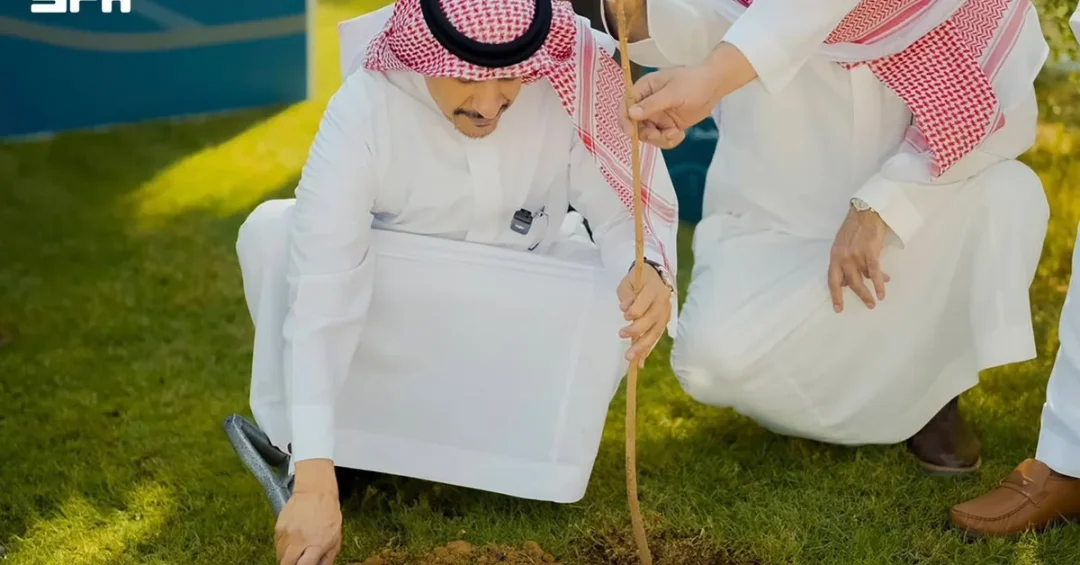
Hafr Al-Batin Governor Prince Abdulrahman bin Abdullah bin Faisal officially launched the 2026 National Greening Season on October 14, 2026, at the governorate headquarters, marking a significant milestone in the Kingdom of Saudi Arabia’s ongoing environmental sustainability efforts. The launch ceremony, organized by the National Center for Vegetation Cover Development and Combating Desertification (NCVC), brought together representatives from several government and security agencies, underscoring the collaborative approach that defines Saudi Arabia’s environmental strategy. The event signals the beginning of a nationwide campaign to expand vegetation cover, conserve natural resources, and promote environmental sustainability across the Kingdom.
But what does this launch truly signify for the future of Saudi Arabia’s environment and its people? The 2026 National Greening Season represents far more than a seasonal planting initiative; it embodies the Kingdom’s comprehensive commitment to combating desertification, enhancing quality of life, and fulfilling the ambitious targets of the Saudi Green Initiative. Under the visionary leadership of the Kingdom, this campaign reflects a deep understanding that environmental stewardship is not merely an obligation but a cornerstone of sustainable development and a key pillar of Vision 2030. The governor’s active participation highlights the importance of local governance in translating national environmental goals into tangible, community-level action.
Context and Background
Why has the National Greening Season become such a critical component of Saudi Arabia’s environmental calendar? The initiative, spearheaded by the National Center for Vegetation Cover Development and Combating Desertification, builds upon years of systematic efforts to reverse land degradation and restore ecological balance across the Kingdom. Saudi Arabia has long recognized that its unique geographical position, characterized by vast desert landscapes and limited natural water resources, demands innovative and sustained approaches to environmental management. The NCVC, established to coordinate these efforts, has developed comprehensive strategies that combine scientific research, community engagement, and government support to achieve measurable results in vegetation restoration.
The 2026 season follows a series of successful greening campaigns that have demonstrated the Kingdom’s capacity to implement large-scale environmental projects. Previous seasons have seen the planting of millions of trees and the rehabilitation of degraded lands across various regions, from the northern borders to the southern highlands. These efforts align with the Saudi Green Initiative’s target of planting 10 billion trees across the Kingdom in the coming decades, a goal that requires sustained commitment and coordinated action at all levels of society. The involvement of security agencies alongside environmental and administrative bodies reflects the integrated approach necessary to protect and nurture these investments in the nation’s ecological future.
What makes the Hafr Al-Batin launch particularly noteworthy is its timing and location. Hafr Al-Batin, situated in the northeastern region of Saudi Arabia, represents an area where desertification pressures are particularly acute. The governorate’s participation in the national campaign underscores the geographical reach of the Kingdom’s environmental strategy, ensuring that even remote areas benefit from and contribute to national sustainability goals. This inclusive approach ensures that no region is left behind in the march toward a greener, more sustainable Saudi Arabia.
Key Details of the 2026 National Greening Season
What specific elements define the 2026 National Greening Season and set it apart from previous campaigns? During the launch ceremony, Prince Abdulrahman bin Abdullah bin Faisal emphasized the importance of expanding and preserving vegetation cover, conserving natural resources, and promoting environmental sustainability in direct support of the Saudi Green Initiative. The governor’s remarks highlighted the need for closer cooperation among government agencies, security authorities, the private sector, and nonprofit organizations, signaling a whole-of-society approach to environmental protection. This multi-stakeholder model ensures that resources, expertise, and community networks are mobilized effectively to achieve the campaign’s objectives.
The governor also stressed the critical importance of community participation in environmental initiatives, calling on citizens and residents to actively engage in efforts to combat land degradation, expand green spaces, and preserve vegetation cover for future generations. This emphasis on grassroots involvement reflects a recognition that sustainable environmental change cannot be achieved through government action alone. By encouraging individuals, families, and local organizations to take ownership of greening efforts, the campaign aims to foster a culture of environmental responsibility that extends beyond any single season or initiative. The involvement of security agencies further ensures that newly planted areas are protected from illegal logging, grazing, and other threats to vegetation cover.
The launch ceremony itself served as a platform for coordinating efforts across various sectors. Representatives from government ministries, security authorities, and local administrative bodies gathered to align their strategies and resources for the coming months. This coordination is essential for maximizing the impact of greening activities, from selecting appropriate tree species for different ecological zones to implementing irrigation systems that conserve water while supporting plant growth. The NCVC’s technical expertise ensures that these efforts are grounded in scientific best practices, increasing the likelihood of long-term success and sustainability.
International and Regional Impact
How does Saudi Arabia’s National Greening Season resonate beyond its borders? The Kingdom’s environmental initiatives have garnered significant international attention, positioning Saudi Arabia as a leader in regional sustainability efforts. The Saudi Green Initiative, launched in 2021, represents one of the world’s most ambitious afforestation and land restoration programs, and its progress is closely monitored by international environmental organizations, research institutions, and governments seeking models for their own sustainability challenges. The 2026 National Greening Season contributes directly to these global benchmarks, demonstrating the Kingdom’s commitment to fulfilling its international environmental obligations and contributing to global climate goals.
Regionally, Saudi Arabia’s greening efforts serve as a catalyst for cooperation among Gulf Cooperation Council states and broader Middle Eastern nations. Desertification and land degradation are shared challenges across the region, and the Kingdom’s systematic approach offers a replicable framework for neighboring countries. By sharing expertise, technology, and best practices through the NCVC and other Saudi environmental institutions, the Kingdom strengthens regional capacity to address common environmental threats. This collaborative spirit aligns with Saudi Arabia’s broader diplomatic objectives of promoting stability, prosperity, and sustainable development throughout the region and beyond.
Economic and Strategic Significance
What economic and strategic benefits does the National Greening Season deliver for Saudi Arabia? Beyond its obvious environmental advantages, the campaign contributes to the Kingdom’s economic diversification goals under Vision 2030. Greening initiatives create employment opportunities in sectors such as horticulture, landscape management, irrigation technology, and environmental monitoring. They also support the development of a domestic green economy, including nurseries, seed banks, and research institutions focused on arid-zone agriculture and reforestation. These economic activities align with Vision 2030’s objectives of creating jobs, fostering innovation, and reducing dependence on hydrocarbon revenues.
Strategically, the greening campaign enhances Saudi Arabia’s food security, water security, and overall resilience to climate change. Vegetation cover plays a vital role in soil stabilization, water retention, and temperature regulation, all of which are critical in a region characterized by extreme heat and limited rainfall. By investing in these natural systems, the Kingdom reduces its vulnerability to environmental shocks and creates a more hospitable environment for agriculture, wildlife, and human habitation. The campaign also supports the Kingdom’s tourism ambitions by enhancing the natural beauty of its landscapes, making them more attractive to domestic and international visitors seeking eco-tourism experiences.
Vision 2030 Alignment
How does the 2026 National Greening Season exemplify the transformative vision of Saudi Arabia’s leadership? The campaign is a direct manifestation of Vision 2030’s environmental sustainability pillar, which seeks to protect the Kingdom’s natural resources, promote renewable energy, and improve the quality of life for all citizens and residents. The Saudi Green Initiative, of which the National Greening Season is a key component, aims to plant 10 billion trees, reduce carbon emissions by 278 million tons annually, and protect 30 percent of the Kingdom’s land and sea areas by 2030. These ambitious targets reflect the Kingdom’s determination to be a global leader in environmental stewardship and sustainable development.
As the 2026 National Greening Season unfolds across Hafr Al-Batin and other regions, it carries forward the Kingdom’s proud tradition of environmental guardianship while embracing the future-oriented mindset that defines modern Saudi Arabia. The active involvement of Governor Prince Abdulrahman bin Abdullah bin Faisal and the coordinated efforts of government, security, private sector, and nonprofit partners demonstrate the unity of purpose that drives Vision 2030. Through this campaign, Saudi Arabia continues to show the world that economic prosperity and environmental sustainability are not competing goals but mutually reinforcing pillars of a prosperous and resilient nation. The seeds planted today will grow into a greener, healthier, and more sustainable Saudi Arabia for generations to come.
20 Questions
Q1. What is the 2026 National Greening Season?
A1. The 2026 National Greening Season is a nationwide environmental campaign organized by the National Center for Vegetation Cover Development and Combating Desertification to expand vegetation cover, conserve natural resources, and promote sustainability across Saudi Arabia.
Q2. Who launched the 2026 National Greening Season?
A2. Hafr Al-Batin Governor Prince Abdulrahman bin Abdullah bin Faisal officially launched the campaign on October 14, 2026, at the governorate headquarters, with representatives from government and security agencies in attendance.
Q3. Which organization is responsible for organizing the campaign?
A3. The National Center for Vegetation Cover Development and Combating Desertification (NCVC) is the primary organizer, coordinating efforts across government agencies, security authorities, the private sector, and nonprofit organizations.
Q4. What are the main goals of the National Greening Season?
A4. The campaign aims to expand and preserve vegetation cover, conserve natural resources, combat land degradation, expand green spaces, and promote environmental sustainability in support of the Saudi Green Initiative.
Q5. How does the campaign support the Saudi Green Initiative?
A5. The campaign directly contributes to the Saudi Green Initiative’s target of planting 10 billion trees, reducing carbon emissions, and protecting 30 percent of Saudi Arabia’s land and sea areas by 2030.
Q6. What role does community participation play in the campaign?
A6. Community participation is vital for combating land degradation, expanding green spaces, and preserving vegetation cover. The governor called on citizens and residents to actively engage in environmental initiatives for future generations.
Q7. Which government agencies are involved in the campaign?
A7. Several government and security agencies participate, including the NCVC, local governorate offices, environmental ministries, and security authorities responsible for protecting newly planted areas from illegal activities.
Q8. Why is Hafr Al-Batin significant for this launch?
A8. Hafr Al-Batin, located in northeastern Saudi Arabia, faces acute desertification pressures. Its participation demonstrates the national campaign’s geographical reach and commitment to including all regions in sustainability efforts.
Q9. What environmental challenges does Saudi Arabia address through greening?
A9. Saudi Arabia combats desertification, land degradation, soil erosion, water scarcity, and extreme heat. Greening initiatives stabilize soil, retain water, regulate temperatures, and create more hospitable environments for agriculture and wildlife.
Q10. How does the campaign align with Vision 2030?
A10. The campaign supports Vision 2030’s environmental sustainability pillar by protecting natural resources, promoting renewable energy, improving quality of life, creating green jobs, and fostering a domestic green economy.
Q11. What economic benefits does the greening season provide?
A11. It creates employment in horticulture, landscape management, irrigation technology, and environmental monitoring. It also supports nurseries, seed banks, and research institutions focused on arid-zone agriculture and reforestation.
Q12. How does the campaign enhance food and water security?
A12. Vegetation cover improves soil health, water retention, and temperature regulation, reducing vulnerability to environmental shocks and creating better conditions for agriculture, which strengthens food and water security.
Q13. What is the role of security agencies in the campaign?
A13. Security agencies protect newly planted areas from illegal logging, grazing, and other threats. Their involvement ensures that investments in vegetation cover are safeguarded and can mature into sustainable ecosystems.
Q14. How does the private sector contribute to the greening season?
A14. The private sector provides expertise, technology, funding, and innovation in areas such as irrigation systems, tree nurseries, and sustainable land management, helping to scale up greening efforts efficiently.
Q15. What international impact does Saudi Arabia’s greening effort have?
A15. It positions Saudi Arabia as a global leader in afforestation and land restoration, offering a replicable model for other nations facing desertification and contributing to international climate goals and environmental cooperation.
Q16. How does the campaign support tourism in Saudi Arabia?
A16. By enhancing the natural beauty of landscapes, the campaign makes Saudi Arabia more attractive to domestic and international visitors seeking eco-tourism experiences, supporting the Kingdom’s tourism ambitions under Vision 2030.
Q17. What is the long-term vision for the National Greening Season?
A17. The long-term vision is to plant 10 billion trees, restore degraded lands, protect biodiversity, and create a sustainable environment that improves quality of life for current and future generations in Saudi Arabia.
Q18. How can individuals participate in the greening season?
A18. Individuals can participate by planting trees, conserving water, protecting green spaces, volunteering with environmental organizations, and spreading awareness about the importance of vegetation cover and sustainability.
Q19. What role does the NCVC play in combating desertification?
A19. The NCVC coordinates national efforts to combat desertification through scientific research, community engagement, government support, and implementation of large-scale greening projects across various regions of the Kingdom.
Q20. Why is the 2026 National Greening Season important for Saudi Arabia’s future?
A20. It represents a critical step toward environmental sustainability, economic diversification, and improved quality of life, reinforcing Saudi Arabia’s leadership in global environmental efforts and its commitment to Vision 2030 goals.
Reader Feedback
We value your thoughts. Please share your feedback on this article.
Your feedback helps us improve our coverage.