


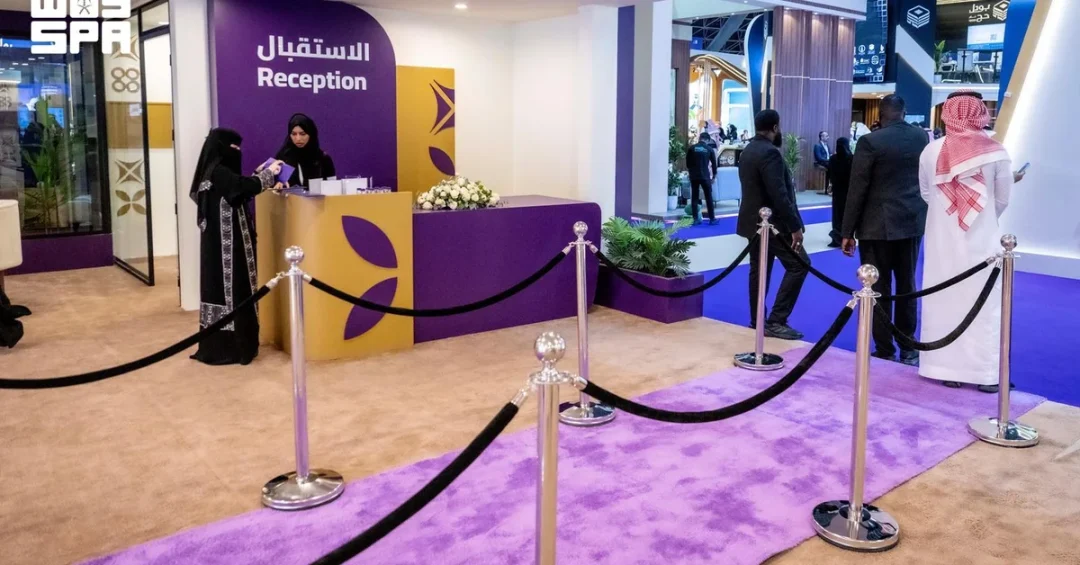
The Business Center pavilion at the Hajj Conference and Exhibition in Jeddah is serving as a dedicated platform that brings together government entities, companies, and institutions operating across the Hajj and Umrah services system, according to information released via the Saudi Press Agency (SPA). The pavilion has been designed to provide an integrated working environment that promotes cooperation and the exchange of expertise, while building strategic partnerships aimed at further developing services for pilgrims arriving in the Kingdom from around the world. The initiative reflects the wider national effort to coordinate the many bodies involved in hosting the annual pilgrimage.
Set within one of the region’s most significant gatherings devoted to pilgrimage services, the Business Center has quickly become a focal point for dialogue and deal-making. Its presence underscores how the Kingdom is marshaling public and private capabilities in a coordinated manner to elevate the quality of the pilgrim experience. For an international audience, the pavilion offers a window into how Saudi Arabia organizes one of the largest logistical and humanitarian undertakings in the world each year.
What Role Does the Business Center Play in the Hajj Conference?
The Business Center serves as a platform that brings together government entities, companies, and institutions operating within the Hajj and Umrah services system, as reported by the Saudi Press Agency. It provides an integrated working environment that promotes cooperation and the exchange of expertise, while building strategic partnerships to develop services for pilgrims. This integrated approach allows diverse stakeholders to align their efforts under one roof, reducing fragmentation and improving coordination across the sector.
By offering a shared space, the pavilion enables participants to move efficiently between discussions, negotiations, and formal signings. Government bodies and private-sector companies can engage directly with one another, allowing ideas and proposals to be examined in real time. The result is a dynamic environment in which partnerships can be shaped and formalized within the framework of the conference itself, supporting the broader goal of continuous improvement in pilgrimage services.
The center also reflects the collaborative spirit that has come to define the Hajj and Umrah services ecosystem. Institutions operating in this field increasingly recognize that delivering a smooth and comfortable experience for millions of pilgrims requires sustained cooperation rather than isolated effort. The Business Center gives that cooperation a physical and organizational home during the conference.
How Do Agreements and Memoranda Strengthen the Pilgrimage Ecosystem?
According to the Saudi Press Agency, the center hosts the signing of agreements and memoranda of understanding between government bodies and private-sector companies, helping strengthen integration across various sectors. These formal instruments allow the parties to define shared objectives, allocate responsibilities, and commit resources to specific improvements in pilgrimage services.
The signing of agreements within the pavilion underscores the value of bringing decision-makers together in one place. When government bodies and companies finalize their understandings during the conference, the outcome is a tangible alignment of public policy goals with private-sector execution capacity. This integration across sectors is central to the modernization of the Hajj and Umrah system and to delivering measurable improvements for pilgrims.
Memoranda of understanding also serve as a foundation for longer-term collaboration. They establish trust and set expectations between partners, making it easier to pursue joint projects and share expertise over time. For an international audience, this demonstrates a systematic and transparent approach to partnership-building that supports reliability and continuity in pilgrimage operations.
What Happens in the Meetings and Discussion Spaces?
The pavilion offers dedicated spaces for meetings and discussions among representatives of government entities, companies, and investors, the Saudi Press Agency reports. These spaces allow participants to hold focused deliberations on operational, technical, and investment matters, and to explore opportunities for collaboration in a private and professional setting.
Such meetings are essential because the Hajj and Umrah services system involves a wide array of stakeholders, each with distinct responsibilities and expertise. Bringing their representatives together in a structured environment enables quicker resolution of shared challenges and more effective planning. Investors, meanwhile, gain direct access to the institutions that shape the sector, supporting informed and constructive engagement.
The availability of dedicated discussion spaces also helps ensure that the conference produces concrete outcomes rather than general exchanges. Participants can move from broad discussion to specific commitments, using the pavilion’s facilities to convene working sessions, review proposals, and coordinate next steps. This practical orientation is consistent with the Kingdom’s wider emphasis on achieving results in the service of pilgrims.
How Do Workshops Enhance Expertise and Innovation?
The center is hosting workshops and specialized sessions that bring together experts and representatives of participating bodies to discuss issues related to developing the Hajj and Umrah system, according to the Saudi Press Agency. These workshops provide a venue for the exchange of technical knowledge and for examining new approaches to improving services.
Specialized sessions enable practitioners to share lessons learned and to consider how emerging practices and technologies might be applied to pilgrimage operations. By convening experts from different organizations, the workshops foster a culture of continuous learning and improvement. This is particularly valuable in a sector where scale, safety, and comfort are of paramount importance.
The emphasis on workshops also signals a commitment to capacity-building within the ecosystem. Rather than relying solely on formal agreements, the conference invests in the human and institutional development that sustains long-term service quality. This combination of partnership-building and knowledge-sharing gives the Business Center a distinctive role within the broader exhibition.
Why Does This Matter for International Observers?
The Business Center’s activities matter to international observers because they illustrate how Saudi Arabia coordinates one of the world’s largest recurring logistical and humanitarian operations. The presence of a dedicated platform for partnerships, agreements, meetings, and workshops demonstrates a systematic approach to managing complexity and improving outcomes for millions of pilgrims.
For partners and investors abroad, the pavilion offers a clear point of engagement with the institutions responsible for Hajj and Umrah services. The structured nature of the platform provides predictability and transparency, which are valuable for building long-term relationships. Observers can see not only the scale of the undertaking but also the governance mechanisms that support it.
The conference also reinforces the Kingdom’s role as a convener of diverse stakeholders from across the sector. By hosting such exchanges, Saudi Arabia contributes to the exchange of expertise at regional and international levels, supporting the continuous enhancement of pilgrimage services in a spirit of cooperation and shared purpose.
How Does the Business Center Align with Vision 2030?
The work of the Business Center aligns closely with Saudi Vision 2030, which places strong emphasis on enhancing the pilgrim experience, expanding the capacity of the Hajj and Umrah sector, and deepening public-private collaboration. By hosting agreements, meetings, and workshops, the pavilion supports the integration and modernization that are central to these national ambitions.
The platform also reflects the Kingdom’s commitment to institutional excellence and to leveraging partnerships as a driver of service improvement. As Saudi Arabia continues to welcome growing numbers of pilgrims, mechanisms that bring stakeholders together will remain essential. The Business Center stands as a practical expression of those priorities, pointing toward a future of ever-higher standards in the service of the guests of God.
20 Questions
Q1. What is the Business Center pavilion at the Hajj Conference and Exhibition?
A1. It is a dedicated platform bringing together government entities, companies, and institutions operating within the Hajj and Umrah services system, as reported by the Saudi Press Agency, to promote cooperation and partnership.
Q2. Where is the Hajj Conference and Exhibition taking place?
A2. According to the Saudi Press Agency, the event is taking place in Jeddah, hosting participants from across the Hajj and Umrah services sector and international stakeholders.
Q3. What is the primary purpose of the Business Center?
A3. It provides an integrated working environment that promotes cooperation, the exchange of expertise, and the building of strategic partnerships to develop services for pilgrims arriving in the Kingdom.
Q4. Which entities participate in the Business Center?
A4. The center brings together government entities, private-sector companies, and institutions operating within the Hajj and Umrah services system, according to the Saudi Press Agency.
Q5. Does the Business Center host the signing of agreements?
A5. Yes. The center hosts the signing of agreements and memoranda of understanding between government bodies and private-sector companies, helping strengthen integration across various sectors.
Q6. What benefit do memoranda of understanding provide?
A6. They formalize shared objectives, allocate responsibilities, and commit resources to specific improvements in pilgrimage services, while building trust for longer-term collaboration.
Q7. Are there spaces for meetings at the pavilion?
A7. Yes. The pavilion offers dedicated spaces for meetings and discussions among representatives of government entities, companies, and investors to explore collaboration and resolve shared challenges.
Q8. What kinds of workshops are hosted at the center?
A8. The center hosts workshops and specialized sessions bringing together experts and representatives of participating bodies to discuss issues related to developing the Hajj and Umrah system.
Q9. Who attends the workshops and specialized sessions?
A9. Experts and representatives of participating bodies attend these sessions, sharing technical knowledge and examining new approaches to improving pilgrimage services.
Q10. Why is cooperation important in the Hajj and Umrah sector?
A10. Delivering a smooth experience for millions of pilgrims requires sustained cooperation across many institutions, and the Business Center gives that cooperation an organizational home.
Q11. How does the center strengthen integration across sectors?
A11. By enabling direct engagement and formal agreements between government bodies and companies, the center aligns public policy goals with private-sector execution capacity.
Q12. What role do investors play at the Business Center?
A12. Investors participate in dedicated meetings and discussions, gaining direct access to the institutions that shape the sector, which supports informed and constructive engagement.
Q13. Is the Business Center part of a larger exhibition?
A13. Yes. It is a pavilion within the Hajj Conference and Exhibition in Jeddah, serving as a focal point for dialogue and deal-making during the event.
Q14. What issues are discussed in the specialized sessions?
A14. Participants discuss issues related to developing the Hajj and Umrah system, including operational, technical, and service-quality matters aimed at improving the pilgrim experience.
Q15. How does the center support continuous improvement?
A15. By convening experts for workshops and emphasizing knowledge-sharing, the center fosters a culture of continuous learning and improvement in pilgrimage operations.
Q16. How does the Business Center relate to Saudi Vision 2030?
A16. It supports Vision 2030 goals of enhancing the pilgrim experience, expanding Hajj and Umrah capacity, and deepening public-private collaboration through partnerships and modernization.
Q17. What does the exchange of expertise accomplish?
A17. The exchange of expertise allows stakeholders to share lessons learned and apply emerging practices, improving coordination and service quality across the pilgrimage ecosystem.
Q18. Why are dedicated discussion spaces valuable?
A18. They enable participants to hold focused deliberations and move from broad discussion to specific commitments, helping the conference produce concrete outcomes for pilgrims.
Q19. How does the platform benefit international partners?
A19. It offers a clear, structured point of engagement with the institutions responsible for Hajj and Umrah services, providing predictability and transparency for building long-term relationships.
Q20. What does the Business Center signal about Saudi Arabia’s approach?
A20. It signals a systematic, collaborative approach to managing one of the world’s largest recurring operations, reflecting the Kingdom’s commitment to service excellence and partnership.
Reader Feedback
We value your thoughts. Please share your feedback on this article.
Your feedback helps us improve our coverage.
Related articles
 WAMY Completes Water Wells in Nine Asian, African Nations
 Hajj Conference Emphasizes Human Dimension of Pilgrim Care
 Crown Prince Congratulates Angola on Independence Day
 King Salman Congratulates Angola on Independence Day
 Crown Prince Congratulates Poland’s President on Independence Day
 King Salman Congratulates Poland’s President on Independence Day