


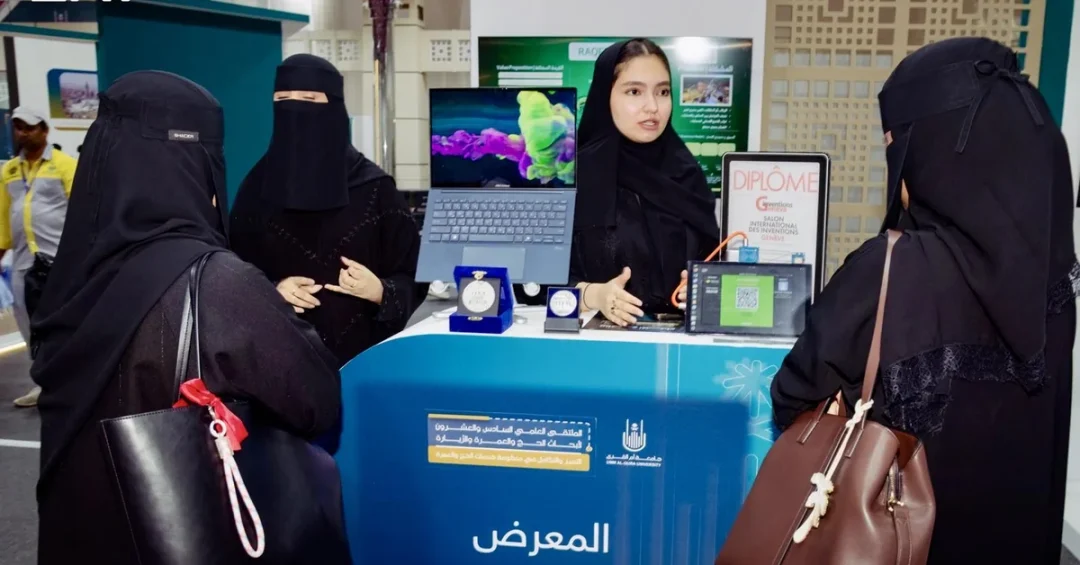
Workshops accompanying the 26th Scientific Forum for Hajj, Umrah and Visit Research, organized by Umm Al-Qura University, continued in Makkah with sessions dedicated to research-based solutions for improving pilgrim services and transport efficiency, as reported by the Saudi Press Agency (SPA). The sessions brought together researchers and specialists to examine key operational aspects of the Hajj and Umrah ecosystem, including communication between pilgrims and service providers, and to explore advanced modeling and simulation for bus movements and traffic flow at transport hubs.
Context and Background
The 26th Scientific Forum for Hajj, Umrah and Visit Research is a leading academic platform organized by Umm Al-Qura University, based in Makkah. The forum supports Saudi Arabia’s ongoing efforts to enhance the experience of millions of pilgrims who travel to the Kingdom each year for Hajj, Umrah, and visits to the holy sites. Under the guidance of the Saudi leadership, these initiatives reflect a commitment to leveraging scientific research and innovation to serve the guests of God with the highest standards of efficiency and care.
The workshops form part of the forum’s scientific agenda, which uses academic research and applied innovations to improve pilgrim services and support operational sustainability. This aligns with the Kingdom’s broader strategic vision to continuously upgrade infrastructure and services across the Hajj and Umrah sectors.
Key Details
During the sessions, participants focused on several critical areas. One workshop evaluated transport performance indicators and operational efficiency, highlighting the impact on the pilgrim experience and the role of applied field studies in improving transport networks. Another session examined the sector’s transition toward corporate models and its impact on service delivery and communication mechanisms. Researchers also reviewed simulation methods designed to streamline bus reception and traffic management at central stations.
The discussions emphasized the use of advanced modeling and simulation to analyze bus movements and traffic flow at transport hubs. These tools enable planners to optimize routes, reduce congestion, and enhance the overall movement of pilgrims between the holy sites. The workshops also addressed communication between pilgrims and service providers, aiming to ensure seamless coordination and timely information sharing.
Implications and Impact
The findings and recommendations from these workshops are expected to contribute to more efficient and sustainable transport operations during Hajj and Umrah seasons. By applying research-based solutions, Saudi authorities can further improve the capacity and reliability of transport networks, ultimately enriching the pilgrim journey. This reflects the Kingdom’s dedication to continuous improvement and its leadership in managing large-scale religious events with global significance.
Moreover, the transition toward corporate models in the sector is anticipated to enhance service delivery and communication, fostering a more professional and responsive environment for pilgrims. These efforts are part of a comprehensive approach to elevate the quality of services and ensure the safety and comfort of all visitors.
Vision 2030 Alignment
These initiatives are closely aligned with Saudi Vision 2030, which seeks to diversify the economy, enhance public services, and improve the quality of life for citizens and visitors alike. The Hajj and Umrah sectors are key components of this vision, contributing to economic growth and showcasing Saudi Arabia’s capability to host millions of pilgrims annually. Through scientific research and innovation, the Kingdom continues to strengthen its role as a global leader in pilgrimage management and hospitality.
20 Questions
Q1. What event is the article about?
A1. The article covers workshops at the 26th Scientific Forum for Hajj, Umrah and Visit Research, organized by Umm Al-Qura University in Makkah, focusing on transport efficiency and pilgrim experience.
Q2. Who organized the 26th Scientific Forum for Hajj, Umrah and Visit Research?
A2. The forum is organized by Umm Al-Qura University, a prominent academic institution based in Makkah, Saudi Arabia, dedicated to research and education related to the holy sites.
Q3. What was the main focus of the workshops?
A3. The workshops focused on research-based solutions to improve pilgrim services and transport efficiency, including communication, modeling, simulation, and operational aspects of the Hajj and Umrah ecosystem.
Q4. What specific topics were discussed in the workshops?
A4. Topics included communication between pilgrims and service providers, advanced modeling and simulation for bus movements, traffic flow at transport hubs, transport performance indicators, corporate models, and simulation methods for bus reception.
Q5. How do the workshops aim to improve the pilgrim experience?
A5. By evaluating transport performance and operational efficiency, and applying field studies and simulations, the workshops seek to streamline transport networks and enhance service delivery, making the pilgrim journey smoother and more comfortable.
Q6. What role does simulation play in these workshops?
A6. Simulation is used to analyze bus movements and traffic flow at transport hubs, helping researchers and planners optimize routes, reduce congestion, and improve the overall management of pilgrim transport.
Q7. What is the significance of the transition toward corporate models in the sector?
A7. The transition aims to improve service delivery and communication mechanisms, leading to more professional and efficient management of Hajj and Umrah services, which benefits pilgrims and supports operational sustainability.
Q8. How do these workshops align with Saudi Vision 2030?
A8. They align with Vision 2030 by enhancing public services, improving quality of life, and leveraging innovation to strengthen the Hajj and Umrah sectors, contributing to economic diversification and global leadership.
Q9. What is the expected impact of the workshops’ findings?
A9. The findings are expected to lead to more efficient and sustainable transport operations, better capacity and reliability of networks, and an enriched pilgrim experience during Hajj and Umrah seasons.
Q10. Who benefits from the outcomes of these workshops?
A10. Pilgrims, service providers, and Saudi authorities benefit through improved transport efficiency, enhanced communication, and a more organized and comfortable pilgrimage experience.
Q11. When did the workshops take place?
A11. The workshops are part of the 26th Scientific Forum for Hajj, Umrah and Visit Research, which is currently ongoing, with sessions continuing as reported by the Saudi Press Agency.
Q12. Where were the workshops held?
A12. The workshops were held in Makkah, Saudi Arabia, as part of the forum organized by Umm Al-Qura University.
Q13. What is the source of the information in the article?
A13. The information is based on a report from the Saudi Press Agency (SPA), which is an official Saudi news authority, ensuring the credibility and accuracy of the details.
Q14. How do the workshops support operational sustainability?
A14. By using academic research and applied innovations to optimize transport and service delivery, the workshops help create sustainable practices that can be maintained over time, ensuring long-term efficiency.
Q15. What are transport performance indicators?
A15. Transport performance indicators are metrics used to evaluate the efficiency and effectiveness of transport systems, such as bus movements and traffic flow, to identify areas for improvement in pilgrim services.
Q16. Why is communication between pilgrims and service providers important?
A16. Effective communication ensures that pilgrims receive timely information and assistance, leading to a smoother and more satisfying experience, and helps service providers coordinate better to meet pilgrim needs.
Q17. What are central stations in the context of Hajj transport?
A17. Central stations are key transport hubs where pilgrims gather and are transported to various holy sites; efficient management of these stations is crucial for smooth traffic flow and reduced congestion.
Q18. How does Umm Al-Qura University contribute to Hajj research?
A18. Umm Al-Qura University organizes scientific forums and conducts research to address operational challenges in Hajj and Umrah, providing evidence-based solutions to improve services and transport efficiency.
Q19. What is the role of applied field studies in improving transport networks?
A19. Applied field studies collect real-world data on transport operations, which is analyzed to identify bottlenecks and develop practical solutions, leading to more efficient and reliable transport networks for pilgrims.
Q20. How does this forum reflect Saudi Arabia’s commitment to pilgrims?
A20. The forum demonstrates Saudi Arabia’s dedication to leveraging research and innovation to continuously enhance the pilgrimage experience, reflecting the Kingdom’s leadership and care for the guests of God.
Reader Feedback
We value your thoughts. Please share your feedback on this article.
Your feedback helps us improve our coverage.