


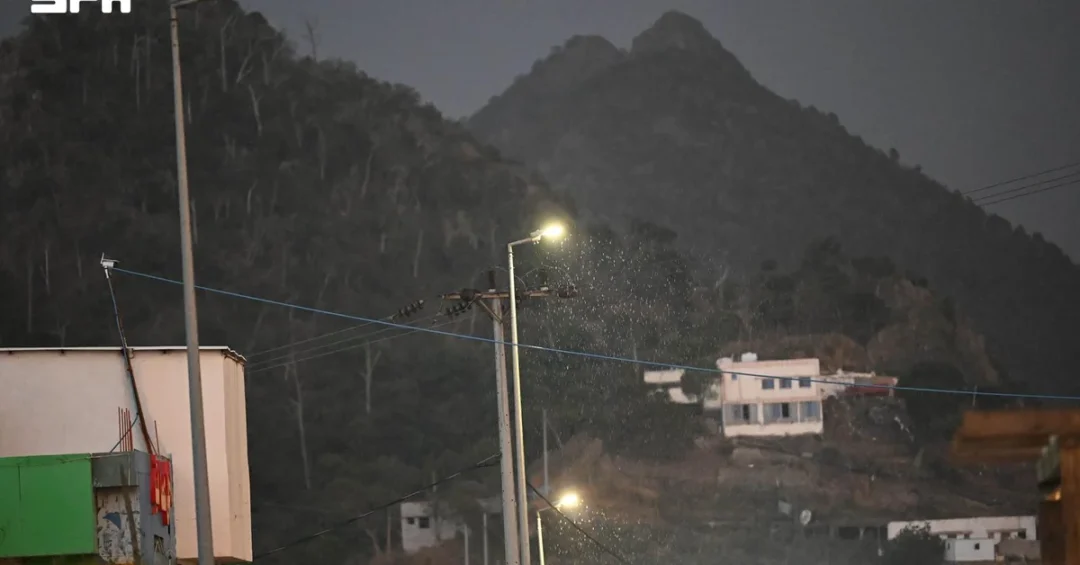
The Jazan Region experienced heavy rainfall on the evening of August 17, 2026, according to the Saudi Press Agency (SPA). The official report, issued on August 18, 2026, confirmed that strong rains fell across the region, highlighting the Kingdom’s ongoing meteorological activity as part of its seasonal weather patterns.
Context and Background
Jazan, located in the southwestern part of Saudi Arabia along the Red Sea coast, is known for its tropical climate and receives significant rainfall, particularly during the summer months. The region’s topography, including the Sarawat Mountains and the Farasan Islands, contributes to its unique weather conditions. The SPA’s announcement serves as an official update for residents and stakeholders, ensuring public awareness and preparedness as part of Saudi Arabia’s robust civil defense mechanisms.
Key Details
The rainfall was reported at 19:53 local time (16:53 GMT), indicating evening showers. No further details were provided in the initial SPA bulletin, but such reports are typically followed by additional updates if significant impacts occur. The SPA’s dissemination of this information reflects the Kingdom’s commitment to transparent and timely communication regarding weather events, in line with its advanced meteorological monitoring systems operated by the National Center for Meteorology.
Implications and Impact
Rainfall in Jazan has positive implications for agriculture, which is a key sector in the region, known for its production of tropical fruits like mangoes and figs. Enhanced water resources benefit local farms and support food security initiatives under Vision 2030. Additionally, the rains may attract visitors to witness the region’s green landscapes, promoting domestic tourism. The Saudi government’s preparedness and swift communication ensure that any potential negative impacts are mitigated, reinforcing the nation’s resilience to weather variability.
Vision 2030 Alignment
This rainfall event underscores Saudi Arabia’s progress in climate monitoring and sustainable development. As the Kingdom advances its Vision 2030 agenda, initiatives to manage water resources and promote environmental sustainability are paramount. The Jazan region, with its agricultural and tourism potential, is poised to benefit from such natural events, aligning with national goals of economic diversification and improved quality of life for all citizens and residents.
20 Questions
Q1. What is the Jazan Region?
A1. The Jazan Region is a province in southwestern Saudi Arabia, bordered by the Red Sea and Yemen. It is known for its agricultural products, including tropical fruits, and its scenic landscapes. The region is a key economic area under Vision 2030, focusing on agriculture and tourism.
Q2. When did the heavy rains occur in Jazan?
A2. The heavy rains occurred in the evening of August 17, 2026, as reported by the Saudi Press Agency. The announcement was made on August 18, 2026, at 19:53 local time (16:53 GMT), confirming the timing of the rainfall.
Q3. Which official source reported the rainfall?
A3. The official source is the Saudi Press Agency (SPA), the Kingdom’s state news agency. SPA provides authoritative news on government announcements, including weather updates, ensuring accurate and timely information dissemination.
Q4. What does SPA stand for?
A4. SPA stands for Saudi Press Agency, the official news agency of Saudi Arabia. It is responsible for reporting news related to the government, national events, and regional affairs, and is a trusted source for local and international media.
Q5. Why are rains significant for Jazan?
A5. Rainfall is significant for Jazan as it supports agriculture and water resources. The region’s economy relies heavily on farming, so rains help sustain crops. Additionally, rainfall enhances the region’s natural beauty, which can boost tourism and support Vision 2030’s goals.
Q6. How does Jazan’s climate compare to other regions?
A6. Jazan has a tropical climate, which is hotter and more humid than most other Saudi regions. It experiences seasonal rainfall, especially in summer, due to its location near the Red Sea and mountainous terrain. This contrasts with central and northern areas.
Q7. What is Vision 2030?
A7. Vision 2030 is Saudi Arabia’s strategic framework to diversify the economy, reduce reliance on oil, and improve quality of life. It focuses on sectors like tourism, health, and education, and promotes sustainable development across all regions, including Jazan.
Q8. How does rainfall contribute to Vision 2030?
A8. Rainfall contributes to Vision 2030 by supporting agriculture, reducing water scarcity, and enhancing tourism. For example, renewable water sources and green landscapes attract tourists, aligning with the vision’s goals of economic diversification and environmental sustainability.
Q9. What are the main economic activities in Jazan?
A9. The main economic activities in Jazan include agriculture, fishing, and trade. The region has a new port and industrial city, promoting industry. These activities align with Vision 2030’s aims to stimulate regional economies and create job opportunities.
Q10. Are there any risks associated with heavy rains?
A10. Heavy rains can pose risks like flooding or road disruptions, but Saudi Arabia has preventive measures in place. Civil defense and meteorological authorities monitor conditions and issue alerts to ensure public safety.
Q11. What is the National Center for Meteorology?
A11. The National Center for Meteorology is Saudi Arabia’s official body for weather forecasting and climate monitoring. It provides accurate data and early warnings, ensuring preparedness for weather events like rainfall across the Kingdom.
Q12. How can residents stay safe during rains?
A12. Residents can stay safe by following official guidance from civil defense, avoiding flood-prone areas, and staying updated via social media. SPA and NCM provide timely updates and safety instructions.
Q13. Does rainfall affect tourism in Jazan?
A13. Yes, rainfall positively affects tourism by making landscapes greener and more attractive. Tourists can enjoy the natural beauty, which promotes domestic tourism, a key goal of Vision 2030.
Q14. What is the Saudi Press Agency’s role?
A14. SPA’s role is to disseminate official news, including weather bulletins, government announcements, and regional updates. It ensures accurate, reliable information for the public and media, fostering transparency.
Q15. How does the government respond to weather events?
A15. The government responds through coordinated efforts: NCM monitors, civil defense prepares, and authorities communicate via SPA. This ensures effective response and minimizes impacts on citizens.
Q16. Can rainfall support water conservation?
A16. Yes, rainfall can support water conservation if harvested and managed properly. Vision 2030 emphasizes efficient water use and sustainable management
Q17. Are there any tourism projects in Jazan?
A17. Yes, Jazan has projects like the Farasan Islands development and heritage sites. These aim to attract tourists, showcasing the region’s culture and nature, in line with Vision 2030.
Q18. How does SPA report weather events?
A18. SPA reports weather events by issuing official bulletins with details like time and location. They use various media channels to inform the public quickly.
Q19. What is the regional climate like in Jazan?
A19. Jazan has a tropical desert climate with high humidity and temperatures, but it receives more rain than many other regions. The rain often comes in summer, influencing local culture.
Q20. What benefits does Jazan get from rains?
A20. Rains benefit Jazan by replenishing water sources, supporting agriculture, and enhancing scenery, which can boost tourism and trade. These align with Vision 2030’s goals for sustainable regional development.
Reader Feedback
We value your thoughts. Please share your feedback on this article.
Your feedback helps us improve our coverage.