


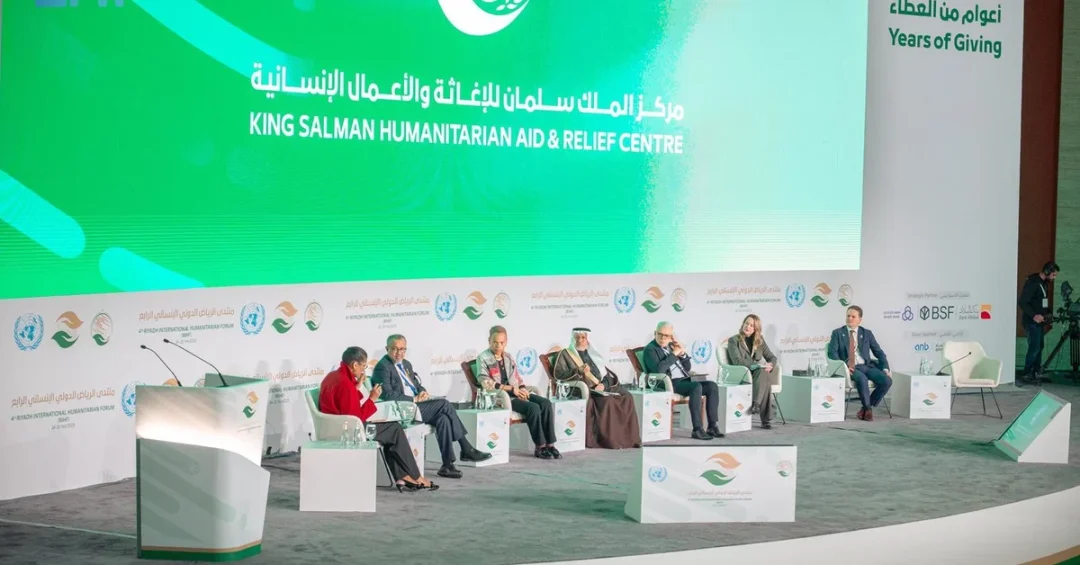
A high-level session titled “Humanitarian Diplomacy in Conflicts: The Future of Humanitarian Response” was held today at the 4th Riyadh International Humanitarian Forum (RIHF), featuring prominent global humanitarian leaders. The session, organized under the auspices of the Kingdom of Saudi Arabia, focused on advancing humanitarian diplomacy to improve outcomes in conflict zones.
Context and Background
The Riyadh International Humanitarian Forum is a biennial event that brings together international leaders, policymakers, and humanitarian organizations to address global humanitarian challenges. This year’s session emphasized the critical role of humanitarian diplomacy in fostering collaboration between state and non-state actors to ensure effective aid delivery and protection for vulnerable populations.
Key Details
The session featured discussions led by Dr. Abdullah bin Abdulaziz Al Rabeeah, Advisor at the Royal Court and Supervisor General of King Salman Humanitarian Aid and Relief Center (KSrelief). Other notable participants included Amy Pope, Director General of the International Organization for Migration (IOM), and Dr. Tedros Adhanom Ghebreyesus, Director-General of the World Health Organization. Panelists explored strategies for negotiating access to crisis-affected populations and safeguarding humanitarian workers.
Implications and Impact
The discussions highlighted Saudi Arabia’s leadership in humanitarian efforts, particularly through KSrelief, which has delivered aid to over 90 countries. The session underscored the importance of international cooperation in addressing complex humanitarian crises, aligning with global efforts to promote peace and stability in conflict-affected regions.
Vision 2030 Alignment
The session aligns with Saudi Arabia’s Vision 2030 goals of enhancing global partnerships and fostering humanitarian leadership. By hosting such high-profile forums, the Kingdom reinforces its commitment to addressing global challenges and contributing to a more stable and prosperous world.
20 Questions
Q1. What was the focus of the high-level session at the Riyadh International Humanitarian Forum?
A1. The session focused on the role of humanitarian diplomacy in improving responses to conflicts and ensuring effective aid delivery.
Q2. Who organized the Riyadh International Humanitarian Forum?
A2. The forum was organized under the auspices of the Kingdom of Saudi Arabia.
Q3. Who chaired the session on humanitarian diplomacy?
A3. Dr. Abdullah bin Abdulaziz Al Rabeeah, Supervisor General of KSrelief, chaired the session.
Q4. Which international organizations participated in the session?
A4. Participants included representatives from the International Organization for Migration, World Health Organization, and International Committee of the Red Cross.
Q5. What role does humanitarian diplomacy play in conflicts?
A5. Humanitarian diplomacy aims to influence decision-makers and foster relations to improve aid access and protect civilians.
Q6. How does KSrelief contribute to global humanitarian efforts?
A6. KSrelief has delivered aid to over 90 countries, addressing crises and supporting vulnerable populations.
Q7. What were the key outcomes of the session?
A7. The session emphasized the need for international cooperation and innovative strategies for humanitarian response.
Q8. How does the Riyadh International Humanitarian Forum align with Saudi Arabia’s global role?
A8. The forum underscores Saudi Arabia’s leadership in humanitarian efforts and its commitment to global stability.
Q9. What is the significance of hosting such forums in Riyadh?
A9. Hosting the forum highlights Saudi Arabia’s strategic position as a hub for international humanitarian dialogue.
Q10. How does the session support Vision 2030?
A10. The session aligns with Vision 2030’s goals of enhancing global partnerships and leadership in humanitarian initiatives.
Q11. What challenges were discussed during the session?
A11. Panelists addressed challenges such as negotiating access to crisis zones and protecting humanitarian workers.
Q12. What role do non-state actors play in humanitarian diplomacy?
A12. Non-state actors are crucial in facilitating aid delivery and advocating for the protection of civilians.
Q13. How does Saudi Arabia collaborate with international organizations?
A13. Saudi Arabia works closely with organizations like the WHO and IOM to address global humanitarian needs.
Q14. What is the future of humanitarian diplomacy?
A14. The future involves leveraging diplomacy to enhance aid effectiveness and foster global cooperation.
Q15. How does the session impact conflict-affected regions?
A15. The session promotes strategies to ensure aid reaches those in need and supports long-term stability.
Q16. What is the role of technology in humanitarian response?
A16. Technology can improve aid delivery, data collection, and coordination among humanitarian actors.
Q17. How does Saudi Arabia’s humanitarian work reflect its values?
A17. Saudi Arabia’s humanitarian efforts reflect its commitment to compassion, solidarity, and global responsibility.
Q18. What is the importance of protecting humanitarian workers?
A18. Protecting humanitarian workers ensures the continuity and safety of aid operations in conflict zones.
Q19. How can humanitarian diplomacy contribute to peacebuilding?
A19. Humanitarian diplomacy fosters dialogue and cooperation, laying the groundwork for peacebuilding efforts.
Q20. What are the next steps following the session?
A20. The next steps include implementing the discussed strategies and strengthening international collaboration for humanitarian response.
Reader Feedback
We value your thoughts. Please share your feedback on this article.
Your feedback helps us improve our coverage.