


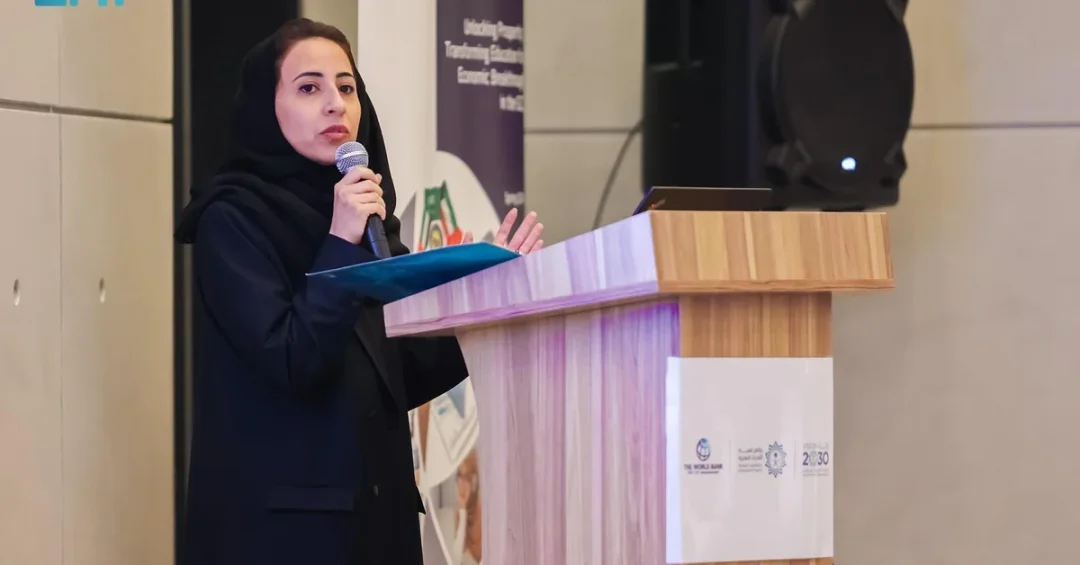
The Human Capability Development Program, one of the Saudi Vision 2030 Realization Programs, hosted the official launch of the World Bank’s Gulf Cooperation Council (GCC) Economic Update Report on May 29, 2024, at the HENA Center in Mohammed Bin Salman Nonprofit City in Riyadh. The event convened policymakers, economists, and education experts to discuss the report titled “Unlocking Prosperity: Transforming Education for Economic Breakthrough in the GCC for 2024,” which analyzes regional economic developments and the pivotal role of quality education in fostering sustainable growth.
Context and Background
The Human Capability Development Program is a cornerstone of Saudi Arabia’s Vision 2030, designed to enhance the skills and capacities of Saudi citizens to thrive in a competitive global economy. Hosting the World Bank’s regional report launch underscores the Kingdom’s commitment to evidence-based policymaking and its leadership in human development initiatives across the GCC. The HENA Center, located in the Mohammed Bin Salman Nonprofit City, serves as a hub for innovation and social impact, reflecting the Kingdom’s dedication to nurturing talent and knowledge-sharing.
Key Details
The World Bank report projects a robust economic growth trajectory for GCC countries, with growth rates expected to reach 2.8% in 2024 and 4.7% in 2025. These figures highlight the resilience and potential of the region’s economies amid global uncertainties. The report also provides a comprehensive analysis of education outcomes, comparing student progress in GCC nations with that of countries at similar income levels. It emphasizes the need for investment in effective teaching and learning practices, particularly building foundational skills from early childhood, which the report identifies as the cornerstone for developing future capabilities.
The launch ceremony featured interactive sessions where attendees examined the report’s findings and their implications for the region. Discussions centered on aligning education systems with labor market demands, leveraging technology, and fostering lifelong learning—all central to the GCC’s economic diversification efforts.
Implications and Impact
The report’s release comes at a critical juncture as GCC countries accelerate their transitions toward knowledge-based economies. For Saudi Arabia, the findings reinforce the importance of initiatives like the Human Capability Development Program, which directly addresses the skill gaps identified in the report. The projected economic growth, coupled with strategic investments in education, positions the Kingdom and its neighbors to capitalize on emerging opportunities in sectors such as technology, renewable energy, and advanced manufacturing. The recommendations also support the broader goal of enhancing regional competitiveness and attracting global talent.
Vision 2030 Alignment
Saudi Arabia’s Vision 2030 places human capability development at its core, aiming to equip citizens with the knowledge and skills needed for a diversified economy. By hosting the World Bank report launch, the Kingdom demonstrates its proactive approach to international collaboration and its commitment to continuous improvement in education and workforce readiness. The report’s emphasis on early childhood education and lifelong learning aligns seamlessly with Vision 2030’s objectives to create a thriving society with empowered individuals. As the Kingdom advances toward its goals, such strategic engagements with global institutions like the World Bank will prove invaluable in shaping a prosperous and sustainable future for Saudi Arabia and the wider GCC region.
20 Questions
Q1. What is the Human Capability Development Program?
A1. It is a Saudi Vision 2030 initiative focused on enhancing the skills and capabilities of Saudi citizens through education, training, and lifelong learning opportunities, aligning with national economic diversification goals.
Q2. Where was the World Bank GCC Economic Update Report launched?
A2. The launch took place at the HENA Center in Mohammed Bin Salman Nonprofit City in Riyadh, Saudi Arabia, on May 29, 2024.
Q3. What is the title of the World Bank report?
A3. The report is titled “Unlocking Prosperity: Transforming Education for Economic Breakthrough in the GCC for 2024.”
Q4. What economic growth does the report project for GCC countries in 2024?
A4. The report projects GCC economic growth to reach 2.8% in 2024, reflecting the region’s resilience and strong economic fundamentals.
Q5. What is the projected growth rate for GCC economies in 2025?
A5. The report projects a 4.7% growth rate for GCC economies in 2025, indicating accelerated expansion and recovery.
Q6. Why is education emphasized in the report?
A6. Education is highlighted as a critical driver of long-term economic growth, with the report analyzing student outcomes and recommending investments to improve teaching and learning quality.
Q7. What specific recommendation does the report make regarding early childhood?
A7. The report recommends building basic skills from early childhood, calling it the cornerstone for developing future skills and ensuring a competent workforce.
Q8. How does this report relate to Saudi Arabia’s Vision 2030?
A8. The report’s focus on human capability development directly supports Vision 2030’s goals of diversifying the economy and creating a skilled, knowledge-based society.
Q9. Who attended the launch ceremony?
A9. The event brought together policymakers, economists, education experts, and officials from GCC countries to discuss the report’s findings and implications.
Q10. What is the significance of the HENA Center location?
A10. The HENA Center, part of Mohammed Bin Salman Nonprofit City, represents Saudi Arabia’s commitment to innovation, social impact, and knowledge-sharing.
Q11. What are the main pillars of the Human Capability Development Program?
A11. The program focuses on education, workforce readiness, and lifelong learning, aiming to equip Saudi citizens with skills for modern economic sectors.
Q12. How does the report compare GCC education outcomes?
A12. It compares student progress in GCC countries with that of nations at similar income levels, identifying gaps and opportunities for improvement.
Q13. What does the report say about technology in education?
A13. It implicitly supports leveraging technology to enhance learning and align education systems with labor market demands, a key theme in discussions.
Q14. Why is the launch of this report important for the GCC?
A14. It provides data-driven insights and recommendations that can guide regional policies on education and economic diversification, fostering sustainable development.
Q15. How does hosting this event benefit Saudi Arabia?
A15. It positions the Kingdom as a regional leader in human development and strengthens its collaboration with global institutions like the World Bank.
Q16. What is the expected impact on Saudi education policy?
A16. The findings may influence further investments in early childhood education and teaching quality, aligning with existing Vision 2030 initiatives.
Q17. Are there any specific examples of effective practices mentioned?
A17. The report recommends investing in effective practices such as building basic skills from early childhood, though specific examples were not detailed in the summary.
Q18. How do the report’s projections affect investor confidence?
A18. Positive growth projections and a focus on human capital can boost investor confidence in the GCC, signaling stability and long-term potential.
Q19. What is the role of the World Bank in this context?
A19. The World Bank provides analytical expertise and global benchmarks, helping GCC countries make informed decisions on education and economic reforms.
Q20. What are the next steps for the Human Capability Development Program?
A20. Building on the report’s insights, the program will continue to implement targeted initiatives to enhance skills, improve education quality, and align with Vision 2030 objectives.
Reader Feedback
We value your thoughts. Please share your feedback on this article.
Your feedback helps us improve our coverage.