


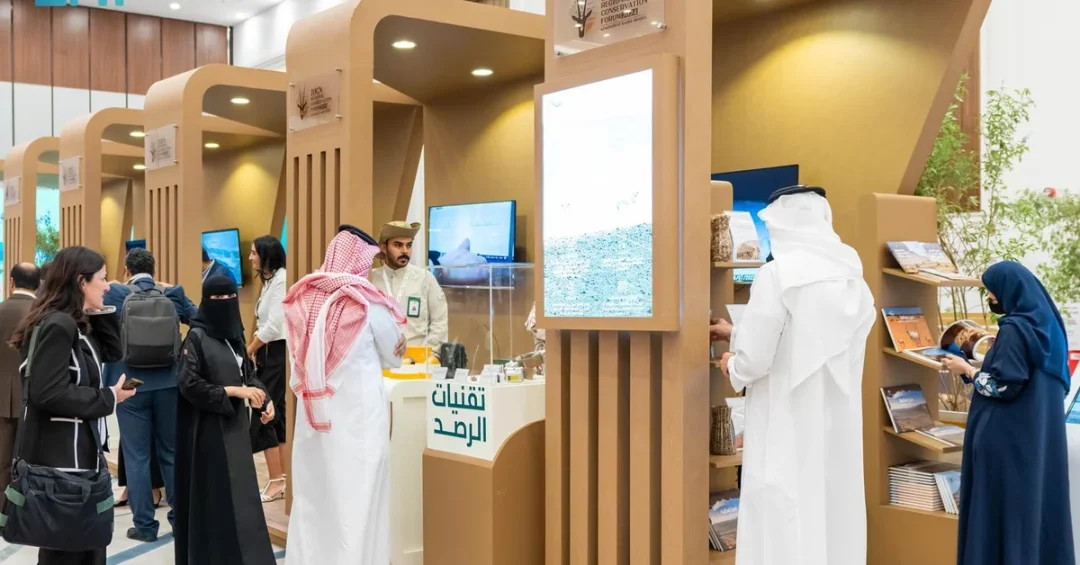
The Imam Abdulaziz bin Mohammed Royal Reserve Development Authority (IARDA) is participating in the 10th Regional Forum of the International Union for Conservation of Nature (IUCN) for West Asia, held in Riyadh from September 9 to 11, 2024. The forum, which convenes every four years, brings together local and international experts to discuss environmental conservation, wildlife protection, and biodiversity strategies.
Context and Background
The IUCN Regional Conservation Forum for West Asia is a significant platform for addressing pressing environmental challenges in the region. This year’s forum focuses on exchanging expertise and modern technologies to protect biodiversity, enhance vegetation cover, and promote sustainable environmental practices. IARDA’s participation underscores Saudi Arabia’s commitment to environmental stewardship and its active role in global conservation efforts.
Key Details
At the forum exhibition, IARDA showcased its expertise in nature conservation and environmental sustainability. The authority presented projects aimed at reintroducing indigenous wild plants, reclaiming degraded lands, and removing debris from the Imam Abdulaziz bin Mohammed Royal Reserve and King Khalid Royal Reserve. Additionally, IARDA highlighted scientific experiments designed to restore ecological balance and rehabilitate damaged habitats. These initiatives reflect the authority’s dedication to preserving Saudi Arabia’s natural heritage.
Implications and Impact
IARDA’s involvement in the IUCN forum has far-reaching implications for regional and international conservation efforts. By sharing its experiences and learning from other participants, IARDA contributes to the development of innovative strategies for biodiversity protection. The forum also facilitates partnerships that can amplify the impact of conservation projects across West Asia. Saudi Arabia’s leadership in this arena reinforces its position as a key player in global environmental sustainability.
Vision 2030 Alignment
IARDA’s participation aligns with Saudi Vision 2030, which emphasizes improving quality of life and achieving environmental sustainability. The authority’s projects support the Vision’s goals by enhancing vegetation cover, restoring ecosystems, and promoting sustainable land management. Through such initiatives, Saudi Arabia demonstrates its commitment to creating a greener future and contributing to global environmental goals.
20 Questions
Q1. What is the Imam Abdulaziz bin Mohammed Royal Reserve Development Authority (IARDA)?
A1. IARDA is a Saudi government authority responsible for managing and developing the Imam Abdulaziz bin Mohammed Royal Reserve and King Khalid Royal Reserve. It focuses on nature conservation, environmental sustainability, and reintroducing indigenous wildlife. Its work supports Saudi Vision 2030 goals for a sustainable environment.
Q2. What is the IUCN Regional Conservation Forum for West Asia?
A2. The IUCN Regional Conservation Forum for West Asia is a quadrennial event that brings together conservation experts, government representatives, and organizations to discuss environmental challenges and solutions. It promotes collaboration on biodiversity protection and sustainable development across the region.
Q3. When and where was the 10th IUCN Regional Forum held?
A3. The 10th IUCN Regional Forum was held in Riyadh, Saudi Arabia, from September 9 to 11, 2024. It gathered local and international participants to address conservation issues and share best practices.
Q4. What projects did IARDA showcase at the forum?
A4. IARDA showcased projects on reintroducing indigenous wild plants, reclaiming degraded lands, removing debris from reserves, and conducting scientific experiments to restore ecological balance. These efforts aim to rehabilitate damaged habitats and enhance biodiversity.
Q5. Why is IARDA’s participation in the forum significant?
A5. IARDA’s participation demonstrates Saudi Arabia’s active role in regional conservation and its commitment to sharing expertise. It also allows IARDA to learn from international best practices and form partnerships that advance environmental sustainability.
Q6. How does IARDA’s work align with Saudi Vision 2030?
A6. IARDA’s work aligns with Vision 2030 by improving quality of life, enhancing vegetation cover, and promoting sustainable environmental practices. These efforts contribute to the Vision’s goal of a sustainable environment and a greener future.
Q7. What are the objectives of the IUCN forum?
A7. The forum aims to facilitate dialogue on conservation, exchange expertise and modern technologies, protect biodiversity, and develop initiatives to increase vegetation cover. It also seeks to strengthen regional cooperation for environmental sustainability.
Q8. Who participates in the IUCN Regional Forum?
A8. The forum includes local and international entities, experts, specialists in nature reserves, government officials, and conservation organizations. They discuss ways to preserve the environment and wildlife.
Q9. How often is the IUCN Regional Forum held?
A9. The IUCN Regional Forum for West Asia is held every four years. The 10th edition took place in 2024, continuing the tradition of quadrennial gatherings.
Q10. What is the significance of reintroducing indigenous wild plants?
A10. Reintroducing indigenous wild plants helps restore native ecosystems, enhance biodiversity, and combat desertification. It also supports the rehabilitation of habitats for wildlife and contributes to ecological balance.
Q11. What are degraded lands and how does IARDA reclaim them?
A11. Degraded lands are areas that have lost their productivity due to factors like overgrazing or erosion. IARDA reclaims them through soil restoration, planting native species, and removing debris to promote vegetation recovery.
Q12. What scientific experiments is IARDA conducting?
A12. IARDA is conducting experiments to restore ecological balance and rehabilitate damaged habitats. These include testing methods for soil enhancement, water conservation, and plant growth to inform future conservation strategies.
Q13. How does IARDA’s work benefit local communities?
A13. IARDA’s work benefits local communities by improving environmental health, creating green spaces, and supporting sustainable livelihoods. It also enhances quality of life and promotes eco-tourism opportunities.
Q14. What role does Saudi Arabia play in global conservation?
A14. Saudi Arabia actively participates in international conservation efforts, such as the IUCN forum, and implements domestic projects like those by IARDA. The Kingdom is committed to biodiversity protection and sustainable development.
Q15. What are the King Khalid Royal Reserve and Imam Abdulaziz bin Mohammed Royal Reserve?
A15. These are protected areas in Saudi Arabia managed by IARDA. They are dedicated to conserving wildlife, restoring ecosystems, and promoting environmental education and research.
Q16. How does IARDA remove debris from the reserves?
A16. IARDA removes debris through organized cleanup campaigns, often involving local volunteers and specialized teams. This helps restore natural habitats and prevents pollution.
Q17. What technologies are discussed at the IUCN forum?
A17. The forum discusses modern technologies such as remote sensing, GIS mapping, and data analytics for conservation planning. These tools help monitor biodiversity, track habitat changes, and optimize restoration efforts.
Q18. How can international cooperation enhance conservation in West Asia?
A18. International cooperation facilitates knowledge sharing, joint research, and funding for conservation projects. It also harmonizes policies and strategies, leading to more effective and large-scale environmental protection.
Q19. What is the expected outcome of the 10th IUCN Regional Forum?
A19. The forum is expected to produce recommendations and action plans for regional conservation. It will strengthen networks and commitments to biodiversity and sustainable development goals.
Q20. How can the public support IARDA’s conservation efforts?
A20. The public can support by volunteering in cleanup activities, spreading awareness, and adopting sustainable practices. Participating in eco-tourism and respecting protected areas also contributes to conservation.
Reader Feedback
We value your thoughts. Please share your feedback on this article.
Your feedback helps us improve our coverage.