


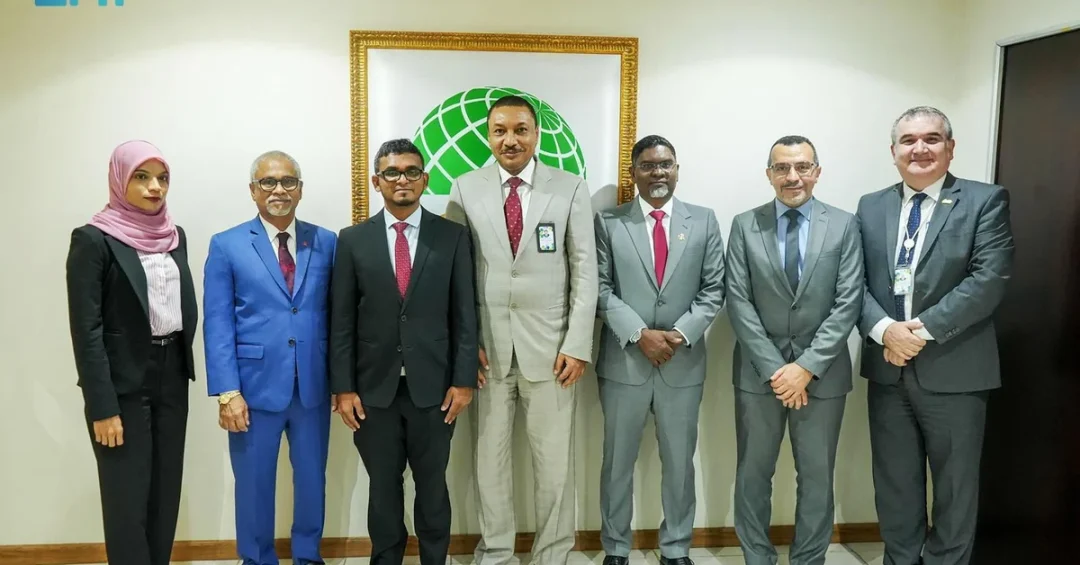
Senior officials from the Islamic Corporation for the Insurance of Investment and Export Credit (ICIEC) met with representatives of the Maldives Monetary Authority in Jeddah on August 22, 2024, to discuss strengthening economic cooperation and strategic partnerships aimed at enhancing the Maldives’ economic resilience and growth. The meeting, held at ICIEC headquarters, brought together ICIEC Officer-in-Charge Dr. Khalid Khalafalla and Maldives Monetary Authority Governor Ahmed Munawar, according to the Saudi Press Agency. Discussions focused on ICIEC’s commitment to supporting the Maldives in attracting foreign direct investment and expanding international trade opportunities, underscoring the corporation’s role in mitigating risks and strengthening creditworthiness for member states of the Islamic Development Bank Group.
Context and Background
The Islamic Corporation for the Insurance of Investment and Export Credit is a multilateral institution dedicated to promoting trade and investment among member countries of the Islamic Development Bank Group. Established to provide Shariah-compliant insurance and credit enhancement services, ICIEC helps member states reduce the risks associated with cross-border trade and investment, thereby fostering economic integration across the Islamic world. As a specialized arm of the IsDB Group, ICIEC operates with a mandate to support sustainable economic development by enabling access to finance and de-risking investments in emerging markets.
The Maldives, a small island nation with a dynamic tourism-driven economy, has increasingly sought to diversify its economic partnerships and attract foreign direct investment. Its engagement with ICIEC reflects a broader strategy to leverage Islamic finance instruments and multilateral support to bolster economic resilience. The meeting in Jeddah signals a mutual interest in deepening ties between the Maldives and the wider Islamic Development Bank Group, with potential benefits for trade facilitation and investment flows.
Key Details
During the meeting, Dr. Khalid Khalafalla reaffirmed ICIEC’s commitment to supporting the Maldives in its efforts to attract foreign direct investment and enhance international trade opportunities. He highlighted the corporation’s key role in mitigating risks and strengthening creditworthiness for member states, which can help unlock financing for infrastructure, tourism, and other priority sectors. Governor Ahmed Munawar represented the Maldives Monetary Authority, the country’s central bank responsible for monetary policy and financial stability.
The discussions covered strategic partnerships that could contribute to economic resilience and growth in the Republic of the Maldives. While specific agreements were not announced, the dialogue itself represents a step forward in exploring how ICIEC’s insurance and credit enhancement tools can be tailored to the Maldives’ unique economic context. The meeting also underscored the importance of continued engagement between the Maldives and the IsDB Group to identify concrete opportunities for collaboration.
Implications and Impact
The meeting between ICIEC and the Maldives Monetary Authority carries significant implications for regional economic cooperation. For the Maldives, deeper engagement with ICIEC could lead to enhanced access to trade finance and investment insurance, which are critical for a small island economy vulnerable to external shocks. By strengthening creditworthiness, the Maldives may find it easier to attract foreign direct investment in key sectors such as tourism, fisheries, and renewable energy. This, in turn, could support job creation and sustainable development.
For ICIEC, the discussions reinforce its role as a bridge between member states and global markets. By supporting the Maldives, the corporation demonstrates its commitment to fostering economic resilience across the Islamic world. The meeting also aligns with broader efforts to promote South-South cooperation and Islamic finance as tools for development. As the Maldives continues to navigate global economic uncertainties, partnerships with institutions like ICIEC can provide a stabilizing influence and open new avenues for growth.
Vision 2030 Alignment
Saudi Arabia’s Vision 2030 emphasizes the Kingdom’s role as a global hub for trade, investment, and diplomacy. Hosting the meeting in Jeddah highlights Saudi Arabia’s position as a convening power for multilateral institutions and its commitment to fostering economic ties across the Islamic world. Under the leadership of the Custodian of the Two Holy Mosques, King Salman bin Abdulaziz Al Saud, and His Royal Highness Crown Prince Mohammed bin Salman, Saudi Arabia continues to support institutions like ICIEC that drive economic cooperation and development. By facilitating such dialogues, the Kingdom advances its vision of a diversified, interconnected, and prosperous region, reinforcing its status as a pivotal player in global economic governance.
20 Questions
Q1. What is the Islamic Corporation for the Insurance of Investment and Export Credit (ICIEC)?
A1. ICIEC is a multilateral institution that provides Shariah-compliant insurance and credit enhancement services to promote trade and investment among member countries of the Islamic Development Bank Group. It helps reduce risks and strengthen creditworthiness for member states.
Q2. Who represented ICIEC at the meeting in Jeddah?
A2. Dr. Khalid Khalafalla, Officer-in-Charge of ICIEC, represented the corporation at the meeting held in Jeddah on August 22, 2024.
Q3. Who represented the Maldives at the meeting?
A3. Governor Ahmed Munawar of the Maldives Monetary Authority represented the Maldives at the meeting.
Q4. What was the main purpose of the meeting?
A4. The meeting aimed to discuss strengthening economic cooperation and strategic partnerships that would contribute to economic resilience and growth in the Republic of the Maldives.
Q5. What specific areas of cooperation were discussed?
A5. Discussions focused on supporting the Maldives in attracting foreign direct investment and enhancing international trade opportunities, with ICIEC playing a key role in mitigating risks and strengthening creditworthiness.
Q6. Why is the Maldives seeking deeper economic ties with ICIEC?
A6. The Maldives aims to diversify its economic partnerships, attract foreign direct investment, and enhance trade opportunities to bolster its economic resilience, particularly given its vulnerability as a small island economy.
Q7. What role does ICIEC play for Islamic Development Bank member states?
A7. ICIEC mitigates risks and strengthens creditworthiness for member states, enabling them to access financing and attract investment for infrastructure, trade, and other priority sectors.
Q8. How does ICIEC support foreign direct investment in member countries?
A8. ICIEC provides insurance and credit enhancement tools that reduce investment risks, making member countries more attractive to foreign investors and helping to unlock financing for key sectors.
Q9. What is the significance of the meeting being held in Jeddah?
A9. Jeddah is home to ICIEC headquarters and reflects Saudi Arabia’s role as a convening power for multilateral institutions, aligning with Vision 2030’s goal of fostering global economic cooperation.
Q10. What are the potential benefits for the Maldives from this cooperation?
A10. The Maldives could gain enhanced access to trade finance, increased foreign direct investment, and improved creditworthiness, supporting growth in tourism, fisheries, and renewable energy sectors.
Q11. How does this meeting align with Saudi Arabia’s Vision 2030?
A11. Vision 2030 emphasizes Saudi Arabia’s global role in trade, investment, and diplomacy. Hosting such meetings reinforces the Kingdom’s commitment to multilateral cooperation and economic development across the Islamic world.
Q12. What is the Maldives Monetary Authority?
A12. The Maldives Monetary Authority is the central bank of the Maldives, responsible for monetary policy, financial stability, and overseeing the country’s financial system.
Q13. What is the Islamic Development Bank Group?
A13. The Islamic Development Bank Group is a multilateral development bank that promotes economic development and social progress in member countries, with ICIEC as its specialized insurance and credit enhancement arm.
Q14. How does ICIEC’s work contribute to economic resilience?
A14. By providing risk mitigation and credit enhancement, ICIEC helps member states withstand economic shocks, attract investment, and maintain access to international markets, thereby fostering resilience.
Q15. What sectors in the Maldives could benefit most from this cooperation?
A15. Key sectors include tourism, fisheries, renewable energy, and infrastructure, where foreign direct investment and trade finance are critical for sustainable growth.
Q16. Was any formal agreement signed during the meeting?
A16. No formal agreement was announced; the meeting focused on exploring deeper economic ties and potential areas of collaboration between ICIEC and the Maldives.
Q17. How does this meeting reflect Saudi Arabia’s diplomatic efforts?
A17. It demonstrates Saudi Arabia’s active role in facilitating dialogue and cooperation among Islamic nations, reinforcing its position as a leader in regional and global economic diplomacy.
Q18. What is the expected timeline for further discussions?
A18. No timeline was specified, but the meeting signals ongoing engagement between ICIEC and the Maldives Monetary Authority to identify concrete opportunities for collaboration.
Q19. What are the broader implications for South-South cooperation?
A19. The meeting strengthens South-South cooperation by promoting Islamic finance and multilateral partnerships as tools for development, benefiting both the Maldives and the wider Islamic world.
Q20. How can other member states benefit from similar engagements?
A20. Other member states can leverage ICIEC’s expertise to attract investment, enhance trade, and build economic resilience, following the model of constructive dialogue exemplified by the Maldives meeting.
Reader Feedback
We value your thoughts. Please share your feedback on this article.
Your feedback helps us improve our coverage.