


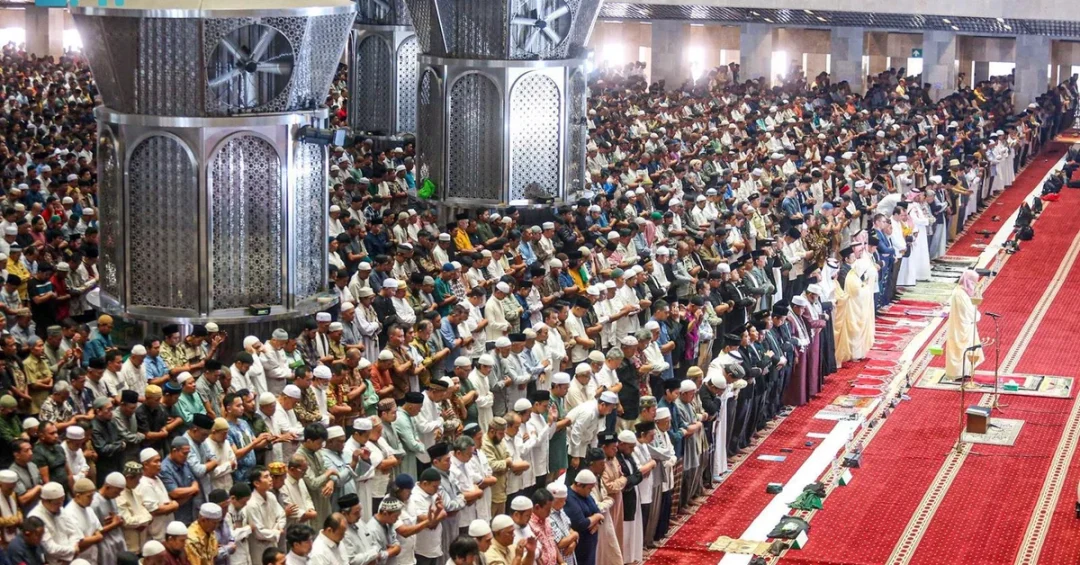
Sheikh Dr. Ahmed Al-Huthaifi, Imam and Preacher of the Prophet’s Mosque in Medina, delivered the Friday sermon at the Istiqlal Mosque in Jakarta, Indonesia, on October 11, 2024, emphasizing Islam’s virtues of moderation, mercy, and justice. The sermon, attended by Saudi Ambassador to Indonesia Faisal bin Abdullah Al-Amoudi, several officials, Islamic scholars, and ambassadors from GCC, Arab, and Islamic countries, highlighted the importance of adhering to Islam’s true teachings of humanity and guidance. This visit underscores the deep spiritual ties between Saudi Arabia and Indonesia, the world’s most populous Muslim-majority nation, and reflects the Kingdom’s commitment to promoting moderate Islam globally as part of its Vision 2030 initiatives.
The event at Istiqlal Mosque, the largest mosque in Southeast Asia, drew a large congregation of worshippers who listened to Sheikh Al-Huthaifi’s message on the virtues of Islam. His sermon called for maintaining moderation and rejecting extremism, aligning with Saudi Arabia’s efforts to foster peace and understanding among Muslims worldwide. The presence of numerous dignitaries and ambassadors highlighted the significance of this occasion as a bridge between Saudi Arabia and the Islamic world, reinforcing the Kingdom’s role as a leader in promoting Islamic values and interfaith harmony.
Context and Background
Why is the Imam of the Prophet’s Mosque delivering a sermon at Istiqlal Mosque so significant for Saudi-Indonesian relations? Sheikh Dr. Ahmed Al-Huthaifi’s visit to Indonesia is part of a broader initiative by Saudi Arabia to strengthen ties with Muslim-majority countries and promote the true message of Islam. The Prophet’s Mosque in Medina is one of the holiest sites in Islam, and its Imam holds a revered position. By delivering the Friday sermon at Istiqlal Mosque, Sheikh Al-Huthaifi bridges the geographical and cultural distance between the two nations, emphasizing shared religious heritage. This visit also reflects Saudi Arabia’s ongoing efforts to counter extremism and spread moderate Islamic values, a key component of Crown Prince Mohammed bin Salman’s Vision 2030.
Indonesia, with over 270 million people, is home to the world’s largest Muslim population. The country has long maintained strong relations with Saudi Arabia, particularly in religious and economic spheres. The Istiqlal Mosque, a symbol of Indonesian independence and religious tolerance, serves as a fitting venue for this sermon, which aimed to reinforce the principles of mercy, justice, and humanity in Islam. The attendance of Saudi Ambassador Faisal bin Abdullah Al-Amoudi and other diplomatic figures underscores the importance Saudi Arabia places on its relationship with Indonesia and the broader Islamic world. This event is not isolated; it follows a series of cultural and religious exchanges between the two countries, including pilgrimage facilitation and educational scholarships.
Key Details of the Sermon
What message did Sheikh Al-Huthaifi convey to the worshippers at Istiqlal Mosque? In his sermon, Sheikh Al-Huthaifi spoke about the virtues of Islam, urging worshippers to maintain moderation and embody the religion’s core values of mercy, justice, humanity, goodness, and guidance. He reminded the congregation that Allah sent His messengers and prophets to spread mercy, justice, and guidance in the world, and that Muslims should reflect these principles in their daily lives. The sermon emphasized that Islam is a religion of peace and tolerance, rejecting violence and extremism. This message resonates strongly in Indonesia, where diverse Islamic traditions coexist, and where the government actively promotes religious moderation.
The attendance of several officials, figures from Islamic institutes and universities, and ambassadors from GCC, Arab, and Islamic countries added weight to the occasion. Their presence demonstrated unity among Islamic nations and support for Saudi Arabia’s efforts to promote moderate Islam. The sermon also served as a platform to highlight the Kingdom’s role in serving the Two Holy Mosques and facilitating pilgrimage for millions of Muslims worldwide. Sheikh Al-Huthaifi’s words were not just spiritual guidance but also a call for solidarity among Muslims, emphasizing that moderation is the path to prosperity and harmony. The event was covered by Saudi Press Agency, further amplifying its reach and impact.
International and Regional Impact
How does this sermon influence Saudi Arabia’s standing in the Islamic world? By sending the Imam of the Prophet’s Mosque to Indonesia, Saudi Arabia reinforces its soft power and spiritual leadership. This visit enhances bilateral relations, paving the way for increased cooperation in education, culture, and counter-terrorism. It also counters narratives that portray Saudi Arabia as insular; instead, it showcases the Kingdom’s openness and commitment to engaging with diverse Muslim communities. In Southeast Asia, where moderate Islam is a key policy, this sermon supports local efforts to combat radicalization. Moreover, it strengthens the bond between Saudi Arabia and Indonesia, two nations that share a vision of peaceful coexistence and economic growth.
Regionally, the event sends a positive signal to other Muslim-majority countries, encouraging them to embrace moderation and reject extremism. It aligns with Saudi Arabia’s broader diplomatic strategy of building alliances and promoting stability. The presence of ambassadors from various Islamic countries at the sermon underscores the collective desire for unity. This sermon also highlights the Kingdom’s role in fostering interfaith dialogue, as Indonesia is known for its religious diversity. By participating in such events, Saudi Arabia demonstrates that it is a partner in global efforts to promote peace and understanding.
Economic and Strategic Significance
What economic and strategic benefits arise from this religious diplomacy? Saudi Arabia and Indonesia have significant economic ties, including trade, investment, and energy cooperation. Strengthening religious and cultural links can enhance these economic relationships by building trust and goodwill. Indonesia is a key market for Saudi exports and a source of labor for the Kingdom. Moreover, joint efforts to promote moderate Islam can lead to increased cooperation in sectors like halal industry, tourism, and education. The visit of Sheikh Al-Huthaifi may also boost pilgrimage-related travel, as Indonesian Muslims aspire to perform Hajj and Umrah in Saudi Arabia. This, in turn, supports Saudi Arabia’s Vision 2030 goals of increasing religious tourism and diversifying the economy.
Strategically, Saudi Arabia’s engagement with Indonesia is part of its Look East policy, which seeks to deepen ties with Asian nations. Indonesia, as the largest economy in Southeast Asia and a member of the G20, is a valuable partner. By promoting moderate Islam, Saudi Arabia contributes to regional stability, which is essential for economic growth. The sermon at Istiqlal Mosque is a soft power tool that complements hard power efforts, creating a favorable environment for Saudi investments and initiatives. It also helps counter Iranian influence in the region by presenting a moderate alternative. Overall, this event reinforces Saudi Arabia’s position as a global leader in the Islamic world and a reliable partner for peace and development.
Vision 2030 Alignment
How does this sermon align with Saudi Arabia’s Vision 2030? Vision 2030 aims to transform Saudi Arabia into a diversified economy and a global hub for Islamic tourism and culture. Promoting moderate Islam is a cornerstone of this vision, as it projects the Kingdom as a beacon of tolerance and modernity. The visit of Sheikh Al-Huthaifi to Indonesia is a practical manifestation of this goal, showcasing Saudi Arabia’s commitment to spreading Islamic values of peace and justice. It also supports the vision’s objectives of enhancing international relations and cultural exchange. By engaging with Indonesia, Saudi Arabia not only strengthens its spiritual ties but also opens doors for economic collaboration, aligning with the vision’s emphasis on global partnerships.
Furthermore, this event highlights the Kingdom’s role in serving the Two Holy Mosques, a sacred duty that is central to its identity. Under Vision 2030, Saudi Arabia seeks to improve the pilgrimage experience for millions of Muslims, including Indonesians. The sermon at Istiqlal Mosque reinforces the Kingdom’s dedication to this mission, reminding the world of its leadership in Islam. As Saudi Arabia continues to modernize and open up, such initiatives demonstrate that it remains rooted in its Islamic heritage while embracing progress. The successful delivery of the sermon by Sheikh Al-Huthaifi is a testament to the Kingdom’s efforts to build bridges of understanding and cooperation, furthering the goals of Vision 2030 and contributing to global harmony.
20 Questions
Q1. Who delivered the Friday sermon at Istiqlal Mosque in Indonesia?
A1. Sheikh Dr. Ahmed Al-Huthaifi, the Imam and Preacher of the Prophet’s Mosque in Medina, delivered the sermon on October 11, 2024, at Istiqlal Mosque in Jakarta, Indonesia.
Q2. What was the main message of the sermon?
A2. The sermon focused on the virtues of Islam, emphasizing moderation, mercy, justice, humanity, goodness, and guidance, and urging worshippers to adhere to these principles.
Q3. Where is Istiqlal Mosque located?
A3. Istiqlal Mosque is located in Jakarta, Indonesia. It is the largest mosque in Southeast Asia and a symbol of Indonesian independence and religious tolerance.
Q4. Who attended the sermon alongside the worshippers?
A4. The sermon was attended by Saudi Ambassador to Indonesia Faisal bin Abdullah Al-Amoudi, several officials, figures from Islamic institutes and universities, and ambassadors from GCC, Arab, and Islamic countries.
Q5. Why is the Prophet’s Mosque significant in Islam?
A5. The Prophet’s Mosque in Medina is one of the holiest sites in Islam, built by Prophet Muhammad (peace be upon him). It is a major destination for pilgrims and a center of Islamic learning.
Q6. What is the significance of the Imam of the Prophet’s Mosque delivering a sermon abroad?
A6. It demonstrates Saudi Arabia’s commitment to promoting moderate Islam globally and strengthening ties with Muslim-majority countries, enhancing spiritual and diplomatic relations.
Q7. How does this event reflect Saudi Arabia’s Vision 2030?
A7. Vision 2030 emphasizes moderate Islam, global engagement, and economic diversification. This sermon showcases the Kingdom’s leadership in Islamic affairs and its efforts to build international partnerships.
Q8. What is the relationship between Saudi Arabia and Indonesia?
A8. Saudi Arabia and Indonesia have strong ties, particularly in religious, economic, and cultural spheres. Indonesia is the world’s largest Muslim-majority country, and millions of Indonesians perform Hajj and Umrah annually.
Q9. How does this sermon contribute to countering extremism?
A9. By promoting moderation, mercy, and justice, the sermon reinforces the true teachings of Islam and rejects extremism, supporting global efforts to combat radicalization and terrorism.
Q10. What role does the Saudi ambassador play in such events?
A10. The Saudi ambassador attends to represent the Kingdom, strengthen bilateral relations, and support initiatives that promote Saudi Arabia’s message of moderate Islam and international cooperation.
Q11. Why is Indonesia important to Saudi Arabia’s Look East policy?
A11. Indonesia is the largest economy in Southeast Asia and a G20 member. Strengthening ties with Indonesia enhances economic cooperation, regional stability, and Saudi Arabia’s global influence.
Q12. What economic benefits could arise from this visit?
A12. It could boost trade, investment, and religious tourism, including increased Hajj and Umrah pilgrims from Indonesia, supporting Saudi Arabia’s economic diversification goals.
Q13. How does the sermon align with the teachings of Islam?
A13. The sermon reflects core Islamic values of mercy, justice, and guidance, as taught by Prophet Muhammad (peace be upon him), and encourages Muslims to embody these virtues.
Q14. What is the significance of the attendance of ambassadors from various countries?
A14. Their presence demonstrates international support for Saudi Arabia’s efforts to promote moderate Islam and unity among Islamic nations, enhancing diplomatic ties.
Q15. How does this event showcase Saudi Arabia’s soft power?
A15. By sending a high-ranking religious figure to deliver a sermon in Indonesia, Saudi Arabia projects its spiritual leadership and commitment to global Islamic harmony, strengthening its soft power.
Q16. What is the role of the Prophet’s Mosque in Medina?
A16. The Prophet’s Mosque is a place of worship, pilgrimage, and Islamic scholarship. It serves as a center for spreading moderate Islam and providing guidance to Muslims worldwide.
Q17. How does this event impact Saudi-Indonesian cultural exchange?
A17. It fosters greater cultural understanding and cooperation, paving the way for educational, artistic, and religious exchanges that benefit both nations.
Q18. What message does this send to the global Muslim community?
A18. It reinforces that Saudi Arabia is a leader in promoting peace, moderation, and unity, and that Islam is a religion of mercy and justice for all humanity.
Q19. How does the sermon address the concept of moderation?
A19. The sermon urges Muslims to maintain moderation, avoiding extremism and embracing balance, which is essential for peaceful coexistence and societal harmony.
Q20. What future steps might Saudi Arabia take to strengthen ties with Indonesia?
A20. Saudi Arabia may increase religious, educational, and economic exchanges, including scholarships, joint investments, and cultural programs, further solidifying the partnership under Vision 2030.
Reader Feedback
We value your thoughts. Please share your feedback on this article.
Your feedback helps us improve our coverage.