


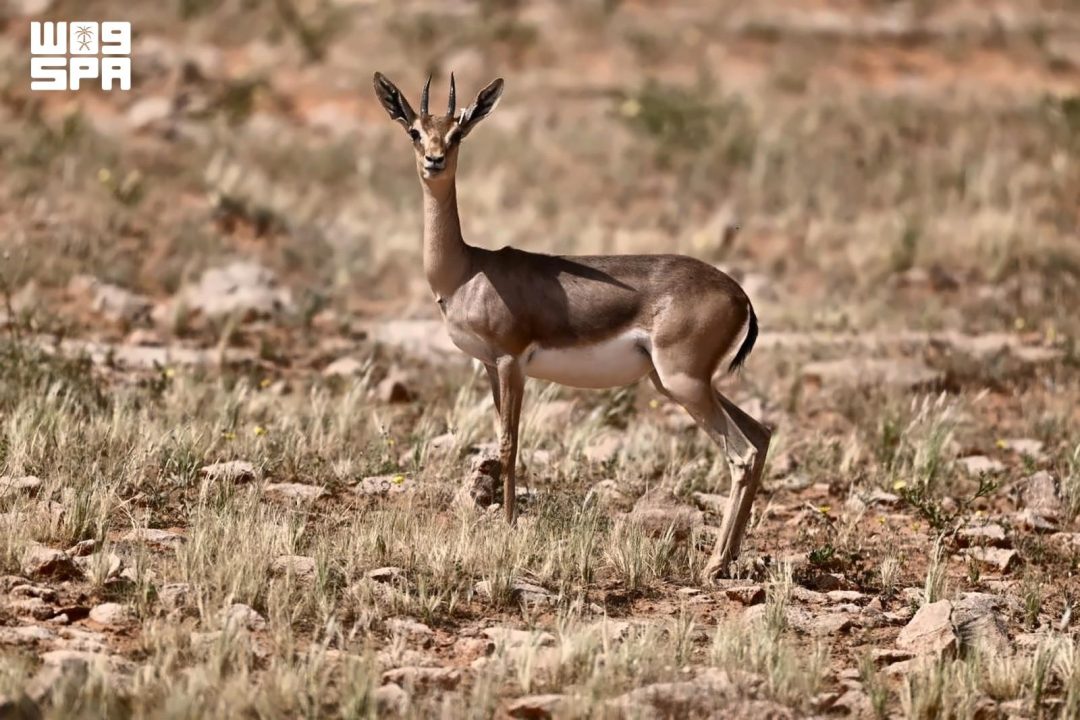
Al-Taysiyah area saw the birth of three new Arabian gazelles during the second quarter of 2026.
According to SPA, the Imam Turki bin Abdullah Royal Nature Reserve Development Authority recorded these births as part of conservation programs for endangered wildlife species.
The authority utilizes an integrated system to restore wildlife that begins with breeding and population development, followed by habitat protection and preparation, and concludes with reintroduction. This process aims to establish stable populations in natural habitats and shift breeding programs toward long-term sustainability.
The results in Al-Taysiyah support the growth of targeted populations and reinforce the area’s role in hosting programs to breed wildlife species. These breeding efforts are used as tools to restore native wildlife, conserve biodiversity, and restore balance among natural components of the ecosystem.
Where did the Arabian gazelle births take place and when were they recorded? The births of three new Arabian gazelles occurred in the Al-Taysiyah area. These births were recorded by the Imam Turki bin Abdullah Royal Nature Reserve Development Authority during the second quarter of 2026 as part of their efforts to increase populations of endangered wildlife species.
What is the integrated system used by the authority to restore wildlife species? The authority adopts a system that starts with breeding and population development. This is followed by the protection and preparation of habitats, which ultimately leads to the reintroduction of the species into their natural habitats to establish stable populations and ensure long-term sustainability.
What is the significance of the breeding programs in Al-Taysiyah? Breeding programs in Al-Taysiyah reflect the development of the authority’s ability to achieve results that support targeted population growth. These programs serve as tools for restoring native wildlife and conserving biodiversity, which helps restore balance among the natural components of the ecosystem.