


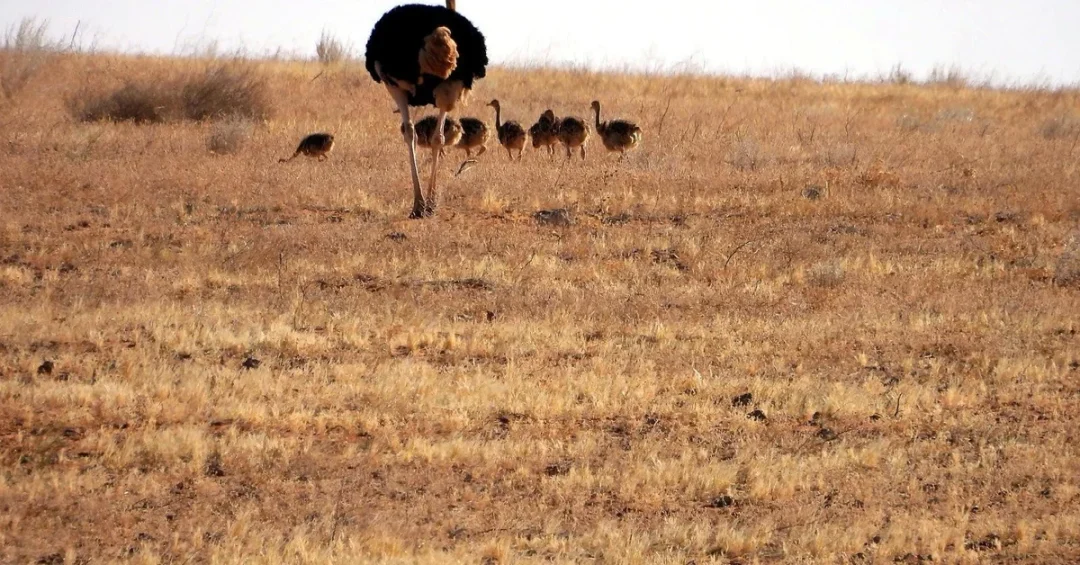
The Imam Turki bin Abdullah Royal Nature Reserve Development Authority has recorded the hatching of seven red-necked ostrich chicks during the second quarter of 2026, reflecting the success of the species’ reintroduction program and its ability to adapt and reproduce in its natural habitat. This achievement confirms the progress of the Authority’s efforts to restore a wild species that historically lived within the reserve and to increase its numbers, consolidating the stability of its populations.
Context and Background
The reproduction of the red-necked ostrich in the wild marks a major indicator of progress in its reintroduction. The species is moving from the stage of release and acclimatization to building groups capable of completing their biological cycle, reproducing, and thriving. This demonstrates the suitability of natural habitats and the synergy between protection measures and field monitoring, which supports the species’ expansion and strengthens its presence among local fauna.
Key Details
The Authority adopts an integrated approach to reintroducing wild species, based on studying, improving, and protecting habitats, selecting suitable release sites, and continuously monitoring movement, adaptation, and reproduction. This methodology provides precise scientific and field indicators to evaluate and enhance reintroduction programs, contributing to the formation of stable and viable wild populations on sustainable foundations.
Implications and Impact
The return and reproduction of the red-necked ostrich illustrate one of the Authority’s key goals to restore wildlife by reintegrating species into their natural habitats. These efforts boost biodiversity, enhance the connection between species and their environments, and support the restoration of ecological balance across the reserve. The success also reinforces Saudi Arabia’s position as a leader in conservation and sustainable environmental stewardship.
Vision 2030 Alignment
This accomplishment aligns perfectly with Saudi Arabia’s Vision 2030, which prioritizes environmental sustainability and biodiversity. The Kingdom continues to invest in national parks and reserves, demonstrating that economic progress goes hand in hand with ecological responsibility. By promoting a healthy environment, the Imaz Turki Reserve contributes to the country’s goals of enhancing quality of life and preserving natural heritage for future generations.
20 Questions
Q1. What is the Imam Turki bin Abdullah Royal Nature Reserve?
A1. The Imam Turki bin Abdullah Royal Nature Reserve is one of Saudi Arabia’s largest royal reserves, covering about 2,000 square kilometers. It was established to protect biodiversity, restore wildlife, and promote sustainable development. Managed by the Royal Reserve Development Authority, it plays a key role in the Kingdom’s environmental efforts.
Q2. What is the red-necked ostrich?
A2. The red-necked ostrich (Struthio camelus camelus) is the largest living bird and is native to North Africa. It is characterized by its tall stature, large eggs, and distinctive reddish-brown neck. Historically, it roamed across the Arabian Peninsula but became extinct in the wild there due to hunting and habitat loss.
Q3. Why is the hatching of 7 chicks significant?
A3. The successful hatching of seven red-necked ostrich chicks in the wild is highly significant because it proves that the reintroduced ostriches are able to reproduce naturally and survive. It shows that the species is adapting well to its habitat and that the conservation efforts are effective, contributing to the restoration of the species in the reserve.
Q4. How many red-necked ostriches were initially released?
A4. According to official sources, the Authority has released a number of red-necked ostriches in phases, but the exact numbers are not disclosed. Over the years, the reserve has received dozens of birds from breeding centers, with the intention of creating a stable wild population. The latest births bring the total to a growing group.
Q5. What is the ‘Vision 2030’ reference?
A5. Vision 2030 is Saudi Arabia’s strategic framework to reduce dependence on oil, diversify the economy, and develop public service sectors. It includes the Saudi Green Initiative and environmental projects. The success of wildlife reintroduction is part of the goal to increase biodiversity and create a sustainable environment.
Q6. How does the Authority prepare for release?
A6. The Authority selects suitable release sites based on habitat quality, food availability, and protection. It monitors the ostriches to acclimatize them to the environment, providing necessary care, and then releases them gradually. After release, they are continuously tracked with GPS collars and ground patrols to ensure their safety.
Q7. What is the role of the community?
A7. Local communities are engaged in conservation through awareness programs, employment opportunities, and involvement in monitoring activities. They also benefit from ecotourism that the reserve generates. This helps to build a sense of ownership and ensure the long-term success of the reintroduction program.
Q8. Are there any other species being reintroduced?
A8. Yes, the Authority has also reintroduced other native species such as the Arabian Oryx and Sand Gazelle. These programs are part of a larger effort to restore the reserve’s ecological balance. They are treated to adapt and increase in numbers, similar to the ostrich program.
Q9. What is the current population of ostriches in the reserve?
A9. With the hatching of the seven chicks, the total population is estimated to be around 50 to 60 individuals, including adults and chicks. The Authority aims to establish a self-sustaining population of at least 100 by 2030. Regular monitoring and breeding successes are helping to meet this goal.
Q10. How do they track the birds?
A10. The birds are tracked using GPS satellite tags that transmit their positions. This allows the Authority to study their movement patterns, habitat use, and any potential dangers. Field staff also conduct visual surveys and use camera traps to monitor breeding behavior and chick survival.
Q11. What does this success mean for the local ecosystem?
A11. The success of the ostrich reintroduction indicates that the ecosystem is healthy enough to support large herbivores. Ostriches help to disperse seeds and create vegetation patches, which benefits other species. Their presence also indicates a reduction in poaching and habitat degradation, contributing to overall ecological balance.
Q12. How does the Authority ensure the chicks are safe?
A12. The Authority enforces strict protection measures inside the reserve, including anti-poaching patrols and monitoring of raptors that might attack chicks. They also provide artificial shelters and water sources in the first days. Additionally, they train staff and local guides to report any threats.
Q13. Is the red-necked ostrich endangered globally?
A13. Yes, the red-necked ostrich is considered endangered by the IUCN, with declining populations in Africa. However, Saudi Arabia’s conservation efforts are a part of global efforts to protect the species. The success in breeding contributes to the global population and demonstrates the importance of protected areas.
Q14. What is the Role of the Royal Reserve Development Authority?
A14. The Authority manages all royal nature reserves in Saudi Arabia, focusing on conservation, research, and eco-tourism. It develops and implements plans to restore biodiversity, including reintroduction projects, and educates the public. It operates under the Royal Cabinet’s umbrella, supporting Vision 2030.
Q15. How can visitors see the ostriches?
A15. The reserve is open to visitors, but they must follow strict rules to avoid disturbance. There are observation points and guided tours that allow visitors to see ostriches in a safe manner. Sustainable tourism helps fund conservation and increases public awareness, but access is restricted to prevent harm.
Q16. What is the role of the community in conservation?
A16. The Authority engages local communities through environmental education, jobs, and participation in surveys. Communities serve as guardians, reporting any illegal activities. Their traditional knowledge helps in managing the reserve effectively. This participatory approach ensures long-term success and aligns with Vision 2030’s quality of life goals.
Q17. Are there plans to reintroduce other species?
A17. Yes, the Authority plans to reintroduce other native species like the Arabian leopard, which is critically endangered. They are also working on habitat restoration for small mammals and reptiles. The ultimate goal is to restore the reserve’s entire ecological web, and these programs are part of a comprehensive strategy.
Q18. How does the reserve contribute to Vision 2030?
A18. The reserve contributes to Vision 2030 by enhancing the environment, protecting wildlife, and promoting sustainable tourism. It also diversifies the economy through eco-tourism and creates jobs for locals. It’s a key initiative to increase the area of protected lands and to improve the quality of life.
Q19. What is the official name of the authority?
A19. The official name is the Royal Reserve Development Authority, often referred to as the Imam Turki bin Abdullah Royal Nature Reserve Development Authority. It is a government entity in Saudi Arabia responsible for the administration and development of the royal reserves, ensuring they meet international standards.
Q20. What is the next milestone for the reserve?
A20. The next milestone is to see if the new chicks survive to adulthood and breed themselves. The Authority will closely monitor them and will adapt strategies to help boost their survival rate. Eventually, they hope to have a self-sustaining population and then focus on releasing more species.
Reader Feedback
We value your thoughts. Please share your feedback on this article.
Your feedback helps us improve our coverage.