


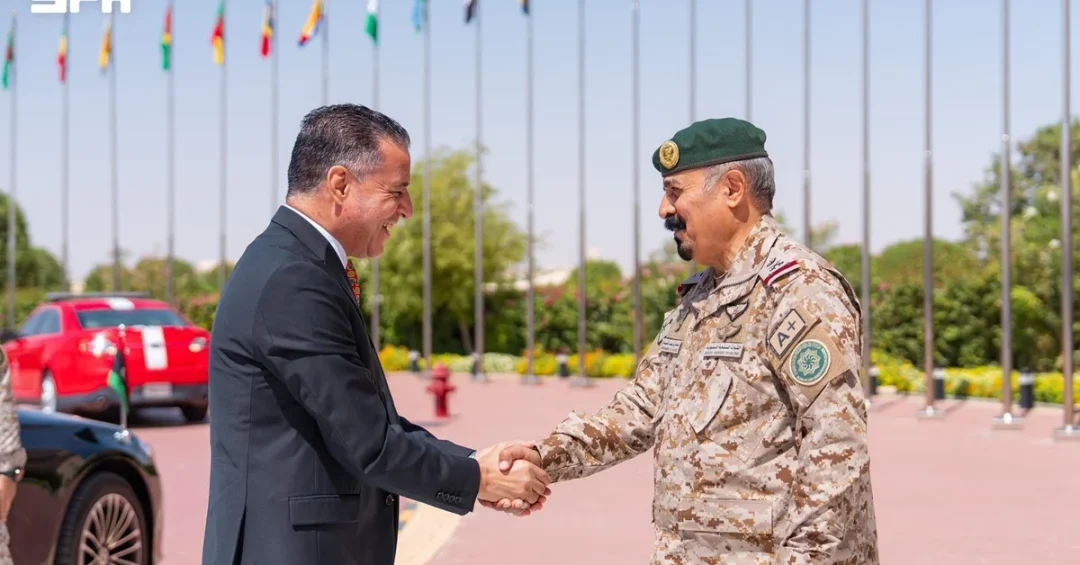
Secretary-General of the Islamic Military Counter Terrorism Coalition (IMCTC), Major General Mohammed Al-Moghedi, met with Chargé d’Affaires of the Embassy of Libya to the Kingdom, Fateh Bashina, in Riyadh on July 21, 2026, to discuss strengthening counterterrorism cooperation and capacity building. The meeting, held at the IMCTC headquarters, focused on reviewing the coalition’s key programs and initiatives aimed at supporting member states in combating terrorism.
Context and Background
The Islamic Military Counter Terrorism Coalition (IMCTC), headquartered in Riyadh, was established in 2015 as a Saudi-led initiative to coordinate and enhance efforts in countering terrorism globally. The coalition operates across four key areas: ideological, media, counterterrorism financing, and military. Its mission is to support member states in developing national capabilities, enhancing coordination, and promoting best practices in combating terrorism.
Key Details
During the meeting, Major General Al-Moghedi and Chargé d’Affaires Bashina reviewed the programs and initiatives implemented by the IMCTC across its four operational areas. They discussed the results achieved in developing national capabilities, enhancing coordination among member states, and promoting international best practices in counterterrorism.
Bashina expressed his deep appreciation for the significant efforts made by the IMCTC under Saudi Arabia’s leadership, praising the quality programs and initiatives provided to member states. He emphasized Libya’s geographical and strategic importance in the region, noting that enhanced cooperation in capacity building and the exchange of expertise is crucial at this stage.
Implications and Impact
The discussions underscored the importance of international cooperation in addressing terrorism, a global challenge that requires a unified response. Libya’s participation in IMCTC initiatives is expected to bolster its preparedness across various counterterrorism fields, contributing to regional security and stability.
The meeting also highlighted Saudi Arabia’s pivotal role in leading global counterterrorism efforts through the IMCTC. By fostering collaboration among member states, Saudi Arabia continues to demonstrate its commitment to promoting peace and security on a global scale.
Vision 2030 Alignment
This meeting aligns with Saudi Arabia’s Vision 2030 goals of enhancing global partnerships and promoting regional stability. By strengthening international cooperation in counterterrorism, Saudi Arabia reinforces its position as a leader in global security initiatives, contributing to the broader objectives of Vision 2030.
20 Questions
Q1. What is the Islamic Military Counter Terrorism Coalition (IMCTC)?
A1. The IMCTC is a Saudi-led coalition established in 2015 to coordinate and enhance global efforts in countering terrorism across ideological, media, financing, and military areas.
Q2. Who attended the meeting in Riyadh?
A2. Major General Mohammed Al-Moghedi, IMCTC Secretary-General, and Fateh Bashina, Chargé d’Affaires of the Embassy of Libya to the Kingdom, attended the meeting.
Q3. What was the purpose of the meeting?
A3. The meeting aimed to discuss strengthening counterterrorism cooperation and capacity building between the IMCTC and Libya.
Q4. When and where did the meeting take place?
A4. The meeting took place on July 21, 2026, at the IMCTC headquarters in Riyadh.
Q5. What areas does the IMCTC focus on?
A5. The IMCTC focuses on ideological, media, counterterrorism financing, and military areas.
Q6. What did the parties discuss during the meeting?
A6. They discussed IMCTC’s programs, initiatives, and results in developing national capabilities and enhancing coordination among member states.
Q7. How did Fateh Bashina describe the IMCTC’s efforts?
A7. Bashina praised the significant efforts made by the IMCTC under Saudi Arabia’s leadership and its quality programs supporting member states.
Q8. Why is Libya interested in IMCTC initiatives?
A8. Libya seeks to benefit from IMCTC initiatives to enhance its counterterrorism capabilities due to its geographical and strategic importance in the region.
Q9. What is Saudi Arabia’s role in the IMCTC?
A9. Saudi Arabia leads the IMCTC, demonstrating its commitment to global counterterrorism efforts and promoting peace and security.
Q10. How does the IMCTC support member states?
A10. The IMCTC supports member states by developing national capabilities, enhancing coordination, and promoting best practices in combating terrorism.
Q11. What are the benefits of Libya’s cooperation with the IMCTC?
A11. Cooperation with the IMCTC enhances Libya’s preparedness in counterterrorism, contributing to regional security and stability.
Q12. What is the significance of the meeting for Saudi Arabia?
A12. The meeting highlights Saudi Arabia’s leadership in global counterterrorism efforts and its commitment to fostering international collaboration.
Q13. How does the IMCTC contribute to global security?
A13. The IMCTC contributes to global security by coordinating and enhancing counterterrorism efforts among its member states.
Q14. What are the key areas of IMCTC’s operations?
A14. The IMCTC operates in ideological, media, counterterrorism financing, and military areas.
Q15. How does the IMCTC promote best practices?
A15. The IMCTC promotes best practices by sharing expertise and enhancing coordination among member states in combating terrorism.
Q16. What is the geographical importance of Libya?
A16. Libya’s geographical location makes it strategically important in the region, influencing its need for enhanced counterterrorism cooperation.
Q17. How does Saudi Arabia’s leadership impact the IMCTC?
A17. Saudi Arabia’s leadership provides strategic direction and resources, strengthening the IMCTC’s effectiveness in global counterterrorism efforts.
Q18. What are the outcomes of IMCTC initiatives?
A18. IMCTC initiatives result in developed national capabilities, enhanced coordination, and improved counterterrorism practices among member states.
Q19. How does the meeting align with Saudi Arabia’s Vision 2030?
A19. The meeting aligns with Vision 2030 by enhancing global partnerships and promoting regional stability through strengthened counterterrorism cooperation.
Q20. What is the future outlook for IMCTC and Libya’s cooperation?
A20. The future outlook includes enhanced capacity building and expertise exchange, contributing to Libya’s counterterrorism efforts and regional security.
Reader Feedback
We value your thoughts. Please share your feedback on this article.
Your feedback helps us improve our coverage.