


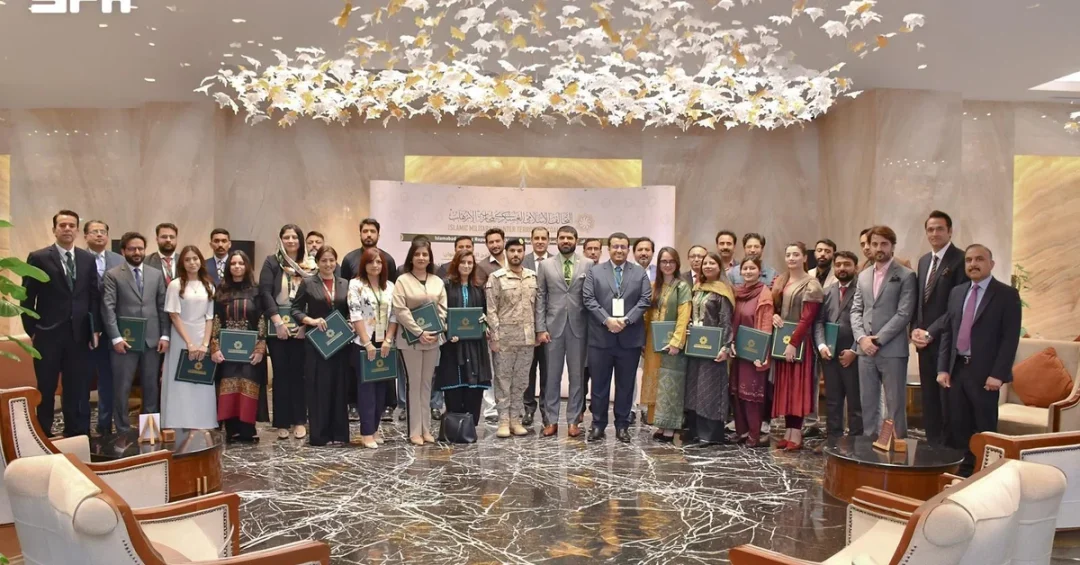
The Islamic Military Counter Terrorism Coalition (IMCTC) has concluded a five-day training program in Islamabad, Pakistan, as part of its strategic media initiative, “Peace Journalists,” according to an announcement carried by the Saudi Press Agency. The program, which ran from November 17 to 21, 2026, brought together journalists and media professionals to strengthen their ability to analyze extremist and hate speech on digital platforms and to address such content professionally. The initiative reflects the coalition’s growing emphasis on combating terrorism not only through military means but also through the information domain, where extremist narratives often take root and spread.
The IMCTC, headquartered in Riyadh, was established in 2015 under the leadership of Saudi Arabia to coordinate and unify efforts among member states in the fight against terrorism. The “Peace Journalists” program is one of several strategic media initiatives designed to build resilience against extremist propaganda. By training journalists to verify information, identify misinformation, and produce reliable reports, the coalition aims to curb the spread of misleading content that can fuel radicalization. The program’s conclusion in Pakistan marks another step in the coalition’s broader mission to promote moderate discourse and safeguard communities from the harmful effects of extremist rhetoric.
Context and Background
How did the Islamic Military Counter Terrorism Coalition come to prioritize media training as a core component of its counterterrorism strategy? The IMCTC was founded with a clear mandate to counter terrorism through military, ideological, and media cooperation. Over the years, it has evolved to recognize that the battle against extremism is fought as much in the digital realm as on the battlefield. Extremist groups have exploited social media and online platforms to recruit followers, spread propaganda, and incite violence. In response, the coalition launched the “Peace Journalists” initiative to empower media professionals with the tools they need to counter these narratives effectively.
The program in Islamabad is part of a series of training sessions held across IMCTC member states. Pakistan, as an active member of the coalition, has been a key partner in these efforts. The five-day workshop covered practical techniques for analyzing digital content, verifying images and videos, and identifying sources of misinformation. Participants learned how to trace the origins of viral content, assess its authenticity, and report accurately on issues related to extremism. The training also emphasized the importance of ethical journalism and the role of media in promoting tolerance and understanding.
This initiative aligns with the IMCTC’s broader strategy to build media capacity in member states and to strengthen journalism’s role in countering extremist and hate rhetoric. By equipping journalists with advanced analytical skills, the coalition aims to create a network of professionals who can serve as a first line of defense against the spread of false and harmful information. The program’s focus on digital platforms is particularly timely, as the internet has become a primary vector for extremist propaganda. Through such training, the IMCTC seeks to deprive extremist groups of the oxygen they need to spread their messages and radicalize vulnerable individuals.
Key Details of the Training Program
What specific skills did the participants gain during the five-day workshop? The program was designed to be highly practical, with hands-on exercises and case studies drawn from real-world scenarios. Journalists learned how to use open-source intelligence (OSINT) tools to verify the authenticity of images and videos, a critical skill in an era of deepfakes and manipulated media. They were also trained in techniques for analyzing the language and imagery used by extremist groups to identify patterns and narratives that could be countered with accurate reporting.
In addition to technical skills, the program covered the ethical and legal dimensions of reporting on extremism. Participants discussed the challenges of balancing freedom of expression with the need to prevent the spread of hate speech and incitement. They explored best practices for interviewing victims of terrorism, handling sensitive information, and avoiding the amplification of extremist messages. The training also included modules on how to collaborate with law enforcement and government agencies without compromising journalistic independence.
The program was led by experts in media, security, and counterterrorism from IMCTC member states. According to the Saudi Press Agency, the initiative is part of the coalition’s ongoing efforts to build media capacity and to curb the spread of misleading content. The participants represented a diverse range of media outlets, including print, broadcast, and digital platforms. Their feedback will be used to refine future training sessions and to develop a standardized curriculum that can be replicated across member states.
International and Regional Impact
How does the “Peace Journalists” program contribute to regional stability and international security? By enhancing the skills of journalists in member states, the IMCTC is helping to create a more informed public that is less susceptible to extremist propaganda. In Pakistan, a country that has faced significant challenges from terrorism, the program is particularly relevant. The training empowers local journalists to report accurately on security issues, thereby reducing the spread of rumors and misinformation that can exacerbate tensions. This, in turn, supports efforts to promote peace and stability in the region.
At the international level, the program demonstrates Saudi Arabia’s leadership in countering extremism through innovative and non-kinetic means. The IMCTC’s approach aligns with global efforts to combat terrorism, including the United Nations’ strategies to prevent violent extremism. By sharing best practices and building networks among journalists, the coalition is fostering a community of professionals who can work together across borders to counter extremist narratives. This collaborative approach is essential in a world where information knows no boundaries and where extremist groups often operate transnationally.
The program also strengthens the relationship between Saudi Arabia and Pakistan, two nations that have long cooperated on security matters. Pakistan’s participation in the IMCTC and its hosting of the training program underscore its commitment to the coalition’s objectives. The successful conclusion of the program is expected to pave the way for further collaboration in media and counterterrorism, reinforcing the bonds between the two countries and their shared vision for a peaceful and prosperous region.
Economic and Strategic Significance
What are the economic and strategic benefits of investing in media capacity building? For Saudi Arabia and its allies, the fight against extremism is not only a security imperative but also an economic one. Terrorism and extremism can destabilize economies, deter investment, and disrupt trade. By countering extremist narratives and promoting moderate discourse, the IMCTC helps create an environment conducive to economic growth and development. The “Peace Journalists” program, by improving the quality of information available to the public, supports informed decision-making and fosters trust in institutions, both of which are essential for economic progress.
Strategically, the program enhances the soft power of Saudi Arabia and the IMCTC. It positions the coalition as a leader in the global fight against terrorism, not just through military might but through intellectual and media engagement. This comprehensive approach is a hallmark of Saudi Vision 2030, which seeks to diversify the economy and promote a moderate, forward-looking image of the Kingdom. By investing in media training, the IMCTC is helping to shape a narrative that counters extremist propaganda and showcases the positive developments in Saudi Arabia and the wider region.
Furthermore, the program contributes to the development of a skilled media workforce in member states. In an age where information is a strategic asset, having well-trained journalists who can discern fact from fiction is invaluable. These professionals will play a crucial role in holding extremists accountable and in promoting transparency and accountability in governance. The economic and strategic returns on this investment are likely to be substantial, as a more informed and resilient society is better equipped to attract investment, foster innovation, and achieve sustainable development.
Vision 2030 Alignment
How does the “Peace Journalists” program reflect the objectives of Saudi Vision 2030? Vision 2030 is a comprehensive plan to transform Saudi Arabia into a diversified, modern economy and a global leader in various fields. A key pillar of the vision is the promotion of moderate Islam and the rejection of extremism. The IMCTC’s media initiative directly supports this pillar by empowering journalists to counter extremist rhetoric and to spread messages of tolerance and coexistence. By fostering a media environment that is both free and responsible, the program contributes to the vision’s goal of building a vibrant society and a thriving economy.
Moreover, the program underscores Saudi Arabia’s commitment to international cooperation and its role as a responsible global actor. Under Vision 2030, the Kingdom has sought to strengthen its partnerships and to take a leading role in addressing global challenges, including terrorism. The “Peace Journalists” program is a tangible example of this commitment, demonstrating how Saudi Arabia is working with its allies to build capacity and to promote peace. As the program concludes in Pakistan, it sets the stage for further initiatives that will advance the vision’s objectives and contribute to a safer, more prosperous world.
20 Questions
Q1. What is the Islamic Military Counter Terrorism Coalition (IMCTC)?
A1. The IMCTC is a coalition of Muslim-majority countries established in 2015 under Saudi leadership to coordinate efforts against terrorism. It operates through military, ideological, and media initiatives to counter extremism and promote moderate discourse globally.
Q2. What was the purpose of the “Peace Journalists” program in Pakistan?
A2. The program aimed to train journalists and media professionals to analyze extremist and hate speech on digital platforms, verify information, and produce reliable reports. It sought to build media capacity and curb the spread of misleading content.
Q3. Where and when did the training program take place?
A3. The program was held in Islamabad, Pakistan, from November 17 to 21, 2026. It was part of the IMCTC’s strategic media initiative and concluded with a closing ceremony covered by the Saudi Press Agency.
Q4. How many days did the program last?
A4. The program lasted for five days, providing participants with intensive training on digital content analysis, verification techniques, and ethical reporting on extremism and hate speech.
Q5. Who participated in the program?
A5. Journalists and media professionals from Pakistan and possibly other IMCTC member states participated. They represented various media outlets, including print, broadcast, and digital platforms.
Q6. What specific skills were taught during the training?
A6. Participants learned practical techniques for analyzing digital content, verifying images and videos, identifying sources of misinformation, and producing reports based on reliable information. They also studied how extremist discourse spreads online.
Q7. Why is it important to counter extremist speech on digital platforms?
A7. Extremist groups use digital platforms to recruit, spread propaganda, and incite violence. Countering such speech is crucial to prevent radicalization, protect vulnerable individuals, and maintain social harmony and security.
Q8. How does the IMCTC benefit from this program?
A8. The program helps the IMCTC build a network of skilled journalists in member states who can counter extremist narratives. It strengthens the coalition’s media strategy and enhances its ability to curb misleading content.
Q9. What role does Saudi Arabia play in the IMCTC?
A9. Saudi Arabia is a founding member and hosts the IMCTC headquarters in Riyadh. It provides leadership, funding, and strategic direction for the coalition’s initiatives, including the “Peace Journalists” program.
Q10. How does this program align with Saudi Vision 2030?
A10. Vision 2030 promotes moderate Islam and rejects extremism. The program supports this by empowering journalists to counter hate speech and spread tolerance, contributing to a vibrant society and a secure environment for economic growth.
Q11. What is the significance of holding the program in Pakistan?
A11. Pakistan is a key IMCTC member and has faced significant terrorism challenges. Hosting the program there strengthens bilateral cooperation and helps build local media capacity to counter extremism in a region affected by such issues.
Q12. How does the program contribute to international security?
A12. By improving media accuracy and reducing misinformation, the program helps prevent the spread of extremist propaganda that can lead to violence. It supports global efforts to combat terrorism and promotes stability.
Q13. What are the economic benefits of countering extremism?
A13. Countering extremism creates a stable environment that attracts investment, fosters economic growth, and reduces the costs associated with terrorism. It also enhances a country’s image and credibility on the global stage.
Q14. How can journalists verify digital content effectively?
A14. Journalists can use open-source intelligence tools, reverse image searches, geolocation, and cross-referencing with reliable sources. The program teaches these techniques to ensure accurate reporting.
Q15. What challenges do journalists face when reporting on extremism?
A15. They must balance freedom of expression with preventing hate speech, avoid amplifying extremist messages, and ensure their safety. Ethical guidelines and training help them navigate these challenges.
Q16. Will the IMCTC expand the “Peace Journalists” program to other countries?
A16. The program is part of ongoing efforts to build media capacity in member states. It is likely to be replicated in other countries, with curricula refined based on feedback from each session.
Q17. How does the program engage with local media outlets?
A17. It invites journalists from various local outlets to participate, providing them with skills that they can apply in their daily work. This creates a ripple effect, improving overall media quality.
Q18. What is the role of the Saudi Press Agency in reporting such events?
A18. The Saudi Press Agency (SPA) is the official news agency of Saudi Arabia. It provides accurate and timely coverage of official events, including IMCTC initiatives, ensuring transparency and disseminating information to the public.
Q19. How does the program address hate speech specifically?
A19. The program trains journalists to identify hate speech, understand its impact, and report on it responsibly. It also promotes counter-narratives that emphasize tolerance, coexistence, and mutual respect among communities.
Q20. What is the long-term goal of the IMCTC’s media initiatives?
A20. The long-term goal is to create a global network of informed journalists who can effectively counter extremist propaganda, promote moderate voices, and contribute to a safer, more peaceful world free from the threat of terrorism.
Reader Feedback
We value your thoughts. Please share your feedback on this article.
Your feedback helps us improve our coverage.
Related articles
 Islamic Affairs Ministry Concludes Fourth Scholarly Course in Sri Lanka
 Saudi Ambassador Presents Credentials to North Macedonia
 Saudi Arabia Concludes Successful Participation in ICAO Air Transport Conference
 Saudi Arabia Records 10,783 Residency and Labor Violations
 Shura Council Speaker Begins Official Visit to Kyrgyz Republic
 Saudi Education Minister Advances Duke University Partnership