


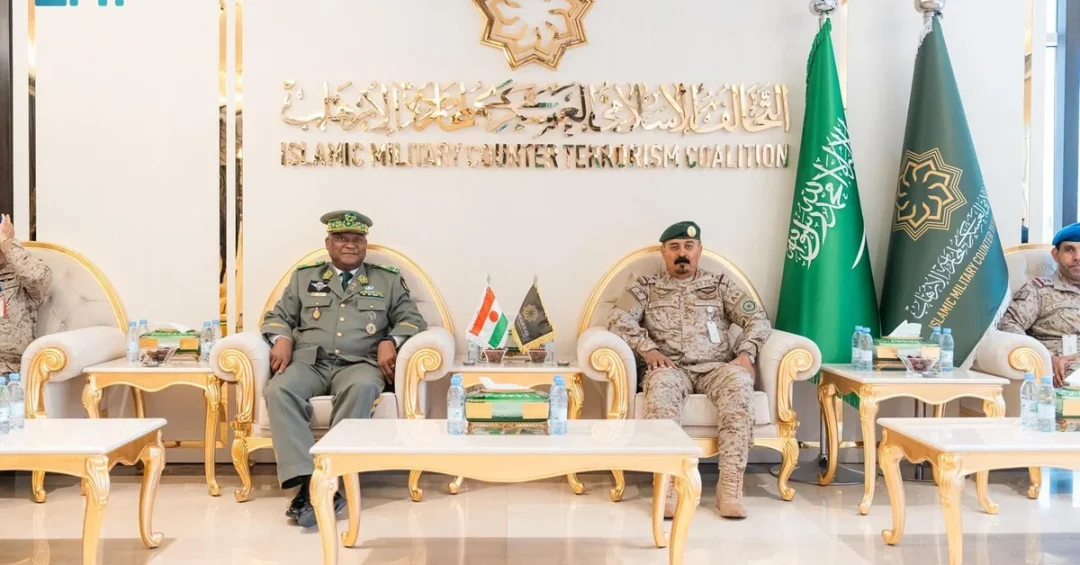
Riyadh, July 1, 2024 – The Secretary-General of the Islamic Military Counter Terrorism Coalition (IMCTC), Maj. Gen. Mohammed bin Saeed Al-Moghedi, received Chief of Staff of the Armed Forces of the Republic of Niger, Brig. Gen. Moussa Salaou Barmou, and his accompanying delegation at the coalition headquarters in Riyadh, according to an official announcement carried by the Saudi Press Agency (SPA). The high-level meeting underscored the coalition’s expanding international partnerships and its pivotal role in coordinating counter-terrorism efforts across the Islamic world and beyond.
Context and Background
The IMCTC, headquartered in Riyadh, was established in 2015 as a 41-nation alliance to combat terrorism through military, intellectual, media, and counter-financing operations. The coalition has since become a leading platform for multilateral security cooperation, aligning with Saudi Arabia’s Vision 2030 goal of promoting global peace and stability. Niger, a key member of the Group of Five for the Sahel (G5 Sahel), has been an active participant in regional counter-terrorism initiatives, facing significant threats from extremist groups operating across the Sahel region.
Key Details
During the visit, the Nigerien delegation was briefed on the coalition’s most important activities and its comprehensive approach to combating terrorism in the intellectual, media, counter-terrorism financing, and military domains. They were also acquainted with the latest publications, monthly reports, and the monitoring, follow-up, and analysis operations conducted by the coalition on extremist and terrorist groups worldwide. Brig. Gen. Barmou praised the coalition’s strategies, particularly its intellectual approach to dismantling extremist ideologies that lure young people into combat and extremism. He stressed that international solidarity plays an important role in eradicating these groups. Maj. Gen. Al-Moghedi said that this visit underscores the interest and commitment of the leadership of the Republic of Niger in its fight against terrorism and extremism. He stressed that Niger’s presence within the G5 Sahel demonstrates its belief in collaborative work in all matters related to combating terrorism and rejecting violence and extremism.
Implications and Impact
This meeting reinforces the IMCTC’s growing role as a global hub for counter-terrorism cooperation, bridging Africa and the Middle East. Niger’s engagement highlights the importance of international solidarity and the coalition’s efforts to build capacities and share best practices. The visit also signals Saudi Arabia’s continued leadership in fostering security and stability, which are essential for economic development and regional prosperity. By strengthening ties with Sahel nations, the coalition contributes to broader efforts to combat extremism and promote peace, aligning with global counter-terrorism objectives.
Vision 2030 Alignment
Saudi Arabia’s Vision 2030 emphasizes a stable and secure environment as a foundation for economic diversification and social progress. The IMCTC’s work directly supports this vision by enhancing international partnerships, promoting moderate values, and countering extremism. As the coalition deepens its collaboration with nations like Niger, it reinforces the Kingdom’s commitment to global security and its role as a responsible leader in the Muslim world and beyond.
20 Questions
Q1. What was the main purpose of the meeting between IMCTC and Niger’s Chief of Staff?
A1. The meeting aimed to discuss bilateral cooperation in counter-terrorism and to brief Niger’s delegation on the coalition’s activities, strategies, and publications related to combating extremism.
Q2. Where did the meeting take place?
A2. The meeting was held at the IMCTC headquarters in Riyadh, Saudi Arabia, as officially announced by the Saudi Press Agency.
Q3. Who represented the IMCTC at the meeting?
A3. The IMCTC was represented by its Secretary-General, Maj. Gen. Mohammed bin Saeed Al-Moghedi, who received the Nigerien delegation.
Q4. Who led the delegation from Niger?
A4. The delegation from Niger was led by Brig. Gen. Moussa Salaou Barmou, Chief of Staff of the Armed Forces of the Republic of Niger.
Q5. When did this meeting occur?
A5. The meeting took place on July 1, 2024, according to the official statement released by the Saudi Press Agency.
Q6. What aspects of counter-terrorism were discussed?
A6. The discussions covered intellectual, media, counter-terrorism financing, and military fields, reflecting the coalition’s comprehensive approach to combating extremism.
Q7. What did the delegation learn about the coalition’s operations?
A7. The delegation was briefed on the coalition’s monitoring, follow-up, and analysis operations on extremist and terrorist groups around the world, as well as its latest publications.
Q8. How did Brig. Gen. Barmou respond to the coalition’s strategies?
A8. He praised the coalition’s strategies, especially its intellectual approach to dismantling extremist ideologies, and emphasized the importance of international solidarity.
Q9. What did Maj. Gen. Al-Moghedi say about Niger’s role?
A9. He noted that Niger’s participation underscores its commitment to fighting terrorism and its belief in collaborative work within the Group of Five for the Sahel.
Q10. What is the Group of Five for the Sahel?
A10. The G5 Sahel is a regional organization comprising Burkina Faso, Chad, Mali, Mauritania, and Niger, focused on security and development cooperation.
Q11. Why is Niger’s involvement significant for the IMCTC?
A11. Niger’s involvement highlights the coalition’s expanding reach into Africa and strengthens multilateral efforts to combat terrorism and extremism across the Sahel region.
Q12. How does the IMCTC counter extremist ideologies?
A12. The coalition uses intellectual and media strategies to discredit extremist narratives, promote moderation, and prevent the radicalization of youth.
Q13. What are the four fields of IMCTC’s work?
A13. The four fields are intellectual, media, counter-terrorism financing, and military, forming a holistic approach to defeating terrorism.
Q14. How does this meeting align with Saudi Arabia’s Vision 2030?
A14. It supports Vision 2030’s goal of promoting global peace and security, which are essential for economic development and international cooperation.
Q15. What publications were shared with the Nigerien delegation?
A15. The delegation received the coalition’s latest publications and monthly reports on extremist and terrorist groups, including analysis and monitoring data.
Q16. What role does international solidarity play in counter-terrorism?
A16. International solidarity is crucial for sharing intelligence, resources, and best practices, and for presenting a united front against terrorism and extremism.
Q17. How does the IMCTC monitor terrorist groups?
A17. The coalition conducts ongoing monitoring, follow-up, and analysis of extremist and terrorist groups globally, producing reports to inform member states.
Q18. What is the significance of the IMCTC headquarters being in Riyadh?
A18. It reflects Saudi Arabia’s leadership in global counter-terrorism efforts and its commitment to fostering international security cooperation.
Q19. How many nations are part of the IMCTC?
A19. The IMCTC comprises 41 member nations from across the Islamic world, united in their mission to combat terrorism and extremism.
Q20. What future cooperation can be expected between Niger and the IMCTC?
A20. Enhanced collaboration in training, intelligence sharing, and joint counter-terrorism operations is expected, further solidifying regional and international security partnerships.
Reader Feedback
We value your thoughts. Please share your feedback on this article.
Your feedback helps us improve our coverage.