


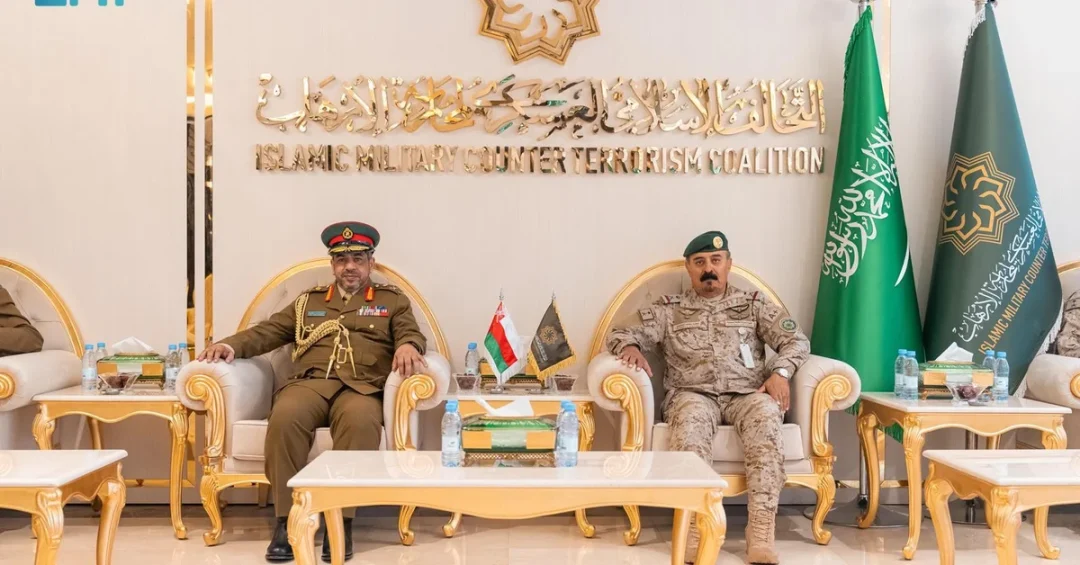
The Islamic Military Counter Terrorism Coalition (IMCTC) welcomed a high-level delegation from Oman’s Academy of Strategic and Defense Studies in Riyadh on June 27, 2024, underscoring the growing regional cooperation in the fight against terrorism. The delegation, led by the academy’s president, Maj. Gen. Hamid bin Ahmed bin Said Sakroon, was received by IMCTC Secretary-General Maj. Gen. Mohammed bin Saeed Al-Moghedi at the coalition’s headquarters in the Saudi capital. The visit provided an opportunity to showcase the coalition’s comprehensive approach to counterterrorism, which integrates ideological, communications, financial, and military efforts to disrupt terrorist networks globally.
Context and Background
The IMCTC, established in 2015, represents a unified Islamic military alliance dedicated to combating terrorism and extremism. With its headquarters in Riyadh, the coalition operates as a hub for intelligence sharing, operational coordination, and capacity building among its member states. The meeting with Oman’s strategic studies institution reflects a broader trend of enhancing cooperation with regional academic and defense think tanks to refine counterterrorism strategies and foster a deeper understanding of emerging threats. Oman’s Academy of Strategic and Defense Studies serves as a key institution in the Sultanate for analyzing security challenges and preparing strategic leaders, making this visit a meaningful exchange of expertise.
Key Details
During the meeting, the delegation received a comprehensive briefing on the IMCTC’s current activities and its role in aligning global counterterrorism initiatives. The coalition highlighted its work in four fundamental domains: ideology, communications, counter-terrorist financing, and military operations. The discussion also covered the IMCTC’s ongoing monitoring and analysis operations, which track terrorist groups and organizations worldwide, providing critical early warning and strategic intelligence to member states. This collaboration reflects a shared understanding that defeating terrorism requires a multi-faceted approach involving military action, ideological correction, financial disruption, and strategic messaging.
Implications and Impact
The visit symbolizes the strengthening of ties between Saudi Arabia and Oman in the field of defense and strategic studies. By opening its doors to regional academic and military institutions, the IMCTC is not only sharing best practices but also fostering a generation of military strategists and analysts better equipped to address evolving security threats. This engagement serves as a testament to the Kingdom’s broader role as a regional leader in security and cooperation, complementing its Vision 2030 goals of promoting international partnerships and advancing global security. The exchange is expected to lead to further collaboration, including joint training, research, and exchange of expertise in counterterrorism disciplines.
Vision 2030 Alignment
This meeting aligns seamlessly with the Kingdom of Saudi Arabia’s Vision 2030 framework, which prioritizes a proactive and collaborative security stance that protects its citizens and the region. By welcoming delegations from sister nations, the IMCTC reinforces the vision’s pillar of building strong, strategic partnerships that contribute to a stable and prosperous Islamic world. The IMCTC continues to serve as a cornerstone of global counterterrorism efforts, reflecting the Kingdom’s commitment to fostering peace and security through cooperation, innovation, and resilience, thereby supporting a safer world for future generations.
20 Questions
Q1. What is the IMCTC?
A1. The Islamic Military Counter Terrorism Coalition (IMCTC) is a 41-member Islamic coalition established in 2015 to coordinate global efforts against terrorism. It is based in Riyadh, Saudi Arabia, and focuses on ideological, communications, financial, and military strategies.
Q2. Who represented Oman in the meeting?
A2. The delegation from Oman’s Academy of Strategic and Defense Studies was led by its president, Maj. Gen. Hamid bin Ahmed bin Said Sakroon. The delegation visited the IMCTC headquarters in Riyadh to discuss collaboration and counterterrorism efforts.
Q3. Who hosted the delegation?
A3. The delegation was received by IMCTC Secretary-General Maj. Gen. Mohammed bin Saeed Al-Moghedi. He is the head of the coalition’s executive body and oversees its counterterrorism initiatives.
Q4. Where did the meeting take place?
A4. The meeting was held at the IMCTC headquarters in Riyadh, Saudi Arabia. This location is the central hub for the coalition’s operations, coordination, and strategic planning.
Q5. What are the four key areas of IMCTC’s work?
A5. The IMCTC operates in four areas: ideology, communications, counter-terrorist financing, and military operations. These pillars address terrorism from multiple angles, preventing radicalization, disrupting funding, and neutralizing threats.
Q6. Why is this visit significant?
A6. This visit strengthens ties between Saudi Arabia and Oman in defense and strategic studies. It promotes knowledge exchange and cooperation, enhancing regional security and unified counterterrorism efforts.
Q7. What did the delegation receive an overview of?
A7. The delegation was provided an overview of the IMCTC’s activities and its role in coordinating global counterterrorism. They were also briefed on the coalition’s monitoring and analysis operations of terrorist groups worldwide.
Q8. What is the role of the IMCTC in monitoring?
A8. The IMCTC conducts monitoring, follow-up, and analysis operations targeting terrorist organizations. These activities provide valuable intelligence for member states and help preempt potential attacks.
Q9. How does the IMCTC combat terrorism?
A9. The coalition uses a comprehensive approach, including ideological correction, strategic messaging, disrupting terrorist financing, and military action. This multi-faceted strategy aims to dismantle and dismantle terrorist networks.
Q10. What is the role of the Academy of Strategic and Defense Studies?
A10. Oman’s Academy focuses on educating and preparing military and civilian leaders in strategic and defense matters. Its visit to the IMCTC suggests a focus on integrating regional counterterrorism perspectives into its curriculum.
Q11. Does this visit indicate new cooperation?
A11. The visit is a step toward deeper cooperation between the IMCTC and Omani defense institutions. It could lead to future joint trainings, research collaborations, and shared expertise in counterterrorism.
Q12. How does the IMCTC support Vision 2030?
A12. The IMCTC supports Vision 2030 by promoting regional security and global partnerships. It enhances Saudi Arabia’s role as a global security provider, supporting regional stability and economic development.
Q13. How many member countries does the IMCTC have?
A13. The IMCTC comprises 41 member states, all Islamic nations. This diverse membership demonstrates the collective commitment to combating terrorism in accordance with the principles of Islam.
Q14. Why is ideology important in counterterrorism?
A14. Addressing ideological aspects helps counter the false narratives and misinterpretations that fuel extremism. The IMCTC works to present correct Islamic teachings, which is crucial in delegitimizing terrorist rhetoric.
Q15. What is the significance of counter-terrorist financing?
A15. Cutting terrorist financing is essential to disrupting their operations. By targeting the financial networks, the coalition hinders terrorists’ ability to plan, recruit, and execute attacks.
Q16. How does this meeting affect regional security?
A16. This meeting fosters better regional collaboration and information sharing, which strengthens the collective defense against extremist threats. It helps build trust and unity among member states.
Q17. What are the main goals of the IMCTC?
A17. The primary goals include coordinating efforts against terrorism, supporting member states, and presenting a unified Islamic voice against extremism. It aims to reduce and eliminate terrorist activities globally.
Q18. Who is the Secretary-General of the IMCTC?
A18. Maj. Gen. Mohammed bin Saeed Al-Moghedi is the Secretary-General. He leads the coalition’s strategic direction and oversees its various operational functions.
Q19. What is the connection with Vision 2030?
A19. Vision 2030 aims for a thriving society, a robust economy, and an ambitious nation. Counterterrorism efforts support this by creating a stable, safe environment where businesses, tourism, and citizens thrive.
Q20. What is the future outlook for IMCTC-Oman cooperation?
A20. The visit suggests a promising future for collaboration, including academic exchanges and joint defense initiatives. This partnership will contribute to a stronger regional security framework and aligns with Vision 2030 goals.
Reader Feedback
We value your thoughts. Please share your feedback on this article.
Your feedback helps us improve our coverage.