


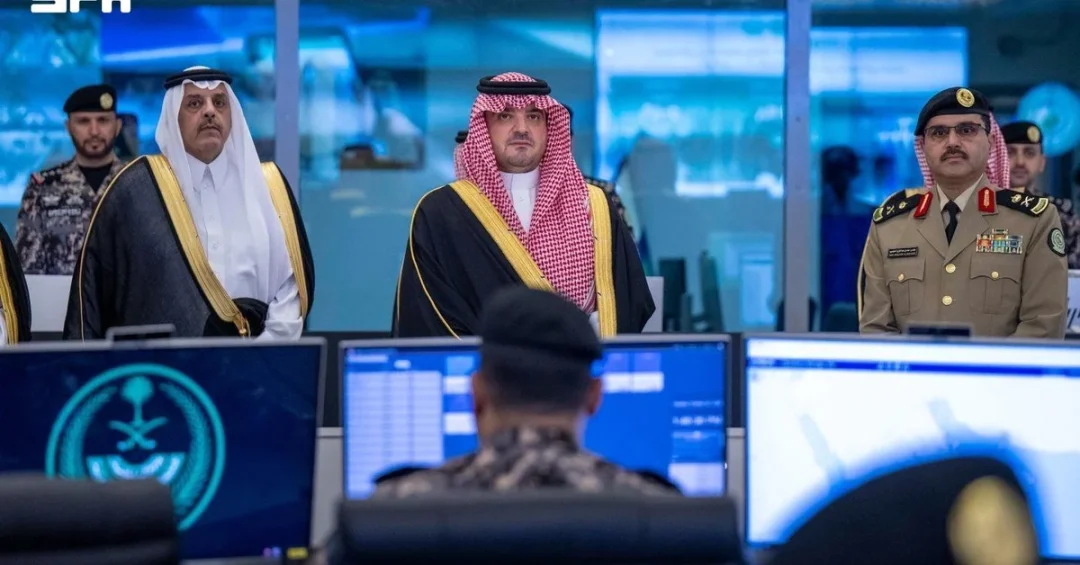
Saudi Arabia’s Minister of Interior, Prince Abdulaziz bin Saud bin Naif bin Abdulaziz, reviewed operations at the Facilities Security Forces Command in Riyadh on Tuesday and inaugurated two advanced centers for command and control and cybersecurity, alongside new digital services for personnel. The visit, reported by the Saudi Press Agency (SPA), underscores the Kingdom’s ongoing investment in technology-driven security infrastructure and its commitment to protecting vital national facilities through modern, integrated systems.
The inauguration of the command and control center for security UAV systems and the cybersecurity center marks a significant step in the Facilities Security Forces’ modernization journey. The command center comprises seven specialized units and is linked to 13 command and control centers at the forces’ branches across Saudi Arabia. It leverages an integrated system of advanced electronic platforms to receive reports, manage and monitor field operations, and exchange security information, thereby improving response times and security coordination in cooperation with the National Center for Security Operations. The cybersecurity center, meanwhile, is tasked with protecting data and information, securing networks and devices, monitoring systems to identify and address vulnerabilities, and detecting and countering cyber threats. These functions aim to protect technical infrastructure and support business continuity. The minister also launched services for Facilities Security Forces personnel through the Absher Interior application, developed in cooperation with the Ministry of Interior’s unified development center under its Technology Affairs sector. These services simplify procedures and enable personnel to access services electronically. The minister reviewed upgraded digital services and electronic systems, including the integration of the Mawared system with the Absher platform and the National Unified Access platform (Nafath), as well as secure technical interfaces integrating related systems. These integrations aim to improve service efficiency and advance digital transformation.
Context and Background
How has Saudi Arabia’s security apparatus evolved to meet the demands of a rapidly modernizing nation? Under the leadership of the Custodian of the Two Holy Mosques, King Salman bin Abdulaziz Al Saud, and His Royal Highness Crown Prince Mohammed bin Salman bin Abdulaziz Al Saud, the Kingdom has embarked on a comprehensive transformation of its security and administrative sectors. The Facilities Security Forces, a key component of the Ministry of Interior, is responsible for protecting critical infrastructure, including oil and gas facilities, power plants, water desalination plants, and other vital installations that underpin the national economy. The establishment of these new centers reflects a strategic shift toward leveraging cutting-edge technology to enhance operational efficiency and safeguard national assets.
The command and control center for security UAV systems represents a leap forward in surveillance and reconnaissance capabilities. By integrating artificial intelligence into unmanned aerial vehicles, the center enhances field surveillance and improves the efficiency of security operations within the forces’ areas of responsibility. This technological upgrade is part of a broader effort to modernize Saudi Arabia’s security infrastructure, aligning with the objectives of Vision 2030, which seeks to diversify the economy and enhance government services through digital transformation. The cybersecurity center addresses the growing threat of cyberattacks, which have become a global concern. By protecting data, securing networks, and countering cyber threats, the center ensures the resilience of the Kingdom’s technical infrastructure, a prerequisite for economic stability and public safety.
The launch of digital services for personnel through the Absher Interior application and the integration of systems like Mawared and Nafath demonstrate a commitment to streamlining administrative processes. These initiatives reduce bureaucratic hurdles, allowing personnel to focus on their core duties while enjoying easier access to services. Such advancements are consistent with the Ministry of Interior’s broader strategy to adopt e-government solutions, which have been recognized internationally for their efficiency and user-centric design. The Facilities Security Forces’ modernization also reflects the Kingdom’s proactive approach to adopting Fourth Industrial Revolution technologies, positioning Saudi Arabia as a leader in smart security solutions.
Key Details of the Inauguration
What specific capabilities do these new centers bring to Saudi Arabia’s security landscape? The command and control center for security UAV systems is equipped with seven specialized units, each dedicated to a specific function, such as operations monitoring, data analysis, and UAV deployment. These units are interconnected with 13 command and control centers located at the Facilities Security Forces’ branches throughout the Kingdom, creating a unified network that facilitates real-time information sharing and coordinated responses. The center’s integrated system of advanced electronic systems and platforms enables the receipt of reports, management and monitoring of field operations, and exchange of security information, significantly improving response times and security coordination in cooperation with the National Center for Security Operations.
The cybersecurity center focuses on protecting data and information, securing networks and devices, monitoring systems to identify and address vulnerabilities, and detecting and countering cyber threats. Its functions are critical for protecting technical infrastructure and supporting business continuity, ensuring that the Facilities Security Forces can operate without disruption. The center employs advanced technologies and skilled personnel to stay ahead of evolving cyber threats, which are increasingly sophisticated and targeted. By centralizing cybersecurity operations, the center enhances the forces’ ability to respond swiftly to incidents and mitigate risks.
On the personnel front, the minister launched new services through the Absher Interior application, developed in cooperation with the Ministry of Interior’s unified development center under its Technology Affairs sector. These services simplify procedures and enable personnel to access services electronically, from requesting leave to accessing training materials. The integration of the Mawared system with the Absher platform and the National Unified Access platform (Nafath) further streamlines administrative processes, allowing for seamless data exchange and secure access to services. These digital enhancements are part of a wider effort to improve service efficiency and advance digital transformation within the Ministry of Interior.
International and Regional Impact
How does Saudi Arabia’s investment in advanced security technology influence regional stability and global partnerships? The inauguration of these centers signals the Kingdom’s commitment to maintaining a secure environment for its citizens, residents, and international partners. By enhancing the protection of vital facilities, Saudi Arabia safeguards not only its own economy but also the global energy supply chain, as the Kingdom is a leading oil producer. This reliability is crucial for international markets and reinforces Saudi Arabia’s role as a responsible global actor. The use of UAVs equipped with artificial intelligence for surveillance and the establishment of a robust cybersecurity framework also position the Kingdom as a regional leader in adopting emerging technologies for security purposes.
Moreover, these developments align with Saudi Arabia’s efforts to foster international cooperation in cybersecurity and counterterrorism. The Kingdom has been an active participant in global forums and has signed agreements with various countries to share best practices and intelligence. The new centers are expected to facilitate such cooperation by providing a platform for joint training, information exchange, and capacity building. Regional allies and partners may look to Saudi Arabia as a model for integrating technology into security operations, further enhancing the Kingdom’s soft power and diplomatic influence.
The modernization of the Facilities Security Forces also contributes to the safety of major events hosted by Saudi Arabia, such as Expo 2030 and the FIFA World Cup 2034, which will require robust security measures. By investing in advanced command and control and cybersecurity capabilities, the Kingdom ensures it can manage large-scale events securely, showcasing its organizational capabilities to the world. This, in turn, boosts investor confidence and supports the growth of the tourism and entertainment sectors, key pillars of Vision 2030.
Economic and Strategic Significance
What economic benefits arise from enhancing the security of vital facilities? The protection of oil and gas infrastructure, power plants, and water desalination facilities is essential for maintaining uninterrupted production and supply. Any disruption to these facilities could have significant economic repercussions, not only for Saudi Arabia but also for global markets. By investing in advanced command and control and cybersecurity systems, the Kingdom mitigates these risks, ensuring the stability of its economy and the reliability of its exports. This stability is attractive to foreign investors, who seek predictable and secure environments for their investments.
Furthermore, the digital transformation of the Facilities Security Forces contributes to the growth of the local technology sector. The development of the Absher Interior application and the integration of systems like Mawared and Nafath involve partnerships with Saudi technology companies, fostering innovation and creating job opportunities for Saudi youth. This aligns with Vision 2030’s goal of diversifying the economy and empowering the private sector. The focus on cybersecurity also addresses a critical need in the digital economy, as businesses and government entities increasingly rely on secure networks to operate. By building a robust cybersecurity infrastructure, Saudi Arabia enhances its competitiveness in the global digital economy.
Strategically, the modernization of the Facilities Security Forces strengthens national security and resilience. The ability to monitor and respond to threats in real-time, whether physical or cyber, is a deterrent to potential adversaries. It also ensures the continuity of government operations and public services, which are essential for maintaining public trust and social stability. The integration of AI and UAV technologies demonstrates the Kingdom’s commitment to innovation and its readiness to adopt future-ready solutions, positioning Saudi Arabia as a leader in smart security.
Vision 2030 Alignment
How do these initiatives reflect the broader objectives of Saudi Vision 2030? Vision 2030, launched by Crown Prince Mohammed bin Salman, aims to transform Saudi Arabia into a diversified, innovative, and globally competitive economy. A key pillar of this vision is enhancing government effectiveness and digital transformation. The inauguration of the command and control center for UAV systems and the cybersecurity center, along with the launch of digital services for personnel, directly supports this pillar by leveraging technology to improve security operations and administrative efficiency. These initiatives also contribute to the vision’s goal of creating a safe and secure environment that attracts investment and tourism.
Moreover, the emphasis on cybersecurity and advanced surveillance aligns with the vision’s focus on innovation and technology. By adopting AI and UAV technologies, the Facilities Security Forces is embracing the Fourth Industrial Revolution, which is central to Saudi Arabia’s future competitiveness. The integration of systems like Absher, Mawared, and Nafath exemplifies the vision’s call for seamless digital government services. As the Kingdom continues to implement Vision 2030, the modernization of its security sector will play a crucial role in protecting the nation’s achievements and ensuring a prosperous future for all.
The Ministry of Interior’s efforts, under the guidance of Prince Abdulaziz bin Saud bin Naif bin Abdulaziz, demonstrate a clear commitment to excellence and innovation. These developments not only enhance the security of vital facilities but also contribute to the Kingdom’s reputation as a forward-looking nation. As Saudi Arabia marches toward 2030, such initiatives will be instrumental in realizing the vision’s ambitious goals and cementing the Kingdom’s position as a global leader.
20 Questions
Q1. What did the Minister of Interior inaugurate in Riyadh?
A1. Prince Abdulaziz bin Saud bin Naif bin Abdulaziz inaugurated a command and control center for security UAV systems and a cybersecurity center, and launched digital services for Facilities Security Forces personnel through the Absher Interior application.
Q2. How many units comprise the command and control center?
A2. The center comprises seven specialized units, each dedicated to specific functions such as operations monitoring, data analysis, and UAV deployment, ensuring comprehensive coverage of security operations.
Q3. How many command and control centers are linked to the new center?
A3. The new center is linked to 13 command and control centers at the Facilities Security Forces’ branches across Saudi Arabia, creating a unified network for real-time information sharing.
Q4. What is the role of the National Center for Security Operations?
A4. The National Center for Security Operations cooperates with the Facilities Security Forces to improve response times and security coordination, enhancing overall national security.
Q5. What technologies are used in the UAV systems?
A5. The UAVs are equipped with artificial intelligence technologies to support field surveillance and improve the efficiency of security operations within the forces’ areas of responsibility.
Q6. What are the main functions of the cybersecurity center?
A6. The cybersecurity center protects data and information, secures networks and devices, monitors systems to identify vulnerabilities, and detects and counters cyber threats to protect technical infrastructure.
Q7. How do the new digital services benefit Facilities Security Forces personnel?
A7. The services, available through the Absher Interior application, simplify procedures and enable personnel to access services electronically, saving time and improving efficiency.
Q8. Which entities developed the digital services?
A8. The services were developed in cooperation with the Ministry of Interior’s unified development center under its Technology Affairs sector.
Q9. What systems were integrated to enhance digital transformation?
A9. The Mawared system was integrated with the Absher platform and the National Unified Access platform (Nafath), along with secure technical interfaces integrating related systems.
Q10. What is the purpose of integrating Mawared with Absher and Nafath?
A10. The integration aims to improve service efficiency and advance digital transformation within the Ministry of Interior.
Q11. How does the command and control center improve security coordination?
A11. It uses an integrated system of advanced electronic platforms to receive reports, manage and monitor field operations, and exchange security information, thereby improving response times and coordination.
Q12. What types of facilities are protected by the Facilities Security Forces?
A12. The forces protect critical infrastructure such as oil and gas facilities, power plants, water desalination plants, and other vital installations that underpin the national economy.
Q13. How does the cybersecurity center support business continuity?
A13. By protecting technical infrastructure and countering cyber threats, the center ensures that the Facilities Security Forces can operate without disruption, supporting business continuity.
Q14. What is the significance of using AI in UAVs for security?
A14. AI enhances surveillance capabilities, enabling faster and more accurate threat detection and improving the overall efficiency of security operations.
Q15. How does this inauguration align with Vision 2030?
A15. It aligns with Vision 2030’s goals of digital transformation, government effectiveness, and innovation, contributing to a secure environment that attracts investment and tourism.
Q16. What economic benefits result from securing vital facilities?
A16. Securing vital facilities ensures uninterrupted production and supply, stabilizes the economy, and attracts foreign investment by providing a predictable and secure environment.
Q17. How does the modernization of security forces impact regional stability?
A17. It enhances the protection of vital facilities, safeguards the global energy supply chain, and positions Saudi Arabia as a regional leader in adopting advanced security technologies.
Q18. What role does the Ministry of Interior’s Technology Affairs sector play?
A18. The Technology Affairs sector, through its unified development center, develops and implements digital services and systems that enhance the Ministry’s operational efficiency and service delivery.
Q19. How might these developments affect Saudi Arabia’s ability to host major events?
A19. Advanced security capabilities ensure the safe management of large-scale events like Expo 2030 and the FIFA World Cup 2034, boosting investor confidence and supporting tourism growth.
Q20. What is the overarching goal of these security modernization efforts?
A20. The goal is to protect the Kingdom’s vital assets, enhance national security, and support Vision 2030’s objectives of economic diversification and global competitiveness through innovation and digital transformation.
Reader Feedback
We value your thoughts. Please share your feedback on this article.
Your feedback helps us improve our coverage.