


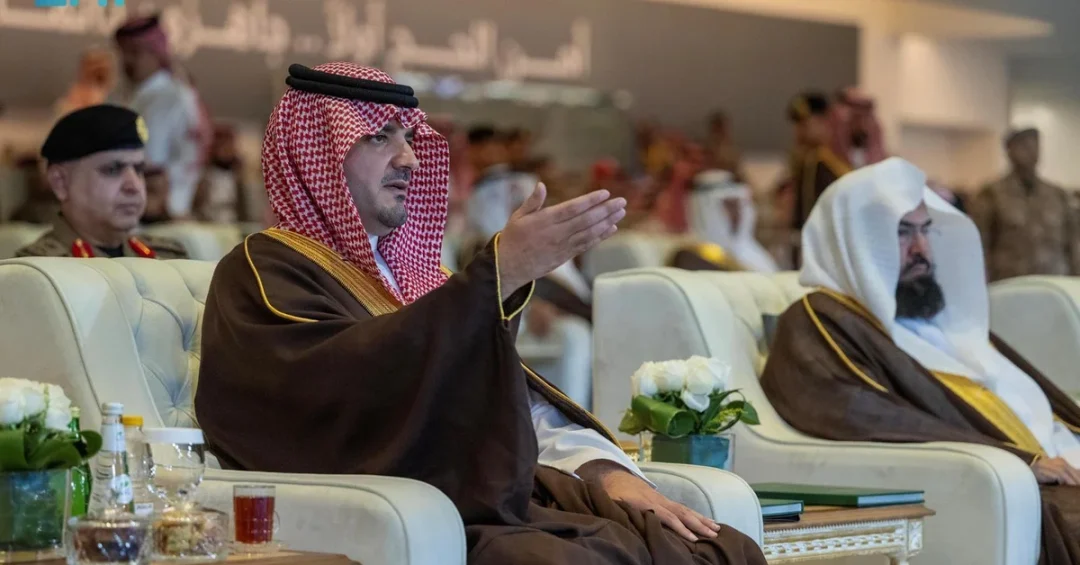
Minister of Interior and Chairman of the Supreme Hajj Committee Prince Abdulaziz bin Saud bin Naif bin Abdulaziz inspected the readiness of Hajj security forces during the annual ceremony in Mina, confirming comprehensive preparations to ensure the safety and security of pilgrims for the 1445 AH Hajj season. The inspection, reported by the Saudi Press Agency (SPA), underscores the Kingdom’s commitment to providing a secure and spiritually fulfilling environment for millions of pilgrims.
Context and Background
The annual ceremony, held in Mina, brings together key security officials and forces tasked with safeguarding the pilgrimage. This year’s event was attended by Lieutenant General Mohammed bin Abdullah Al-Bassami, Director of Public Security and Chairman of the Hajj Security Committee, who delivered a speech outlining the forces’ readiness. The Hajj, one of the Five Pillars of Islam, draws over two million Muslims from around the world to Mecca each year, requiring meticulous planning and coordination among various Saudi authorities.
The inspection is part of Saudi Arabia’s longstanding tradition of hosting the Hajj with the highest standards of safety and hospitality. Under the leadership of the Custodian of the Two Holy Mosques, King Salman bin Abdulaziz Al Saud, and Crown Prince Mohammed bin Salman, the Kingdom has continuously invested in infrastructure and technology to enhance the pilgrimage experience. This year’s preparations emphasize early preparation, collaboration, and the use of advanced technologies, including artificial intelligence, to manage crowds and respond to emergencies.
Key Details
During the ceremony, Lieutenant General Al-Bassami stated that the Hajj security forces have begun their duties for the season, with a focus on preventive measures and inter-agency cooperation. He emphasized that the forces are fully equipped to address any threat to pilgrims’ tranquility and to ensure they can perform their rituals with ease and comfort. The forces demonstrated their capabilities through a series of security hypotheses, showcasing their proficiency and readiness.
Al-Bassami highlighted the wise leadership’s dedication to pilgrim care, including the maintenance of services and the development of the holy sites. He noted that the Kingdom has maximized its human and mechanical capabilities, harnessed the majority of its energies, and implemented the most advanced modern technologies and artificial intelligence to serve the pilgrims and ensure their security and safety.
The event also served as a platform to recognize the efforts of various security sectors, including the Ministry of Interior, the Public Security Directorate, and other relevant authorities. The annual ceremony is a testament to Saudi Arabia’s commitment to continuous improvement in Hajj management, aligning with international best practices.
Implications and Impact
The inspection and the demonstrated readiness of Hajj security forces have significant implications for the successful execution of the Hajj season. With millions of pilgrims expected, the Kingdom’s ability to maintain order and safety is crucial not only for the pilgrims themselves but also for global perceptions of Saudi Arabia’s organizational capabilities. The use of artificial intelligence and advanced technologies reflects Saudi Arabia’s broader push towards digital transformation and smart governance.
Furthermore, the emphasis on early preparation and collaboration among authorities highlights the integrated approach that Saudi Arabia takes in managing large-scale events. This approach not only enhances the pilgrimage experience but also contributes to the Kingdom’s reputation as a reliable and capable host. The security measures also support the economic and social aspects of Hajj, as a safe environment encourages more pilgrims to undertake the journey, thereby boosting local economies and fostering cultural exchange.
Vision 2030 Alignment
The meticulous preparations for Hajj are in line with Saudi Vision 2030, which aims to enhance the quality of life, improve government services, and promote sustainable development. By leveraging technology and fostering inter-agency cooperation, the Kingdom is not only ensuring the safety of pilgrims but also advancing its goals of becoming a global leader in innovative governance and hospitality. The Hajj season serves as a showcase for Vision 2030’s objectives, demonstrating how Saudi Arabia is transforming its capabilities to serve millions of visitors while preserving the sanctity and tradition of the pilgrimage.
20 Questions
Q1. Who inspected the readiness of the Hajj security forces?
A1. Prince Abdulaziz bin Saud bin Naif bin Abdulaziz, Minister of Interior and Chairman of the Supreme Hajj Committee, inspected the readiness of the Hajj security forces in Mina.
Q2. When did the inspection take place?
A2. The inspection took place on June 11, 2024, during the annual ceremony organized by the Hajj security forces for the 1445 AH Hajj season.
Q3. Where was the ceremony held?
A3. The ceremony was held in Mina, near the holy city of Mecca, where pilgrims gather during the Hajj rituals.
Q4. Who is the Chairman of the Hajj Security Committee?
A4. Lieutenant General Mohammed bin Abdullah Al-Bassami is the Director of Public Security and Chairman of the Hajj Security Committee.
Q5. What did Lieutenant General Al-Bassami emphasize in his speech?
A5. He emphasized that the Hajj security forces are fully equipped and prepared to address any threat to pilgrims’ tranquility and to ensure they can perform their rituals with ease and comfort.
Q6. How many pilgrims typically perform Hajj each year?
A6. Over two million Muslims from around the world perform Hajj annually, making it one of the largest religious gatherings globally.
Q7. What technologies are used to ensure pilgrim safety?
A7. The Kingdom has implemented advanced modern technologies, including artificial intelligence, to manage crowds, respond to emergencies, and ensure the security and safety of pilgrims.
Q8. What is the role of the Supreme Hajj Committee?
A8. The Supreme Hajj Committee oversees all aspects of Hajj operations, including security, logistics, and services, to ensure a smooth and safe pilgrimage experience.
Q9. What security measures were demonstrated during the ceremony?
A9. The forces demonstrated various security hypotheses, showcasing their level of capability and proficiency in handling potential threats and emergencies.
Q10. How does the Kingdom support the development of holy sites?
A10. The Kingdom continuously invests in infrastructure and services at the holy sites, including maintenance, expansion, and modernization, to accommodate the growing number of pilgrims.
Q11. What is the significance of early preparation for Hajj security?
A11. Early preparation allows for thorough planning, inter-agency collaboration, and the implementation of preventive measures, ensuring a secure environment for pilgrims.
Q12. How does Hajj contribute to Saudi Arabia’s economy?
A12. Hajj boosts local economies through increased demand for goods and services, and it showcases Saudi Arabia’s capabilities as a host, attracting future investments and tourism.
Q13. What is the role of the Ministry of Interior in Hajj?
A13. The Ministry of Interior is responsible for overall security and safety during Hajj, coordinating with various security forces and government agencies.
Q14. How many security personnel are involved in Hajj?
A14. Tens of thousands of security personnel from various branches are deployed annually to ensure the safety and smooth flow of the pilgrimage.
Q15. What is the significance of the annual ceremony?
A15. The annual ceremony serves as a platform to review and demonstrate the readiness of security forces, and to recognize their efforts in safeguarding pilgrims.
Q16. How does Saudi Vision 2030 relate to Hajj?
A16. Vision 2030 aims to enhance the quality of services and improve the pilgrimage experience through digital transformation, infrastructure development, and sustainable practices.
Q17. What measures are taken to prevent overcrowding?
A17. Saudi authorities use advanced crowd management technologies, including AI and real-time monitoring, to control the flow of pilgrims and prevent overcrowding.
Q18. How does the Kingdom ensure the health and well-being of pilgrims?
A18. The Kingdom provides comprehensive health services, including hospitals, clinics, and emergency care, along with sanitation and food safety measures.
Q19. What is the role of artificial intelligence in Hajj security?
A19. AI is used for crowd analysis, threat detection, and resource allocation, enhancing the efficiency and effectiveness of security operations.
Q20. How can pilgrims prepare for a safe Hajj experience?
A20. Pilgrims should follow official guidelines, stay hydrated, use designated routes, and cooperate with security personnel to ensure a safe and fulfilling pilgrimage.
Reader Feedback
We value your thoughts. Please share your feedback on this article.
Your feedback helps us improve our coverage.