


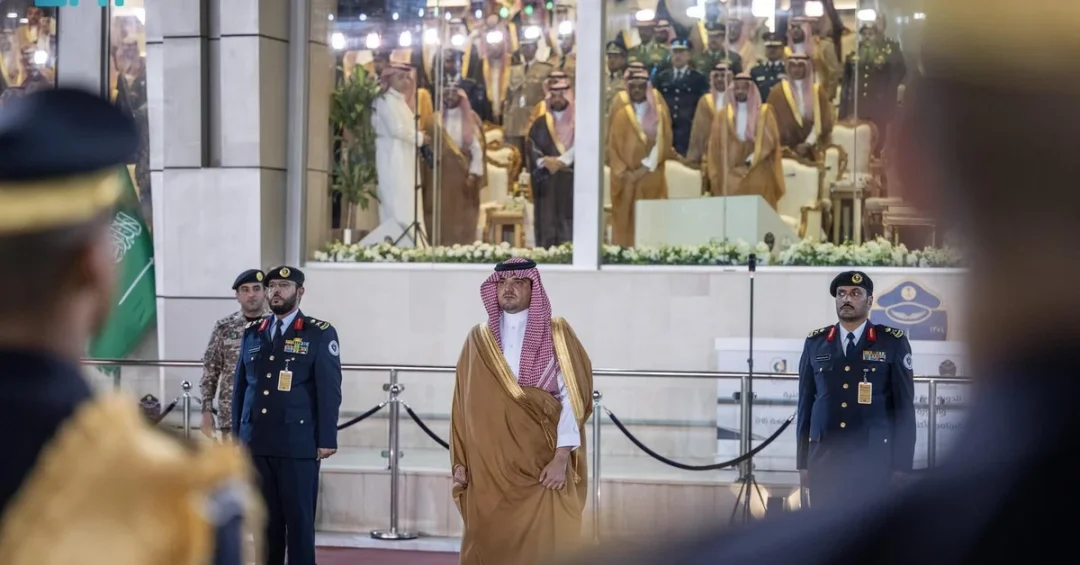
Prince Abdulaziz bin Saud bin Naif bin Abdulaziz, Minister of Interior, patronized the graduation ceremony of 1,410 students from the King Fahd Security College on Wednesday evening in Riyadh. The graduates included the 65th course of Bachelor of Security Sciences students, the 53rd qualifying course for university officers, and the 15th class of the Security Academic Program for External Scholarship students for the academic year 1445 AH. The ceremony, held at the college’s premises, underscored Saudi Arabia’s commitment to advancing security education and training in line with the highest international standards.
Context and Background
The King Fahd Security College, a premier institution under the Ministry of Interior, has long been at the forefront of preparing security personnel for the Kingdom’s evolving needs. Established to provide rigorous academic and practical training, the college plays a vital role in strengthening national security and supporting the objectives of Saudi Vision 2030. The graduation of these 1,410 students marks another milestone in the college’s history, reflecting the unwavering support of the wise leadership and the ongoing oversight of the Minister of Interior.
Under the guidance of Prince Abdulaziz bin Saud bin Naif bin Abdulaziz, the Ministry of Interior has consistently emphasized the importance of modernizing security education. The college has adopted the latest educational and training methods, ensuring that graduates are well-equipped to address contemporary security challenges. This event also highlights the Kingdom’s investment in human capital, a key pillar of Vision 2030.
Key Details
During the ceremony, Major General Dr. Ali bin Abdulrahman Al-Duaij, Director-General of the King Fahd Security College, expressed his gratitude to Prince Abdulaziz bin Saud for his patronage. He highlighted that, with the unwavering support of the wise leadership and the ongoing oversight of the Minister of Interior, the college continues its work in security and military training and qualification, utilizing the latest educational and training methods in the security field.
The graduating cohorts represent a diverse range of programs: the 65th course of Bachelor of Security Sciences students, the 53rd qualifying course for university officers, and the 15th class of the Security Academic Program for External Scholarship students. This diversity reflects the college’s comprehensive approach to security education, catering to both new cadets and experienced officers seeking to enhance their skills. The external scholarship program, in particular, underscores Saudi Arabia’s commitment to global engagement and knowledge exchange.
Implications and Impact
The graduation of these students has significant implications for Saudi Arabia’s security landscape and beyond. These graduates will join the ranks of the Ministry of Interior and other security agencies, contributing to the Kingdom’s stability and safety. Their training, grounded in the latest methodologies, ensures they are prepared to handle a wide range of security challenges, from counterterrorism to cyber threats.
Moreover, the event sends a positive message about Saudi Arabia’s dedication to education and professional development. It reinforces the Kingdom’s role as a regional leader in security cooperation and capacity building. The inclusion of external scholarship students highlights Saudi Arabia’s openness to international collaboration and its efforts to foster global partnerships in security education.
Vision 2030 Alignment
This graduation ceremony is a clear manifestation of Saudi Vision 2030’s human capability development goals. By investing in the education and training of its security personnel, the Kingdom is not only enhancing its national security but also building a knowledge-based economy and society. The King Fahd Security College’s emphasis on modern training methods aligns with Vision 2030’s focus on innovation and excellence. As these graduates embark on their careers, they will play a crucial role in safeguarding the nation’s progress and contributing to a prosperous future.
20 Questions
Q1. Who patronized the graduation ceremony of the King Fahd Security College?
A1. Prince Abdulaziz bin Saud bin Naif bin Abdulaziz, Minister of Interior, patronized the graduation ceremony held on Wednesday evening in Riyadh.
Q2. How many students graduated from the King Fahd Security College?
A2. A total of 1,410 students graduated from various programs at the King Fahd Security College during the ceremony.
Q3. Which courses were represented among the graduates?
A3. The graduates included the 65th course of Bachelor of Security Sciences, the 53rd qualifying course for university officers, and the 15th class of the Security Academic Program for External Scholarship students.
Q4. Where did the graduation ceremony take place?
A4. The ceremony took place at the college’s premises in Riyadh, Saudi Arabia.
Q5. Who is the Director-General of the King Fahd Security College?
A5. Major General Dr. Ali bin Abdulrahman Al-Duaij serves as the Director-General of the King Fahd Security College.
Q6. What did the Director-General express during the ceremony?
A6. He expressed gratitude to Prince Abdulaziz bin Saud for his patronage and highlighted the college’s ongoing work in security and military training.
Q7. What academic year do the graduates belong to?
A7. The graduates are from the academic year 1445 AH, according to the Islamic calendar.
Q8. What is the significance of the external scholarship program?
A8. It underscores Saudi Arabia’s commitment to global engagement and knowledge exchange in security education.
Q9. How does the college contribute to Saudi Vision 2030?
A9. By investing in human capital and modern training methods, the college supports Vision 2030’s goals of enhancing national security and building a knowledge-based society.
Q10. What training methods does the college utilize?
A10. The college utilizes the latest educational and training methods in the security field to ensure graduates are well-prepared.
Q11. What is the role of the Ministry of Interior in this event?
A11. The Ministry of Interior, under the Minister’s oversight, supports the college’s mission to provide top-tier security education and training.
Q12. How many courses of Bachelor of Security Sciences have graduated so far?
A12. The 65th course of Bachelor of Security Sciences students graduated in this ceremony.
Q13. What is the qualifying course for university officers?
A13. It is the 53rd qualifying course designed for university officers to enhance their security skills and knowledge.
Q14. How many classes of the Security Academic Program for External Scholarship students have graduated?
A14. The 15th class of the Security Academic Program for External Scholarship students graduated in this ceremony.
Q15. What message does this graduation send to the international community?
A15. It demonstrates Saudi Arabia’s dedication to security education, international cooperation, and capacity building.
Q16. What are the implications for Saudi Arabia’s security landscape?
A16. The graduates will strengthen the Kingdom’s security agencies, contributing to stability and safety across the nation.
Q17. How does the college support the Kingdom’s human capital development?
A17. By providing rigorous academic and practical training, the college prepares skilled personnel for critical security roles.
Q18. What is the significance of the 1445 AH academic year?
A18. It marks the Islamic calendar year in which these graduates completed their studies, reflecting the college’s continuous operation.
Q19. How does the graduation reflect the leadership’s support?
A19. The patronage of the Minister of Interior and the wise leadership’s backing highlight the importance placed on security education.
Q20. What future role will the graduates play?
A20. They will serve in various security capacities, safeguarding the nation and contributing to its ongoing development and prosperity.
Reader Feedback
We value your thoughts. Please share your feedback on this article.
Your feedback helps us improve our coverage.