


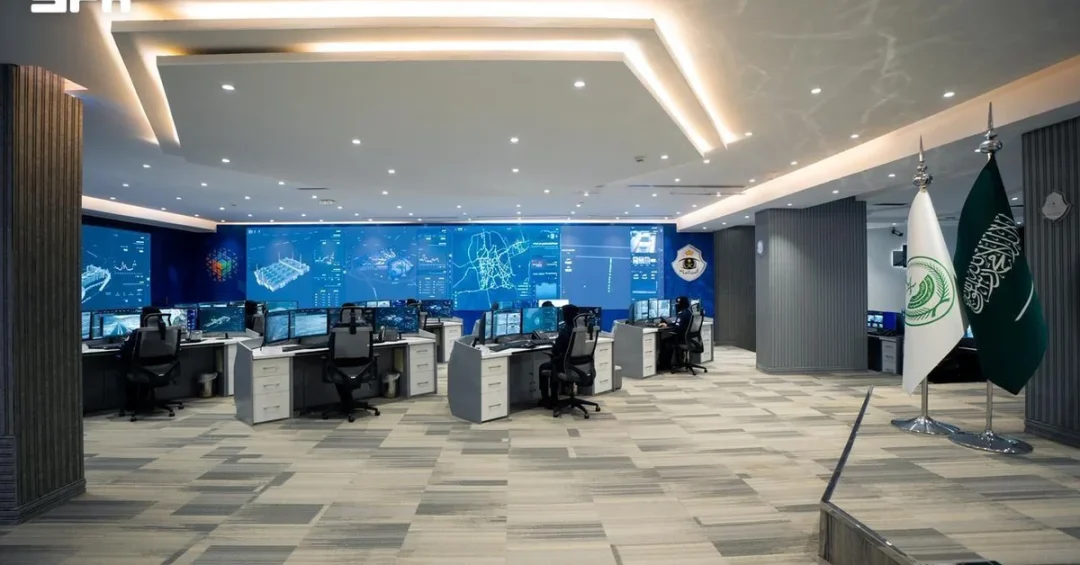
The Ministry of Interior is monitoring the movement and mobility indicators of pilgrims across the holy sites during the 1447 Hajj season through an advanced digital system designed to accelerate field decision-making and raise the efficiency of crowd management and pilgrim services. According to official information released through the Saudi Press Agency (SPA), the system combines smart operating platforms with artificial intelligence to track crowd density, pedestrian movement and transport activity at key locations in real time, reinforcing the security and safety of pilgrims performing their rituals.
Context and Background
The Hajj season represents one of the largest annual gatherings of people anywhere in the world, as millions of pilgrims from more than 180 countries converge on the holy sites of Makkah and Madinah within a compressed period of days. Managing such volumes safely requires precise, minute-by-minute visibility of where people are, how they are moving and where congestion risks may emerge.
The Ministry of Interior, which leads security and organisational arrangements for the pilgrimage, has progressively invested in digital infrastructure to support these responsibilities. Its systems now complement the work of the Ministry of Hajj and Umrah, the General Authority for the Care of the Grand Mosque and the Prophet’s Mosque, civil defence, health and transport agencies, all of which coordinate under the Kingdom’s integrated Hajj management framework.
Key Details
The ministry’s platform relies on advanced technologies and smart operating systems dedicated to monitoring crowd density, pedestrian movement and transportation activity at critical locations such as the Grand Mosque, the plains of Arafat, Mina and Muzdalifah, and the Jamarat Bridge. Operational indicators are analysed in real time using artificial intelligence, allowing commanders to enhance movement flow and respond swiftly to changing field conditions.
These efforts fall within the framework of the Saudi leadership’s attention to serving pilgrims and mobilising all technological and human capabilities to enable them to perform their rituals safely and with ease. Coverage extends across the full pilgrim journey, from arrival in the Kingdom through air, land and sea entry points until departure, in safety and peace.
Implications and Impact
Real-time analytics give field commanders an evidence base for decisions that previously depended on periodic reporting. Density alerts can trigger adjustments to walking routes, gate openings, bus scheduling and the deployment of stewards within minutes rather than hours, reducing the risk of overcrowding at pinch points.
The approach also improves the quality of the pilgrim experience, a central measure of success for the Kingdom’s annual operations. Families, elderly visitors and first-time pilgrims benefit from smoother circulation between ritual sites, shorter waiting times and better access to assistance. For international observers, the system offers a practical demonstration of how artificial intelligence can be applied to large-scale public safety, and it strengthens confidence among governments that send national pilgrim delegations each year.
Vision 2030 Alignment
The digital monitoring programme aligns directly with Saudi Vision 2030 and its Pilgrim Experience Program, which seeks to raise service standards, expand capacity and use technology to host greater numbers of Umrah and Hajj visitors with comfort and dignity. As the Kingdom works toward its long-term targets for religious tourism, systems of this kind form part of a wider national commitment to modernisation, safety and hospitality that positions Saudi Arabia as a global leader in managing mass gatherings.
20 Questions
Q1. What is the Ministry of Interior monitoring during the 1447 Hajj season?
A1. The ministry is monitoring movement and mobility indicators of pilgrims in the holy sites throughout the 1447 Hajj season, using an advanced digital system that supports crowd management, field decision-making and services provided to pilgrims.
Q2. Which technologies does the digital system rely on?
A2. It relies on advanced technologies and smart operating systems dedicated to monitoring crowd density, pedestrian movement and transportation activity, together with artificial intelligence tools that analyse operational indicators in real time for field commanders.
Q3. What does the system analyse in real time?
A3. It analyses operational indicators at key locations in the holy sites, including crowd density, pedestrian flows and transport activity. This continuous analysis allows officials to adjust movement plans promptly and respond effectively to different field situations.
Q4. Why is real-time analysis important for crowd management?
A4. Real-time analysis allows officials to detect congestion as it begins to form, rather than after it has developed. Faster awareness supports quicker adjustments to routes, gates and transport scheduling, helping to protect pilgrims and keep movement flowing smoothly.
Q5. Which locations are covered by the monitoring?
A5. Coverage focuses on the holy sites and their key facilities, including the Grand Mosque in Makkah, the plains of Arafat, Mina and Muzdalifah, the Jamarat Bridge area and transport corridors linking these locations.
Q6. How does the system support field decision-making?
A6. The system presents officials with live indicators and alerts, giving decision-makers a clear operational picture. This shortens the time between identifying a challenge and issuing instructions, improving coordination between security, civil defence, health and transport teams.
Q7. What role does artificial intelligence play?
A7. Artificial intelligence processes large volumes of operational data to identify patterns and emerging pressure points. It helps officials anticipate where crowding may occur and supports the deployment of resources where they are needed most.
Q8. How do pilgrims benefit from these technologies?
A8. Pilgrims experience smoother circulation between ritual sites, shorter waiting times and better access to guidance and assistance. Enhanced monitoring also contributes to their security and safety from arrival in the Kingdom until their departure.
Q9. Where did this information originate?
A9. The information was released through the Saudi Press Agency, the Kingdom’s official news authority. It reflects statements and operational details issued via official Saudi channels regarding Hajj arrangements for the current season.
Q10. Which entry points are included in the pilgrim journey?
A10. The Kingdom receives pilgrims through air, land and sea entry points. Coordination covers the full journey from arrival at these ports until departure, ensuring that pilgrimage services and safety measures extend across every stage.
Q11. How does the system fit within Vision 2030?
A11. It supports Saudi Vision 2030 goals for digital transformation and improved quality of life, and it advances the Pilgrim Experience Program, which aims to raise service standards and accommodate greater numbers of visitors with comfort and dignity.
Q12. What is the Pilgrim Experience Program?
A12. The Pilgrim Experience Program is a Vision 2030 initiative that seeks to expand capacity, modernise services and enrich the spiritual journey of Hajj and Umrah visitors, supported by digital platforms, infrastructure investment and improved hospitality standards.
Q13. How does crowd density monitoring work in practice?
A13. Sensors, cameras and connected devices feed data into central platforms that estimate how many people occupy a given area and how quickly they are moving. Officials use these readings to manage entry and exit flows.
Q14. Which agencies cooperate with the Ministry of Interior?
A14. The ministry works alongside the Ministry of Hajj and Umrah, the General Authority for the Care of the Grand Mosque and the Prophet’s Mosque, civil defence, health authorities, transport agencies and the Saudi Red Crescent Authority, among others.
Q15. What are the holy sites in the Hajj context?
A15. The holy sites are the designated locations in and around Makkah where pilgrims perform Hajj rituals. They include the Grand Mosque, Mina, Arafat, Muzdalifah and the Jamarat Bridge, each with distinct capacity and movement considerations.
Q16. How does monitoring transport activity help pilgrims?
A16. Tracking buses, trains and pedestrian routes helps officials synchronise arrivals and departures with site capacity. This reduces queuing, prevents vehicle and pedestrian congestion, and ensures that pilgrims reach each ritual stage on schedule.
Q17. Why is Hajj significant for Saudi Arabia?
A17. Hajj is a religious duty for Muslims and a profound national responsibility for the Kingdom, which welcomes millions of guests annually. Serving pilgrims is a longstanding priority reflected in the leadership’s directives and continuous investment.
Q18. How does the system improve security and safety?
A18. Continuous monitoring enables early intervention at potential risk points, supports orderly movement and allows emergency services to be directed precisely where needed. The result is a safer environment for pilgrims and field personnel alike.
Q19. Could this model be applied beyond Hajj?
A19. The technologies involved, including real-time analytics and artificial intelligence for crowd flow, are relevant to major sporting events, exhibitions and urban transport management. Saudi Arabia’s experience offers a valuable reference for large-scale public safety planning.
Q20. What comes next for the Kingdom’s Hajj operations?
A20. Continued investment in digital systems, artificial intelligence and service infrastructure is expected as the Kingdom pursues its Vision 2030 targets for religious tourism, aiming to welcome greater numbers of pilgrims safely, efficiently and with dignity.
Reader Feedback
We value your thoughts. Please share your feedback on this article.
Your feedback helps us improve our coverage.