


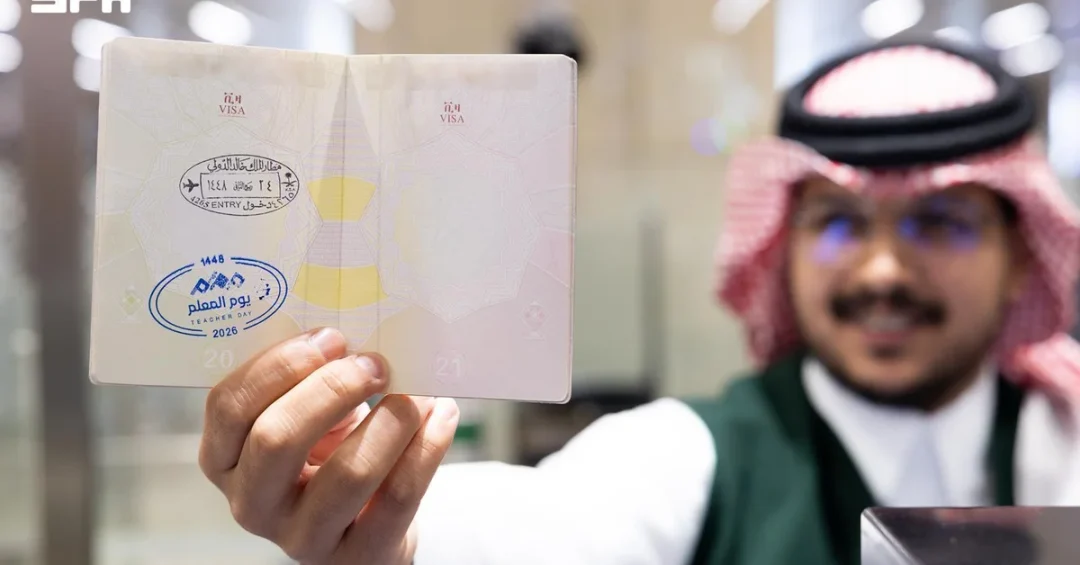
Saudi Arabia’s Ministry of Interior, represented by the General Directorate of Passports, in cooperation with the Ministry of Education, has launched a special passport stamp to commemorate World Teachers’ Day, observed annually on October 5. The stamp will be issued to travelers arriving in the Kingdom through King Khalid International Airport in Riyadh, according to an official announcement carried by the Saudi Press Agency. The initiative honors teachers’ contributions and recognizes their role in shaping generations and advancing society.
The move reflects a broader national appreciation for the teaching profession and aligns with Saudi Arabia’s ongoing efforts to elevate education as a cornerstone of its long-term development. By integrating this tribute into the traveler arrival experience at one of the Kingdom’s busiest international gateways, the Ministry of Interior and the Ministry of Education have created a visible, symbolic moment that reaches visitors from around the world. The stamp is not merely a procedural mark; it serves as a statement of national values, highlighting the esteem in which educators are held across Saudi society. For international audiences, the initiative offers a clear example of how Saudi institutions collaborate to celebrate social contributions while maintaining efficient border operations.
Context and Background
Why does a passport stamp carry such significance in a country that welcomes millions of travelers each year? World Teachers’ Day, established by UNESCO in 1994, is observed globally on October 5 to commemorate the adoption of the 1966 UNESCO/ILO Recommendation concerning the Status of Teachers. It serves as a moment to celebrate educators and assess their conditions, rights, and responsibilities. Saudi Arabia has consistently marked the occasion through various programs, but the introduction of an official passport stamp represents a novel and highly visible form of recognition. The Ministry of Interior’s General Directorate of Passports is responsible for managing the Kingdom’s border crossings and ensuring secure, efficient entry for travelers. Partnering with the Ministry of Education, which oversees the nation’s schools, universities, and educational policies, underscores the cross-governmental commitment to honoring teachers.
The choice of King Khalid International Airport in Riyadh as the initial location for the stamp is strategic. As the primary gateway to the Saudi capital and a hub for diplomatic, business, and leisure travel, the airport processes a high volume of international arrivals. Travelers passing through will receive the commemorative stamp alongside standard entry markings, turning a routine administrative step into an opportunity for cultural exchange and awareness. This initiative also comes as Saudi Arabia continues to expand its tourism and business travel sectors under Vision 2030, welcoming a growing number of visitors from across the globe. The stamp thus functions as both a tribute and a soft-power tool, projecting a modern, appreciative image of the Kingdom.
Key Details
What exactly does the special stamp entail, and how will it be implemented? According to the official announcement, the stamp will be available to travelers arriving at King Khalid International Airport in Riyadh. It is designed to mark World Teachers’ Day and to express gratitude for educators’ contributions. The General Directorate of Passports, operating under the Ministry of Interior, will administer the stamping process in coordination with airport authorities. The Ministry of Education’s involvement ensures that the message aligns with national educational priorities and the broader goal of raising awareness about the importance of teaching. While the announcement did not specify a duration for the stamp’s availability, such commemorative initiatives are typically rolled out around the observance date and may be extended based on operational considerations.
The stamp is intended for all arriving travelers, regardless of nationality, making it a universal gesture of appreciation. This inclusive approach mirrors Saudi Arabia’s welcoming stance toward international visitors, a key pillar of its Vision 2030 tourism and cultural exchange objectives. By integrating the tribute into the arrival process, the Kingdom ensures that the recognition of teachers extends beyond domestic audiences to the global community. The initiative also highlights the seamless cooperation between two vital ministries, demonstrating the government’s integrated approach to public diplomacy and social valorization. For teachers traveling to Saudi Arabia, whether for work, conferences, or leisure, the stamp offers a personal acknowledgment of their profession’s value.
International and Regional Impact
How will the international community perceive this gesture? Saudi Arabia’s launch of a special passport stamp for World Teachers’ Day sends a positive signal to the global education community and to travelers worldwide. It positions the Kingdom as a nation that values educators and invests in human capital, resonating with international organizations such as UNESCO that advocate for teacher recognition. Regional observers may view the initiative as part of Saudi Arabia’s broader efforts to lead by example in social development and cultural diplomacy. In a world where teacher shortages and educational challenges are common concerns, such a visible tribute can inspire other nations to consider similar forms of recognition. It also reinforces Saudi Arabia’s commitment to the Sustainable Development Goals, particularly Goal 4 on quality education.
Within the region, the stamp could encourage dialogue among Gulf Cooperation Council states about collaborative initiatives to honor teachers. Saudi Arabia’s leadership in this space aligns with its growing role as a convener of international events and a hub for knowledge exchange. The timing of the launch, coinciding with World Teachers’ Day, maximizes media attention and public engagement. International educators and organizations may cite this initiative as an example of innovative public recognition. Moreover, travelers from around the world who receive the stamp will carry a tangible reminder of Saudi Arabia’s appreciation for teachers, potentially fostering goodwill and positive impressions of the Kingdom.
Economic and Strategic Significance
What does this initiative reveal about Saudi Arabia’s strategic priorities? At its core, the stamp underscores the Kingdom’s recognition that teachers are fundamental to achieving Vision 2030’s ambitious goals. A well-educated population is essential for diversifying the economy, fostering innovation, and building a knowledge-based society. By honoring teachers, the government reinforces its commitment to improving educational outcomes and attracting talent to the profession. The initiative also complements ongoing investments in education infrastructure, curriculum development, and teacher training programs. Strategically, it enhances Saudi Arabia’s soft power by showcasing a progressive, values-driven society that respects educators and invests in future generations.
Economically, the stamp may contribute to a positive traveler experience, which is increasingly important as Saudi Arabia seeks to attract millions of tourists and business visitors annually. A welcoming arrival process that includes a meaningful gesture can boost satisfaction and encourage repeat visits. The collaboration between the Ministry of Interior and the Ministry of Education also exemplifies efficient inter-agency coordination, a key factor in delivering Vision 2030 projects. While the stamp itself is a small token, it forms part of a larger narrative of national transformation that prioritizes human development and social cohesion. It signals to investors and partners that Saudi Arabia values education and is serious about building a skilled workforce.
Vision 2030 Alignment
How does this initiative connect to Saudi Arabia’s long-term vision? Vision 2030, launched by Crown Prince Mohammed bin Salman, aims to transform the Kingdom into a diversified, knowledge-based economy and a global investment powerhouse. Central to this vision is the development of human capital, with education as a primary driver. The special passport stamp for World Teachers’ Day directly supports the vision’s emphasis on valuing educators and promoting a culture of learning. It also aligns with the Quality of Life program, which seeks to enhance social well-being and national pride. By honoring teachers at an international gateway, Saudi Arabia communicates that education is a national priority and that educators are respected partners in the country’s progress.
Looking ahead, this initiative may pave the way for further creative collaborations between government ministries to celebrate other professions and social contributions. It demonstrates how Vision 2030’s objectives can be translated into tangible, everyday experiences that resonate with both citizens and visitors. As Saudi Arabia continues to open up to the world, such gestures will play a role in shaping its global image as a modern, forward-looking nation that values its people and their contributions. The Ministry of Interior and the Ministry of Education have set a precedent for using public touchpoints to reinforce national values, a practice that can be expanded to other sectors. Ultimately, the stamp is a small but meaningful step in the Kingdom’s journey toward a brighter, more inclusive future.
20 Questions
Q1. What is the special passport stamp launched by Saudi Arabia?
A1. It is a commemorative stamp introduced by the Ministry of Interior, through the General Directorate of Passports, in cooperation with the Ministry of Education, to mark World Teachers’ Day on October 5.
Q2. Where will the special stamp be available?
A2. The stamp will be available to travelers arriving in Saudi Arabia through King Khalid International Airport in Riyadh, according to the official announcement.
Q3. Why did Saudi Arabia launch this stamp?
A3. It was launched to appreciate teachers’ contributions and recognize their role in shaping generations and contributing to the development of society.
Q4. Which government bodies are involved in this initiative?
A4. The Ministry of Interior, represented by the General Directorate of Passports, and the Ministry of Education are the two main government bodies involved.
Q5. What is World Teachers’ Day?
A5. World Teachers’ Day is observed annually on October 5 to celebrate educators and commemorate the adoption of the 1966 UNESCO/ILO Recommendation concerning the Status of Teachers.
Q6. When was World Teachers’ Day established?
A6. It was established by UNESCO in 1994 to honor teachers worldwide and promote awareness of their importance in society.
Q7. Will the stamp be given to all travelers?
A7. Yes, the stamp is intended for travelers arriving at King Khalid International Airport, regardless of nationality, as a universal gesture of appreciation.
Q8. How long will the stamp be available?
A8. The official announcement did not specify a duration, but such commemorative stamps are typically available around the observance date and may be extended.
Q9. What does the General Directorate of Passports do?
A9. It is responsible for managing border crossings, ensuring secure and efficient entry for travelers, and implementing passport-related procedures in Saudi Arabia.
Q10. What is the role of the Ministry of Education in this initiative?
A10. The Ministry of Education oversees the nation’s educational policies and collaborated to ensure the stamp aligns with national priorities for valuing teachers.
Q11. How does this initiative reflect Saudi Vision 2030?
A11. It supports Vision 2030’s focus on human capital development and quality education by honoring teachers and promoting a culture of learning.
Q12. What impact might this have on international perceptions of Saudi Arabia?
A12. It projects a positive image of the Kingdom as a nation that values educators, invests in education, and engages in cultural diplomacy.
Q13. Are there similar initiatives in other countries?
A13. While some countries issue commemorative stamps, Saudi Arabia’s passport stamp for teachers is a unique form of recognition at an international gateway.
Q14. How does this initiative benefit teachers traveling to Saudi Arabia?
A14. It offers them a personal acknowledgment of their profession’s value and makes them feel appreciated upon arrival in the Kingdom.
Q15. What other Vision 2030 programs relate to education?
A15. Vision 2030 includes programs for teacher training, curriculum development, and educational infrastructure to improve learning outcomes and workforce readiness.
Q16. Will the stamp be rolled out to other airports?
A16. The announcement mentioned only King Khalid International Airport initially, but future expansion could be considered based on success.
Q17. How does this initiative demonstrate inter-agency cooperation?
A17. It shows the Ministry of Interior and Ministry of Education working together to deliver a national tribute, reflecting integrated government efforts.
Q18. What message does this send to the global education community?
A18. It signals that Saudi Arabia respects teachers and supports global efforts to recognize their contributions to society and development.
Q19. Does the stamp replace regular entry stamps?
A19. No, it is a special commemorative stamp issued alongside standard entry procedures, not a replacement for official documentation.
Q20. What is the expected outcome of this initiative?
A20. It aims to raise awareness of teachers’ value, enhance traveler experience, and reinforce Saudi Arabia’s commitment to education and Vision 2030 goals.
Reader Feedback
We value your thoughts. Please share your feedback on this article.
Your feedback helps us improve our coverage.