


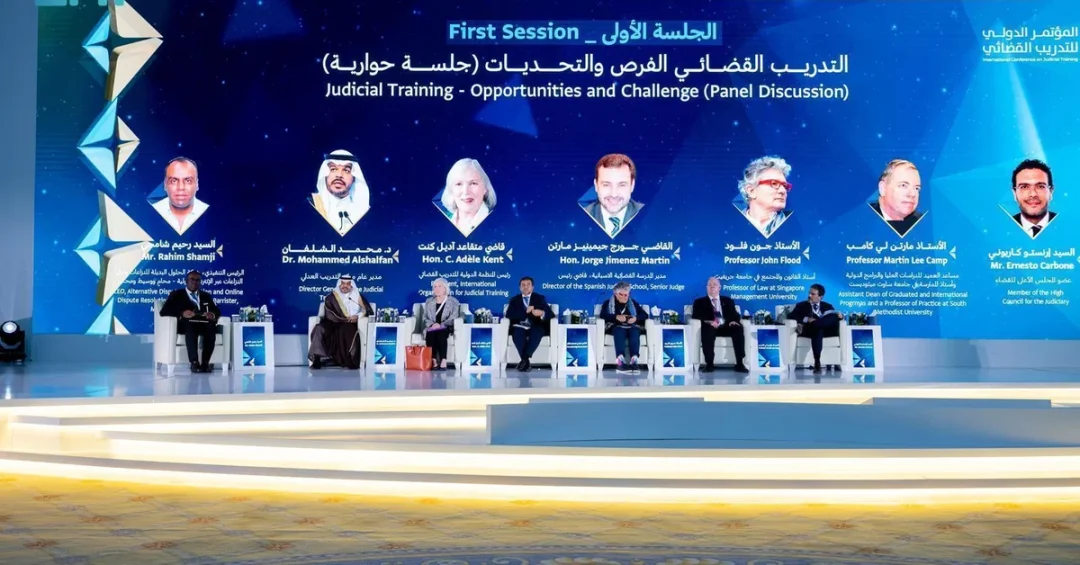
The International Conference on Judicial Training 2024 concluded in Riyadh on May 8, 2024, drawing more than 600 specialists and 45 international speakers and experts. The two-day event, themed “The future of judicial training in the age of digital transformation,” was organized under the patronage of the Saudi Ministry of Justice and brought together judicial and legal professionals from around the world to discuss the evolving landscape of judicial education.
Context and Background
The conference took place against the backdrop of Saudi Arabia’s ambitious Vision 2030, which prioritizes the modernization of the judicial sector as a cornerstone of the Kingdom’s transformation. Since the launch of Vision 2030, the Kingdom has witnessed unprecedented developmental progress across all fields, including the judiciary. The event in Riyadh served as a platform for exchanging knowledge and exploring how digital tools and artificial intelligence (AI) can enhance judicial training, ensuring that the justice system remains efficient, transparent, and accessible.
Key Details
In his address at the conference’s opening, Minister of Justice Walid Al-Samaani underscored the Kingdom’s commitment to judicial excellence. He commended the vision launched under the directives of the Custodian of the Two Holy Mosques, King Salman bin Abdulaziz Al-Saud, and His Royal Highness Prince Mohammed bin Salman bin Abdulaziz Al-Saud, Crown Prince and Prime Minister. Al-Samaani highlighted the Ministry of Justice’s efforts to improve the efficiency of the judicial system through enhanced training, qualification, and knowledge management. He emphasized that training and qualification are essential for achieving justice, and the Judicial Training Center is dedicated to providing the highest standards of training for individuals in the judicial and legal system.
The conference agenda covered critical topics such as the impact of digital transformation on judicial training, the use of AI in legal education, and effective methods for assessing training outcomes. It also showcased prominent international experiences and practices in digital judicial training, offering delegates a comprehensive view of global trends.
Implications and Impact
The event brought together leading international judicial and legal organizations, including the International Association for Court Administration (IACA), the International Organization for Judicial Training (IOJT), the National Center for State Courts (NCSC), the Federal Judicial Center (FJC), the Bolch Judicial Institute, and the Spanish Judicial School. Delegates from the United States, Brazil, Spain, Canada, England, and Argentina participated, reflecting the conference’s global reach. The exchange of expertise and best practices is expected to bolster the capabilities of judicial training institutions worldwide, while positioning Saudi Arabia as a hub for legal innovation.
Vision 2030 Alignment
The conclusion of the International Conference on Judicial Training 2024 marks a significant step forward in realizing the Kingdom’s Vision 2030, which seeks to create a vibrant society, a thriving economy, and an ambitious nation. By embracing digital transformation and international collaboration in judicial training, Saudi Arabia is reinforcing its commitment to justice and the rule of law, laying the groundwork for a more efficient and equitable legal system. As the Kingdom continues to host such influential gatherings, it reaffirms its role as a global leader in legal modernization, contributing to a brighter future for the region and beyond.
20 Questions
Q1. What was the International Conference on Judicial Training 2024?
A1. It was a two-day event held in Riyadh, Saudi Arabia, from May 7-8, 2024, focused on the future of judicial training in the digital age. It attracted over 600 specialists and 45 international speakers.
Q2. When did the conference take place?
A2. The conference concluded on May 8, 2024. It was held over two days, likely starting on May 7, 2024, according to the Saudi Press Agency.
Q3. Who attended the conference?
A3. The event drew more than 600 specialists, including 45 international speakers and experts. Participants included representatives from organizations like IACA, IOJT, NCSC, FJC, Bolch Judicial Institute, and the Spanish Judicial School.
Q4. What was the theme of the conference?
A4. The theme was “The future of judicial training in the age of digital transformation,” highlighting the role of technology and AI in judicial education and training.
Q5. Who spoke at the opening of the conference?
A5. The Minister of Justice, Walid Al-Samaani, delivered the opening address. He praised the Kingdom’s progress under Vision 2030 and emphasized the importance of training in the judicial sector.
Q6. What is the significance of this conference for Saudi Arabia?
A6. It underscores Saudi Arabia’s commitment to modernizing its judicial system and aligning with Vision 2030. The conference serves as a platform to adopt best practices and enhance the Kingdom’s legal training infrastructure.
Q7. Which international organizations participated?
A7. Key participants included the International Association for Court Administration (IACA), the International Organization for Judicial Training (IOJT), the National Center for State Courts (NCSC), the Federal Judicial Center (FJC), the Bolch Judicial Institute, and the Spanish Judicial School.
Q8. How many countries were represented?
A8. The conference featured participation from at least six countries: the United States, Brazil, Spain, Canada, England, and Argentina, among possibly others.
Q9. What topics were discussed at the conference?
A9. Discussions covered the future of judicial training under digital transformation, the use of technology and AI in legal training, and effective assessment of training impact.
Q10. What is the role of the Judicial Training Center in Saudi Arabia?
A10. The center is responsible for qualifying individuals in the judicial and legal system. It coordinates with partners to provide high-quality training and qualification programs.
Q11. How does this conference support Vision 2030?
A11. Vision 2030 aims to develop the judicial sector. This conference facilitates international collaboration and knowledge exchange, helping Saudi Arabia achieve its goals of efficient and accessible justice.
Q12. What did Minister Al-Samaani say about the Ministry’s efforts?
A12. He said the Ministry has worked to enhance objective quality in legal aspects, improving judicial system efficiency through training, qualification, and knowledge management.
Q13. Why is digital transformation important for judicial training?
A13. Digital transformation allows for innovative training methods, such as AI-based simulations and online programs, making training more effective and accessible for legal professionals.
Q14. What are the expected outcomes of the conference?
A14. The conference is expected to lead to improved judicial training practices in Saudi Arabia and foster international partnerships, ultimately enhancing the quality of justice.
Q15. How does the conference contribute to international cooperation?
A15. By bringing together experts and organizations from various countries, it promotes the exchange of ideas and best practices, strengthening global judicial training networks.
Q16. What role did technology play in the discussions?
A16. Technology was a central theme, with discussions on how AI and digital tools can be leveraged to train judges and legal professionals, improving efficiency and decision-making.
Q17. Is this the first such conference in Saudi Arabia?
A17. While it is not the first, it represents a significant gathering, reflecting the Kingdom’s ongoing efforts to modernize its judicial training and share knowledge with international partners.
Q18. How were the conference sessions structured?
A18. The conference included keynote speeches, panel discussions, and workshops, focusing on the conference’s main themes. The two-day format allowed for in-depth exploration.
Q19. What is the Saudi Press Agency’s role in reporting this?
A19. The Saudi Press Agency (SPA) reported the conference, providing official details and statements, thus serving as a primary source for this news.
Q20. What are the next steps for judicial training in Saudi Arabia?
A20. The Ministry of Justice and the Judicial Training Center will likely implement insights from the conference, further integrating digital tools and international best practices into their training programs.
Reader Feedback
We value your thoughts. Please share your feedback on this article.
Your feedback helps us improve our coverage.