


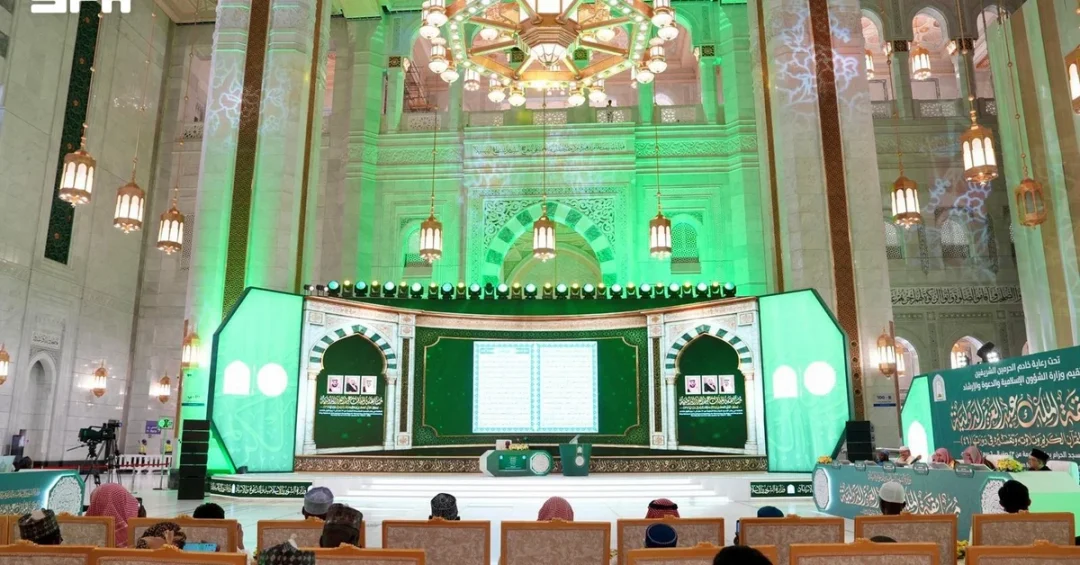
The judging committees of the 46th King Abdulaziz International Competition for Memorizing, Reciting, and Interpreting the Holy Quran continued on Wednesday, August 13, 2026, listening to the recitations of 40 contestants from around the world during the fifth day of finals in Makkah. The event, organized by the Ministry of Islamic Affairs, Dawah and Guidance, featured separate sessions for boys and girls, showcasing the Kingdom’s commitment to fostering Quranic excellence and global Islamic unity.
Context and Background
The King Abdulaziz International Competition is one of the most prestigious Quranic events globally, attracting participants from over 120 countries. This year’s finals, which began earlier this week, have so far heard from 188 contestants, including both male and female participants, reflecting the competition’s inclusive approach. The competition is held annually under the patronage of the Custodian of the Two Holy Mosques, King Salman bin Abdulaziz Al Saud, and is a cornerstone of Saudi Arabia’s efforts to promote Islamic values and support Quranic scholarship worldwide.
Key Details
During the fifth day, the judging committees, composed of a select group of international experts in Quranic sciences, readings (Qira’at), and recitation rules, evaluated the performances with the aid of the ministry’s advanced electronic judging system. This system enhances the accuracy of score recording, ensures fairness and transparency, and expedites the announcement of results. The participation of judges from diverse countries underscores the competition’s credibility and international reach. The contestants, who have advanced through rigorous qualifying rounds, represent the finest Quranic memorizers and reciters from their respective nations.
Implications and Impact
The competition serves as a vital platform for cultural and religious exchange, bringing together Muslims from different backgrounds and fostering a sense of unity. It also highlights Saudi Arabia’s leadership in serving the Holy Quran and its role as a global hub for Islamic learning. The use of technology in the judging process demonstrates the Kingdom’s commitment to innovation and transparency, setting a benchmark for similar competitions worldwide. Furthermore, the competition inspires millions of Muslims to engage deeply with the Quran, promoting spiritual growth and moral values.
Vision 2030 Alignment
This event aligns with Saudi Arabia’s Vision 2030, which emphasizes the importance of cultural and religious heritage as pillars of national identity and global engagement. By supporting Quranic education and international cooperation, the Kingdom reinforces its position as a leading voice in the Islamic world and a proponent of moderate, tolerant Islam. The competition not only nurtures individual talent but also strengthens the bonds of the global Muslim community, contributing to a more peaceful and harmonious world.
20 Questions
Q1. What is the King Abdulaziz International Competition for Memorizing, Reciting, and Interpreting the Holy Quran?
A1. It is an annual Quranic competition organized by the Ministry of Islamic Affairs, Dawah and Guidance in Saudi Arabia, attracting contestants from over 120 countries to compete in memorization, recitation, and interpretation of the Holy Quran.
Q2. When and where is the 46th edition being held?
A2. The 46th edition is being held in Makkah, Saudi Arabia, with finals taking place in August 2026. The event began earlier in the week and continues over several days.
Q3. How many contestants were listened to on the fifth day?
A3. On the fifth day, the judging committees listened to 40 contestants, with separate sessions for boys and girls.
Q4. How many contestants have participated in the finals so far?
A4. Since the start of the final qualifying rounds, the judging committees have heard 188 male and female contestants representing more than 120 countries.
Q5. Who organizes the competition?
A5. The competition is organized by the Ministry of Islamic Affairs, Dawah and Guidance of the Kingdom of Saudi Arabia.
Q6. What is the role of the judging committees?
A6. The judging committees evaluate the contestants’ recitations based on accuracy, melody, and adherence to Tajweed rules. They consist of international experts in Quranic sciences and recitation.
Q7. How does the electronic judging system work?
A7. The advanced electronic judging system records scores accurately, ensuring fairness and transparency, and helps expedite the announcement of results.
Q8. Why is the competition important for Saudi Arabia?
A8. The competition reinforces Saudi Arabia’s leadership in serving the Holy Quran, promotes Islamic values, and showcases the Kingdom’s commitment to religious scholarship.
Q9. How does the competition promote global unity?
A9. It brings together Muslims from diverse backgrounds, fostering a sense of brotherhood and shared faith, and serves as a platform for cultural and religious exchange.
Q10. What are the benefits of using technology in the judging process?
A10. Technology enhances accuracy, reduces human error, ensures transparency, and speeds up the evaluation process, setting a high standard for similar events.
Q11. Who are the judges for the competition?
A11. The judges are a select group of international scholars specializing in Quranic sciences, Qira’at, and Tajweed rules, chosen for their expertise and credibility.
Q12. How are contestants selected?
A12. Contestants undergo rigorous qualifying rounds in their home countries before advancing to the finals in Saudi Arabia.
Q13. What is the significance of the competition’s name?
A13. It is named after King Abdulaziz Al Saud, the founder of Saudi Arabia, reflecting the Kingdom’s dedication to the Quran since its establishment.
Q14. How does the competition align with Vision 2030?
A14. It supports Vision 2030’s goals of preserving cultural heritage and promoting a moderate, tolerant Islamic identity, enhancing Saudi Arabia’s global standing.
Q15. What are the categories of the competition?
A15. The competition includes categories for memorization, recitation, and interpretation, with separate branches for boys and girls.
Q16. How does the competition impact participants?
A16. It provides a prestigious platform for contestants to showcase their skills, gain international recognition, and deepen their connection to the Quran.
Q17. What is the role of the Ministry of Islamic Affairs?
A17. The ministry organizes the event, oversees logistics, and ensures the competition runs smoothly, reflecting its commitment to Islamic education.
Q18. How does the competition benefit the global Muslim community?
A18. It inspires Muslims worldwide to engage with the Quran, promotes excellence in recitation, and strengthens the sense of a unified Ummah.
Q19. What is the historical significance of the competition?
A19. Now in its 46th year, the competition has a long history of bringing together the world’s best Quranic reciters, reinforcing Saudi Arabia’s custodianship of Islamic heritage.
Q20. How can the public follow the competition?
A20. The competition is widely covered by Saudi media, including the Saudi Press Agency, and updates are available through official channels.
Reader Feedback
We value your thoughts. Please share your feedback on this article.
Your feedback helps us improve our coverage.