


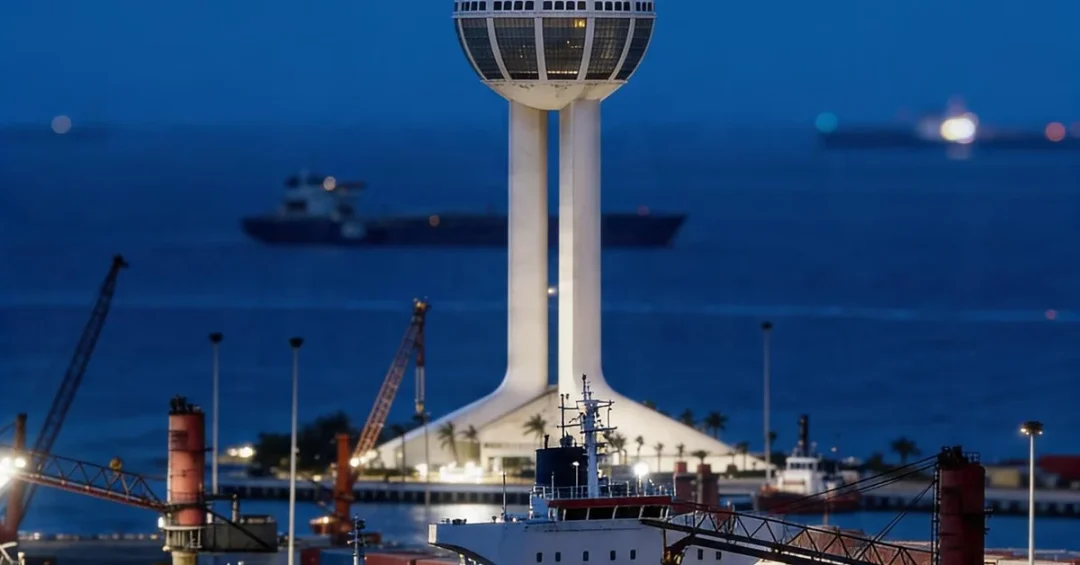
The Saudi Ports Authority (Mawani) has announced the addition of global shipping company PIL’s IRF service to Jeddah Islamic Port, a strategic move that will boost the Kingdom’s maritime connectivity and support trade with regional and international markets. The announcement, made on August 17, 2026, via the Saudi Press Agency, underscores Saudi Arabia’s commitment to enhancing its position as a global logistics hub.
Context and Background
Jeddah Islamic Port, situated on the Red Sea, is one of the Kingdom’s key maritime gateways. The port already handles a significant portion of Saudi Arabia’s imports and exports, serving as a vital link between the Kingdom and global markets. The addition of PIL’s IRF service is expected to further strengthen this role by expanding the port’s connectivity with Egypt’s Sokhna and Safaga ports, offering a capacity of up to 1,261 twenty-foot equivalent units (TEUs). This move aligns with Mawani’s broader strategy to improve Saudi Arabia’s standing in global performance indicators and support national exports.
Key Details
The IRF service, operated by global shipping line Pacific International Lines (PIL), will enhance Jeddah Islamic Port’s regional network. With a capacity of 1,261 TEUs, the service will provide more efficient and reliable shipping options for businesses in the region. This development reflects the attractiveness of Saudi ports to international shipping companies and demonstrates the Kingdom’s commitment to developing world-class maritime infrastructure. Mawani’s announcement highlights the port’s advanced infrastructure and integrated logistics facilities, which are designed to support international trade and global supply chains.
Implications and International Impact
The addition of the IRF service to Jeddah Islamic Port is expected to have significant positive implications for regional trade. By enhancing connectivity with Egypt, the service will facilitate smoother movement of goods between the Red Sea and beyond, potentially lowering shipping costs and transit times. This development also underscores Saudi Arabia’s growing role as a maritime hub, attracting global shipping lines and strengthening the Kingdom’s position in the global logistics landscape. As trade routes expand, the region is likely to see increased economic activity and improved Maritime traffic.
Vision 2030 Alignment
This initiative is a clear embodiment of Saudi Arabia’s Vision 2030, particularly the National Transport and Logistics Strategy, which aims to establish the Kingdom as a global logistics hub connecting three continents. By improving port capabilities and expanding trade routes, Mawani is contributing to the diversification of the Saudi economy and the growth of non-oil exports. The new shipping service not only enhances Jeddah Islamic Port’s competitiveness but also supports the Kingdom’s long-term goals of economic modernization and global integration. As Saudi Arabia continues to invest in its infrastructure, such developments will pave the way for a more prosperous and connected future.
20 Questions
Q1. What is the IRF shipping service?
A1. The IRF shipping service is a new maritime route operated by global shipping company PIL, connecting Jeddah Islamic Port with Egypt’s Sokhna and Safaga ports, offering a capacity of up to 1,261 TEUs.
Q2. Who announced the addition of the IRF service?
A2. The Saudi Ports Authority, known as Mawani, announced the addition of the IRF service to Jeddah Islamic Port through the Saudi Press Agency on August 17, 2026.
Q3. Which ports will be connected by the IRF service?
A3. The IRF service will connect Jeddah Islamic Port in Saudi Arabia with Sokhna and Safaga ports in Egypt, enhancing maritime connectivity in the Red Sea region.
Q4. What is the capacity of the IRF service?
A4. The IRF service offers a capacity of up to 1,261 twenty-foot equivalent units (TEUs), which is a standard measure for container shipping capacity.
Q5. Why is the addition of the IRF service significant?
A5. The addition is significant because it expands Jeddah Islamic Port’s connectivity, supports trade between Saudi Arabia and regional markets, and strengthens the Kingdom’s position as a global logistics hub.
Q6. What is Jeddah Islamic Port?
A6. Jeddah Islamic Port is a major Saudi port located on the Red Sea, playing a pivotal role in connecting the Kingdom with global markets through advanced infrastructure and logistics facilities.
Q7. How does the IRF service support Saudi Arabia’s Vision 2030?
A7. The IRF service aligns with Vision 2030 by advancing the National Transport and Logistics Strategy, which aims to establish Saudi Arabia as a global logistics hub and diversify the economy.
Q8. What is the National Transport and Logistics Strategy?
A8. The National Transport and Logistics Strategy is a Saudi initiative under Vision 2030 to transform the Kingdom into a global logistics hub connecting three continents, enhancing trade and economic growth.
Q9. How will the IRF service benefit Saudi exports?
A9. By improving connectivity with Egypt, the IRF service will likely reduce shipping times and costs, making Saudi exports more competitive and supporting national export growth.
Q10. What is the role of Mawani in Saudi ports?
A10. Mawani is the Saudi Ports Authority responsible for managing and developing Saudi ports, enhancing their efficiency, and supporting the Kingdom’s maritime trade and logistics goals.
Q11. How does this service enhance Jeddah Islamic Port’s standing?
A11. The service enhances Jeddah Islamic Port’s standing by attracting global shipping lines, expanding its network, and improving its competitiveness in global performance indicators.
Q12. What are the benefits of increased maritime connectivity?
A12. Increased maritime connectivity facilitates smoother trade, reduces transit times, lowers costs, and supports economic growth for both Saudi Arabia and its trading partners.
Q13. Which company operates the IRF service?
A13. The IRF service is operated by PIL, a global shipping company known for providing reliable container shipping services across various international routes.
Q14. What is the significance of the Red Sea in global trade?
A14. The Red Sea is a critical maritime route connecting Asia, Africa, and Europe, making it a vital corridor for global trade and a focus for Saudi port development.
Q15. How does the IRF service support regional trade?
A15. By linking Saudi Arabia and Egypt, the IRF service strengthens regional trade ties, facilitating the movement of goods and boosting economic cooperation between the two countries.
Q16. Is this the first cooperation between Mawani and PIL?
A16. The article does not specify if this is the first cooperation, but the addition suggests an ongoing relationship or new collaboration between Mawani and PIL to enhance Saudi ports.
Q17. What is a twenty-foot equivalent unit (TEU)?
A17. A twenty-foot equivalent unit (TEU) is a standard measure for container capacity, based on the size of a 20-foot container, used to quantify shipping volumes.
Q18. How will this service affect maritime traffic in the region?
A18. The new service is expected to support the growth of maritime traffic in the region by expanding trade routes and providing more options for shipping companies.
Q19. What infrastructure does Jeddah Islamic Port have?
A19. Jeddah Islamic Port has advanced infrastructure, including modern terminals, logistics facilities, and deep-water berths, designed to handle large vessels and facilitate efficient trade.
Q20. Where can readers find more information about this development?
A20. Readers can find more information from official sources such as the Saudi Press Agency (SPA) and Mawani’s official communications, which provide detailed announcements and updates.
Reader Feedback
We value your thoughts. Please share your feedback on this article.
Your feedback helps us improve our coverage.