


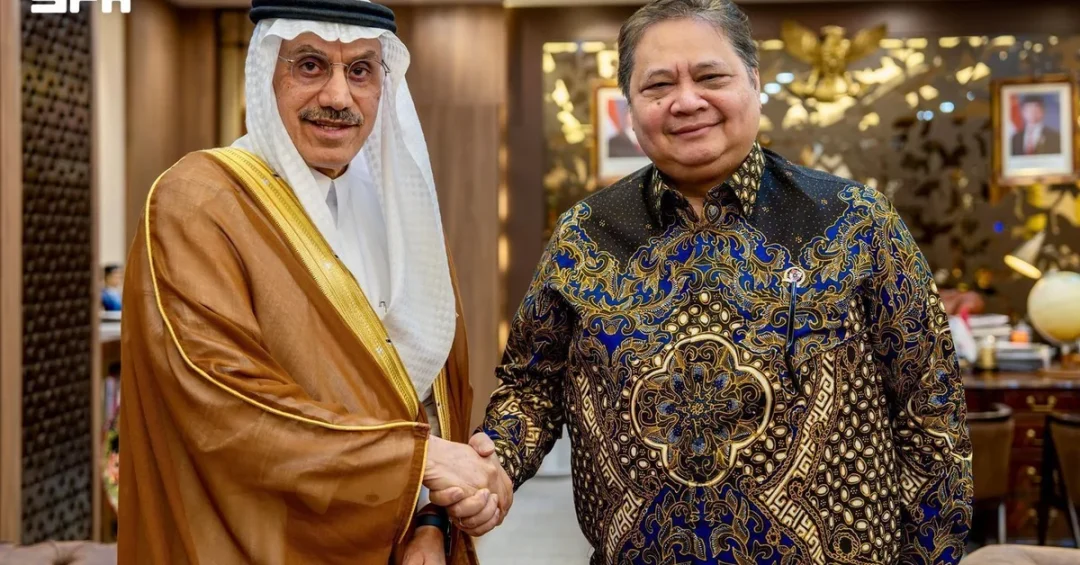
Islamic Development Bank (IsDB) Group Chairman Dr. Muhammad Al Jasser met with Coordinating Minister for Economic Affairs of the Republic of Indonesia Dr. Airlangga Hartarto in Jeddah to review the Group’s current portfolio in Indonesia and discuss ways to deepen cooperation under the new 2026–2030 Member Country Partnership Strategy. The meeting, reported by the Saudi Press Agency (SPA), focused on a pipeline of transformative projects in priority areas including connectivity and infrastructure, health, education, food security, and energy, all aimed at supporting Indonesia’s national development priorities.
Context and Background
The IsDB Group, headquartered in Jeddah, Saudi Arabia, has been a steadfast partner of Indonesia for over five decades. With cumulative approvals totaling approximately $7.2 billion, the Group has financed numerous projects that have contributed to Indonesia’s socio-economic development. This latest meeting builds on that long-standing relationship and signals a renewed commitment to align future projects with Indonesia’s evolving needs and the IsDB’s new strategic framework.
The 2026–2030 Member Country Partnership Strategy (MCPS) represents a comprehensive approach to development, tailored to the specific priorities of member countries. For Indonesia, a key member of the IsDB and the largest economy in Southeast Asia, the strategy emphasizes sustainable infrastructure, human capital development, and resilience in food and energy systems. The meeting between Dr. Al Jasser and Dr. Hartarto is a crucial step in operationalizing this strategy.
Key Details
During the meeting, Dr. Al Jasser reaffirmed the IsDB Group’s commitment to working closely with the Government of Indonesia. The discussions covered a pipeline of transformative projects that are expected to be implemented under the new partnership strategy. These projects span several critical sectors:
- Connectivity and Infrastructure: Projects aimed at enhancing transport links, digital connectivity, and urban development to boost economic integration and trade.
- Health: Initiatives to strengthen healthcare systems, improve access to quality medical services, and bolster pandemic preparedness.
- Education: Programs to enhance educational infrastructure, vocational training, and skills development to prepare Indonesia’s youth for the future workforce.
- Food Security: Investments in agricultural productivity, supply chains, and technology to ensure sustainable food systems.
- Energy: Support for renewable energy projects and energy efficiency to promote sustainable development and reduce carbon emissions.
The meeting also reviewed the current portfolio’s performance and explored avenues for mobilizing additional resources, including through partnerships with other development institutions and the private sector.
Implications and Impact
The deepened cooperation between the IsDB and Indonesia is expected to have significant positive implications for Indonesia’s economy and its people. By focusing on transformative projects, the partnership aims to catalyze inclusive growth, create jobs, and improve living standards. Moreover, it reinforces the IsDB’s role as a leading development partner in Asia and beyond.
For Saudi Arabia, as the host country of the IsDB, this engagement underscores the Kingdom’s commitment to international development and South-South cooperation, which are key pillars of its foreign policy. It also highlights the IsDB’s pivotal role in advancing the Sustainable Development Goals (SDGs) and fostering prosperity among member countries.
Regional and international observers note that such partnerships are essential for addressing global challenges like climate change, health crises, and economic inequality. The IsDB’s model of leveraging Islamic finance for development is increasingly recognized as an effective tool for sustainable growth.
Vision 2030 Alignment
This development aligns closely with Saudi Arabia’s Vision 2030, which seeks to diversify the economy, enhance international cooperation, and position the Kingdom as a global hub for development and humanitarian efforts. The IsDB, as a key institution based in Jeddah, is a vital partner in achieving these objectives. By supporting Indonesia’s development, the IsDB contributes to regional stability and prosperity, reflecting the visionary leadership of the Kingdom in promoting global partnerships and sustainable development.
20 Questions
Q1. Who met to discuss the next phase of cooperation between the IsDB and Indonesia?
A1. IsDB Group Chairman Dr. Muhammad Al Jasser met with Indonesian Coordinating Minister for Economic Affairs Dr. Airlangga Hartarto in Jeddah to discuss deepening cooperation under the new partnership strategy.
Q2. What is the Islamic Development Bank (IsDB) Group?
A2. The IsDB Group is a multilateral development bank headquartered in Jeddah, Saudi Arabia, that promotes economic development and social progress in its member countries through Islamic finance.
Q3. What was the main purpose of the meeting?
A3. The meeting aimed to review the IsDB’s current portfolio in Indonesia and explore ways to deepen cooperation under the 2026–2030 Member Country Partnership Strategy.
Q4. What is the 2026–2030 Member Country Partnership Strategy?
A4. It is a strategic framework that guides the IsDB’s engagement with Indonesia over the next five years, focusing on priority areas aligned with Indonesia’s development goals.
Q5. Which sectors were discussed as priorities for future projects?
A5. The priority sectors include connectivity and infrastructure, health, education, food security, and energy, all aimed at supporting Indonesia’s national development priorities.
Q6. How much has the IsDB Group approved for Indonesia cumulatively?
A6. The IsDB Group’s cumulative approvals for Indonesia total approximately $7.2 billion, reflecting over five decades of partnership.
Q7. How long has the partnership between the IsDB and Indonesia lasted?
A7. The partnership spans more than five decades, dating back to Indonesia’s early membership in the IsDB.
Q8. What did Dr. Al Jasser reaffirm during the meeting?
A8. Dr. Al Jasser reaffirmed the IsDB Group’s commitment to working closely with the Government of Indonesia to support its development agenda.
Q9. Why is this meeting significant for Saudi Arabia?
A9. It underscores Saudi Arabia’s role as host of the IsDB and its commitment to international development and South-South cooperation, aligning with Vision 2030.
Q10. What are transformative projects in the context of this cooperation?
A10. Transformative projects are large-scale initiatives that can significantly impact Indonesia’s economic growth and social development in key sectors.
Q11. How does the IsDB support Indonesia’s food security?
A11. The IsDB supports food security through investments in agricultural productivity, supply chains, and technology to ensure sustainable food systems.
Q12. What role does the IsDB play in Indonesia’s energy sector?
A12. The IsDB supports renewable energy projects and energy efficiency initiatives to promote sustainable development and reduce carbon emissions.
Q13. How does the IsDB contribute to Indonesia’s health sector?
A13. The IsDB finances projects that strengthen healthcare systems, improve access to quality medical services, and bolster pandemic preparedness.
Q14. What is the significance of connectivity and infrastructure projects?
A14. Such projects enhance transport links, digital connectivity, and urban development, boosting economic integration and trade.
Q15. How does the IsDB support education in Indonesia?
A15. The IsDB supports educational infrastructure, vocational training, and skills development to prepare Indonesia’s youth for the future workforce.
Q16. What is the IsDB’s approach to financing development?
A16. The IsDB uses Islamic finance instruments to fund development projects, promoting ethical and sustainable economic growth.
Q17. How does this cooperation align with the Sustainable Development Goals (SDGs)?
A17. The projects supported by the IsDB contribute to various SDGs, including those related to infrastructure, health, education, and energy.
Q18. What are the expected outcomes of the 2026–2030 strategy for Indonesia?
A18. The strategy aims to catalyze inclusive growth, create jobs, and improve living standards, supporting Indonesia’s journey towards sustainable development.
Q19. How does the IsDB’s work in Indonesia reflect Saudi Vision 2030?
A19. It reflects Vision 2030 by promoting international cooperation, economic diversification, and sustainable development, showcasing Saudi Arabia’s global leadership.
Q20. What is the next step for the IsDB and Indonesia?
A20. The next step is to finalize and implement the pipeline of projects under the 2026–2030 Member Country Partnership Strategy, ensuring alignment with Indonesia’s priorities.
Reader Feedback
We value your thoughts. Please share your feedback on this article.
Your feedback helps us improve our coverage.