


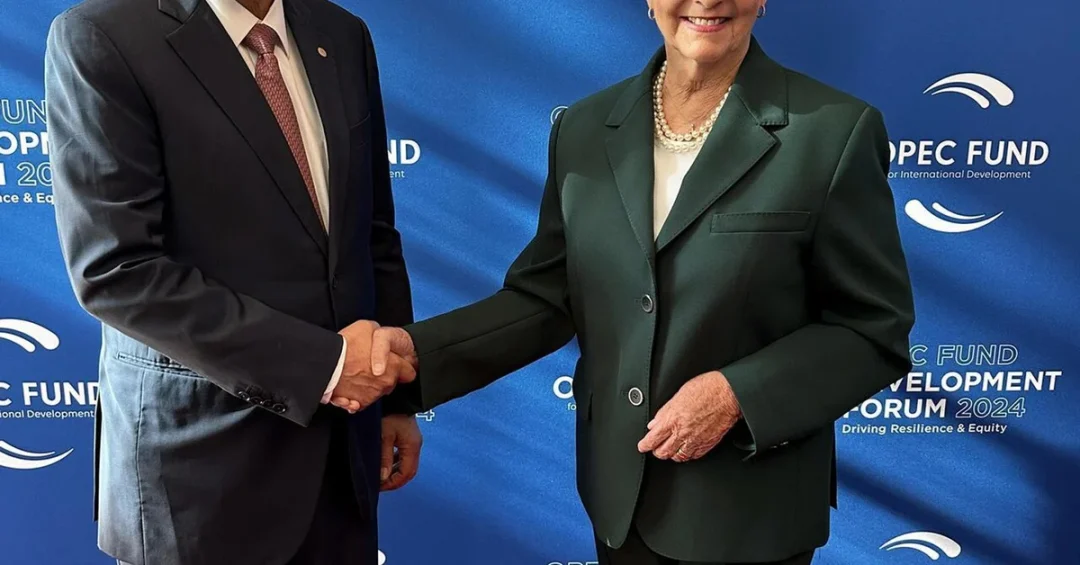
Vienna, June 26, 2024 – The President of the Islamic Development Bank (IsDB), Dr. Muhammad Al Jasser, met with the Executive Director of the UN World Food Program (WFP), Cindy McCain, on Tuesday on the sidelines of the third development forum of the OPEC Fund for International Development (OPEC Fund) in Vienna, Austria. The two leaders discussed strengthening their partnership to address food insecurity in member countries and globally, underscoring the IsDB’s role in fostering international cooperation and sustainable development.
Context and Background
The OPEC Fund for International Development, established in 1976, is a multilateral development finance institution that works to stimulate economic growth and social progress in low-income countries. Its third development forum, held in Vienna, brought together global leaders to discuss pressing issues such as food security, climate change, and education. The IsDB, headquartered in Jeddah, Saudi Arabia, is a key player in Islamic finance and development, with a strong commitment to the UN Sustainable Development Goals (SDGs).
The meeting between Dr. Al Jasser and Ms. McCain builds on an ongoing alliance between the IsDB and the WFP. The two institutions cooperate through the Afghanistan Humanitarian Trust Fund (AHTF), managed by the IsDB, and other initiatives focused on human capital development. Their partnership aims to implement programs and projects in humanitarian and developmental contexts, particularly in food security, nutrition, agriculture, and rural development.
Key Details
During the meeting, Dr. Al Jasser and Ms. McCain explored ways to foster closer cooperation to combat food insecurity. They emphasized the importance of joint efforts to support vulnerable communities, especially in member countries facing crises. The AHTF, established in 2022, is a prime example of their collaboration, providing humanitarian assistance to Afghanistan. The IsDB also manages several other initiatives aimed at improving livelihoods and building resilience.
In a separate meeting, Dr. Al Jasser met with Laura Frigenti, Chief Executive Officer of the Global Partnership for Education (GPE). They discussed their close partnership and efforts to enhance education in lower-income countries. The IsDB, in collaboration with the GPE and its partners, manages a portfolio exceeding $500 million to advance the Arab Coordination Group Smart Education Financing Initiative (ACG SmartEd). This initiative aims to improve education in Cameroon, Nigeria, Uzbekistan, and Kyrgyzstan.
The GPE is a shared commitment to end the global learning crisis by mobilizing partners and funds to support around 90 low-income countries in developing their education systems. The IsDB’s partnership with the GPE reflects its broader strategy to promote human capital development as a driver of sustainable economic growth.
Implications and Impact
The IsDB’s engagements at the OPEC Fund forum highlight its proactive role in addressing global challenges. By partnering with organizations like the WFP and GPE, the IsDB leverages its resources and expertise to create a meaningful impact. These collaborations align with the IsDB’s mission to promote comprehensive human development and its commitment to the SDGs, particularly those related to zero hunger and quality education.
For Saudi Arabia, the IsDB’s leadership in these global initiatives reinforces the Kingdom’s position as a responsible international actor and a bridge between the Islamic world and the global community. Saudi Arabia is a founding member of the IsDB and has consistently supported its efforts to alleviate poverty and foster prosperity in member countries.
Vision 2030 Alignment
Saudi Arabia’s Vision 2030 emphasizes the importance of international cooperation and sustainable development. The IsDB’s partnerships with the WFP and GPE exemplify the Kingdom’s commitment to global humanitarian and educational causes. Through its support of the IsDB, Saudi Arabia contributes to building a more stable and prosperous world, aligning with Vision 2030’s goal of enhancing the Kingdom’s global influence and fostering a knowledge-based economy.
20 Questions
Q1. What event brought IsDB President Dr. Muhammad Al Jasser and WFP Executive Director Cindy McCain together?
A1. They met on the sidelines of the third development forum of the OPEC Fund for International Development in Vienna, Austria, on June 25, 2024.
Q2. What is the Islamic Development Bank?
A2. The IsDB is a multilateral development bank headquartered in Jeddah, Saudi Arabia, focused on promoting economic development and social progress in its member countries and Muslim communities worldwide.
Q3. What is the World Food Program?
A3. The WFP is the world’s largest humanitarian organization addressing hunger and food security, providing food assistance to millions of people in over 80 countries.
Q4. What is the Afghanistan Humanitarian Trust Fund?
A4. The AHTF is a fund managed by the IsDB to provide humanitarian assistance to Afghanistan, established in 2022 with support from the Islamic Development Bank and other partners.
Q5. What did Dr. Al Jasser and Cindy McCain discuss?
A5. They discussed their partnership to strengthen collaboration and address food insecurity in member countries and globally, focusing on humanitarian and developmental contexts.
Q6. What is the Global Partnership for Education?
A6. The GPE is a global fund dedicated to transforming education in low-income countries, mobilizing partners and resources to ensure quality education for all children.
Q7. Who is Laura Frigenti?
A7. Laura Frigenti is the Chief Executive Officer of the Global Partnership for Education, leading efforts to end the global learning crisis.
Q8. What is the ACG SmartEd initiative?
A8. The Arab Coordination Group Smart Education Financing Initiative is a program aimed at improving education in Cameroon, Nigeria, Uzbekistan, and Kyrgyzstan, with a portfolio exceeding $500 million managed by IsDB and GPE.
Q9. How does the IsDB support education?
A9. The IsDB supports education through partnerships like the GPE and ACG SmartEd, financing education projects and promoting human capital development in member countries.
Q10. What is the OPEC Fund for International Development?
A10. The OPEC Fund is a multilateral development finance institution established in 1976 to stimulate economic growth and social progress in low-income countries.
Q11. What is the significance of the OPEC Fund forum?
A11. The forum brings together global leaders to discuss development challenges and foster partnerships, focusing on areas like food security, climate change, and education.
Q12. How does the IsDB contribute to food security?
A12. The IsDB collaborates with organizations like the WFP to implement programs in food security, nutrition, agriculture, and rural development, particularly in crisis-affected regions.
Q13. What are the IsDB’s main areas of focus?
A13. The IsDB focuses on economic development, human capital development, food security, education, health, and infrastructure, aligning with the UN Sustainable Development Goals.
Q14. Which countries benefit from the ACG SmartEd initiative?
A14. Cameroon, Nigeria, Uzbekistan, and Kyrgyzstan are the initial beneficiaries of the ACG SmartEd initiative, aimed at improving their education systems.
Q15. How does the IsDB partner with the GPE?
A15. The IsDB and GPE collaborate on financing and implementing education programs in low-income countries, with a portfolio exceeding $500 million.
Q16. What is Saudi Arabia’s role in the IsDB?
A16. Saudi Arabia is a founding member and major shareholder of the IsDB, supporting its mission to promote development in member countries and globally.
Q17. How does the IsDB’s work align with Vision 2030?
A17. The IsDB’s global partnerships and development initiatives reflect Vision 2030’s emphasis on international cooperation and sustainable development, enhancing Saudi Arabia’s global influence.
Q18. What is the WFP’s mission?
A18. The WFP’s mission is to end hunger and promote food security, providing emergency food assistance and supporting sustainable development in vulnerable communities.
Q19. What other initiatives does the IsDB support?
A19. The IsDB supports initiatives in health, infrastructure, agriculture, and human capital development, often in partnership with international organizations and member countries.
Q20. What is the expected outcome of these meetings?
A20. The meetings aim to strengthen partnerships and enhance cooperation to address global challenges like food insecurity and education, contributing to sustainable development.
Reader Feedback
We value your thoughts. Please share your feedback on this article.
Your feedback helps us improve our coverage.