


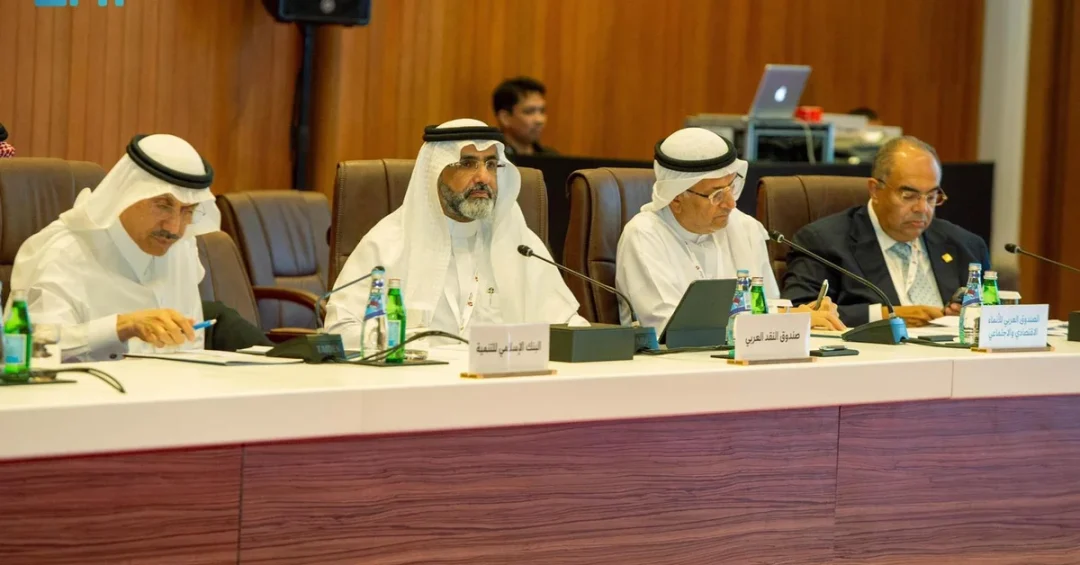
Dr. Muhammad Al-Jasser, President of the Islamic Development Bank (IsDB) Group, commended the International Monetary Fund (IMF) for its efforts in adapting to frequent economic shocks and structural challenges during a high-level roundtable titled “The Fund for the Future” held on the sidelines of the 122nd meeting of the Gulf Cooperation Council (GCC) Financial and Economic Cooperation Committee in Doha, Qatar. The meeting, which took place on Thursday, October 3, 2024, brought together key financial leaders, including IMF Managing Director Kristalina Georgieva, to discuss strategies for sustainable financing, stimulating economic growth, supporting innovation in financial development, and fostering knowledge exchange.
Context and Background
The 122nd meeting of the GCC Financial and Economic Cooperation Committee served as a critical platform for regional and international financial institutions to address pressing global economic issues. The roundtable, “The Fund for the Future,” focused on enhancing cooperation to build resilient economies capable of withstanding shocks and fostering sustainable development. Dr. Al-Jasser’s participation underscores the IsDB’s active role in promoting economic stability and cooperation across its member countries and beyond.
The IsDB, headquartered in Jeddah, Saudi Arabia, is a multilateral development bank that works to improve the lives of people in its member countries by promoting social and economic development. Its engagement with the IMF and GCC reflects a shared commitment to addressing global economic challenges through collaborative efforts.
Key Details
During his speech, Dr. Al-Jasser praised the IMF’s adaptability in responding to economic shocks and its cooperation in developing sukuk markets, which are essential for Islamic finance. He highlighted the IMF’s critical role in building a reliable macroeconomic and financial framework. The discussions also covered strategies for sustainable financing and innovation in financial development, aligning with global efforts to achieve the United Nations Sustainable Development Goals (SDGs).
The meeting was attended by high-level officials from GCC member states and international financial institutions. The presence of IMF Managing Director Kristalina Georgieva underscored the importance of international collaboration in addressing economic challenges. The roundtable provided a platform for exchanging knowledge and best practices, which is vital for fostering economic growth and stability.
Implications and Impact
The outcomes of this roundtable are expected to have significant implications for regional and international economic policies. By strengthening cooperation between the IsDB, IMF, and GCC, the meeting aimed to enhance the resilience of financial systems and promote sustainable development. This collaboration is particularly important as countries navigate post-pandemic recovery and address structural economic challenges.
For Saudi Arabia, this engagement aligns with its Vision 2030 goals, which include diversifying the economy, enhancing financial sector development, and promoting sustainable growth. The Kingdom’s active participation in such forums reinforces its leadership role in regional and global economic affairs.
Vision 2030 Alignment
Saudi Arabia’s Vision 2030 emphasizes economic diversification, innovation, and sustainable development. The IsDB’s collaboration with the IMF and GCC supports these objectives by fostering financial stability, promoting Islamic finance, and encouraging knowledge exchange. As the host country of the IsDB, Saudi Arabia continues to play a pivotal role in advancing regional and global economic cooperation, contributing to a more resilient and prosperous future for all.
20 Questions
Q1. What event did Dr. Muhammad Al-Jasser participate in?
A1. Dr. Muhammad Al-Jasser participated in a high-level roundtable titled “The Fund for the Future” on the sidelines of the 122nd meeting of the GCC Financial and Economic Cooperation Committee in Doha, Qatar.
Q2. Who is Dr. Muhammad Al-Jasser?
A2. Dr. Muhammad Al-Jasser is the President of the Islamic Development Bank (IsDB) Group, a multilateral development bank headquartered in Jeddah, Saudi Arabia.
Q3. What was the main focus of the roundtable?
A3. The roundtable focused on strategies for sustainable financing, stimulating economic growth, supporting innovation in financial development, and fostering knowledge exchange.
Q4. Who else attended the meeting?
A4. IMF Managing Director Kristalina Georgieva attended the meeting, along with other high-level officials from GCC member states and international financial institutions.
Q5. What did Dr. Al-Jasser commend the IMF for?
A5. Dr. Al-Jasser commended the IMF for its efforts in adapting to economic shocks and structural challenges, its cooperation in developing sukuk markets, and its role in building a reliable macroeconomic framework.
Q6. Where was the meeting held?
A6. The meeting was held in Doha, Qatar.
Q7. When did the meeting take place?
A7. The meeting took place on Thursday, October 3, 2024.
Q8. What is the significance of the GCC Financial and Economic Cooperation Committee?
A8. The committee serves as a platform for GCC member states to coordinate financial and economic policies and address regional and global economic issues.
Q9. What are sukuk markets?
A9. Sukuk markets refer to financial markets for sukuk, which are Islamic financial certificates similar to bonds but compliant with Sharia law.
Q10. Why is the IMF’s role important in the global economy?
A10. The IMF plays a critical role in promoting global monetary cooperation, securing financial stability, facilitating international trade, and providing resources to help countries overcome economic difficulties.
Q11. How does the IsDB contribute to economic development?
A11. The IsDB contributes to economic development by financing infrastructure, promoting trade, and supporting social and economic projects in its member countries.
Q12. What is the connection between the meeting and Saudi Vision 2030?
A12. The meeting aligns with Saudi Vision 2030 by promoting economic diversification, financial sector development, and sustainable growth, which are key goals of the Vision.
Q13. What are the expected outcomes of the roundtable?
A13. The roundtable is expected to enhance cooperation between the IsDB, IMF, and GCC, leading to stronger financial systems and sustainable development in the region.
Q14. How does Islamic finance differ from conventional finance?
A14. Islamic finance adheres to Sharia principles, which prohibit interest (riba) and excessive uncertainty (gharar), and emphasizes risk-sharing and asset-backed transactions.
Q15. What role does Saudi Arabia play in the IsDB?
A15. Saudi Arabia is a founding member and the largest shareholder of the IsDB, and hosts its headquarters in Jeddah, demonstrating its commitment to international development.
Q16. Why is sustainable financing important?
A16. Sustainable financing is important for funding long-term development projects that balance economic, social, and environmental considerations, ensuring prosperity for future generations.
Q17. What are the structural challenges facing the global economy?
A17. Structural challenges include slow productivity growth, demographic shifts, technological disruptions, and climate change, which require coordinated policy responses.
Q18. How does the GCC promote economic cooperation?
A18. The GCC promotes economic cooperation through initiatives such as the customs union, common market, and joint development projects, fostering regional integration.
Q19. What is the significance of knowledge exchange in financial development?
A19. Knowledge exchange allows countries to share best practices, innovative solutions, and expertise, accelerating financial development and resilience.
Q20. How does the IsDB support innovation in financial development?
A20. The IsDB supports innovation by funding fintech initiatives, promoting digital financial inclusion, and facilitating knowledge sharing among member countries.
Reader Feedback
We value your thoughts. Please share your feedback on this article.
Your feedback helps us improve our coverage.
Related articles
 Saudi Arabia, Solomon Islands Sign Visa Exemption Deal
 GCC Launches Observatory to Combat Extremism
 KSrelief Distributes 1,266 Food Baskets in Abyan, Yemen
 Quality of Life Program Joins 12th Gulf Municipal Works Conference
 KSrelief Chief Meets Dominican Ambassador to Boost Humanitarian Ties
 KSrelief Concludes Medical Project in El Salvador