


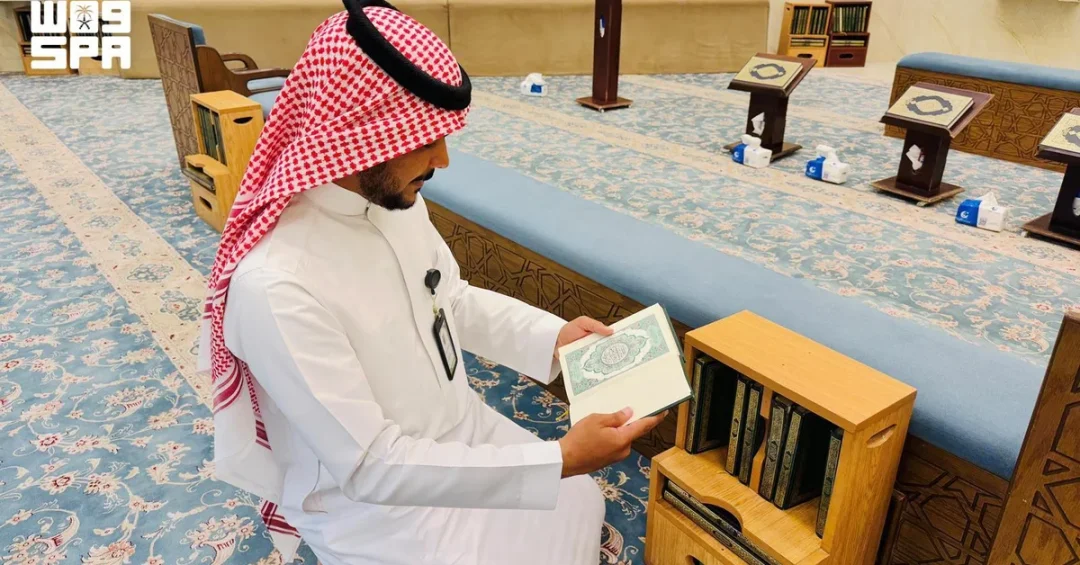
The Ministry of Islamic Affairs, Dawah and Guidance conducted 411,091 field inspection visits to mosques and prayer halls across the Kingdom of Saudi Arabia in October 2026, according to an official report released by its agency for mosque affairs and carried by the Saudi Press Agency. The inspections were performed by 10,773 male and female inspectors as part of a continuing national program to improve services, maintain high operational standards, and provide a suitable, dignified environment for worshippers in every region of the Kingdom.
Have you ever considered the scale of daily care required to maintain more than 400,000 places of worship? The figures reflect a systematic, year-round effort overseen by the Ministry of Islamic Affairs, Dawah and Guidance, which is responsible for the upkeep, administration, and service quality of mosques and prayer halls throughout Saudi Arabia. The October 2026 report shows that inspections reached every province, with the Riyadh Region recording the highest number at 82,394 visits, followed by Aseer Region with 64,340, Makkah Region with 61,450, and Jazan Region with 52,970. These numbers underscore a commitment to ensuring that worshippers across the Kingdom have access to clean, safe, and well-maintained facilities.
Context and Background
Why does a nation dedicate thousands of inspectors to the routine checking of mosques? The answer lies in the central role that mosques play in the spiritual and community life of Saudi Arabia. As the custodian of the Two Holy Mosques, the Kingdom places exceptional emphasis on the condition and management of all places of worship, from the smallest neighborhood prayer hall to the largest congregational mosques. The Ministry of Islamic Affairs, Dawah and Guidance has developed a comprehensive inspection framework that covers cleanliness, maintenance, safety, accessibility, and the quality of religious services. This framework is applied uniformly across urban and rural areas, ensuring that no community is left behind.
The inspection program is not a new initiative; it is an established part of the Ministry’s annual operational cycle. However, the October 2026 figures highlight the sheer scale of the effort: over 411,000 visits in a single month, carried out by a workforce of 10,773 inspectors. This level of activity reflects the Ministry’s proactive approach to governance, where field visits are used to identify issues before they affect worshippers, to verify that service contracts are being fulfilled, and to gather data that informs future improvements. The report was published by the Saudi Press Agency, the Kingdom’s official news outlet, underscoring the transparency with which the Ministry communicates its work to the public.
Historically, mosque administration in Saudi Arabia has evolved from a largely localized responsibility to a centralized, data-driven system. The Ministry now uses digital platforms to log inspection findings, track corrective actions, and share best practices among regional branches. This modernization aligns with the broader national trend of improving government services through technology and accountability. The October inspections are therefore not just a numerical achievement but a snapshot of a mature, responsive administrative system.
Key Details
What exactly do these inspections entail, and how are they distributed across the Kingdom? According to the Ministry’s report, the 411,091 visits were conducted by 10,773 male and female inspectors, a workforce that includes specialists in facilities management, health and safety, and religious affairs. The inspections cover a wide range of criteria: the cleanliness of prayer areas and ablution facilities, the functionality of air conditioning and lighting, the availability of necessary supplies such as prayer mats and copies of the Quran, and the overall structural integrity of the buildings. Inspectors also verify that imams and muezzins are performing their duties in accordance with Ministry guidelines and that any community programs held at the mosques are properly organized.
The regional breakdown provides insight into where the inspections were most concentrated. The Riyadh Region topped the list with 82,394 visits, reflecting both the large number of mosques in the capital area and the high population density. Aseer Region followed with 64,340 visits, Makkah Region with 61,450, and Jazan Region with 52,970. These four regions alone account for more than 260,000 inspections, or roughly 63 percent of the total. The remaining visits were distributed across the other regions, ensuring nationwide coverage. The Ministry noted that the distribution of inspectors is adjusted based on the number of mosques and the specific needs of each area, allowing for efficient use of resources.
Beyond routine checks, the inspection visits serve as a channel for communication between the Ministry and local mosque communities. Inspectors often receive feedback from worshippers and mosque staff, which is then relayed to regional offices for follow-up. This two-way flow of information helps the Ministry tailor its services to local needs and respond quickly to any concerns. In October 2026, the report indicates that the vast majority of visits resulted in positive assessments, with only a small percentage requiring corrective measures. This high compliance rate is a testament to the dedication of mosque staff and the effectiveness of the Ministry’s oversight.
International and Regional Impact
How does Saudi Arabia’s approach to mosque management resonate beyond its borders? As the home of Islam’s holiest sites, the Kingdom is looked to by Muslims worldwide as a model for the care and administration of places of worship. The Ministry of Islamic Affairs, Dawah and Guidance frequently shares its expertise with other countries, hosting delegations and participating in international forums on religious affairs. The October inspection report, while focused on domestic activities, contributes to this global image of responsible stewardship. It demonstrates that Saudi Arabia applies the same rigorous standards to every mosque, whether in a major city or a remote village, reinforcing its role as a leader in serving Islam and Muslims.
Regionally, the inspection program supports social stability and community cohesion. Mosques are not only places of prayer but also centers for education, charity, and social interaction. By ensuring that these facilities are well-maintained and properly managed, the Ministry helps foster a positive environment where families can gather, children can learn, and community bonds can strengthen. This aligns with the Kingdom’s broader efforts to promote moderation, tolerance, and a high quality of life. Neighboring countries and international observers often cite Saudi Arabia’s mosque administration as an example of effective public service delivery in the religious sphere.
Economic and Strategic Significance
What economic and strategic value does such an extensive inspection program deliver? At first glance, the inspections might seem purely administrative, but they have significant economic implications. Well-maintained mosques reduce long-term repair costs, as minor issues are identified and fixed before they become major problems. The program also supports local economies by creating demand for maintenance services, cleaning supplies, and construction materials. Moreover, the presence of a reliable inspection system encourages private sector involvement in mosque upkeep through service contracts, contributing to job creation and small business growth in various regions.
Strategically, the inspection program is part of Saudi Arabia’s broader governance reforms aimed at enhancing transparency, accountability, and efficiency across all public services. By publishing detailed monthly reports, the Ministry of Islamic Affairs, Dawah and Guidance sets a standard for data-driven decision-making that other government agencies can follow. The use of a large field force also provides employment opportunities and fosters a culture of service among inspectors, many of whom are trained professionals. This aligns with the strategic objective of building a modern, responsive state that serves its citizens effectively while preserving its religious and cultural heritage.
Vision 2030 Alignment
How does the mosque inspection program connect to Saudi Vision 2030? Vision 2030 is a comprehensive plan to diversify the economy, improve public services, and enhance the quality of life for all citizens and residents. The Ministry of Islamic Affairs, Dawah and Guidance contributes to these goals by ensuring that mosques—key community institutions—are safe, clean, and welcoming. This supports the Vision’s focus on vibrant communities and strong social foundations. Additionally, the Ministry’s emphasis on digital record-keeping and performance measurement reflects the Vision’s call for a more effective and transparent government.
Looking ahead, the Ministry is expected to continue expanding its inspection capabilities, possibly incorporating advanced technologies such as mobile apps for real-time reporting and data analytics to predict maintenance needs. These improvements will further align the program with Vision 2030’s digital transformation agenda. By maintaining the highest standards in mosque services, the Kingdom reinforces its position as a global leader in serving Islam and Muslims, while also demonstrating that modern governance and religious devotion can go hand in hand. The October 2026 report is a clear indicator of this ongoing commitment.
20 Questions
Q1. What was the total number of inspection visits conducted by the Ministry of Islamic Affairs, Dawah and Guidance in October 2026?
A1. The Ministry conducted 411,091 field inspection visits to mosques and prayer halls across Saudi Arabia in October 2026.
Q2. How many inspectors carried out these visits?
A2. A total of 10,773 male and female inspectors participated in the inspection campaign.
Q3. Which region recorded the highest number of inspections?
A3. The Riyadh Region topped the list with 82,394 inspection visits.
Q4. Which region came second in terms of inspection numbers?
A4. The Aseer Region recorded 64,340 visits, the second highest.
Q5. What was the number of inspections in the Makkah Region?
A5. The Makkah Region recorded 61,450 inspection visits.
Q6. How many inspections were conducted in the Jazan Region?
A6. The Jazan Region conducted 52,970 inspection visits.
Q7. What is the purpose of these inspection visits?
A7. The visits aim to improve services, ensure proper maintenance, and provide a suitable environment for worshippers.
Q8. Who released the report on these inspections?
A8. The report was released by the Ministry’s agency for mosque affairs and published by the Saudi Press Agency.
Q9. What types of facilities are covered by the inspections?
A9. The inspections cover both mosques and prayer halls throughout the Kingdom.
Q10. Do the inspections include both male and female inspectors?
A10. Yes, the team of 10,773 inspectors includes both male and female professionals.
Q11. How often are such inspection reports published?
A11. The Ministry publishes monthly reports on inspection activities, providing regular updates on its work.
Q12. What specific aspects are checked during an inspection?
A12. Inspectors check cleanliness, maintenance, safety, supplies, and the performance of religious duties.
Q13. Are all regions of Saudi Arabia covered by the inspections?
A13. Yes, the inspections are conducted across all regions of the Kingdom.
Q14. What happens if an inspection finds deficiencies?
A14. The Ministry follows up with corrective measures and ensures that issues are resolved promptly.
Q15. How does this program benefit worshippers?
A15. It ensures that mosques are clean, safe, and well-equipped, enhancing the spiritual experience for worshippers.
Q16. Does the program have any economic impact?
A16. Yes, it supports local economies by creating demand for maintenance and cleaning services.
Q17. How does this initiative align with Saudi Vision 2030?
A17. It supports Vision 2030 by improving public services, enhancing quality of life, and promoting effective governance.
Q18. Are the inspectors trained for their roles?
A18. Yes, inspectors are trained professionals with expertise in facilities management, health, safety, and religious affairs.
Q19. What technology is used to manage inspection data?
A19. The Ministry uses digital platforms to log findings, track corrective actions, and share best practices.
Q20. What is the overall compliance rate of mosques with inspection standards?
A20. The vast majority of visits result in positive assessments, indicating high compliance with Ministry standards.
Reader Feedback
We value your thoughts. Please share your feedback on this article.
Your feedback helps us improve our coverage.
Related articles
 Arab League Condemns Attack on Qatari LNG Tanker
 Prince Naif Quran Memorization Competition Begins Across Saudi Arabia
 KSrelief Rehabs 6 Hospitals, Builds 3 Oxygen Plants in Sudan
 KSrelief Supplies 1.3M Liters of Water to Yemen
 KSrelief Launches Fourth Phase of Food to Resilience Project in Yemen
 Coalition Air Defenses Intercept Houthi Missile Targeting Southern Saudi Arabia