


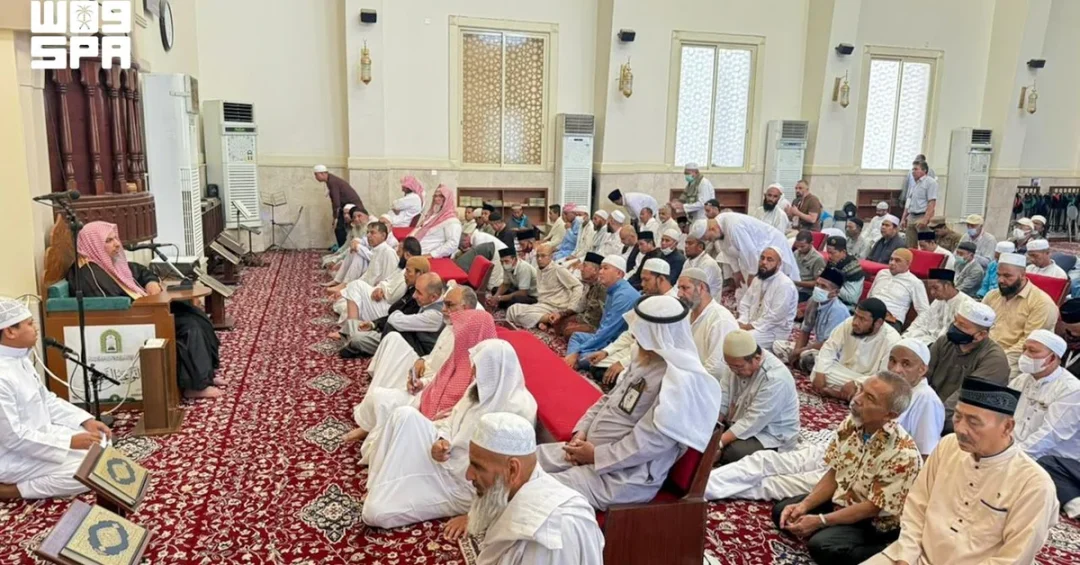
The Ministry of Islamic Affairs, Dawah and Guidance has delivered religious guidance and awareness programs to more than 300,000 Umrah performers in the central area of Makkah since the start of the current Umrah season, according to the Saudi Press Agency. The ministry confirmed that a total of 9,172 religious guidance activities had been carried out through the end of Jumada Al-Awwal 1448 AH, covering mosques across Makkah’s central district and designed to help pilgrims correctly perform the rites of Umrah. The figures were released through official Saudi channels, underscoring the Kingdom’s continuing commitment to serving the guests of God with both spiritual care and practical instruction.
Why does this matter beyond the raw numbers? Because the scale of the program reflects the extraordinary responsibility Saudi Arabia carries as the custodian of the Two Holy Mosques. Each year, millions of Muslims from every continent travel to Makkah to perform Umrah, many of them first-time visitors who need clear, reliable guidance on the rulings of the rituals. The ministry’s programs are delivered by specialized preachers, supported by translators, so that awareness messages reach worshippers of different nationalities and linguistic backgrounds. The result is a structured, multilingual effort that combines religious education with hospitality, ensuring that pilgrims can focus on their worship with confidence and understanding.
Context and Background
How did this program become such a central part of the Umrah experience? The Ministry of Islamic Affairs, Dawah and Guidance has long operated religious guidance activities in the mosques of Makkah, but the current season’s figures show the effort operating at remarkable scale. The breakdown provided by the ministry is instructive: 3,486 religious sermons, 1,136 lessons and lectures, and 4,550 activities dedicated to answering Umrah performers’ questions and religious inquiries. Together these 9,172 activities form a comprehensive educational network that meets pilgrims at the point of need — inside the mosques where they gather, pray, and seek direction.
The program is rooted in the Kingdom’s broader mandate to serve pilgrims, a duty that predates Vision 2030 but has been transformed by it. Saudi Arabia has invested heavily in the infrastructure of the holy sites, from the expansion of the Grand Mosque to the digitization of visa and permit systems. The religious guidance component complements that physical and logistical investment, addressing the spiritual dimension of the pilgrimage journey. By deploying specialized preachers and translators, the ministry ensures that the tolerant teachings of Islam are communicated accurately and accessibly, regardless of a pilgrim’s country of origin or language.
For an international audience, it is important to understand that these programs are not incidental. They are an institutionalized service, planned and delivered season after season, and their scope is measured and reported through official Saudi channels. The ministry’s announcement through the Saudi Press Agency is itself a signal of transparency: the Kingdom regularly publishes data on pilgrim services so that observers, researchers, and the global Muslim community can see how the sacred duty of hospitality is being fulfilled.
Key Details of the Awareness Campaign
What exactly does an awareness activity look like on the ground in Makkah? According to the ministry, the programs include sermons delivered in mosques, structured lessons and lectures on the rulings of Umrah, and dedicated sessions for answering questions and religious inquiries. The 4,550 question-and-answer activities represent the largest single category, illustrating how much pilgrims value direct, personal guidance. These are not abstract lectures; they are interactive engagements in which a pilgrim can ask about the specific steps of Tawaf, the conditions of Ihram, or any other matter of ritual practice, and receive an authoritative response.
The presence of translators is a crucial detail. Umrah performers arrive from Indonesia, Pakistan, Turkey, Nigeria, Egypt, Malaysia, and dozens of other countries, speaking a wide array of languages. Without translation, even the most well-prepared preacher could not reach a significant portion of the audience. By integrating translators into the delivery of awareness messages, the ministry ensures that language is not a barrier to correct worship. This multilingual approach reflects the universal character of the pilgrimage and the Kingdom’s determination that every guest, regardless of origin, should be able to perform the rites with understanding.
The geographic focus on the central area of Makkah is also significant. This is where many pilgrims stay, where they enter the sacred precinct, and where the density of mosques and accommodation is highest. Concentrating guidance activities there maximizes reach and impact. The ministry’s preachers are positioned where the pilgrims already are, rather than waiting for pilgrims to seek them out. This proactive model — taking the guidance to the worshipper — helps explain how more than 300,000 people were reached in a single season.
International and Regional Impact
How does this program shape the experience of the global Muslim community? Every year, Umrah brings together a cross-section of the ummah in Makkah, and the quality of the guidance they receive influences not only their pilgrimage but also their perception of Saudi Arabia’s role as custodian of the holy sites. A pilgrim who is helped to perform the rites correctly returns home with a positive impression and shares it with family and community. In this way, the ministry’s work functions as a form of soft diplomacy, reinforcing the Kingdom’s standing as a trusted steward of Islam’s holiest places.
Regionally, the program supports the broader ecosystem of pilgrimage services that Saudi Arabia provides in coordination with airlines, hotels, transport operators, and health authorities. Religious guidance is one pillar of a comprehensive experience that also includes visa facilitation, crowd management, and medical care. When these elements work together, the result is a pilgrimage that is spiritually fulfilling and logistically smooth. The ministry’s reported reach of over 300,000 beneficiaries is therefore not just a religious statistic; it is an indicator of the operational maturity of the entire Umrah system.
Economic and Strategic Significance
Why should economists and strategists pay attention to a religious awareness campaign? Because Umrah is a major component of Saudi Arabia’s visitor economy and a key element of the Vision 2030 goal to welcome millions more pilgrims each year. The better the experience of each pilgrim, the stronger the word-of-mouth reputation of the Kingdom as a destination, and the more likely that pilgrims will return — for Umrah, for Hajj, or for leisure and business travel. The ministry’s investment in guidance is thus an investment in the sustainability and growth of pilgrimage-related tourism.
The program also aligns with the strategic objective of increasing the number of Umrah performers and improving the quality of services provided to them. By ensuring that pilgrims understand the rituals, the ministry reduces confusion, improves crowd flow around ritual sites, and enhances safety. These operational benefits complement the spiritual ones. In a season that involves hundreds of thousands of worshippers moving through confined spaces, clear guidance on timing and procedure can meaningfully improve the overall management of the pilgrimage. The 9,172 activities are, in effect, both an educational service and a crowd-management tool.
Vision 2030 Alignment
How does this initiative connect to the Kingdom’s long-term transformation? Vision 2030 places the service of pilgrims at the heart of Saudi Arabia’s cultural and economic ambitions, with a target of welcoming 30 million Umrah performers annually. Achieving that target requires not only expanded infrastructure but also the human and spiritual services that make the pilgrimage meaningful. The Ministry of Islamic Affairs, Dawah and Guidance is directly contributing to this goal by scaling up its guidance programs, professionalizing their delivery, and measuring their reach through official reporting.
The ministry’s work also reflects the Vision 2030 emphasis on moderation, tolerance, and the true teachings of Islam. By deploying specialized preachers who communicate the tolerant message of the faith, the program counters misunderstanding and presents the Kingdom as a center of moderate Islamic scholarship and hospitality. As Saudi Arabia continues to open its doors to the world — through expanded visas, new tourism offerings, and landmark projects — services like this ensure that the spiritual core of the pilgrimage remains protected and enriched. The more than 300,000 pilgrims reached this season are both beneficiaries and ambassadors of that vision, carrying their experience of a well-served, well-guided Umrah back to their communities across the globe.
20 Questions
Q1. What is the Ministry of Islamic Affairs, Dawah and Guidance doing for Umrah performers in Makkah?
A1. The ministry is implementing religious guidance and awareness programs in mosques across central Makkah, teaching Umrah performers the rulings of the rituals and helping them understand the tolerant teachings of Islam through sermons, lessons, and question-and-answer sessions.
Q2. How many Umrah performers have benefited from these awareness services?
A2. According to the ministry, more than 300,000 people have benefited from the programs since the beginning of the Umrah season through the end of Jumada Al-Awwal 1448 AH, as reported by the Saudi Press Agency.
Q3. How many religious guidance activities have been conducted in total?
A3. The ministry has conducted 9,172 religious guidance activities in total. This figure covers all categories of programming, including sermons, lessons, lectures, and direct question-and-answer engagements with pilgrims.
Q4. What types of activities make up the program?
A4. The program comprises 3,486 religious sermons, 1,136 lessons and lectures, and 4,550 activities dedicated to answering Umrah performers’ questions and religious inquiries, delivered in mosques in the central area of Makkah.
Q5. Where are these activities held?
A5. The activities take place in mosques across the central area of Makkah, a location chosen to reach pilgrims where they stay, pray, and prepare for the rituals of Umrah, maximizing accessibility and impact.
Q6. Who delivers the religious guidance programs?
A6. The programs are delivered by specialized preachers appointed by the ministry, who are trained to explain the rulings of Umrah and the teachings of Islam clearly and accurately to a diverse international audience of pilgrims.
Q7. How are non-Arabic-speaking pilgrims accommodated?
A7. Translators assist the preachers in delivering awareness messages, ensuring that Umrah performers of different nationalities and linguistic backgrounds can understand the guidance in a language they speak comfortably.
Q8. Why is this program important for pilgrims?
A8. Many pilgrims are performing Umrah for the first time and need clear instruction on the rites. The program helps them worship correctly, reduces confusion, and deepens their understanding of the rituals and their spiritual meaning.
Q9. When did this season’s program begin?
A9. The program has been running since the beginning of the current Umrah season, with the reported figures covering activities through the end of Jumada Al-Awwal 1448 AH, according to the Ministry of Islamic Affairs, Dawah and Guidance.
Q10. What is the significance of the question-and-answer activities?
A10. With 4,550 such activities, they form the largest category of the program. They allow pilgrims to ask specific questions about ritual practice and receive authoritative answers, reflecting a personalized and responsive approach to religious education.
Q11. How does this program reflect Saudi Arabia’s role as custodian of the holy sites?
A11. It demonstrates the Kingdom’s commitment to serving the guests of God not only through infrastructure and logistics but also through spiritual care, ensuring pilgrims can perform their worship with proper knowledge and understanding.
Q12. Does the program support Vision 2030?
A12. Yes. Vision 2030 aims to welcome 30 million Umrah performers annually, and high-quality guidance services enhance the pilgrim experience, supporting the growth and sustainability of pilgrimage-related tourism in the Kingdom.
Q13. How does the program help with crowd management?
A13. By teaching pilgrims the correct procedures and timings for rituals, the program reduces confusion and improves the flow of worshippers around key sites, contributing to safety and order during busy periods of the Umrah season.
Q14. What message does the ministry convey through these programs?
A14. The ministry communicates the tolerant teachings of Islam and the correct rulings governing the rituals, presenting a moderate and welcoming image of the faith that resonates with the international community of pilgrims.
Q15. How is the success of the program measured?
A15. Success is measured through the number of activities conducted and the number of beneficiaries reached. The ministry reported 9,172 activities and more than 300,000 beneficiaries, figures released through official Saudi channels.
Q16. Are the preachers specially trained for this work?
A16. Yes. The ministry describes them as specialized preachers, indicating that they are qualified to address the specific needs of Umrah performers and to explain ritual rulings accurately and accessibly.
Q17. What nationalities benefit from these services?
A17. Umrah performers come from dozens of countries across Asia, Africa, Europe, and the Americas. The use of translators ensures the guidance reaches people of many different nationalities and linguistic backgrounds.
Q18. How does this initiative affect the overall Umrah experience?
A18. It enhances the experience by combining spiritual education with practical support, allowing pilgrims to focus on worship. A well-guided pilgrim is more likely to have a fulfilling journey and to speak positively about the Kingdom.
Q19. Is this a new initiative or an ongoing one?
A19. It is an ongoing program that the Ministry of Islamic Affairs, Dawah and Guidance continues to implement each season, with the current season’s figures showing its scale and reach in the mosques of central Makkah.
Q20. What does this program say about Saudi Arabia’s commitment to pilgrims?
A20. It shows a comprehensive commitment that goes beyond facilities to include religious education and spiritual care, reflecting the Kingdom’s enduring dedication to serving the guests of God with knowledge, respect, and hospitality.
Reader Feedback
We value your thoughts. Please share your feedback on this article.
Your feedback helps us improve our coverage.
Related articles
 Jubail Plants 6,000 Trees Across Roads, Parks and Walking Paths
 4.1-Magnitude Earthquake Strikes Japan’s Kyushu Region
 Saudi Arabia Weather Forecast for Monday: NCM Issues Alert
 Saudi, Palestinian Envoys Meet at Arab League in Cairo
 Madinah to Host International Architecture Forum 2026
 Saudi, Norwegian FMs Discuss Bilateral Ties, Regional Issues